
Beyond Surnames: Chulalongkorn Exhibition Explores Thai Family Name History
Chulalongkorn University's Central Library on the sixth floor rare book room has extended its exhibition titled Beyond Surnames: A Legacy through the end of October 2026. The display marks the 100th anniversary of King Vajiravudh's passing and examines how family names took root in Thailand after the 1913 Surname Act. Visitors encounter historical documents, interactive tools,
Chulalongkorn University's Central Library on the sixth floor rare book room has extended its exhibition titled Beyond Surnames: A Legacy through the end of October 2026. The display marks the 100th anniversary of King Vajiravudh's passing and examines how family names took root in Thailand after the 1913 Surname Act. Visitors encounter historical documents, interactive tools, and activities that connect personal identity to the monarch's reforms.
Beyond Surnames Exhibition Extends at Chulalongkorn University to Honor King Rama VI's Legacy
Bangkok, Thailand — The Central Library at Chulalongkorn University opened the Beyond Surnames: A Legacy exhibition in early 2026 to mark the centennial of King Vajiravudh's death on 25 November 1925. The show highlights the 1913 Surname Act that required every Thai citizen to adopt a family name for the first time. Organizers extended the run until 31 October 2026 after strong public interest from students and families.
Visitor Experience Inside the Rare Book Room
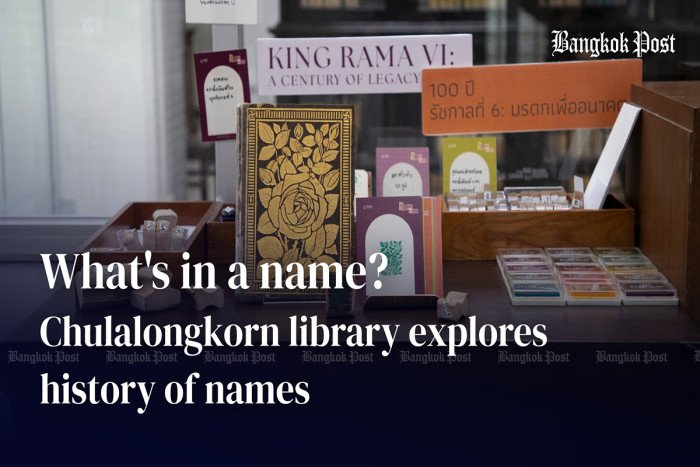
The sixth-floor rare book room at Chulalongkorn University's Central Library houses glass cases containing original 1913 government gazettes announcing the Surname Act. Guests receive a printed map that guides them past 12 display panels showing photographs of King Vajiravudh reviewing draft surnames at Dusit Palace in 1914. Library staff members offer short talks every Tuesday and Thursday at 2 p.m. that explain how the monarch reviewed more than 10,000 name proposals during his reign.
Each visitor can pick up a small wooden stamp carved with traditional motifs and press it onto handmade paper to create a personal family crest. The activity uses ink mixed from natural indigo grown in Sakon Nakhon province. Participants often leave their crests on a community board that now holds more than 3,400 entries collected since the exhibition opened.
King Vajiravudh and the 1913 Surname Act
King Vajiravudh, who ruled Siam from 1910 to 1925, signed the Surname Act on 22 March 1913, also recorded as B.E. 2456. Before the law, most citizens used only given names or nicknames tied to birth order or physical traits. The monarch required every household to register a unique family name within one year, with fines of up to 100 baht for non-compliance.
The king personally reviewed thousands of proposed surnames submitted by provincial governors. He rejected names that sounded too similar to royal titles or existing noble houses. Records kept at the National Archives show he approved 4,872 surnames in the first six months after the law took effect.
Pali and Sanskrit Roots in Thai Surnames
King Vajiravudh drew many approved surnames from Pali and Sanskrit roots that reflected Buddhist virtues or natural elements. The name Wongsa, for example, combines the Sanskrit word for lineage with a Thai ending that denotes prosperity. Families in Ayutthaya province still trace their registered names to lists the king finalized during a 1915 visit to the old capital.
Another common pattern pairs the word "Chai" meaning victory with a suffix such as "yod" meaning peak. The resulting surname Chaiyod appears in civil records from Chiang Mai dated 1916. These linguistic choices preserved classical language knowledge while creating distinct identities for commoner families who previously lacked hereditary names.
AI Tool Generates Historic-Style Surnames
The exhibition features a custom GPT trained on 8,000 surnames approved by King Vajiravudh between 1913 and 1925. Visitors type a short description of their family history or preferred meaning, and the tool suggests three options written in the same Pali-Sanskrit style used a century ago. Library staff verified the first 500 suggestions against original royal gazettes to ensure linguistic accuracy.
Users can print their generated names on rice paper alongside a short explanation of each root word. One family from Nonthaburi province received the suggestion "Suphakit," combining the Pali term for merit with a Thai word for achievement. They later registered the name officially at their district office in May 2026.
Family Identity and Cultural Heritage
Many Thai families view their surnames as living records of the 1913 reforms that connected ordinary citizens to the modern state. Grandparents who remember their parents receiving names from district officials often bring grandchildren to the exhibition to trace those original documents. The library has recorded 1,200 oral histories from such visitors since January 2026.
Community groups in Bangkok's Bang Rak district organized group visits in April 2026 to study surnames shared among long-established merchant families. These outings strengthened neighborhood ties while teaching younger members how the king's language choices still shape daily life in Thai schools and temples.
Links to Buddhist Naming Traditions
Thai Buddhist families have long used temporary ordination names during monkhood that follow similar Pali patterns to the surnames created in 1913. The exhibition displays ordination name lists from Wat Bowonniwet Vihara dated 1920 that mirror the structure of royal-approved family names. Monks from the temple visited the library in June 2026 to discuss these parallels with visitors.
Naming ceremonies at local temples still incorporate elements of the same linguistic tradition. Parents in Ayutthaya often consult monks who suggest names drawn from the same classical sources King Vajiravudh favored. The exhibition includes a small altar where visitors can light incense while reflecting on how surnames and spiritual names together preserve cultural continuity.
Regional Naming Practices Across ASEAN
Neighboring countries developed their own surname systems around the same period. In 1913, the Burmese government under British rule began encouraging family names in urban areas, though rural adoption remained slow until the 1940s. Malaysian Chinese communities in Penang maintained clan names brought from southern China that predate the Thai reforms by centuries.
Indonesian civil records from the 1920s show Dutch colonial authorities requiring family names for tax purposes in Java, creating different patterns from the Pali-based Thai model. The Chulalongkorn exhibition includes a comparative panel that notes these regional variations while highlighting Thailand's unique royal involvement in surname creation.
Practical Information for Future Visitors
The exhibition remains open daily from 9 a.m. to 6 p.m. on the sixth floor of Chulalongkorn University's Central Library at 254 Phayathai Road. Entry is free, though visitors must present a student or national ID at the security desk. The AI surname generator operates on two dedicated terminals, with staff assistance available during peak hours after 3 p.m.
Those planning group visits should contact the library's outreach office at least one week in advance. Special sessions for schools include guided tours of the rare book collection and additional stamping materials. The exhibition closes permanently on 31 October 2026, after which selected panels will move to a permanent display at the National Museum.
By Ann Srisawat, Staff Writer
This article was produced with AI-assisted research and editorial support. Reporting is based on sources cited in the article.
What's Your Reaction?
 Like
0
Like
0
 Dislike
0
Dislike
0
 Love
0
Love
0
 Funny
0
Funny
0
 Wow
0
Wow
0
 Sad
0
Sad
0
 Angry
0
Angry
0

Southeast Asia Correspondent at Global1.News. Based in Bangkok, covering Thai and Southeast Asian politics, economy, technology, and culture. Deep regional perspective on one of the world's most dynamic regions.













Comments (0)