
Peru's Tropical Glaciers Face Accelerating Collapse Under Climate Change
In the shadowed valleys of Peru's Cordillera Blanca, where Quechua families once timed planting cycles to the slow drip of glacial melt, the ice is vanishing at an alarming pace. Peru holds approximately 68% of the world's tropical glaciers, yet these vital ice reserves have shrunk by 47.7% over the past 37 years and 56.2% across six decades according to INAIGEM studies, reachi
Peru's Tropical Glaciers Face Accelerating Collapse Under Climate Change
Huaraz, Ancash – Peru, July 2026 — As Andean communities confront vanishing ice that once sustained rivers and rituals, Peru's glaciers retreat at 0.7 meters per year, 35% faster than the global average, threatening water for millions while new risks emerge from exposed bedrock and unstable lakes.
The Science and History of Peru's Tropical Glaciers
Peru maintains the planet's largest concentration of tropical glaciers, accounting for roughly 68% of the global total, yet these formations have undergone dramatic reduction. INAIGEM studies document a 47.7% loss in glacier extent over the last 37 years and a cumulative 56.2% decline across six decades. These tropical glaciers now stand at their smallest extent in 11,700 years, a stark indicator of unprecedented warming. The retreat rate across the Andes averages 0.7 meters per year, proceeding 35% faster than the worldwide average. INAIGEM, operating under Peru's Ministry of Environment (MINAM), coordinates monitoring alongside SENAMHI weather service programs and UNSAAC glacier research initiatives. European heat wave conditions in 2025 compounded stress on these ice bodies through elevated temperatures. Venezuela lost its final glacier, Humboldt, between 2024 and 2025, becoming the first Andean nation rendered glacier-free. This historical trajectory underscores how Peru's ice fields serve as sentinels for broader cryosphere changes, with data from NASA Landsat imagery confirming consistent shrinkage patterns since the late 1980s.
Iconic Glaciers Showing Visible Retreat: Quelccaya, Pastoruri, and Vallunaraju
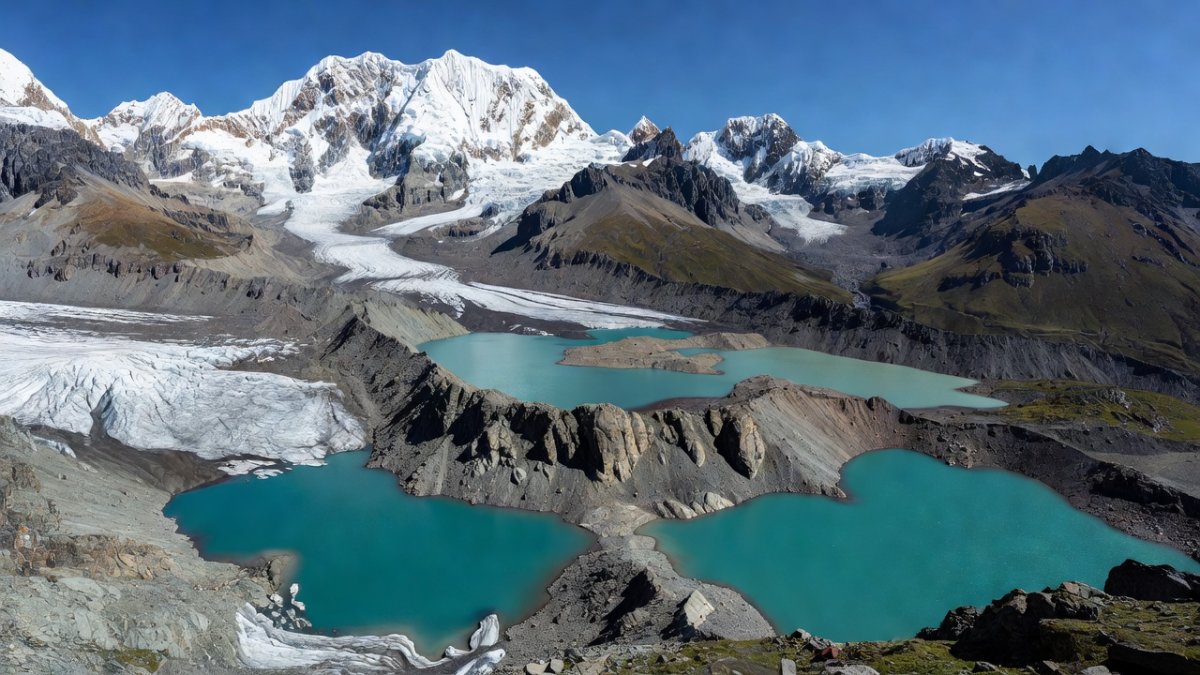
Quelccaya Ice Cap in southern Peru ranks among the largest tropical ice caps, where clear retreat appears in NASA Landsat imagery spanning 1988 to 2023. Pastoruri Glacier near Huaraz has lost approximately 50% of its size and faces potential disappearance within roughly 12 years based on ongoing observations. Vallunaraju at 5,686 meters experienced a notable glacier collapse on 13 April 2025, highlighting acute instability. Cordillera Blanca glaciers in Ancash retreated between 30% and 50% in multiple assessments. Peru now contends with thousands of new proglacial lakes formed by this melting. January 2026 saw Peru close climbing routes in Cordillera Blanca above 5,000 meters due to heightened avalanche risks from melting. June 2026 brought renewed INAIGEM warnings about glacier loss consequences. These iconic sites illustrate the tangible transformation of Peru's high-altitude landscapes, where once-stable ice now fragments rapidly under sustained warming pressures documented by MINAM-affiliated researchers.
Water Supply Crisis for Lima, Huaraz, and Andean Communities
Huaraz draws up to 91% of its dry-season water from glacial melt during drought periods, placing immense pressure on remaining ice reserves. Lima, home to 9-10 million people, depends heavily on Andean glacier-fed rivers including the Rimac and Chillon basins for its supply. Heavy metals have been detected in five glacial basins in Ancash through a 2025 INAIGEM study, with acid rock drainage from exposed bedrock threatening drinking water quality. New glacial lake formation continues across Peru, creating both storage opportunities and hazards. MIDAGRI projects aim to improve water access for thousands of hectares amid these shortages. INAIGEM's 2024 National Evaluation of Glacial Lakes at Risk of Outburst details vulnerabilities tied directly to ongoing retreat. SENAMHI monitoring programs track these shifts in real time, while ANA coordinates allocation efforts. The loss of reliable glacial contributions forces communities to confront chronic scarcity, with Lima's urban population particularly exposed to seasonal shortfalls that intensify during extended dry periods.
GLOF Risks and Emerging Proglacial Lake Hazards
Lake Palcacocha near Huaraz exemplifies GLOF risk, where visibly thinning glaciers feed unstable bodies of water prone to sudden outburst floods. Peru now hosts thousands of new proglacial lakes created by retreating ice, many of which INAIGEM identifies as potential threats. The 2024 INAIGEM report on National Evaluation of Glacial Lakes at Risk of Outburst catalogs these sites across Ancash and beyond. January 2026 route closures in Cordillera Blanca above 5,000 meters responded directly to avalanche dangers linked to melting. INDECI supports emergency preparedness tied to these evolving hazards. Heavy metal contamination from exposed bedrock in five Ancash basins adds further complexity to water management. These developments demand coordinated responses from MINAM and local authorities, as the rapid formation of lakes outpaces traditional risk assessment frameworks. Communities downstream face heightened exposure to catastrophic flooding events that could displace populations and damage infrastructure.
Agriculture, Food Security, and Groundwater Pressures in the Ica Valley
The Ica Valley sustains intensive export agriculture, particularly asparagus production, through over-extraction of groundwater that once received reliable glacial recharge. Reduced meltwater from Cordillera Blanca and other ranges forces farmers to deepen wells, accelerating aquifer depletion. MIDAGRI initiatives seek to expand irrigation access across thousands of hectares, yet these efforts contend with diminishing highland sources. Peru's overall glacier loss of 47.7% in 37 years directly undermines the water balance supporting export crops vital to the national economy. SENAMHI data reveal shifting precipitation patterns that compound reliance on dwindling ice reserves. The 2025 UN International Year of Glaciers' Preservation highlights these agricultural vulnerabilities on a global stage. Without intervention, export volumes risk decline as groundwater tables fall further, threatening food security for both local populations and international markets dependent on Peruvian produce.
Cultural Traditions and Community Impacts in the Cusco Region
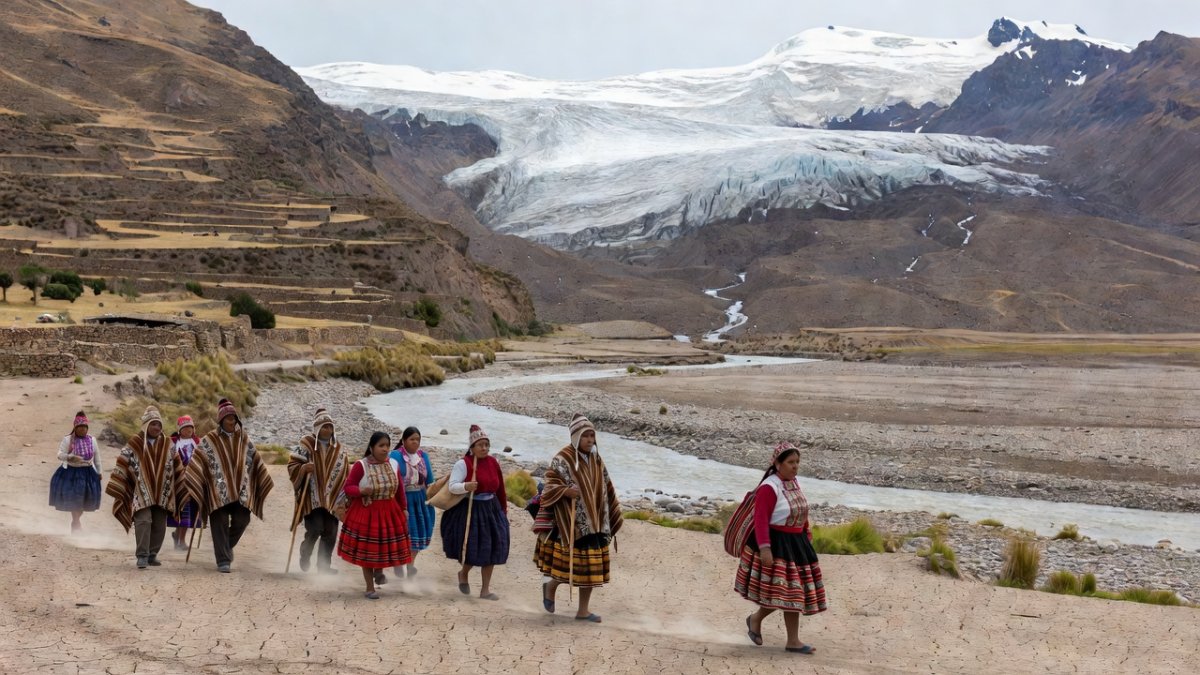
Traditional ice-harvesting practices known as raitq'ana in communities like Phinaya in the Cusco region are declining sharply as glaciers vanish. The ice pilgrimage of Señor de Qoyllur Rit'i near retreating glaciers faces disruption, severing longstanding spiritual connections to the ice. UNSAAC researchers document these cultural shifts alongside physical glacier changes. Peru's 68% share of tropical glaciers once anchored such rituals across the Andes, yet losses of 56.2% over six decades erode these foundations. INAIGEM warnings issued in June 2026 emphasize not only hydrological but also heritage consequences. Communities in Ancash and Cusco report altered seasonal calendars tied to ice melt, affecting festivals and resource gathering. The broader cultural fabric, woven through generations of interaction with Cordillera Blanca and Quelccaya, frays under sustained retreat, prompting calls for preservation efforts aligned with UNESCO frameworks.
INAIGEM Policy Responses and International Engagement
INAIGEM under MINAM leads national glacier monitoring and issued renewed warnings in June 2026 about loss consequences. The 2024 National Evaluation of Glacial Lakes at Risk of Outburst guides prioritization of interventions. Peru participates in COP30 panels in Belém, Brazil, in November 2025, including collaborations with IAEA and UMSA on cryosphere issues. The 2025 UN International Year of Glaciers' Preservation elevates these concerns through UNESCO and WMO initiatives. Venezuela's loss of its last glacier in 2024-2025 serves as a cautionary benchmark for Peru. SENAMHI and UNSAAC programs supply critical data to policymakers, while MIDAGRI and ANA address downstream water needs. These institutional efforts confront the 0.7 meter annual retreat rate and associated heavy metal risks in Ancash basins, seeking to balance immediate adaptation with long-term emission reductions.
The Bottom Line: Outlook for Peru's Glaciers and Regional Resilience
Peru's tropical glaciers, already at their smallest extent in 11,700 years after 47.7% loss in 37 years, continue retreating 35% faster than global averages, reshaping water, agriculture, and culture across Ancash, Lima, Cusco, and the Ica Valley. Iconic sites such as Quelccaya, Pastoruri, and Vallunaraju illustrate the scale of change, while GLOF threats at Lake Palcacocha and heavy metal contamination demand urgent action from INAIGEM and partners. As Venezuela became glacier-free, Peru confronts similar futures without accelerated policy responses ahead of COP30. Communities adapting through MIDAGRI projects and SENAMHI monitoring demonstrate resilience, yet the data underscore that preservation of remaining ice requires both local innovation and global cooperation. By Elena Vasquez, Staff Writer
This article was produced with AI-assisted research and editorial support. Reporting is based on sources cited in the article.
What's Your Reaction?
 Like
0
Like
0
 Dislike
0
Dislike
0
 Love
0
Love
0
 Funny
0
Funny
0
 Wow
0
Wow
0
 Sad
0
Sad
0
 Angry
0
Angry
0

Latin America Correspondent at Global1.News. Based in Mexico City, covering politics, economics, energy, and culture across the region. Brings an on-the-ground perspective to stories spanning from the Rio Grande to Patagonia.















Comments (0)