
Ben Stokes Announces Retirement at Trent Bridge Test
The Shock Announcement at Trent Bridge The announcement came midway through the decisive Rothesay Series Test at Trent Bridge, catching the England dressing room and the wider cricketing world entirely off guard. Ben Stokes informed teammates and coaching staff of his decision to retire from international cricket at the close of this match, offering only the cryptic remark that
The Shock Announcement at Trent Bridge
The announcement came midway through the decisive Rothesay Series Test at Trent Bridge, catching the England dressing room and the wider cricketing world entirely off guard. Ben Stokes informed teammates and coaching staff of his decision to retire from international cricket at the close of this match, offering only the cryptic remark that the reasons could wait. The timing, with one day of the series decider still to play and the outcome hanging in the balance, amplified the sense of disbelief that rippled through the ground.
Within hours the news had spread beyond the boundary, yet Stokes remained focused on the field. In a moment that already feels destined for cricket folklore, he claimed a wicket with his very first delivery after the revelation became public. The dismissal drew an immediate roar from spectators and prompted former teammate Stuart Broad to remark on Sky Sports that it was a magical moment and to ask who writes his scripts, underscoring the talismanic quality Stokes has brought to English cricket across more than a decade.
The decision to step away at the end of this third Test leaves the series poised on a knife edge. Stokes had returned to the side in Nottingham after being stood down for the preceding match, and his presence had been expected to steady an England side still processing the fallout from earlier disciplinary matters. Instead, his retirement statement has shifted attention from the contest itself to the abrupt end of one of the most influential England careers in recent memory.
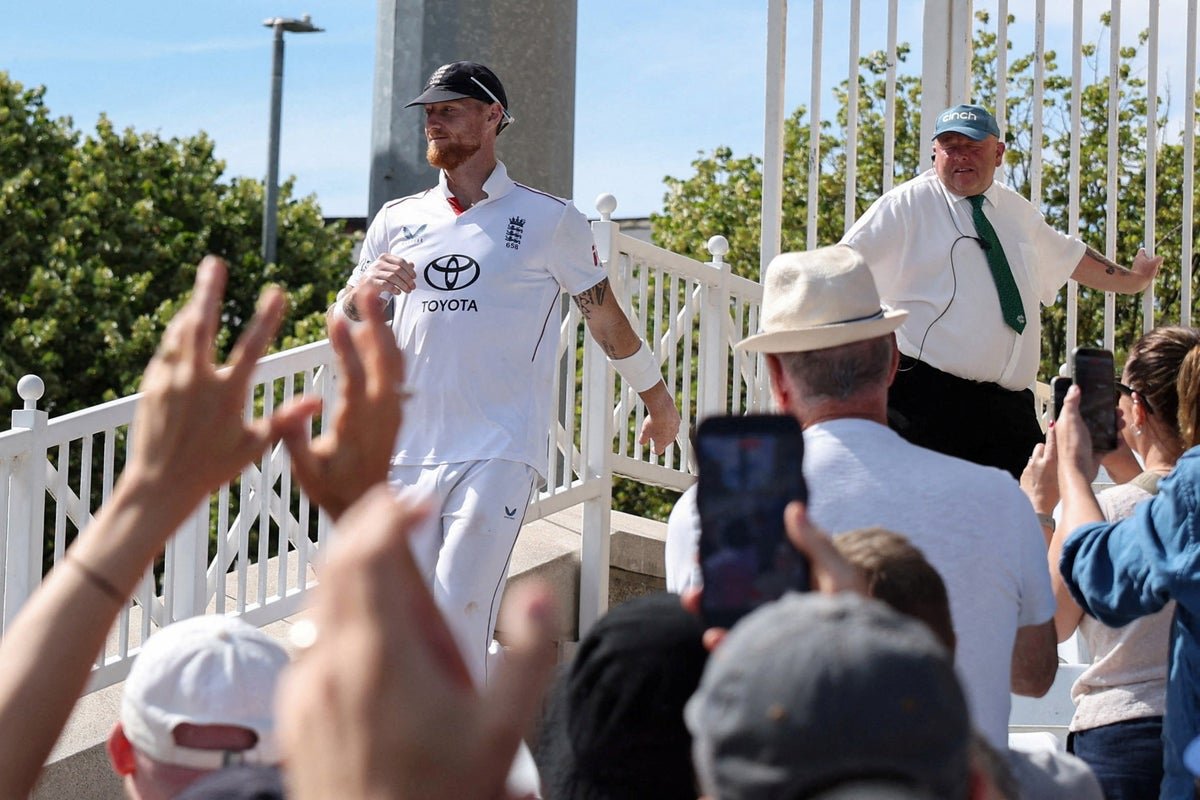
Ben Stokes announced his retirement midway through the Trent Bridge Test (Global 1 News)
Strains with the ECB and the Curfew Controversy
Behind the retirement lies a period of mounting tension between Stokes and the England and Wales Cricket Board hierarchy. The difficulties surfaced earlier this month after the first Test at Lord’s, when Stokes was reported to have broken curfew by visiting a nightclub. The incident triggered internal disciplinary proceedings and, according to those close to the situation, prompted the 35-year-old to consider walking away from international cricket altogether.
The controversy deepened when Stokes and Gus Atkinson became involved in an altercation with Saracens rugby union player Totoa Auvaa. Although both players were later cleared of wrongdoing, the episode led to Stokes being omitted from the side for last week’s defeat at the Kia Oval. The stand-down was presented as a precautionary measure, yet it highlighted the friction between the captain and those responsible for enforcing team standards and player conduct.
Throughout this period Stokes maintained a central contract that extends beyond the 2027 Ashes, signalling the ECB’s long-term investment in his leadership. The contrast between that commitment and the sudden retirement announcement has raised questions about how effectively the board manages relationships with its most senior players when personal and professional pressures intersect.
Reactions from Cricket's Leading Voices
Former England captain Michael Vaughan, speaking on BBC Test Match Special, described the retirement as the result of something that had clearly triggered in Stokes’s mind. He noted the existence of a contract running until next year and the prospect of a home Ashes series, expressing hope that the decision stemmed from simple exhaustion rather than any reported fallouts with the board. Vaughan emphasised that Stokes had given everything for a sustained period and that the game would be poorer without his presence.
On Sky Sports commentary, Michael Atherton called the moment extraordinary and stunning, highlighting the unusual timing in the middle of a day’s play with a match and series still to be decided. He pointed out that the announcement inevitably prompts questions about motivation and timing, leaving observers to wonder what combination of factors had crystallised so suddenly.
ECB chair Richard Thompson issued a measured tribute, stating that Stokes leaves the international game as one of England’s greatest ever cricketers and a defining figure of his generation. Thompson praised the all-rounder’s performances under pressure, relentless competitiveness and capacity to produce the extraordinary when it mattered most, noting that these qualities have created memories that will endure for millions of supporters.
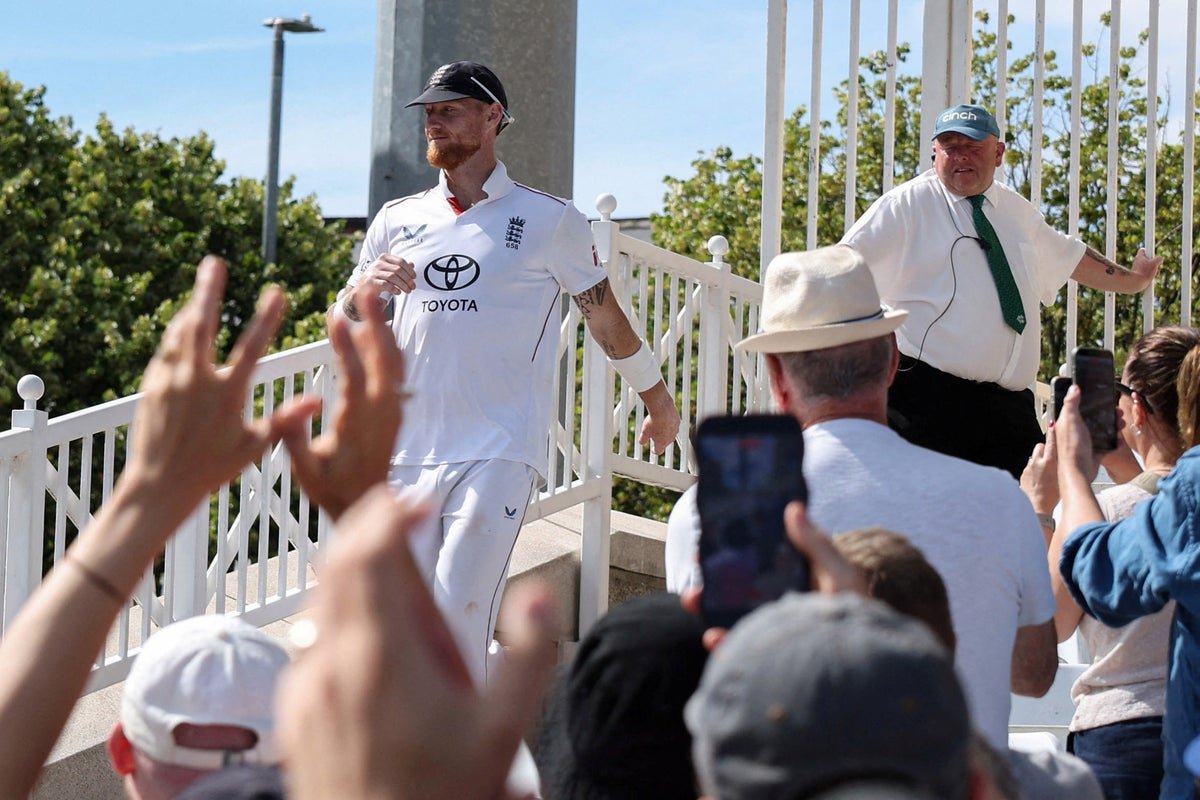
Stokes is one of only two players to pass 7,000 runs and 250 wickets in Test cricket (Global 1 News)
A Career of Defining Moments
Stokes’s international career has been marked by a series of performances that transcended ordinary sporting achievement. He played a central role in England’s 2019 50-over World Cup victory on home soil, then followed that triumph weeks later with a memorable century in the Ashes Test at Headingley. Those two interventions within a single summer cemented his status as a player capable of altering the course of major tournaments single-handedly.
Statistically, Stokes stands among an elite group, one of only two players to have accumulated more than 7,000 Test runs while also claiming 250 or more wickets. This rare combination of batting depth and genuine bowling threat has allowed England to field a balanced side without sacrificing either discipline, a luxury few teams enjoy.
Beyond the numbers, Stokes has embodied a distinctive style of leadership that combined fierce competitiveness with visible emotional investment. His willingness to bowl long spells, to bat through pain and to inspire those around him has shaped the identity of the current England side in both red-ball and limited-overs cricket.
The Timing Question: Why Now?
The retirement arrives at a point when Stokes still held a central contract extending past the 2027 Ashes, raising immediate questions about why the decision could not have waited until after that series. The fact that the announcement was made during an ongoing Test, with the Rothesay Series still unresolved, has left many observers puzzled about the precise catalyst.
Speculation has inevitably turned to the recent disciplinary episode and the subsequent stand-down at the Kia Oval. While Stokes has remained tight-lipped, the sequence of events suggests that the cumulative strain of balancing captaincy, personal conduct scrutiny and on-field demands reached a tipping point this week.
Some within the game have wondered whether the mid-series timing reflects a desire to avoid prolonged speculation or whether it simply indicates that Stokes awoke one morning and concluded he had nothing left to give. Either way, the abruptness has deprived England of the opportunity to plan a more measured transition.
What England Loses
England will lose far more than a single player when Stokes departs after this Trent Bridge Test. As captain he has provided both tactical direction and an emotional core that has held the dressing room together through difficult periods. His absence will be felt most acutely in moments when the team requires someone to produce something extraordinary under pressure.
In batting and bowling terms, the side loses a genuine all-round threat that has allowed selectors to construct line-ups with greater flexibility. The ability to call upon a player who can change a game with bat or ball has been a consistent advantage, and replacing that dual contribution will require several individuals to step up simultaneously.
Perhaps most significantly, England will lose the talismanic presence that has defined the team’s public identity in recent years. Stokes’s capacity to galvanise supporters and teammates alike has been central to the narrative of resilience that has surrounded the side, and that intangible quality will be difficult to replicate.
Who Will Succeed Stokes as Captain?
The ECB now faces the immediate task of identifying a successor capable of stepping into a role that has been shaped so completely by one individual. Succession planning in such circumstances is rarely straightforward, and the board will need to weigh experience against the need for a fresh approach that can command the respect of a dressing room accustomed to Stokes’s style.
Any new captain will inherit a side still navigating the aftermath of the recent disciplinary episode and the sudden leadership vacuum. The transition will therefore require careful handling to ensure that team cohesion is not further disrupted at a time when the Rothesay Series remains in the balance.
Longer term, the ECB must consider how the captaincy role interacts with the broader demands placed on senior players. The circumstances surrounding Stokes’s departure suggest that future appointments may need to be accompanied by clearer support structures if the board wishes to avoid similar abrupt exits.
The Broader Context: Player Welfare and ECB Governance
Stokes’s retirement brings into sharp focus ongoing debates about player workload and the adequacy of support provided to those carrying the greatest responsibility. The combination of intense international schedules, media scrutiny and internal disciplinary processes can create pressures that even the most resilient athletes find difficult to sustain indefinitely.
The episode also raises questions about the ECB’s disciplinary framework and the manner in which it balances accountability with the welfare of its contracted players. The sequence from the Lord’s curfew incident through the Kia Oval stand-down to this week’s announcement suggests that existing mechanisms may require refinement to prevent similar escalations in the future.
At a time when mental health and player retention are prominent concerns across professional sport, the manner of Stokes’s departure will prompt renewed discussion about how governing bodies can better anticipate and mitigate the cumulative toll on their leading figures. The county system, already under strain, will now face additional questions about how it prepares and protects the next generation of players who may one day assume similar burdens.
By Erica Thornton, Staff WriterThis article was produced with AI-assisted research and editorial support. Reporting is based on sources cited in the article.
What's Your Reaction?
 Like
0
Like
0
 Dislike
0
Dislike
0
 Love
0
Love
0
 Funny
0
Funny
0
 Wow
0
Wow
0
 Sad
0
Sad
0
 Angry
0
Angry
0

US Politics and Policy Correspondent at Global1.News. Based in Washington DC, covering American politics, policy, elections, and the courts. Knows how the system works and tells you what it actually means.















Comments (0)