
Taiwan Custard Apples: China's Atemoya Import Pledge Sparks Fears of Economic Coercion
The Recent Pledge and Emerging Concerns Over Import Expansion China's recent pledge to increase purchases of Taiwanese atemoyas has triggered immediate apprehension within Taiwan's agricultural sector. The commitment, announced at a forum in Xiamen attended by business leaders and opposition politicians from Taiwan, positions the fruit as a potential instrument of economic infl
The Recent Pledge and Emerging Concerns Over Import Expansion
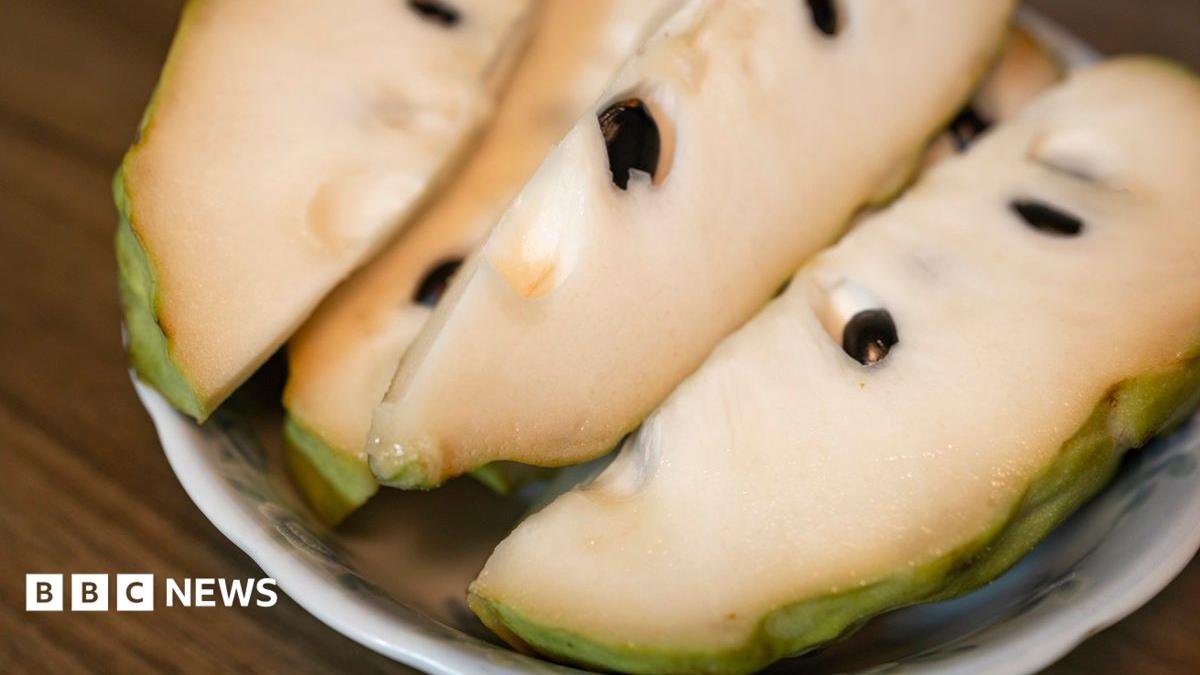
China's recent pledge to increase purchases of Taiwanese atemoyas has triggered immediate apprehension within Taiwan's agricultural sector. The commitment, announced at a forum in Xiamen attended by business leaders and opposition politicians from Taiwan, positions the fruit as a potential instrument of economic influence. Taiwan's agriculture ministry has characterized the move as part of a familiar pattern, raising questions about long-term intentions behind the expanded import commitment.
Officials in Taipei view the pledge against the backdrop of prior trade disruptions involving the same commodity. The atemoya, a hybrid specialty cultivated primarily in Taitung county, represents a concentrated export category where market access can shift rapidly. This development aligns with broader Chinese foreign policy approaches that integrate economic incentives with political objectives across the Taiwan Strait.
Historical Context of the Raise-Trap-Kill Strategy in Agricultural Trade
The raise-trap-kill process described by Taiwan's agriculture ministry draws directly from documented episodes in cross-strait agricultural exchanges. In 2021, China imposed a ban on Taiwanese pineapples that produced significant disruption for growers. The same year saw the suspension of atemoya imports on grounds of pest concerns, followed by partial resumption in 2023 and the introduction of taxes in 2024.
These sequential steps illustrate a calibrated use of market access as leverage. Initial openness encourages production expansion and dependency, after which regulatory or tariff measures can be applied with immediate effect. Taiwan's agriculture ministry has explicitly linked the latest pledge to this established sequence, noting that similar tactics have been observed in other sectors where China maintains dominant import positions.
The strategy reflects China's strategic interest in maintaining asymmetric economic tools that can be activated without formal declaration. Such measures support broader foreign policy doctrine aimed at shaping Taiwan's economic orientation while avoiding overt military signaling.
Domestic Political Reactions and the Role of Opposition Figures
Taiwan's Mainland Affairs Council issued warnings that officials attending the Xiamen forum could face investigation, underscoring the sensitivity surrounding direct engagement with Chinese commercial initiatives. Kuomintang lawmakers responded by criticizing these warnings as unnecessary politicization of routine business discussions.
Taipei Mayor Chiang Wan-an described the atemoya as the TSMC of the fruit world, highlighting its perceived economic significance within Taiwan. This characterization reflects ongoing domestic debate over whether agricultural specialties should be treated as strategic assets comparable to high-technology industries. The exchange illustrates how trade pledges quickly intersect with internal political divisions in Taiwan.
China's Broader Strategic Calculus in Cross-Strait Economic Statecraft
From Beijing's perspective, expanded atemoya imports serve multiple objectives within the framework of cross-strait relations. The approach allows China to cultivate relationships with specific Taiwanese business and political actors while retaining the capacity to adjust volumes or conditions. This calculus aligns with established patterns of economic statecraft that prioritize influence over outright confrontation.
Second-order effects include pressure on Taiwan to diversify export markets and accelerate domestic policy adjustments. The pledge occurs at a time when China continues to expand its own atemoya cultivation, potentially reducing long-term reliance on Taiwanese supply. Such developments reinforce Taiwan's assessment that agricultural trade remains embedded in wider geopolitical competition.
Taiwan's Policy Response and Institutional Coordination
Taiwan's agriculture ministry has stated its intention to prioritize sustainable agricultural development as a countermeasure. This focus seeks to reduce vulnerability by strengthening domestic resilience rather than depending on single-market access. Coordination with the Mainland Affairs Council ensures that trade engagements are evaluated through both economic and security lenses.
These institutional responses reflect Taiwan's recognition that agricultural commodities can function as pressure points in the absence of formal agreements. The ministry's emphasis on sustainability also addresses the risk that production decisions made in response to temporary Chinese demand may prove unsustainable once conditions change.
Strategic Implications for Taiwan's Agricultural Sector
The episode carries lasting consequences for Taiwan's agricultural planning and export strategy. Growers in Taitung county and elsewhere must weigh the benefits of increased Chinese purchases against the demonstrated risk of abrupt policy reversals. Diversification efforts become essential to mitigate exposure to any single market.
Over time, the pattern encourages Taiwan to treat agricultural specialties with the same strategic scrutiny applied to technology sectors. This shift supports broader national resilience objectives while acknowledging that economic coercion remains a persistent feature of cross-strait dynamics. Taiwan's ability to maintain diversified outlets and robust domestic frameworks will determine the sector's capacity to withstand future leverage attempts.
By Prof. Marcus Chen, Staff Writer Source: Based on reporting from BBC NewsThis article was produced with AI-assisted research and editorial support. Reporting is based on sources cited in the article.
What's Your Reaction?
 Like
0
Like
0
 Dislike
0
Dislike
0
 Love
0
Love
0
 Funny
0
Funny
0
 Wow
0
Wow
0
 Sad
0
Sad
0
 Angry
0
Angry
0

World Politics Analyst at Global1.News. Based in Beijing, covering US-China relations, global trade, and geopolitical strategy. Brings deep analytical perspective to the power dynamics shaping international affairs.














Comments (0)