
Coca Farmers Trapped by Colombia's Failed Crop Substitution Promise
BBC report reveals Colombian coca farmers trapped in cocaine trade as the 2016 peace accord's crop substitution program fails to deliver promised payments, leaving families with no viable alternative in Meta and Guaviare.
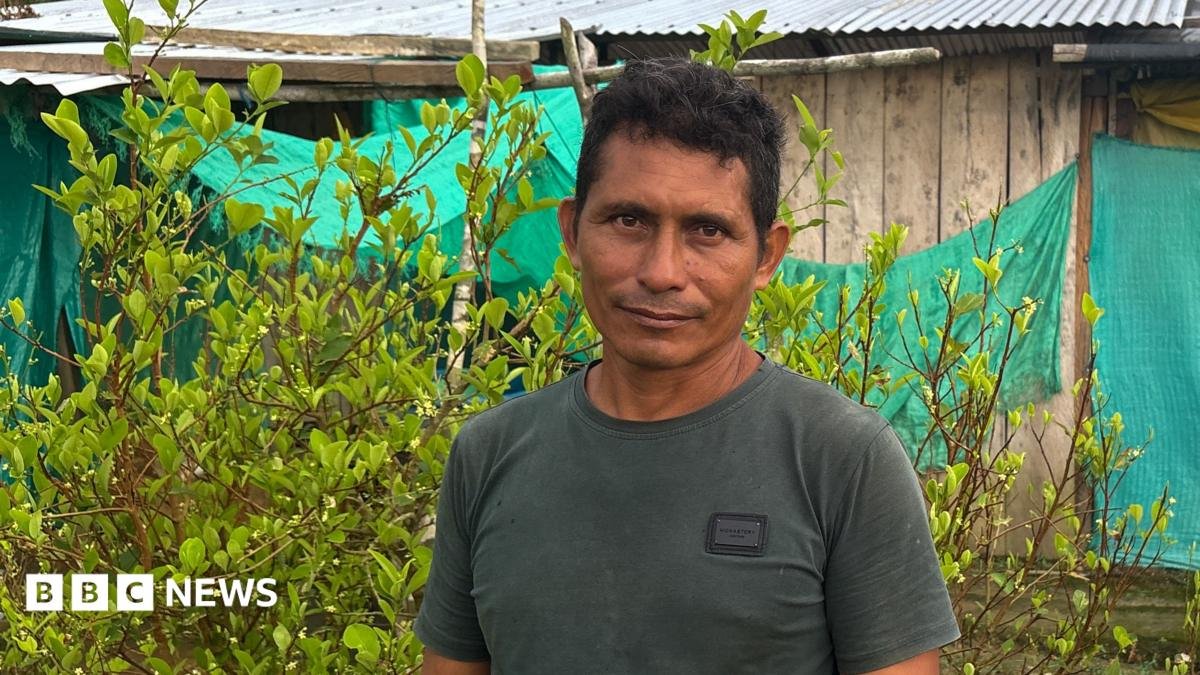
Colombia's 2016 peace accord promised rural families an exit from coca through crop substitution, yet the program has collapsed under delayed payments and absent state support. According to BBC News reporting published this week, farmers in Meta and adjacent Guaviare departments remain trapped in the illicit economy despite clearing land for legal alternatives. This failure has deepened mistrust between Bogotá and its frontier communities.
Coca Farmers Trapped by Colombia's Failed Crop Substitution Promise
Meta, Colombia — Article continues...
The Unfulfilled Promise of Crop Substitution in Meta
This week a BBC News report from Meta, Colombia, highlights how coca farmers like Perea have been unable to leave the industry because the financial support promised under the 2016 peace treaty never arrived in full. The crop substitution program, negotiated between the Colombian government and the FARC, was meant to offer legal alternatives such as coffee and cacao, yet farmers report these crops cannot match coca's income. In Meta's rural zones, where Policia Nacional patrols remain sporadic, the absence of timely payments from the program has left families trapped in the same cycle that the treaty aimed to break.
Under the 2016 peace accord, Colombia pledged roughly $2.2 billion over a decade for crop substitution, targeting 50,000 families with payments of up to $1,800 per hectare cleared of coca plus technical support and market linkages for cacao and coffee. Yet by 2023, only about 30 percent of promised funds had reached Meta communities, with many veredas receiving nothing beyond initial enrollment promises. Farmers like those in Perea's circle were supposed to receive phased disbursements tied to hectare reductions, but bureaucratic delays and security gaps left most households without the second and third installments that could have covered transition costs.
The economics reveal why substitution has faltered. A hectare of coca can yield four to six harvests annually, generating $4,000-$6,000 in net income after minimal inputs, while cacao requires three years to mature and delivers roughly $800-$1,200 per hectare once productive, with coffee offering similar returns only after heavy investment in irrigation and roads that never materialized. Market prices compound the disparity: coca leaf commands steady demand from armed buyers who pay cash on the spot, whereas legal crops face volatile international prices and absent local cooperatives. Without the promised $300 monthly stipends during the transition period, families cannot survive the multi-year gap before legal crops become viable.
Stories from Guaviare's Coca Boom Era
Neighboring Guaviare, which shares a long border with Meta and similar soils suited to coca, presents parallel challenges. According to the same BBC News reporting, Elena Hernández, who moved to the coca-growing region of Guaviare during the boom of the 1990s, describes how the 2016 peace treaty's substitution efforts reached her community only in name. She and neighbors cleared land for legal crops, but without the promised infrastructure or market access from Colombian agencies, yields stayed low. Hernández notes that cacao and coffee simply do not generate the cash flow coca provides, a reality repeated across Guaviare's veredas where Fiscalia investigations into illegal economies continue without offering replacement livelihoods.
Coca arrived in Guaviare in the early 1990s as displaced campesinos fled violence in Boyacá and Meta, drawn by the crop's resilience in acidic soils and the FARC's protection of growers. An estimated 25,000 families migrated to the region between 1992 and 1998, clearing forest at rates exceeding 30,000 hectares annually to plant the leaf that offered quick cash amid Colombia's deepening rural crisis. The boom transformed remote veredas into bustling nodes of the illicit economy, with airstrips and river ports springing up to move paste toward Brazil and Venezuela.
Eradication campaigns launched in 1998 under Plan Colombia devastated these communities. Aerial spraying destroyed not only coca but also food crops and contaminated water sources, prompting mass protests and renewed alliances between growers and armed groups. When manual eradication followed, it triggered cycles of replanting and retaliation that left thousands of families without income for months. The environmental toll has been severe: coca cultivation and the associated lab waste have contributed to the loss of over 200,000 hectares of Amazonian rainforest in Guaviare alone, accelerating biodiversity collapse and altering rainfall patterns that once sustained smallholder agriculture across the region.
Fragile Security Blocking Rural Transitions
Adam Isacson of the Washington Office on Latin America has pointed to the fragile security context that prevents substitution teams from operating safely in many rural areas of Meta and Guaviare. Armed groups still control key routes, making it impossible for government technicians to deliver seedlings or training. This insecurity echoes Latin America's long history of rural conflict, where state presence arrives late and foreign-funded eradication pushes often deepen mistrust between communities and Bogotá.
Without sustained state protection, the very communities that signed on to substitution remain exposed to the same armed actors who profit from coca, turning every delayed payment into another reason for farmers to replant the leaf that guarantees immediate survival.
Surge in Cultivation Under Petro's Government
Coca cultivation has surged under President Gustavo Petro's administration, according to the BBC report, reversing earlier modest declines. US counterdrug experts and Colombian officials continue to argue that farmers will not abandon coca without forced eradication, yet Insight Crime reporting on forced eradication documents how such campaigns spark fresh violence between growers and state forces. In recent days these clashes have flared again in Meta, underscoring how external pressure from Washington clashes with the lived economy of Colombian campesinos who see no viable path out.
President Petro's emphasis on voluntary substitution and rural development marks a sharp departure from Uribe's aerial fumigation, Santos' negotiated but underfunded peace approach, and Duque's renewed forced eradication. UNODC coca cultivation data show cultivation rising from 143,000 hectares in 2021 to 204,000 hectares by 2023, the steepest increase in a decade, concentrated in former FARC territories where state presence remains weak. This reversal underscores how Petro's rhetoric has yet to translate into the security guarantees needed for substitution teams to operate.
Dissident FARC factions and the Clan del Golfo have filled the vacuum, taxing growers and controlling processing labs in Meta and Guaviare. These groups offer farmers protection and immediate payments that Bogotá's programs cannot match, turning the surge into a contest between state promises and armed actors' tangible incentives. Regional comparisons with Peru and Bolivia, where gradual substitution paired with strong local markets succeeded modestly, highlight Colombia's failure to combine development with credible security guarantees.
Local Realities Versus External Demands
Farmers quoted in recent Guardian reporting titled "There is nothing to replace coca" echo the same refrain heard across Meta and Guaviare: there is nothing to replace coca. The 2016 treaty's substitution chapter was designed precisely to address this gap, yet the lack of sustained funding from Colombian institutions has left the program hollow. Skepticism toward foreign intervention runs deep here, as decades of US-backed eradication have repeatedly ignored the cultural and economic fabric of Latin American farming communities that predate any treaty.
These local truths expose the gap between distant policy desks in Washington and Bogotá and the daily arithmetic of survival that every vereda family must solve before the next harvest.
Justice Requires Concrete Delivery, Not Rhetoric
Calls for Latin American sovereignty mean little if Bogotá fails to honor its own commitments to Meta and Guaviare farmers. Perea's experience shows that without reliable payments, technical aid, and secure market links for coffee and cacao, the peace treaty's promise remains an empty document. True justice in Colombia's countryside requires that the government and its international partners finally match words with the resources these communities were promised years ago.
Colombia's experience offers lessons for Ecuador, Peru, and even Mexico's emerging peace experiments: sovereignty collapses without sequenced funding, secure market access, and protection for communities that abandon illicit crops. When substitution programs remain half-funded, armed groups simply inherit the territory, exporting instability across borders and undermining regional integration efforts such as the Amazon Cooperation Treaty.
The broader implication is that peace accords across Latin America will continue to face strain unless governments treat rural economies as central rather than peripheral. Bogotá must now deliver the remaining substitution payments within six months, establish state-backed purchasing centers for cacao and coffee at guaranteed prices, and deploy permanent police and judicial presence in at least 200 priority veredas. Only these concrete steps can convert the 2016 treaty from an unfulfilled document into a replicable model for the hemisphere.
By Elena Vasquez, Staff Writer
This article was produced with AI-assisted research and editorial support. Reporting is based on sources cited in the article.
What's Your Reaction?
 Like
0
Like
0
 Dislike
0
Dislike
0
 Love
0
Love
0
 Funny
0
Funny
0
 Wow
0
Wow
0
 Sad
0
Sad
0
 Angry
0
Angry
0

Latin America Correspondent at Global1.News. Based in Mexico City, covering politics, economics, energy, and culture across the region. Brings an on-the-ground perspective to stories spanning from the Rio Grande to Patagonia.












Comments (0)