
Venezuela Earthquake Recovery: Health Crisis Three Weeks On
Three weeks after the June 24, 2026 doublet, Venezuela’s northern coast remains suspended between rubble and rebuilding. The Mw 7.2 foreshock and Mw 7.5 mainshock, striking 39 seconds apart along the San Sebastián fault system, delivered the strongest shaking the country has felt in over a century. Eight million people felt intense ground motion; nearly 4,734 died, 16,740 were injured, and 6,462 were pulled alive from collapsed structures.
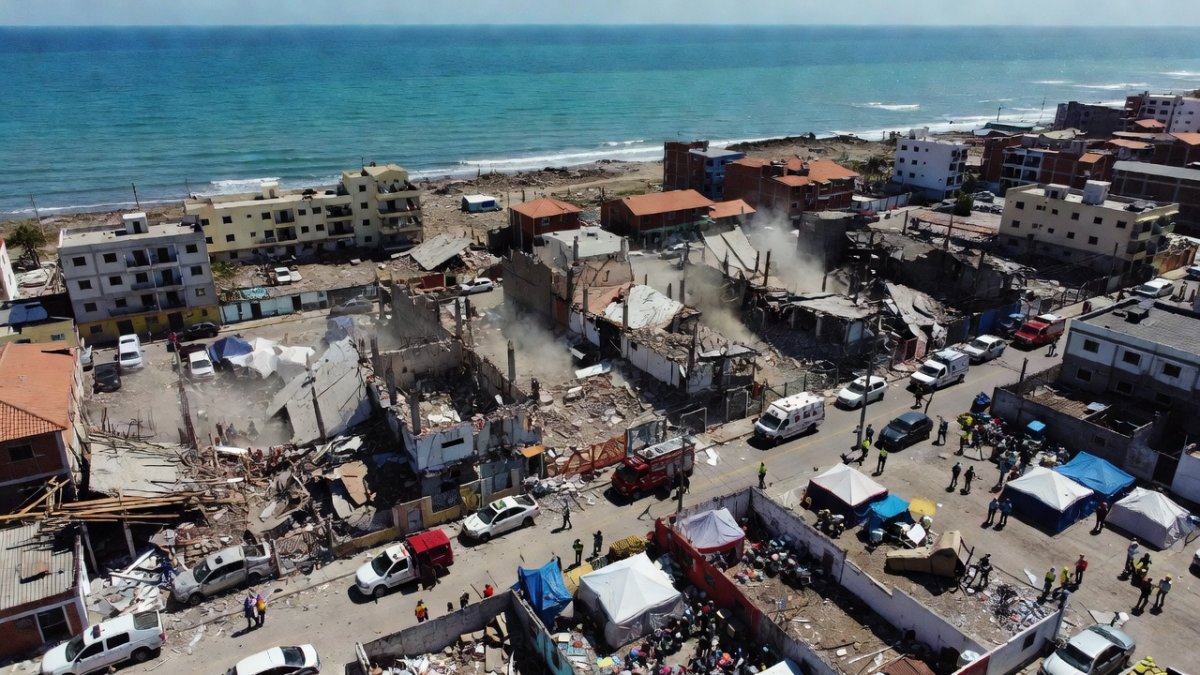
Three weeks after the June 24, 2026 doublet, Venezuela’s northern coast remains suspended between rubble and rebuilding. The Mw 7.2 foreshock and Mw 7.5 mainshock, striking 39 seconds apart along the San Sebastián fault system, delivered the strongest shaking the country has felt in over a century. Eight million people felt intense ground motion; nearly 4,734 died, 16,740 were injured, and 6,462 were pulled alive from collapsed structures. In La Guaira, where the video “Three weeks after Venezuela’s earthquakes, survivors face an uncertain future” was filmed by Noris Soto, residents still sift through pancaked homes with bare hands because fuel for heavy equipment never arrived.
Three Weeks After the Tremors — Venezuela’s Earthquake Recovery Faces a Steep Health Crisis
La Guaira, Venezuela – July 15, 2026 —
Three Weeks After the Tremors — A City in Limbo
La Guaira’s port district looks frozen in the moment the shaking stopped. More than 856 buildings were damaged across the affected zone and 190 collapsed outright, leaving 20,231 people in 107 state-run camps and 128,000 families dependent on emergency rations. Ten thousand tons of food and 20 million liters of water have been distributed, yet isolated coastal hamlets such as Puerto Cruz and Puerto Maya received their first trucks only last week. Two thousand five hundred international rescuers remain on the ground, supported by U.S. Marines handling logistics at the damaged port and Starlink terminals restoring communications. Still, many families continue digging by hand because diesel shortages keep excavators idle. The $24–37 billion economic loss already rivals several years of national GDP, and the human cost compounds daily as aftershocks rattle nerves and unfinished rescues. In Caracas and Miranda the skyline is scarred by tilted high-rises; in Yaracuy near the epicenter, entire villages sit under tarps. Three weeks on, the visible destruction has not yielded to visible recovery—only to a grinding, uncertain limbo that tests every institution in Latin America’s most seismically exposed corridor.
The Health Toll: From Acute Trauma to Chronic Crisis
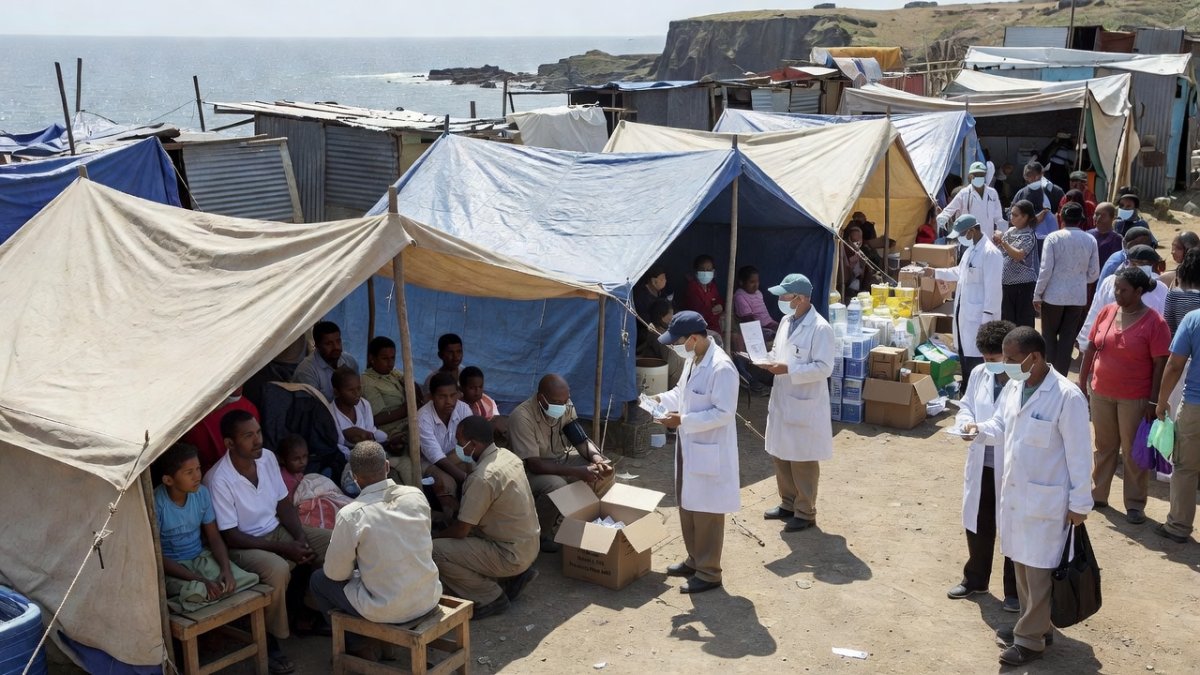
Thirty-eight hospitals in the Caracas metropolitan area suffered structural damage, including Hospital San José in La Guaira, which lost its operating theaters. Thirty-three thousand patients have already been treated by emergency teams, yet the shift from crush injuries to secondary threats is underway. Diarrheal disease is surging in camps lacking reliable sanitation, raising the specter of cholera, typhoid, and hepatitis A. Patients with diabetes, hypertension, and kidney failure who relied on daily dialysis or insulin now queue at mobile clinics that can offer only temporary stabilization. Skin infections and respiratory illnesses spread rapidly in overcrowded tents where ventilation is poor and clean water scarce. International partners have deployed Samaritan’s Purse’s 56-bed facility near Paseo La Guaira, MSF mobile units in Playa Verde, an El Salvador field hospital in Catia La Mar, and a Dominican Republic team that has already treated more than 1,200 people. These units bridge the gap left by collapsed infrastructure, but they cannot replace the chronic-care networks shattered across Aragua, Carabobo, and Miranda. The health system’s pre-existing fragility—exacerbated by years of underinvestment—has turned a natural disaster into a prolonged medical emergency whose full dimensions will unfold over months, not days.
Displacement and Disease: Life in the Camps
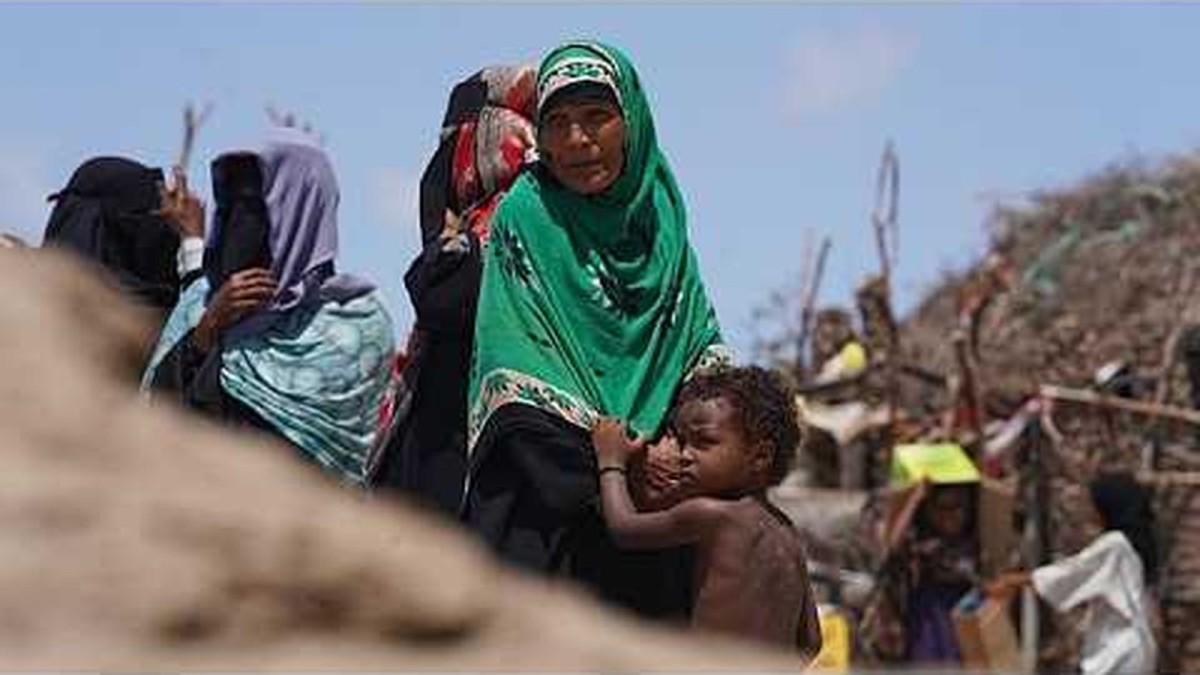
Inside the 107 camps, 20,231 displaced Venezuelans navigate a daily calculus of survival. Tents meant for weeks now house families for an indefinite future, and the density accelerates disease transmission. UNICEF reports 432 schools damaged, depriving children of both education and the protective routine that might buffer psychological harm. Water filters distributed by IsraAID help, yet many shelters still rely on trucked-in supplies that run out before the next delivery. Skin conditions flourish in the heat and humidity; respiratory infections move quickly through families sharing single-room shelters. Chronic patients miss medications, and the elderly, already vulnerable, face accelerated decline. Aid workers note that the 128,000 families receiving assistance represent only the officially registered; countless others remain in informal settlements along the coast where access roads were severed. Three weeks after the doublet, the camps have become microcosms of Venezuela’s broader crisis—places where immediate survival collides with the slow erosion of public health. Without sustained investment in sanitation, vector control, and primary care, these settlements risk becoming permanent reservoirs of preventable illness long after the rubble is cleared.
Hospitals on the Frontline: Field Medicine in La Guaira
Field hospitals have become the backbone of the medical response. Samaritan’s Purse operates a 56-bed unit steps from the damaged port; MSF runs daily mobile clinics in Playa Verde; El Salvador’s team in Catia La Mar and the Dominican Republic contingent together have logged more than 1,200 consultations. These facilities treat the acute injuries that still present—fractures, infections, dehydration—while attempting to restart interrupted chronic care. Yet the scale is daunting: 38 hospitals in greater Caracas alone are compromised, and the national health workforce is stretched thin. International teams rotate through 12-hour shifts, often working without full diagnostic capacity. The 33,000 patients seen in three weeks represent only those who reached care; many more remain in rubble-strewn neighborhoods or distant coastal hamlets. Fuel shortages that hinder heavy rescue equipment also delay medical supply convoys. Despite these constraints, the collaboration between Venezuelan health workers and foreign teams has created pockets of functional care that did not exist before the quake. The question is whether these temporary structures can evolve into a durable network before the next wave of disease or the next aftershock overwhelms them.
Mental Health: Invisible Wounds of the Earthquake
The psychological toll is only beginning to surface. Survivors, rescue workers, and grieving families carry trauma that manifests as insomnia, anxiety, and acute stress reactions. In the camps, children wake screaming from aftershocks; parents recount watching homes collapse in seconds. Rescue personnel who worked 72-hour shifts pulling bodies from rubble now face their own flashbacks. IsraAID has introduced mental-health support alongside water filters, yet demand far exceeds available counselors. The 4,734 deaths left thousands of newly bereaved who lack both ritual space and professional support. In a region where mental-health infrastructure was already minimal, the earthquake has created a silent epidemic layered atop physical injuries and infectious-disease threats. Without systematic screening and sustained psychosocial programs, these invisible wounds will compound economic losses through lost productivity and intergenerational harm. Latin American disaster responses have historically underfunded mental health; Venezuela’s recovery offers a chance to correct that pattern before the human cost multiplies further.
What This Means for Latin America’s Seismic Preparedness
The June 24 doublet tested every assumption about regional readiness. The Caribbean–South American plate boundary has long been known to host shallow, high-magnitude events, yet building codes, early-warning systems, and hospital retrofitting remain uneven across Venezuela, Colombia, and Trinidad. Eight million people felt strong shaking; the 190 collapsed buildings and 38 damaged hospitals reveal how little margin exists when critical infrastructure sits on soft soil or outdated foundations. International rescue deployment of 2,500 personnel and the rapid arrival of field hospitals demonstrate solidarity, but also highlight dependence on external capacity. Starlink and port logistics provided by U.S. Marines underscore the value of pre-positioned communications and supply chains. For the wider region, the lesson is clear: investment in ductile infrastructure, redundant water systems, and community-level medical stockpiles must precede the next event rather than follow it. Venezuela’s tragedy is a stress test whose results should inform every capital from Mexico City to Santiago.
The Bottom Line — Recovery Will Take Years
Three weeks after the strongest shaking in a century, Venezuela confronts a recovery measured not in months but in years. The $24–37 billion damage bill, 20,231 people still in camps, and 432 damaged schools together sketch a horizon that extends well beyond any single administration. Health systems must be rebuilt while simultaneously managing diarrheal surges, chronic-care gaps, and mental-health trauma. International aid has delivered critical breathing room—field hospitals, water filters, rescue expertise—but sustained national and regional commitment is required to convert temporary facilities into permanent resilience. The people of La Guaira, Caracas, and Yaracuy have already shown extraordinary endurance; their continued survival depends on whether governments and neighbors treat this doublet not as an isolated tragedy but as a mandate to harden every vulnerable corridor along Latin America’s seismic margins. Recovery will be long, costly, and uneven, yet it remains the only path out of limbo.
By Elena Vasquez, Staff WriterThis article was produced with AI-assisted research and editorial support. Reporting is based on sources cited in the article.
What's Your Reaction?
 Like
0
Like
0
 Dislike
0
Dislike
0
 Love
0
Love
0
 Funny
0
Funny
0
 Wow
0
Wow
0
 Sad
0
Sad
0
 Angry
0
Angry
0
Latin America Correspondent at Global1.News. Based in Mexico City, covering politics, economics, energy, and culture across the region. Brings an on-the-ground perspective to stories spanning from the Rio Grande to Patagonia.











Comments (0)