
14-Point US-Iran MOU: Trump-Pezeshkian Framework Analysis
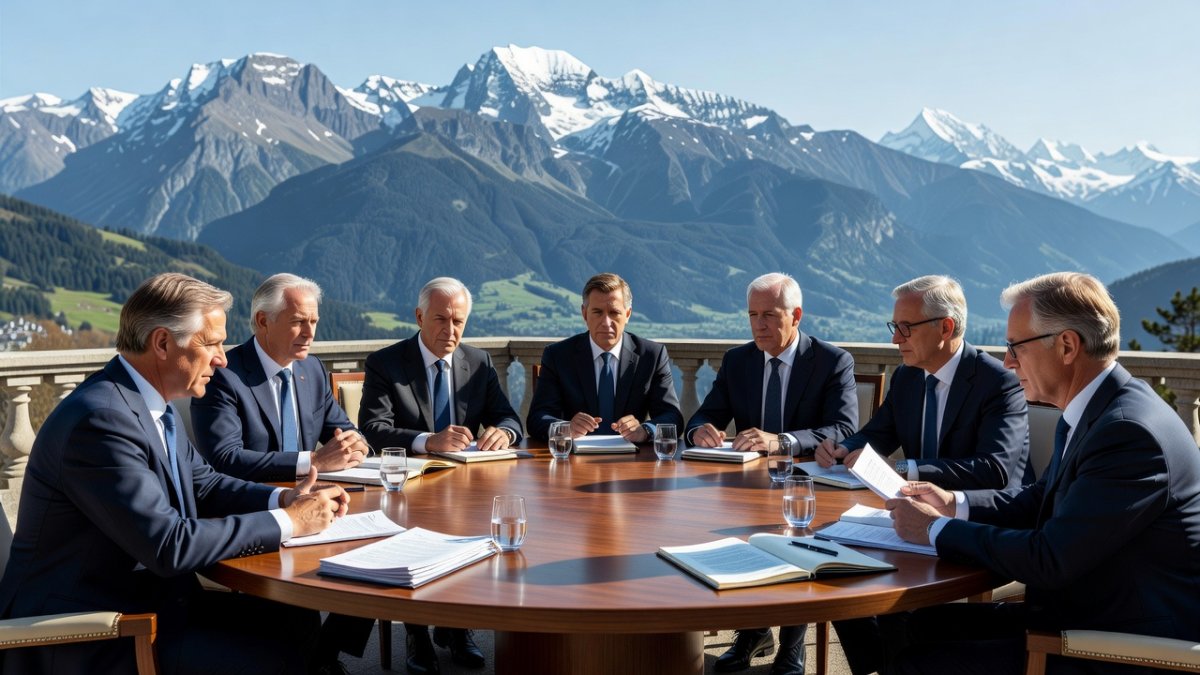
The 110-day war that began on February 28, 2026, with US-Israeli strikes on Iranian targets has ended with the signing of a historic 14-point Memorandum of Understanding at the G7 summit in Evian, France. President Donald Trump and Iranian President Masoud Pezeshkian affixed their signatures to the document on June 17, triggering a 60-day negotiation window toward a permanent a
The 110-day war that began on February 28, 2026, with US-Israeli strikes on Iranian targets has ended with the signing of a historic 14-point Memorandum of Understanding at the G7 summit in Evian, France. President Donald Trump and Iranian President Masoud Pezeshkian affixed their signatures to the document on June 17, triggering a 60-day negotiation window toward a permanent agreement and a formal ceremony set for June 19 in Geneva.
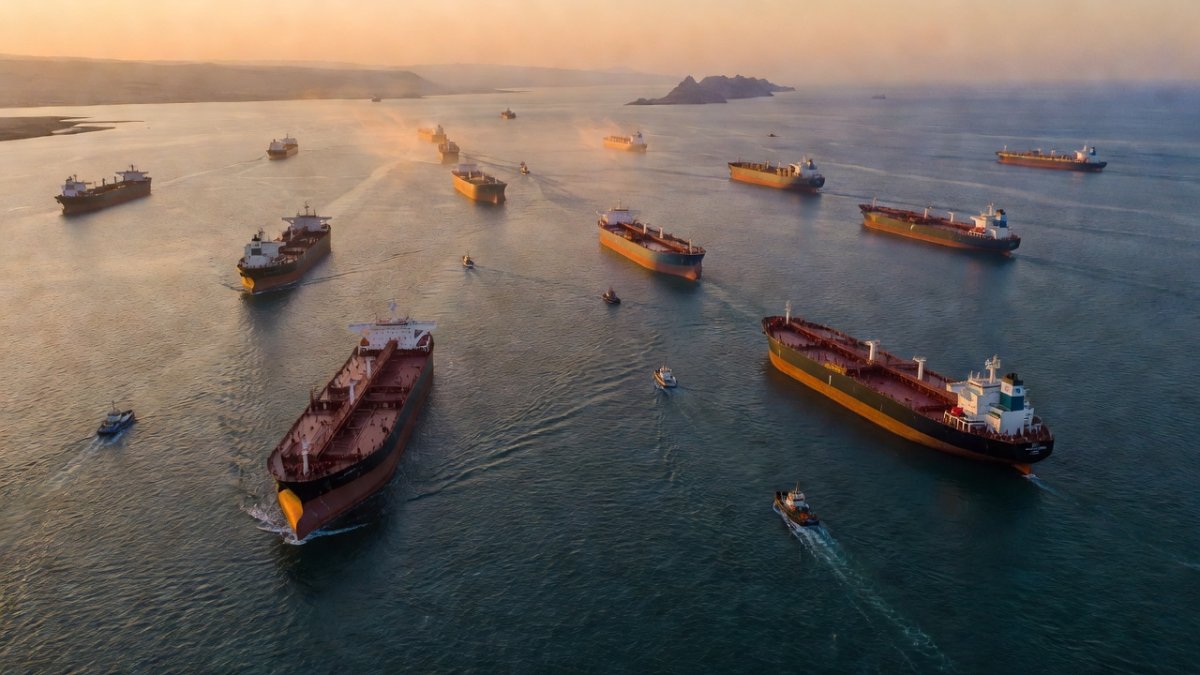
Iran's effective control of the Strait of Hormuz during the conflict halted significant volumes of global oil and gas transit, driving energy prices higher and prompting Washington to invoke the Defense Production Act to replenish depleted munitions stockpiles. Trump publicly noted that US strategic energy reserves would "run out in about four weeks" without restored maritime access through the narrow waterway.
14-Point US-Iran MOU: Inside the Trump-Pezeshkian Framework That Ended the 110-Day War
Beirut, Lebanon – June 18, 2026 — Al Arabiya English exclusively obtained the 14-point draft framework earlier this week, sparking intense debate among regional capitals. The analysis that follows draws on that document, the expert panel discussion hosted by Global News Today with former US Deputy Assistant Secretary of Defense Mick Mulroy, former US Ambassador to Azerbaijan Matthew Bryza, and Daily Telegraph columnist Jake Wallis Simons, as well as official statements from Washington, Tehran, and Riyadh.
Core Provisions and the Sequencing of Concessions
The MOU establishes a carefully choreographed roadmap. Points 1 and 3 require an immediate permanent halt to fighting across all fronts, including Lebanon, and the reopening of the Strait of Hormuz to commercial traffic within two weeks once the US naval blockade is lifted. Point 4 guarantees Iran's territorial integrity and mandates the withdrawal of US and allied forces from occupied Iranian territory.
Point 6 commits the United States to a $300 billion reconstruction and economic development package for Iran — a figure that rivals the combined annual budgets of several Gulf states. Point 7 schedules the phased termination of all UN Security Council, IAEA Board of Governors, and unilateral US primary and secondary sanctions. Point 10 directs the US Treasury to issue waivers for Iranian crude oil and petroleum exports immediately upon signing, while point 11 releases frozen Iranian assets for unrestricted use through Iran's Central Bank.
Energy Markets and Gulf State Calculations
The restoration of Strait of Hormuz traffic directly affects Saudi Arabia, the UAE, and Qatar, whose economic diversification strategies — from Vision 2030 to Dubai's post-oil transition — depend on stable energy revenues and predictable maritime security. Saudi Foreign Minister Prince Faisal bin Farhan stated that any final deal must address regional security concerns beyond bilateral US-Iran issues, signaling Riyadh's insistence on a voice in the post-war order.
Gulf sovereign wealth funds, holding an estimated US$3 trillion in combined assets, are already modeling scenarios for post-war investment flows into Iranian reconstruction projects. The MOU's status-quo clause (point 9) prevents new US sanctions or additional force deployments during the 60-day period, giving Tehran breathing room to maintain its current nuclear program while IAEA-supervised discussions on enrichment proceed in parallel.
Nuclear Terms and the Verification Architecture
Point 8 reaffirms Iran's commitment not to procure or develop nuclear weapons, with the disposition of enriched uranium stockpiles to be resolved through IAEA-supervised down-blending on Iranian soil. The specifics of enrichment limits and other nuclear-related matters are deferred to the final deal — a deliberate ambiguity that preserves negotiating flexibility for both sides.
Point 14 envisions endorsement of the final agreement through a binding UN Security Council resolution, providing Tehran with legal assurances against future unilateral reversals. Point 12 creates an executive monitoring body to track MOU implementation and subsequent compliance. Speaking on Al Arabiya English, former Deputy Assistant Secretary of Defense Mick Mulroy emphasized that verification timelines and the sequencing of sanctions relief will determine whether the arrangement holds — warning that "the devil is in the implementation details."
Regional Reactions and Strategic Calculus
Israel and Lebanon remain central to implementation. Point 1's explicit reference to Lebanon signals that Iranian-backed Hezbollah operations must cease alongside direct US-Iran hostilities. Tensions between Trump and Israeli Prime Minister Benjamin Netanyahu over the pace and scope of de-escalation have surfaced publicly, with Netanyahu expressing reservations about the speed of sanctions relief and the lack of explicit provisions addressing Iran's missile program.
Former US Ambassador Matthew Bryza, in the Al Arabiya English panel, noted that the MOU represents a "mutual exhaustion agreement" — neither side achieved a decisive military victory, and both face acute domestic economic pressures. Iran views the framework as validation of its regional power status after surviving 110 days of sustained bombardment. Washington presents it as a major diplomatic achievement that averts prolonged military entanglement while securing critical energy transit routes.
The $300 Billion Question and Sunni-Shia Dynamics
The provision of $300 billion for Iranian reconstruction has drawn scrutiny from Gulf capitals already concerned about Iranian regional ambitions. Sunni-Shia geopolitical competition, long dormant beneath the surface of Gulf-Iran relations, re-emerges in this context: a Reconstruction Iran flush with capital and sanctions relief could alter the regional balance of power that the Gulf states have maintained through their own diversification programs and foreign policy alignments.
Turkey, another regional actor with ambitions in the Persian Gulf and the Levant, has watched the MOU's evolution closely. Ankara's relationship with Tehran is characterized by cooperation in some areas and competition in others — particularly in Syria, Iraq, and the Caucasus. The MOU's silence on these overlapping theaters leaves room for future friction.
Path Forward and Remaining Uncertainties
Points 5 and 13 link prisoner releases and asset access to the start of final-deal negotiations on the remaining paragraphs, creating a conditional framework that ties humanitarian outcomes to strategic progress. If the Geneva ceremony proceeds as scheduled on June 19, the executive monitoring mechanism will begin operating within days, tasked with verifying compliance across a dozen overlapping commitments.
The $300 billion reconstruction pledge and full sanctions termination remain contingent on verified compliance with the initial framework. Whether the 14-point MOU can bridge the gap between Iranian demands for ironclad security guarantees and US requirements for verifiable, irreversible nuclear restraint will be tested in the weeks ahead. Columnist Jake Wallis Simons, writing for The Daily Telegraph and speaking on Al Arabiya English, noted that "the scale of this deal is unprecedented — so is the scale of the risk if it collapses."
Regional Implications
The US-Iran MOU reshapes the Middle East's strategic landscape in real time. For Gulf states, the priority is ensuring that Iranian reconstruction does not translate into regional hegemony. For Israel, the absence of explicit missile-program restrictions is a gap that will feature prominently in Netanyahu's pushback. For energy markets, the reopening of the Strait of Hormuz — potentially within two weeks — signals a stabilization of supply that could ease the price volatility that has characterized the 110-day conflict.
The 60-day negotiation window will reveal whether the 14-point framework is a genuine breakthrough or a temporary pause in a deeper structural confrontation. What is clear is that the Middle East has entered a new phase — one in which Iran's status as a regional power is formally acknowledged, the Gulf's economic diversification proceeds under altered assumptions, and the United States navigates a strategic recalibration with implications that extend well beyond the Persian Gulf.
By Malik Hassan, Staff Writer
This article was produced with AI-assisted research and editorial support. Reporting is based on sources cited in the article.
What's Your Reaction?
 Like
0
Like
0
 Dislike
0
Dislike
0
 Love
0
Love
0
 Funny
0
Funny
0
 Wow
0
Wow
0
 Sad
0
Sad
0
 Angry
0
Angry
0

Middle East Correspondent at Global1.News. Based in Beirut, covering politics, conflict, energy, and society across the Middle East. Brings context and depth to a region often reduced to headlines.











Comments (0)