
Wat Phra Mahathat Woramahawihan: Thailand's New UNESCO Site
In the serene landscapes of southern Thailand, an ancient temple complex has long stood as a testament to enduring faith and cultural exchange. Wat Phra Mahathat Woramahawihan now joins the global stage as Thailand's ninth UNESCO World Heritage site, celebrating its 1,500 years of spiritual life. This honor brings quiet pride to the communities who have nurtured its traditions across generations.
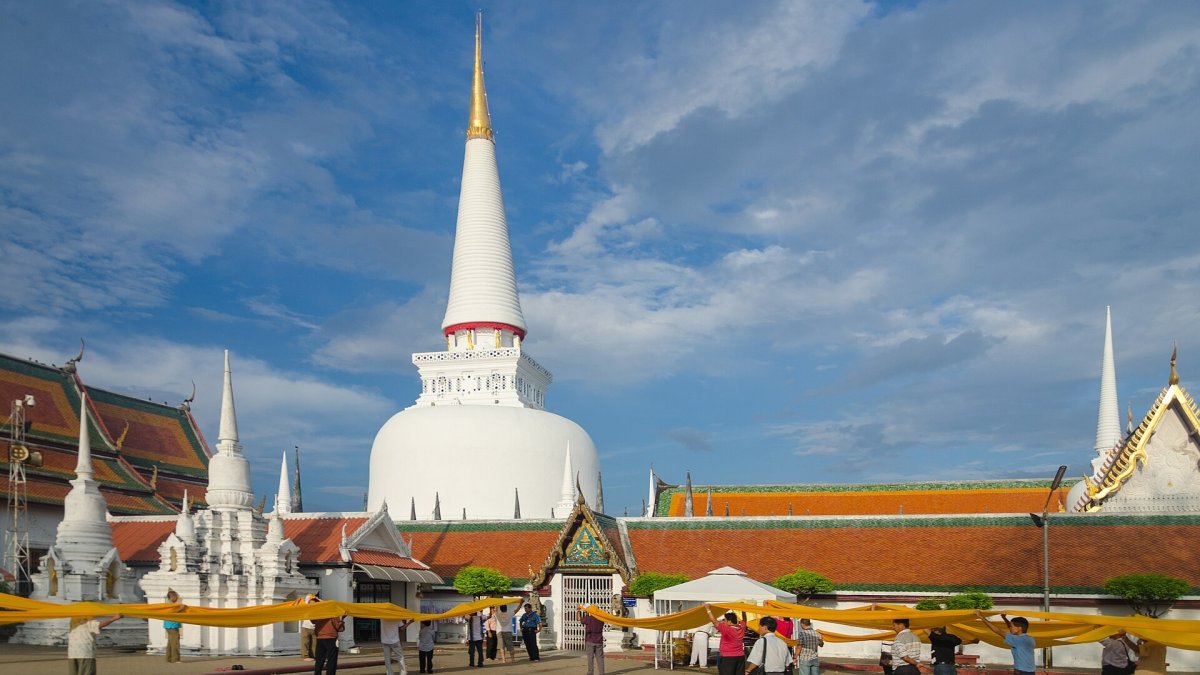
In the serene landscapes of southern Thailand, an ancient temple complex has long stood as a testament to enduring faith and cultural exchange. Wat Phra Mahathat Woramahawihan now joins the global stage as Thailand's ninth UNESCO World Heritage site, celebrating its 1,500 years of spiritual life. This honor brings quiet pride to the communities who have nurtured its traditions across generations.
Wat Phra Mahathat: A 1,500-Year Journey to UNESCO Recognition
Nakhon Si Thammarat, Thailand —
Thailand Welcomes Wat Phra Mahathat Woramahawihan as Ninth UNESCO World Heritage Site
Nakhon Si Thammarat stands at the center of southern Thailand where Wat Phra Mahathat Woramahawihan has served as a place of worship for more than 1,500 years. This week the temple received recognition as Thailand's ninth UNESCO World Heritage site and the first such designation in the southern region. The announcement highlights the temple's role as a living record of religious exchange and maritime connections that shaped Southeast Asia.
Local communities in Nakhon Si Thammarat have maintained daily rituals at the temple for generations. Devotees continue to visit the Phra Borom That Chedi which they believe enshrines relics of the Buddha. This recognition strengthens the bond between the temple and the people who have preserved its traditions through centuries of change.
Maritime Trade Routes and Cultural Influences at the Malay Peninsula Site
Wat Phra Mahathat Woramahawihan sits on the Malay Peninsula between the Indian and Pacific oceans. Ancient maritime trade routes once connected this location to distant lands bringing merchants along with religious beliefs artistic styles and architectural influences from across Asia. The temple absorbed elements from Brahmanism Hinduism Mahayana Buddhism and Theravada Buddhism over time.
Cultural connections reached from northeastern India and Sri Lanka to central Java and Mon communities in southern Myanmar. These influences merged into a unique architectural and spiritual identity that later spread throughout Thailand and other parts of Southeast Asia. Thai readers recognize this history as part of the broader story of how Buddhism traveled along sea lanes to shape regional identity.
The Malay Peninsula’s position between the Indian Ocean and the South China Sea placed Nakhon Si Thammarat at the heart of ancient trade networks linking India and China. Merchants and monks sailed these routes for centuries, carrying not only spices and textiles but also Buddhist scriptures and artistic styles that gradually shaped local religious practices. This crossroads location allowed southern Thailand to absorb diverse influences while remaining firmly rooted in Theravada Buddhism.
Indian merchants introduced early Buddhist iconography, Persian traders brought stories and architectural motifs, and Chinese sailors contributed porcelain offerings and temple decorations still visible today. These exchanges created a distinctly southern Thai Buddhist identity marked by graceful chedi designs and vibrant festivals that differ from the northern traditions centered around Lanna kingdoms. The result is a warm, inclusive spiritual culture that continues to welcome visitors from neighboring Malaysia and Indonesia.
The Phra Borom That Chedi and Its Ancient Foundations
At the heart of the temple complex stands the Phra Borom That Chedi a towering stupa that draws pilgrims from across southern Thailand. According to local tradition the site began as an ancient sand dune known as Hat Sai Kaeo where Buddhist relics were first discovered. A major religious monument was later constructed there creating the foundation for the temple that exists today.
The stupa remains central to Buddhist practice in Nakhon Si Thammarat. Devotees from nearby districts travel to the temple to pay respects and participate in ceremonies that link present-day worship with the site's 1,500-year history. This continuity reflects the enduring strength of Theravada Buddhism in southern Thai communities.
In Theravada Buddhism, relics of the Buddha serve as tangible links to the enlightened teacher, allowing devotees to feel his enduring presence and teachings. Thai Buddhists across generations visit the Phra Borom That Chedi to offer flowers, incense, and prayers, strengthening their faith through this direct connection to the historical Buddha. The relics housed within the chedi at Wat Phra Mahathat in Nakhon Si Thammarat embody centuries of spiritual continuity that bind southern Thai communities to their religious heritage.
Nakhon Si Thammarat emerged as a vital center for Buddhist learning in southern Thailand because of its strategic location along ancient maritime routes. Monks and scholars traveled here from neighboring regions, establishing temples and scriptoria that preserved Pali texts and Theravada traditions. Local communities still gather at the temple for merit-making ceremonies, finding spiritual solace and a sense of belonging that pilgrims from across ASEAN carry home with them.
Living Traditions Including the Hae Pha Khuen That Festival and Nora Performing Art
UNESCO recognized Wat Phra Mahathat Woramahawihan as a living cultural site where traditions continue without interruption. The annual Hae Pha Khuen That festival brings devotees who carry long pieces of cloth to wrap around the stupa as an act of devotion. This ritual remains an active expression of faith practiced by local families each year.
The temple also connects to Nora a traditional performing art form from southern Thailand that reflects centuries of local beliefs and storytelling. Performers in Nakhon Si Thammarat continue to present Nora stories that blend spiritual themes with community history. These practices demonstrate how the temple supports both religious life and cultural expression in the region.
The Hae Pha Khuen That festival takes place each year when communities from Nakhon Si Thammarat and surrounding districts gather to wrap the great chedi in new layers of sacred cloth. Families prepare for weeks, weaving and embroidering the cloth together while elders recount stories of the temple’s founding. The procession moves slowly through the streets, accompanied by chanting and traditional music, creating a shared moment of devotion that strengthens bonds across generations.
Nora, the graceful southern Thai performing art recognized by UNESCO as Intangible Cultural Heritage in 2021, remains deeply connected to Wat Phra Mahathat. Performers often stage shows in the temple grounds during festivals, blending dance, music, and storytelling that honor local Buddhist values. Young people in Nakhon Si Thammarat now learn Nora through community workshops and school programs, ensuring the art form stays alive while adapting gently to modern life.
Local youth groups organize regular training sessions and cultural camps where teenagers practice both Nora and temple rituals alongside their elders. These efforts help preserve the living heritage of Wat Phra Mahathat while giving young people a sense of pride in their southern Thai identity. Through these activities, the temple continues to serve as a gentle anchor for community life in a changing world.
Seventeen Years of Preparation Leading to World Heritage Status
The journey toward World Heritage status began in 2009 and required 17 years of preparation by Thai authorities and local stakeholders. This sustained effort underscores the temple's importance not only to Nakhon Si Thammarat but also to the wider history of Southeast Asia. Officials worked to document the site's architectural features and ongoing cultural practices for international review.
The recognition protects both the ancient monument and the living heritage that surrounds it including rituals local knowledge and cultural practices passed down through generations. Communities in southern Thailand now see their traditions placed on the global stage alongside other ASEAN heritage sites.
Implications for Thai Tourism Cultural Diplomacy and Regional Identity
The designation as Thailand's ninth UNESCO World Heritage site opens new opportunities for cultural tourism in Nakhon Si Thammarat. Visitors from across ASEAN and beyond can now explore the temple's maritime history and Buddhist traditions in greater numbers. This development supports local economies while encouraging respectful engagement with southern Thai culture.
For Thailand the recognition strengthens cultural diplomacy by showcasing how diverse influences from India Sri Lanka Java and Myanmar contributed to a distinct Thai Buddhist identity. The temple's story highlights the country's role as a crossroads of Southeast Asian heritage. Thai readers understand this achievement as a source of national pride that reinforces regional connections and preserves the gentle spiritual practices that define southern communities.
The UNESCO World Heritage designation is expected to draw more visitors to Nakhon Si Thammarat, boosting tourism across southern Thailand in the coming years. Travelers seeking authentic cultural experiences will discover the temple alongside nearby beaches and traditional markets, spreading economic benefits to local guesthouses, restaurants, and artisans. This gentle growth can help sustain community livelihoods while encouraging careful preservation of the site.
Compared with the ancient ruins of Ayutthaya and Sukhothai, which already attract large crowds, Nakhon Si Thammarat offers a living temple still central to daily Buddhist practice. Like the historic temples of Chiang Mai, it provides visitors with opportunities to witness ongoing traditions rather than only archaeological remains. For local communities, the recognition promises new opportunities for sustainable tourism that honors both heritage and daily life in southern Thailand.
By Ann Srisawat, Staff WriterThis article was produced with AI-assisted research and editorial support. Reporting is based on sources cited in the article.
What's Your Reaction?
 Like
0
Like
0
 Dislike
0
Dislike
0
 Love
0
Love
0
 Funny
0
Funny
0
 Wow
0
Wow
0
 Sad
0
Sad
0
 Angry
0
Angry
0

Southeast Asia Correspondent at Global1.News. Based in Bangkok, covering Thai and Southeast Asian politics, economy, technology, and culture. Deep regional perspective on one of the world's most dynamic regions.












Comments (0)