
CXMT's IPO Surge Reflects Deeper Shifts in Semiconductor Geopolitics
When ChangXin Memory Technologies (CXMT) listed on the Shanghai Stock Exchange on Monday, its shares surged nearly 470 percent — making it mainland China's most valuable publicly traded company with a valuation of approximately 3.3 trillion yuan ($487 billion).
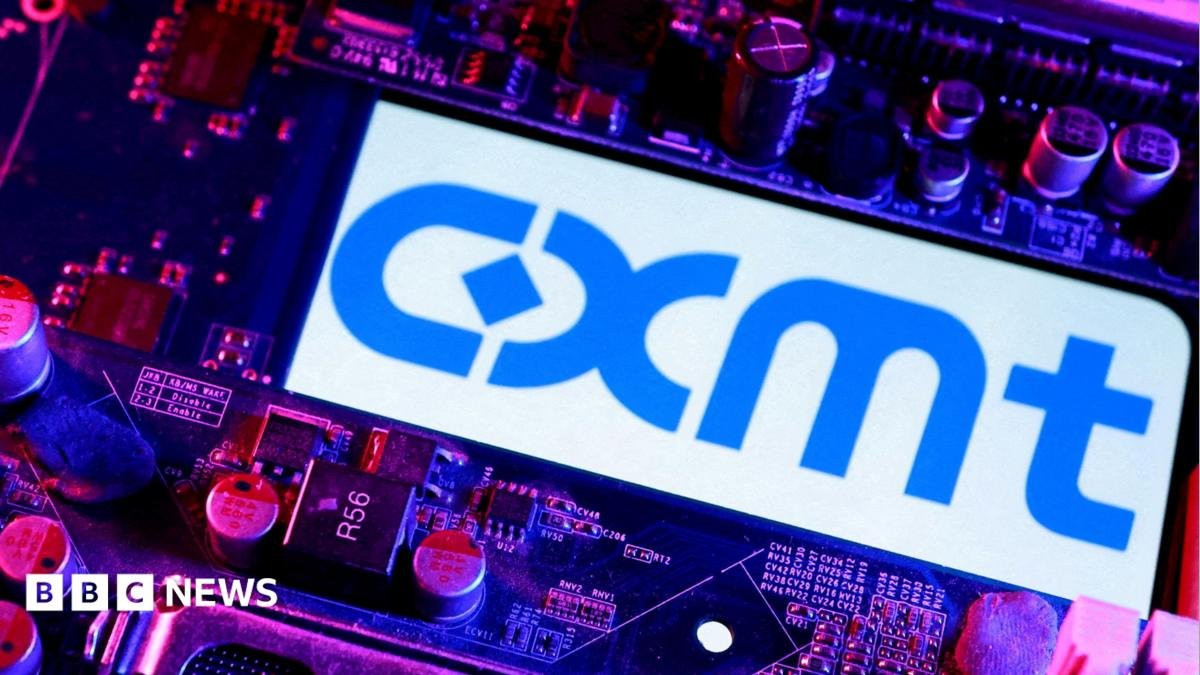
When ChangXin Memory Technologies (CXMT) listed on the Shanghai Stock Exchange on Monday, its shares surged nearly 470 percent — making it mainland China's most valuable publicly traded company with a valuation of approximately 3.3 trillion yuan ($487 billion). The blockbuster debut of the Hefei-based DRAM manufacturer marks a pivotal moment in Beijing's campaign for semiconductor self-sufficiency, raising urgent questions about the trajectory of US-China technology competition and the future architecture of global memory chip supply chains.
CXMT's IPO Surge Reflects Deeper Shifts in Semiconductor Geopolitics
Hefei, Anhui Province — Article continues below.
China's Semiconductor Self-Sufficiency Push
The debut of ChangXin Memory Technologies on the Shanghai Stock Exchange underscores Beijing's sustained drive toward technological autonomy in critical sectors. Founded in 2016 and headquartered in Hefei, the firm's rapid valuation growth to around 3.3 trillion yuan aligns with national priorities outlined in the 14th Five-Year Plan, which emphasizes domestic innovation in advanced manufacturing. This push reflects a strategic calculus aimed at reducing vulnerabilities in supply chains that have long depended on external suppliers. Chinese investors have demonstrated clear preference for homegrown enterprises capable of producing DRAM chips essential for data centers and mobile devices, signaling domestic support for initiatives that prioritize internal capabilities over reliance on foreign technology.
US-China Tech War Context
Developments at CXMT occur against the backdrop of ongoing restrictions imposed by the United States on advanced semiconductor exports. These measures, administered through entities such as the Department of Commerce, seek to limit China's access to cutting-edge fabrication tools and designs. The timing of the IPO, amid a broader global tech market downturn, highlights how such controls have accelerated Beijing's focus on indigenous alternatives. Foreign policy doctrine in China frames these restrictions as external pressures that necessitate accelerated domestic investment, with the Ministry of Foreign Affairs often articulating concerns over technology containment strategies. The result is a recalibration of priorities that favors firms like CXMT in building resilience within the national innovation ecosystem.
US Department of Commerce export controls have systematically constrained Chinese DRAM advancement by placing key firms on the BIS entity list and enforcing stringent Export Administration Regulations. The 2022 CHIPS Act allocated substantial subsidies to US allies while the October 2022 controls banned shipments of advanced lithography and deposition tools to China. Subsequent 2023 and 2024 updates further restricted equipment capable of sub-14nm processes, directly targeting memory fabrication. CXMT responded by cultivating an indigenous supply chain anchored in domestic vendors such as NAURA Technology Group for etching systems and AMEC for chemical vapor deposition equipment. This pivot reduced reliance on foreign suppliers and accelerated qualification of locally produced tools, allowing the firm to sustain yield improvements despite external pressure. The resulting architecture demonstrates how targeted sanctions can inadvertently catalyze parallel technological ecosystems within the sanctioned economy.
CXMT's Market Position Against Global DRAM Oligopoly
CXMT enters a market long dominated by Samsung Electronics, SK Hynix, and Micron Technology, which together account for approximately 90 percent of global DRAM production. The company's shares surged nearly 470 percent on debut, with only 7 percent available for trading, illustrating investor enthusiasm for a new entrant despite the concentrated competitive landscape. Headquartered in Anhui Province under Chairman Zhu Yiming, CXMT manufactures memory chips for AI infrastructure and consumer electronics. Its emergence challenges the established oligopoly by offering an alternative supply source rooted in mainland China, though scaling production to rival the incumbents will require sustained technological advancement and capital allocation.
Beijing's Industrial Policy
Industrial policy frameworks in China, including the Dual Circulation strategy, explicitly support the expansion of domestic semiconductor capacity. CXMT's plans to deploy IPO proceeds toward increased production and research and development mirror these directives, which aim to integrate advanced manufacturing more deeply into the domestic economy while fostering external linkages on favorable terms. The National Development and Reform Commission has historically guided such investments to align with broader goals of economic security. This approach reflects a deliberate effort to cultivate strategic industries that can withstand external shocks, positioning firms like CXMT as instruments of national technological upgrading rather than purely commercial entities.
Beijing has channeled capital through the National Integrated Circuit Industry Investment Fund, known as the Big Fund. Phase I raised approximately $20 billion in 2014, Phase II mobilized $29 billion in 2019, and Phase III secured $47.5 billion in 2024. These vehicles prioritize memory and logic projects aligned with national self-reliance goals. The Shanghai STAR Market provides an additional listing venue that accelerates IPO timelines for strategic semiconductor companies while relaxing profitability thresholds. MOFCOM coordinates export licensing and investment screening, while the NDRC integrates funding allocations into five-year plans. Together these mechanisms create a coordinated capital pipeline that lowers financing costs for firms such as CXMT and aligns corporate roadmaps with state objectives in advanced memory production.
Implications for US Export Controls
The valuation achieved by CXMT raises questions about the long-term effectiveness of US export controls in constraining China's semiconductor progress. While these controls have restricted access to certain equipment and intellectual property, the firm's market performance indicates that domestic capital markets can mobilize resources to support alternative development pathways. Policymakers in Washington may need to reassess the scope and calibration of restrictions, as targeted measures have not prevented the emergence of competitive players in memory chip segments. The strategic calculus here involves balancing the desire to maintain technological leadership against the risk of accelerating China's self-reliance efforts through perceived exclusion from global markets.
CXMT’s rapid progress illustrates the boomerang effect of US restrictions, whereby sanctions compress development timelines rather than halt them. SMIC’s 2021 achievement of 7nm process capability under similar constraints offers a precedent: external pressure prompted accelerated process optimization and equipment substitution. The innovation-at-a-distance theory posits that sanctions raise the cost of inaction, compelling Chinese engineers to pursue alternative architectures and domestic tooling at greater speed. CXMT’s trajectory suggests that memory nodes may follow the same pattern, eroding the long-term efficacy of unilateral controls. Policymakers in Washington now confront the possibility that export restrictions have shortened rather than extended the technological lead of US-aligned supply chains.
AI Boom Driving Memory Demand
Global demand for DRAM is being propelled by the expansion of artificial intelligence applications in data centers and edge computing devices. CXMT's product focus positions it to benefit from this trend, as memory components form a foundational element of AI hardware ecosystems. The surge in share value during a period of wider tech sector weakness suggests that investors anticipate sustained growth in memory requirements driven by computational intensity. This dynamic intersects with China's domestic priorities, where AI development is integrated into national strategies for economic transformation and industrial modernization, creating a feedback loop between technological demand and policy support for local producers.
What This Means for Global Semiconductor Supply Chains
The rise of CXMT introduces new variables into international semiconductor supply chains that have historically centered on East Asian and North American hubs. As production capacity expands in mainland China, downstream manufacturers may gain additional sourcing options, potentially altering procurement patterns and risk assessments. This shift carries implications for trade flows and investment decisions, with firms evaluating diversification strategies amid geopolitical uncertainties. The broader strategic environment suggests that supply chain resilience will increasingly depend on multiple regional centers of excellence rather than concentrated dependencies, influencing how governments and corporations navigate the intersection of technology, security, and commerce in the years ahead.
A viable China-based DRAM producer introduces second-order effects across the memory industry. Samsung and SK Hynix face intensified price competition in mid-tier segments, while Tokyo Electron and ASML encounter reduced visibility into future Chinese orders. Apple, Dell, and other OEMs are already formalizing dual-sourcing strategies that allocate portions of DRAM procurement to CXMT alongside established suppliers. This diversification mitigates geopolitical risk but increases qualification overhead and inventory complexity. Over time, the emergence of a third major DRAM source may compress margins industry-wide and prompt realignment of long-term supply agreements toward greater geographic balance.
By Prof. Marcus Chen, Staff WriterThis article was produced with AI-assisted research and editorial support. Reporting is based on sources cited in the article.
What's Your Reaction?
 Like
0
Like
0
 Dislike
0
Dislike
0
 Love
0
Love
0
 Funny
0
Funny
0
 Wow
0
Wow
0
 Sad
0
Sad
0
 Angry
0
Angry
0

World Politics Analyst at Global1.News. Based in Beijing, covering US-China relations, global trade, and geopolitical strategy. Brings deep analytical perspective to the power dynamics shaping international affairs.













Comments (0)