
Nicaragua Ends Elections as China Ties Grow: Mexico View
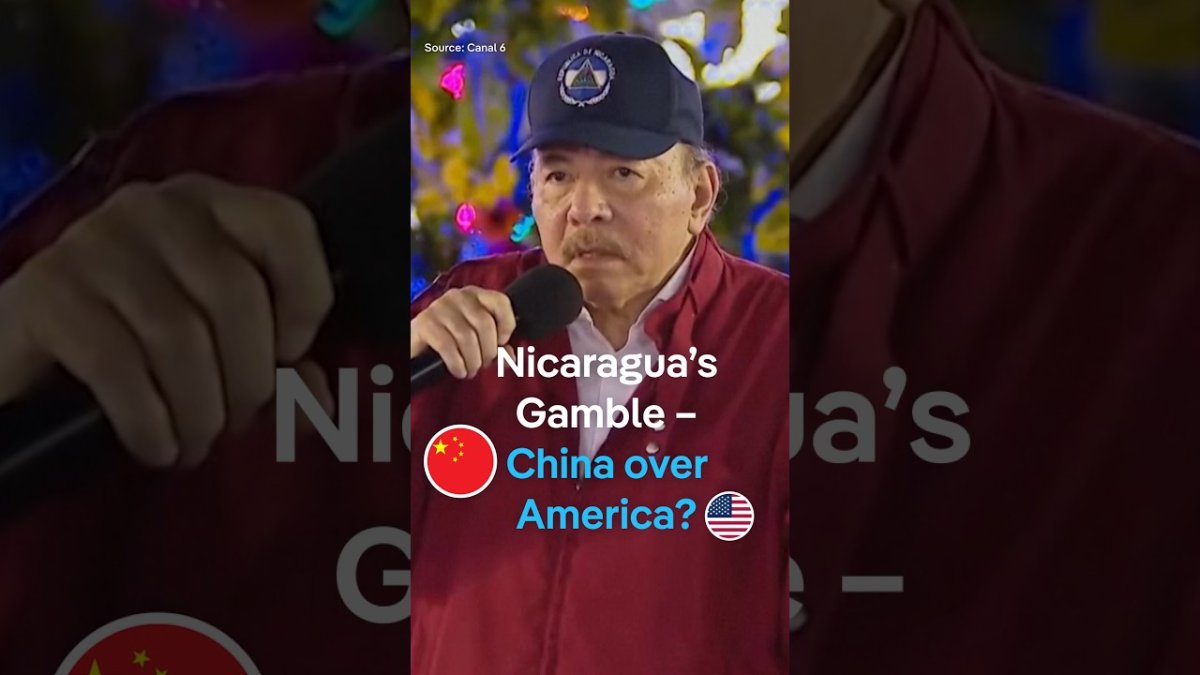
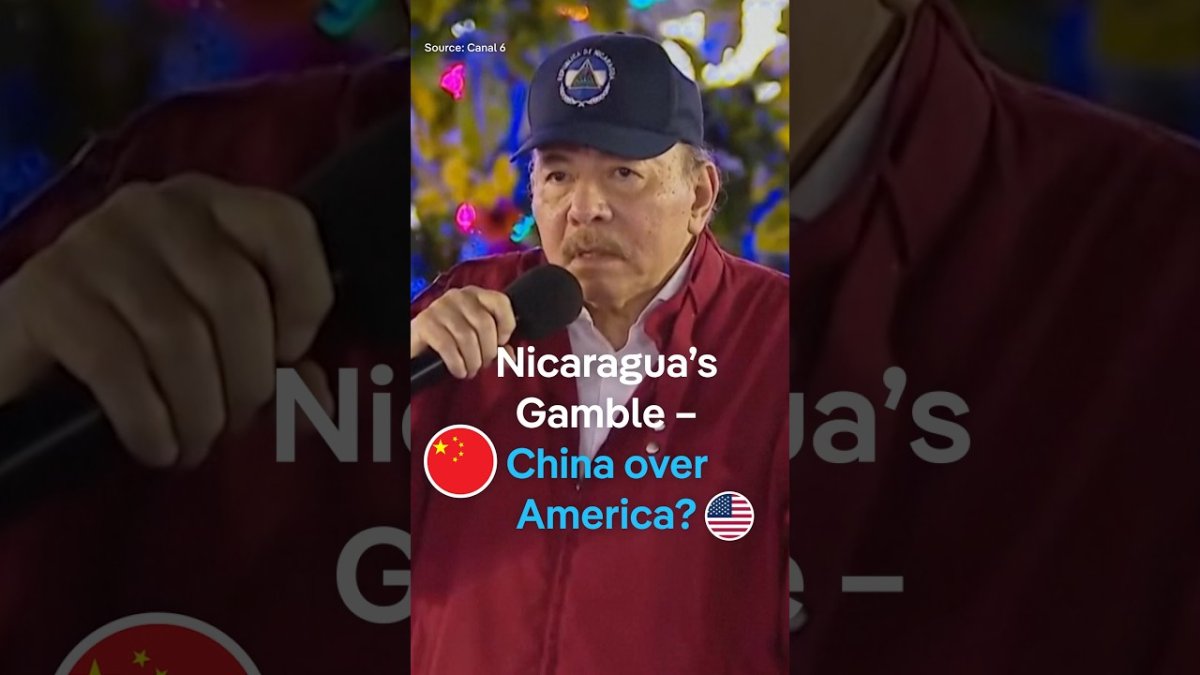
Nicaragua Ends Elections as China's Influence Grows in Latin America Mexico City, Mexico - Nicaraguan President Daniel Ortega announced on July 19 that the country would hold no future elections, a move analyzed in the DW News report featuring Latin America research professor Evan Ellis during the 47th anniversary of the Sandinista Revolution in Managua.
Nicaragua Ends Elections as China's Influence Grows in Latin America
Mexico City, Mexico - Nicaraguan President Daniel Ortega announced on July 19 that the country would hold no future elections, a move analyzed in the DW News report featuring Latin America research professor Evan Ellis during the 47th anniversary of the Sandinista Revolution in Managua.
Ortega's July 19 Declaration in Managua
Daniel Ortega stated during the July 19 event at the Plaza de la Revolución in Managua that Nicaragua would no longer conduct elections, removing any path for opposition parties such as the Citizens for Liberty to challenge the Ortega-Murillo government.
The declaration came exactly 47 years after the Sandinista forces overthrew Anastasio Somoza Debayle in 1979, an anniversary marked each year with official ceremonies attended by members of the Sandinista National Liberation Front.
Nicaraguan citizens in Managua and other cities including León and Granada now face a political structure without scheduled national votes, directly affecting daily decisions about local governance and community organizing.
In the wake of Ortega's declaration, Nicaragua's political landscape has grown even more repressive, with the opposition fragmented and largely exiled or imprisoned following the 2018 protests and subsequent crackdowns; the Sandinista regime has dismantled independent media and civil society groups, leaving citizens with few avenues for dissent ahead of what was to be the 2027 presidential vote.
International bodies have responded sharply: the Organization of American States has condemned the move as a violation of democratic norms, the European Union has expanded targeted sanctions on regime officials, and UN human rights experts have warned of deepening isolation; for Nicaragua's roughly 6.8 million people, this signals prolonged economic stagnation and restricted access to international aid, as remittances from the diaspora become even more vital amid rising poverty rates that already exceed 40 percent in rural areas.
Nicaragua's Growing Partnership with Beijing
After restoring diplomatic relations with China in December 2021, Nicaragua joined the Belt and Road Initiative in 2022 and signed a Free Trade Agreement that covers agricultural exports such as coffee and beef from Nicaraguan producers.
Chinese training programs have hosted Nicaraguan police officers in facilities in Beijing and Shanghai, while infrastructure projects funded by Chinese capital have advanced in the departments of Managua and Chinandega.
Nicaragua hosted the 17th China-Latin America Business Summit in November 2024, bringing together officials from both countries to discuss port expansions and energy projects that shape employment in coastal communities.
Nicaragua's pivot to Beijing builds on its 2021 Belt and Road Initiative entry and a free-trade agreement that has boosted Chinese imports of electronics and machinery while Nicaraguan agricultural exports face uneven market access; infrastructure ambitions include revived plans for an inter-oceanic canal, originally backed by a Hong Kong firm but now potentially shifting toward direct Chinese state financing, alongside port upgrades at Corinto and Puerto Sandino to handle larger cargo volumes.
Compared with China's deeper engagements in Brazil and Peru, where mining and energy projects have generated thousands of jobs alongside debt concerns, Nicaragua's smaller economy risks heavier reliance on loans that could strain public finances; ordinary citizens may see limited benefits, as port developments primarily serve export corridors rather than local employment, echoing patterns in Honduras and El Salvador where Chinese financing has yielded mixed infrastructure gains amid rising external debt servicing costs.
Additional Alliances with Russia and Iran
The Ortega-Murillo government has expanded military cooperation with Russia through equipment deliveries and joint training exercises documented in official statements from Managua.
Agreements with Iran include technology exchanges and diplomatic visits that connect Nicaraguan security institutions with counterparts in Tehran, altering the country's traditional diplomatic map.
These partnerships influence Nicaraguan families who rely on stable public services, as resources shift toward international commitments rather than domestic infrastructure in rural areas such as Matagalpa and Estelí.
United States Reaction and Regional Context
The United States issued statements condemning the July 19 announcement but has not pursued direct intervention, maintaining focus on sanctions targeting specific Nicaraguan officials rather than broad economic measures.
Evan Ellis noted in the DW News analysis that Nicaragua's reorientation away from Washington has accelerated since 2021, with Chinese investments filling gaps left by reduced U.S. engagement in certain sectors.
Regional organizations including the Organization of American States have recorded votes criticizing the electoral changes, yet enforcement remains limited for Nicaraguan citizens seeking political participation.
Mexico's Non-Intervention Position and SRE Stance
The Sheinbaum administration has upheld the Estrada Doctrine through statements from the Secretaría de Relaciones Exteriores, expressing concern over the July 19 announcement without proposing specific sanctions or diplomatic isolation measures.
Officials at the SRE in Mexico City have coordinated with counterparts in the Congreso de la Unión to monitor developments, consistent with Mexico's historical approach to sovereignty questions in Central America.
This position aligns with practices followed by previous Mexican governments when addressing political shifts in neighboring countries, prioritizing dialogue over public confrontation.
Mexico's adherence to the Estrada Doctrine reflects a long-standing commitment to non-intervention that prioritizes diplomatic dialogue over sanctions, allowing the SRE to express concern about Nicaragua's democratic erosion without severing ties; this stance contrasts with firmer positions from Colombia and Chile, which have joined OAS resolutions calling for electoral reforms, while Brazil under Lula has balanced criticism with regional mediation efforts and Argentina has leaned toward stronger alignment with U.S. and EU measures.
Within Mexico's legislature, the Cámara de Diputados has held hearings on Central American migration flows tied to political instability, and the Senado has debated resolutions urging greater support for exiled Nicaraguan voices; the Sheinbaum administration's broader Latin America policy continues this pragmatic approach, focusing on migration management and trade integration through mechanisms like the Community of Latin American and Caribbean States rather than direct confrontation.
Effects on Nicaraguan Communities Inside Mexico
Thousands of Nicaraguan residents live in Mexican colonias in Mexico City, Guadalajara, and Tijuana, where they operate small businesses and participate in local tianguis markets while maintaining family ties across the border.
Changes in Nicaragua's electoral system affect remittances sent from these communities to relatives in Managua and Masaya, as political uncertainty influences migration patterns and economic planning.
Mexican civil society groups in states such as Chiapas and Oaxaca have organized community forums to discuss the situation, drawing on shared cultural connections between the two nations.
Nicaraguan communities in Mexico, concentrated in Mexico City, Guadalajara, and border states like Chiapas and Baja California, number around 15,000 to 20,000 according to recent INM estimates, many working in informal sectors, education, or small businesses after fleeing repression; remittance flows from these residents to Nicaragua reached approximately $120 million annually in recent years, supplementing larger transfers from Costa Rica and the United States, though Mexican-based senders often face higher transaction fees.
Compared with larger Salvadoran and Honduran diasporas in Mexico, Nicaraguans maintain tighter-knit civil society networks that provide legal aid and cultural support; SRE immigration services and the INM have expanded temporary protection permits for those arriving via the southern border, yet processing backlogs persist, highlighting gaps in regional asylum coordination that affect thousands seeking stability away from Managua's tightening grip.
Long-Term Implications for Mexican Foreign Policy
The Sheinbaum administration's response through the SRE will shape how Mexico engages with other Central American governments facing similar consolidation of power, particularly regarding trade routes and migration management.
INEGI data on cross-border economic flows shows that Nicaraguan trade and labor movements contribute to regional stability, making sustained diplomatic attention from Mexican institutions necessary for border communities.
Observers in Mexico note that the Estrada Doctrine continues to guide official reactions, allowing space for humanitarian coordination while avoiding direct involvement in Nicaragua's internal political arrangements.
What to Watch For
Regional observers will monitor whether the Sheinbaum administration expands temporary protection permits through the INM as more Nicaraguans arrive via Chiapas, given the $120 million in annual remittances already supporting families in Managua and Masaya.
Port upgrades at Corinto and Puerto Sandino under Chinese financing could alter trade corridors that Mexican exporters track through the Community of Latin American and Caribbean States, while OAS and EU sanctions may further isolate the Ortega-Murillo government ahead of any 2027 vote that no longer appears on the calendar.
Mexican civil society forums in Oaxaca and Guadalajara will continue tracking how diaspora networks in Tijuana and Mexico City sustain cultural ties and legal aid amid rising external debt pressures on Nicaragua's 6.8 million residents.
By Rosa Martinez, Staff WriterThis article was produced with AI-assisted research and editorial support. Reporting is based on sources cited in the article.
What's Your Reaction?
 Like
0
Like
0
 Dislike
0
Dislike
0
 Love
0
Love
0
 Funny
0
Funny
0
 Wow
0
Wow
0
 Sad
0
Sad
0
 Angry
0
Angry
0

Latin America/Andes Correspondent at Global1.News. Based in Bogota, covering politics, environment, energy, and social movements across the Andean region. Passionate about environmental journalism and communities protecting their land.












Comments (0)