
Jail Time Records: Hip-Hop Studio Offers Freedom Inside Cameroon's Overcrowded New Bell Prison
In the heart of Douala, a small recording studio operates within one of Cameroon's most notorious prisons, turning inmates into recording artists. Jail Time Records provides a rare outlet for expression amid severe overcrowding and hardship. The project has drawn international attention while remaining rooted in local realities of confinement and creativity.

In the heart of Douala, a small recording studio operates within one of Cameroon's most notorious prisons, turning inmates into recording artists. Jail Time Records provides a rare outlet for expression amid severe overcrowding and hardship. The project has drawn international attention while remaining rooted in local realities of confinement and creativity.
Behind the Walls of New Bell
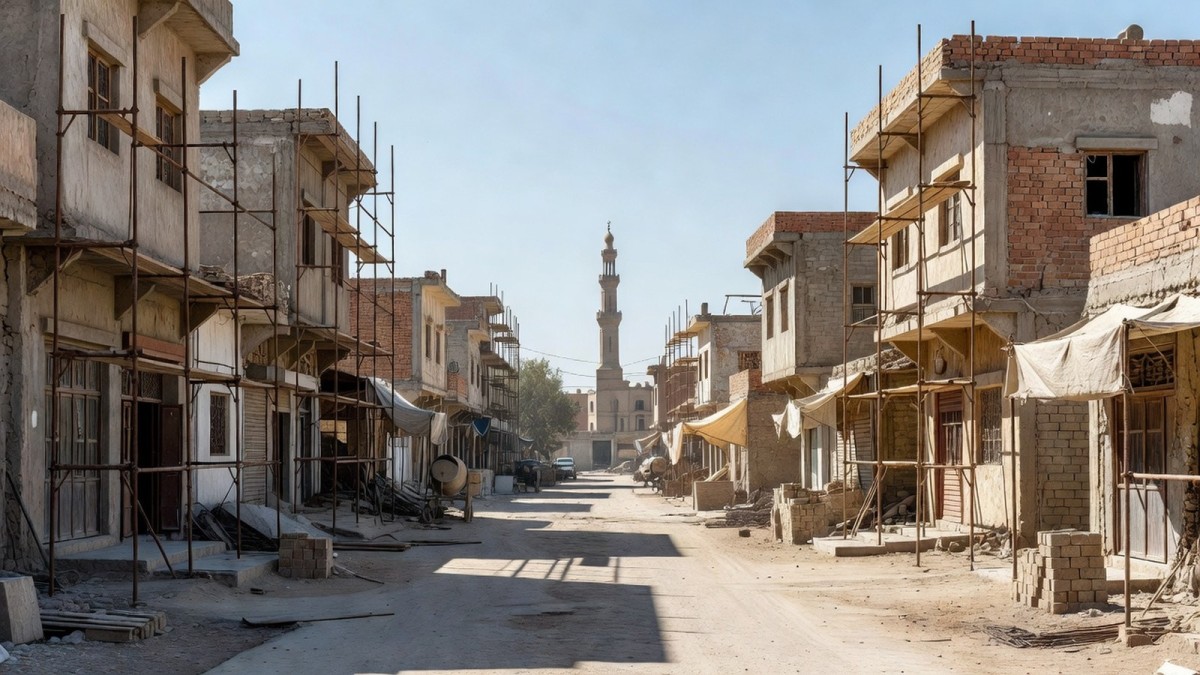
Douala, Cameroon — New Bell prison functions as a self-contained city where survival depends on informal systems and constant negotiation. With 4,700 prisoners crammed into space meant for roughly one-quarter that number, the facility strains under extreme pressure. Crumbling walls and poor sanitation led to a cholera outbreak in 2022, while a 2008 breakout attempt ended with guards killing 16 inmates. Inside, an economy thrives through “taxis” who carry messages, market stalls selling cassava and beignets, and inmate enforcers who maintain order where official control falters.
A Prison City Inside Itself
The prison’s physical decay mirrors its social complexity. Overcrowding forces inmates into tight hierarchies where movement and resources are traded like currency. Messengers known as taxis shuttle information between blocks, while small stalls offer basic foods that supplement meager rations. Enforcers appointed from within the inmate population keep daily tensions in check, creating a parallel authority structure that coexists with official guards.
These arrangements have persisted for years, shaped by repeated crises. The 2022 cholera outbreak highlighted how quickly disease spreads in such conditions, claiming lives before outside intervention arrived. Earlier violence, including the 2008 shooting of escapees, reinforced the lethal stakes of any challenge to the perimeter. Yet daily commerce continues, allowing a fragile sense of normalcy amid the strain.
How Jail Time Records Began
Jail Time Records was founded in 2018 by Dione Roach, a volunteer working with a non-profit, and Steve Happi, who had recently been released. They installed a modest booth equipped with one computer and basic microphones, giving prisoners access to recording for the first time. Happi’s own path to the project began after his arrest in a family dispute over his father’s body; he was later acquitted, though he maintains his aunt, a judge, influenced his detention.
The studio quickly became more than a technical space. Happi has described it as “an instrument of resistance,” noting that participants “don’t think anymore about the four walls—we find the freedom.” Early sessions focused on capturing raw vocals over simple beats, establishing a routine that contrasted sharply with the surrounding idleness. Roach’s organizational support helped secure basic equipment and schedule time, laying the foundation for sustained operation despite the prison’s constraints.
Voices from the Booth
Empereur, a former gang leader, recorded a music video inside the prison that has accumulated 24,000 views on YouTube, demonstrating the reach possible from within the walls. Stone, once a presidential guard, is serving a ten-year sentence for robbery and firearms offenses. His lyrics capture the environment directly: “Heart of stone, it’s war. My senses shatter like broken glass. I’m closed and tight like a cell door.”
Stone often tries to reach his daughter Maira by phone, using brief calls to maintain a connection beyond the prison. The recordings themselves carry an urgent, unpolished quality shaped by basic equipment and strictly limited studio hours. Artists must work quickly, channeling personal stories into verses that reflect both individual hardship and collective experience inside New Bell.
From Douala to the World
Over six years, Happi and Roach documented the studio’s development into a feature-length film that premiered at the Tribeca Film Festival and won three prizes. Executive producers Taika Waititi and Rita Ora helped amplify its profile, with Waititi highlighting “the power of art in relation to redemption.” The 2022 album Jail Time Vol 1 directed half its profits to the artists and half back into the studio.
YouTube uploads have attracted listeners in South Africa, the United States, and Argentina, extending the project’s audience far beyond Cameroon. These international connections emerged organically from the music’s raw authenticity rather than formal promotion. The combination of film recognition and streaming platforms has positioned the studio as a notable example of creative work originating from within a prison system.
Art as Resistance: A West African Tradition
The project echoes the long-standing West African griot tradition, in which songs serve as living archives that preserve community memory and historical events. In Senegal, hip-hop has drawn on this heritage since the 1980s, merging praise-singing techniques with modern beats to confront social and political issues. Jail Time Records operates in a similar register, functioning as a contemporary griot circle where inmates document their realities through lyrics.
Within the prison, music supplies a form of dignity that official structures rarely provide. It sustains personal memory and fosters connection at a time when physical freedom is absent. Participants treat each track as both testimony and continuation of a cultural practice that values oral expression as a means of endurance and collective identity.
Carrying Stories Forward
The studio persists in delivering structure and purpose to participants despite ongoing overcrowding and scarce resources. Inmates gain scheduled creative time that interrupts the monotony of confinement and encourages disciplined collaboration. This routine helps many maintain focus and a sense of agency within an environment that otherwise erodes both.
By continuing to record and refine new material, the project ensures that individual stories remain audible. It offers a framework through which future participants can build skills and articulate experiences that might otherwise stay unspoken. The work sustains a thread of continuity, allowing each cohort of artists to add their voices to an expanding archive created inside the prison.
By Amara Diop, Staff WriterThis article was produced with AI-assisted research and editorial support. Reporting is based on sources cited in the article.
What's Your Reaction?
 Like
0
Like
0
 Dislike
0
Dislike
0
 Love
0
Love
0
 Funny
0
Funny
0
 Wow
0
Wow
0
 Sad
0
Sad
0
 Angry
0
Angry
0

West Africa/Sahel Correspondent at Global1.News. Dakar-based journalist covering politics, security, climate, and development across Francophone and Anglophone West Africa. Tells the stories of a region undergoing profound transformation.











Comments (0)