
Israel's Shrinking Options Against Iran After US Cease-Fire
Israel's Strategic Constraints Mount After US-Iran Cease-Fire The Cease-Fire Shifts Regional Power Balances The cease-fire agreement reached between Washington and Tehran following the war that erupted on Feb. 28 has left Israel in an increasingly uncomfortable position. While debates over the durability and sustainability of this deal continue to dominate regional discourse, T
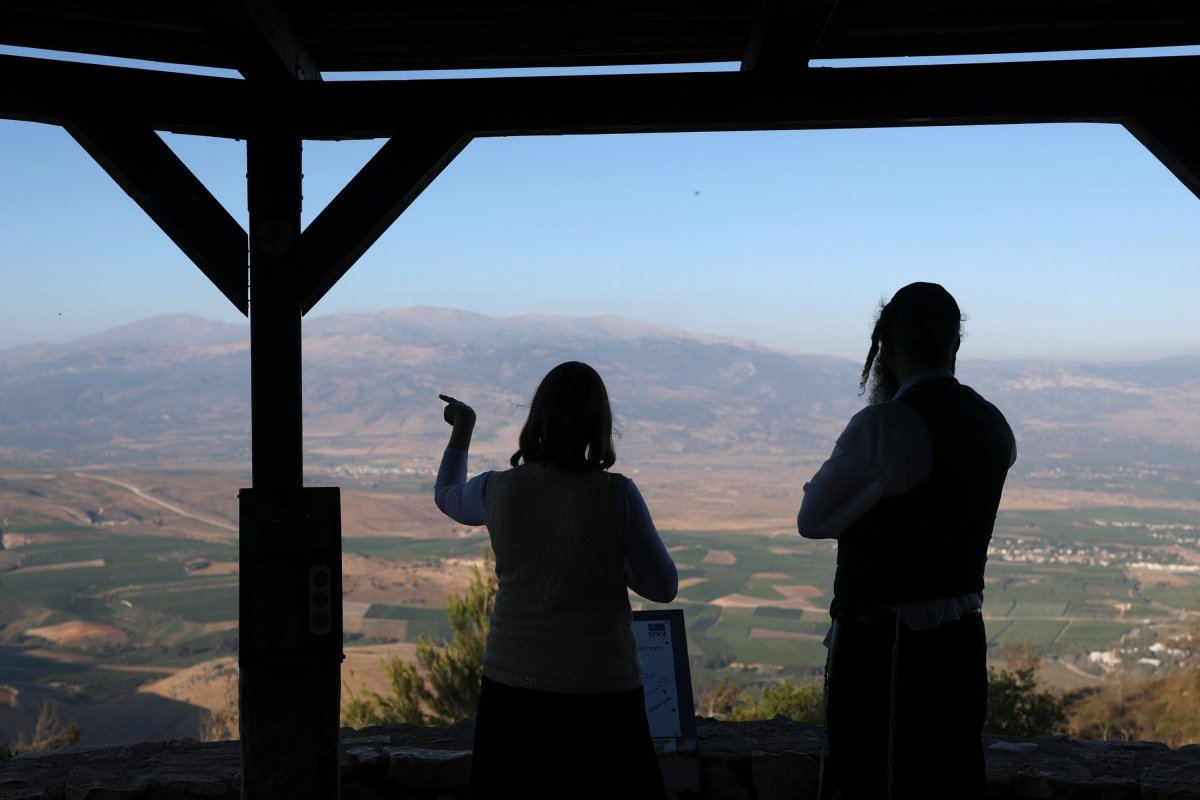
The Cease-Fire Shifts Regional Power Balances
The cease-fire agreement reached between Washington and Tehran following the war that erupted on Feb. 28 has left Israel in an increasingly uncomfortable position. While debates over the durability and sustainability of this deal continue to dominate regional discourse, Tel Aviv is watching the process unfold not as a neutral observer, but as a party that feels directly wronged. For Israel, this is not merely a diplomatic setback. It represents something far more consequential: a public admission that its core strategic objectives against Iran have not been achieved.
Netanyahu Government Views Deal as Strategic Defeat
Israel's reaction to the deal has been blunt and unambiguous. The Netanyahu government has made no effort to conceal its opposition, viewing the agreement not as an imperfect compromise but as a de facto defeat. Israel had argued that the war must continue until it produced decisive, irreversible results against the Iranian regime. In Tel Aviv's reading, a cease-fire that leaves Iran standing is not a pause in the conflict; it is a victory for Tehran. The war that Israel wanted to use as a transformative moment for the region ended before the transformation could take hold.
US Pressure Blocks Traditional Escalation Routes
What makes Israel's predicament even more acute is the failure of its fallback option. Striking Hezbollah in Lebanon to provoke Iran and reignite the broader conflict had long been a card in Israel's strategic hand. That card, however, has now been rendered largely unplayable. The stance adopted by Washington, and by President Donald Trump specifically, has made clear that the United States will not tolerate Israeli escalation that undermines a deal it brokered. The message received in Jerusalem was unmistakable: the option of dragging the region back into full-scale war through a Hezbollah provocation is, for now, off the table.
Trump's pressure, ironically, has done what no amount of diplomatic persuasion could: it has constrained the Netanyahu government in ways it did not anticipate. The result is a picture of strategic constriction that is rare even by the standards of Israel's turbulent regional environment. Sunni-Shia geopolitical competition adds another layer, as any Israeli move risks drawing in Iranian proxy networks across Lebanon, Syria, and Iraq.
Domestic Politics Intensify Pressure on Netanyahu
Despite all of this, the Netanyahu government and the Israeli political mainstream continue to insist that Iran represents an existential threat and that regime change in Tehran remains a non-negotiable strategic objective. This conviction has not softened in the aftermath of the cease-fire. If anything, it has hardened. Nowhere is this more visible than in the rhetoric coming from the opposition. The bloc formed by former Prime Ministers Naftali Bennett and Yesh Atid's centrist leader, Yair Lapid, has seized on the moment, accusing Netanyahu of delivering precisely the failure he promised to prevent.
Bennett's language has been particularly striking. "The day the Israeli government changes, the Iranian regime will begin to change," he declared, pledging to revive and sharpen the so-called Octopus Doctrine, the strategy of striking Iran's head rather than its proxies. It is a bold claim. But it also reveals something important: regardless of who sits in the prime minister's office after the November elections, the strategic ambition will remain the same. What will differ, if anything, is the appetite for risk and the willingness to pursue it.
November Elections Create Dangerous Incentives
The November elections are themselves a complicating factor of the first order. Netanyahu needs a victory narrative before voters go to the polls, and right now he does not have one. This creates a dangerous incentive structure. The period between now and election day may well see a more aggressive Israeli posture toward Iran and Hezbollah, not because the strategic calculus has changed, but because domestic political survival demands it. When electoral arithmetic and national security policy become entangled, the results are rarely clean.
Arab-Israeli normalization efforts under the Abraham Accords add further complexity, as Gulf states like Saudi Arabia and the UAE weigh their own diversification plans against any renewed instability that could affect energy markets and OPEC+ coordination.
Limited Tools Face Growing Iranian Resilience
What options does Israel actually have? The menu, on paper, includes decapitation operations, assassinations and sabotage, efforts to trigger protest movements inside Iran, attempts to mobilize Kurdish populations in Iran's border regions, and continued airstrikes against Iranian and Hezbollah targets. In previous years, several of these tools delivered meaningful results. Today, each faces serious structural limitations that did not exist before. Iran is no longer the reactive, restrained adversary it once was. It has adopted a far more offensive and proactive posture, one that raises the cost Israel must pay for any military action. The deterrence equation has shifted.
Decapitation and sabotage operations, meanwhile, have produced far less disruption than anticipated. Neither Hezbollah nor the Iranian military apparatus has been critically degraded by these methods; the organizational resilience of both has consistently exceeded Israeli expectations. Great power competition involving the United States, China, and Russia further limits unilateral Israeli action, as Tehran leverages its ties to Moscow and Beijing for diplomatic cover.
Strategic Calculus Points to Prolonged Stalemate
Each side's leverage remains constrained by broader regional dynamics. Israel retains qualitative military edges and intelligence capabilities, yet lacks the sustained international backing needed for decisive regime-change operations. Iran, for its part, maintains extensive proxy networks through the IRGC and Hezbollah but faces economic pressures that limit sustained confrontation. Second-order effects could include renewed instability along the Israeli-Lebanese border and disruptions to energy flows through the Strait of Hormuz, affecting global markets far beyond the Middle East.
Turkey's regional influence and neo-Ottoman foreign policy may also play a role if escalation draws in additional actors. The overall picture suggests a period of managed tensions rather than decisive breakthroughs, with both Jerusalem and Tehran calibrating moves to avoid crossing US red lines while preserving core objectives.
By Malik Hassan, Staff WriterThis article was produced with AI-assisted research and editorial support. Reporting is based on sources cited in the article.
What's Your Reaction?
 Like
0
Like
0
 Dislike
0
Dislike
0
 Love
0
Love
0
 Funny
0
Funny
0
 Wow
0
Wow
0
 Sad
0
Sad
0
 Angry
0
Angry
0

India/South Asia Correspondent at Global1.News. Analytical voice with a background in science and health journalism. Based in New Delhi, covering Indian politics, education, healthcare, technology, and policy. Breaks down complex data into clear, actionable reporting.












Comments (0)