
Saudi Arabia Intercepts Iran-Linked Drones Targeting Oil Infrastructure
Saudi Arabia intercepts Iranian-linked drones targeting oil infrastructure in Eastern Province and Riyadh, as Iraq orders an investigation into the attack launched from its territory. The incident underscores the enduring challenge of Iran-backed militia networks operating across Iraq's borders, threatens global energy market stability, and places both Baghdad and Washington in increasingly difficult positions as the five-month-old U.S.-Iran conflict continues.
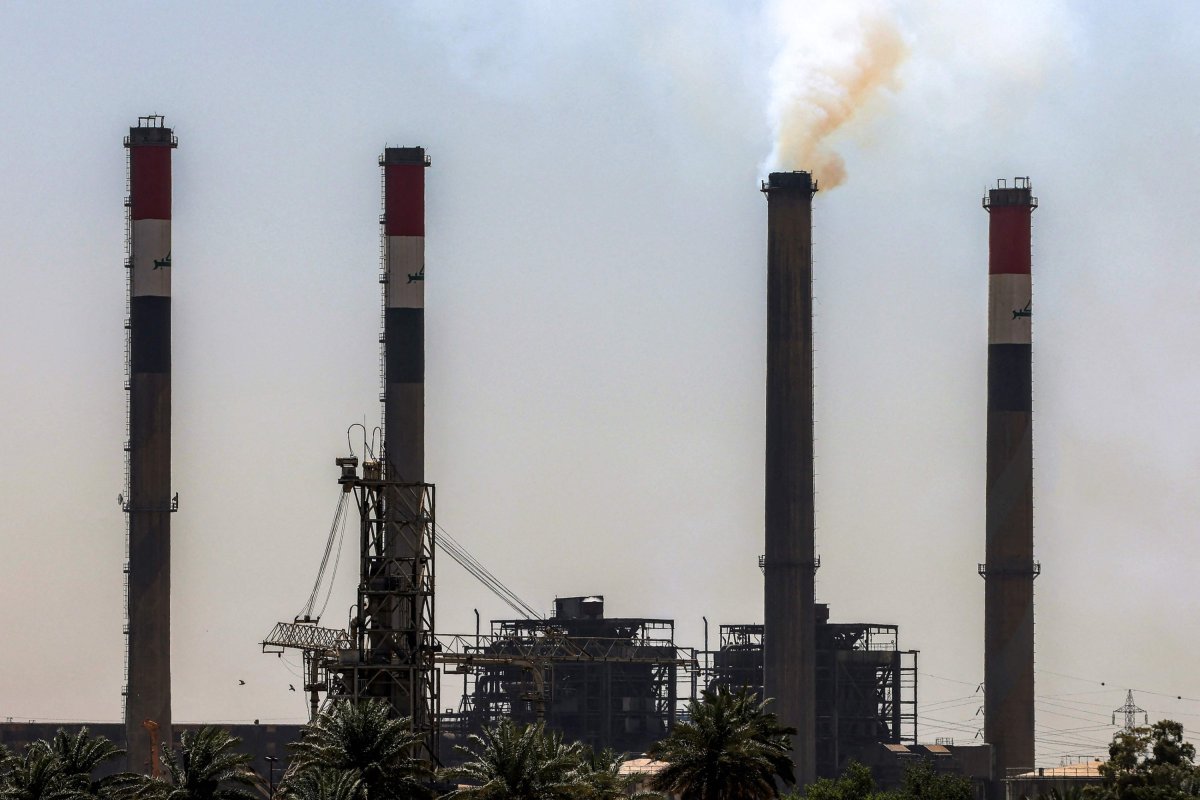
In a significant escalation along the Persian Gulf's most sensitive energy corridor, Saudi Arabia intercepted and destroyed multiple drones launched from Iraqi territory Monday evening, targeting critical oil infrastructure in the kingdom's Eastern Province and the capital Riyadh. The attack, which Saudi authorities attributed to Iran-backed armed groups operating inside Iraq, has reignited long-simmering tensions between Riyadh and Tehran's proxy network while placing Baghdad in an increasingly precarious diplomatic position.
Saudi Arabia Intercepts Iranian-Linked Drone Attack on Oil Infrastructure
Riyadh, Saudi Arabia — July 28, 2026 — Saudi Arabia's Ministry of Defense confirmed that air defense systems successfully intercepted and destroyed drones launched from Iraqi territory Monday evening, with flight paths indicating targets including oil facilities in the kingdom's Eastern Province and sites near Riyadh. The ministry stated unequivocally that the drones were deployed by Iran-backed armed groups operating within Iraq.
The Attack and Immediate Response
Saudi air defense units engaged the incoming drones before they could reach their intended targets, preventing what could have been a significant disruption to the kingdom's energy infrastructure. The Eastern Province is home to the bulk of Saudi Arabia's oil production capacity, including the Ghawar field — the world's largest conventional oil field — and critical processing facilities at Abqaiq and Ras Tanura, which were infamously targeted in the 2019 Abqaiq-Khurais attacks.
Saudi Arabia's Foreign Ministry responded swiftly, issuing a strongly worded condemnation that reaffirmed the kingdom's right to respond to what it termed "the aggression" and to deter those responsible. The ministry specifically called on the Iraqi government to take all necessary measures to prevent Iraqi territory from being used as a launchpad for attacks against the kingdom — language that reflects Riyadh's growing frustration with what it perceives as Iraq's inability to control Iran-aligned militias operating on its soil.
Iraq's Delicate Balancing Act
Iraqi Prime Minister Ali al-Zaidi ordered an immediate investigation into the incident, with his media office emphasizing that Iraq "will not allow its territory to be used to launch attacks against neighbouring countries." Spokesman Sabah al-Numan stated that Zaidi had directed "the competent security authorities to investigate the statement issued by the ministry of Defence of the Kingdom of Saudi Arabia regarding the targeting of the kingdom with drones launched from Iraqi territory."
Baghdad's response reflects the enduring challenge facing successive Iraqi governments: maintaining sovereign control over a country where Iran-backed militias — many integrated into the state-sanctioned Popular Mobilization Forces (PMF) — operate with significant autonomy. The PMF, established in 2014 to combat the Islamic State, includes numerous factions with direct ties to Iran's Islamic Revolutionary Guard Corps (IRGC) Quds Force, and Baghdad has repeatedly struggled to rein in their cross-border activities.
Prime Minister Zaidi, who has sought to position Iraq as a neutral broker between its Gulf neighbors and Iran, now faces a credibility test. His government's ability — and willingness — to investigate and act against Iran-aligned groups will be closely watched in Riyadh, Washington, and Tehran.
Iran's Proxy Calculus
The drone attack fits a well-established pattern of Iranian pressure tactics against Gulf states. By leveraging proxy forces in Iraq, Yemen (the Houthis), and Lebanon (Hezbollah), Tehran maintains what strategic analysts call a "ring of fire" around the Arabian Peninsula — the ability to strike at Saudi and Emirati infrastructure without directly implicating the Iranian state.
Iran's strategic calculus appears calibrated to maintain deniability while signaling to Riyadh that its energy infrastructure remains vulnerable. The use of Iraqi territory as a launchpad is particularly significant: it allows Tehran to exploit the jurisdictional ambiguity between Iraq's sovereign government and the Iran-aligned militias operating within its borders, making direct retaliation against Iran more diplomatically costly for Saudi Arabia.
The timing of the attack is also notable. It comes amid growing domestic pressure on the Trump administration over the five-month-old U.S.-Iran military confrontation, with polling showing support for the war at its lowest level since hostilities began. Tehran may be calculating that Washington's appetite for escalation is waning, creating space for its proxies to increase pressure on Gulf states without triggering a broader American military response.
Energy Security and Global Market Implications
The attack on Saudi oil infrastructure — even one that was successfully intercepted — sends ripples through global energy markets still adjusting to the ongoing conflict in the Persian Gulf. Insurance premiums for tankers transiting the Strait of Hormuz, through which approximately 20% of the world's oil passes, have already risen sharply since February 2026. Any perception that Saudi facilities are increasingly vulnerable to drone attacks could exert upward pressure on crude prices.
OPEC+ dynamics add another layer of complexity. Saudi Arabia, as the de facto leader of the oil cartel, has maintained spare production capacity that has served as a buffer against supply disruptions. However, repeated attacks on its processing infrastructure — even if intercepted — erode market confidence in that buffer. Energy analysts note that the 2019 Abqaiq-Khurais attack temporarily removed 5.7 million barrels per day from global markets, demonstrating just how vulnerable even the most protected facilities can be.
Regional Geopolitical Fallout
The drone interception comes at a moment of heightened regional flux. The Abraham Accords, while pausing new signatories during the current conflict, remain a structural shift in Middle East diplomacy. Saudi Arabia's ongoing normalization discussions with Israel — heavily conditioned on progress toward Palestinian statehood — create a complex backdrop for any Saudi retaliation against Iran-linked targets.
Turkey, meanwhile, has its own complex relationship with both Iraq and the Gulf states. Ankara maintains significant economic ties with Baghdad and has conducted cross-border military operations in northern Iraq against PKK positions. While Turkey and Iran compete for influence in Iraq, they also cooperate on certain issues — most notably energy transit and opposition to Kurdish independence ambitions.
The attack also places the United States in a difficult position. Washington maintains military forces in both Saudi Arabia and Iraq, and the Trump administration's stated goal of withdrawing from Middle Eastern entanglements runs directly counter to the escalatory pressures generated by these attacks. The U.S. Central Command (CENTCOM) has already increased its air defense posture in the Gulf since February, but the proliferation of cheap, effective drone technology makes complete protection of the region's sprawling energy infrastructure logistically and financially prohibitive.
What Comes Next
The coming days will be critical in determining whether this incident remains a contained security breach or escalates into a broader confrontation. Saudi Arabia's response will be calibrated along several dimensions: diplomatic pressure on Baghdad, potential covert or kinetic action against the militias responsible, and coordination with Washington on defensive and potentially offensive measures.
For Iraq, the stakes could not be higher. Prime Minister Zaidi's investigation must produce credible results that demonstrate Baghdad's willingness to assert sovereignty over its territory, or risk a Saudi — and potentially American — military response inside Iraq. The history of U.S. drone strikes against Iranian-aligned militia leaders in Iraq serves as a reminder of what happens when Baghdad's assurances fail to translate into action.
For Iran, the calculus is equally delicate. The drone attack provides leverage but risks triggering a Saudi response that could escalate into direct confrontation — something Tehran has sought to avoid throughout the current conflict by operating through proxies. The question facing Iran's leadership is whether the tactical benefits of pressuring Saudi Arabia outweigh the strategic risks of drawing the kingdom into a more direct military role in the ongoing Gulf crisis.
By Malik Hassan, Staff Writer
This article was produced with AI-assisted research and editorial support. Reporting is based on sources cited in the article.
What's Your Reaction?
 Like
0
Like
0
 Dislike
0
Dislike
0
 Love
0
Love
0
 Funny
0
Funny
0
 Wow
0
Wow
0
 Sad
0
Sad
0
 Angry
0
Angry
0

Middle East Correspondent at Global1.News. Based in Beirut, covering politics, conflict, energy, and society across the Middle East. Brings context and depth to a region often reduced to headlines.













Comments (0)