
Fentanyl Broker Zhang Zhidong's Dramatic Escape and US Trial
In a stunning development that underscores the global reach of the fentanyl crisis, Chinese national Zhang Zhidong, known as the kingpin of this deadly trade, has been extradited to the United States after a dramatic escape from Mexican custody. His arrest and subsequent flight highlight the intricate networks linking Chinese chemical suppliers to Mexican cartels. This case reveals the vulnerabilities in international law enforcement efforts against synthetic opioids ravaging
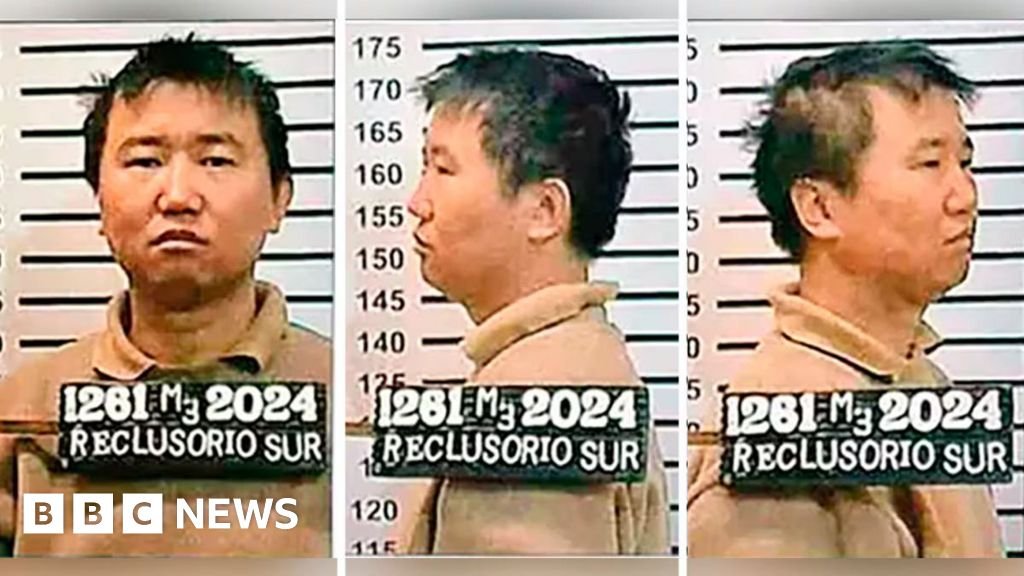
In a stunning development that underscores the global reach of the fentanyl crisis, Chinese national Zhang Zhidong, known as the kingpin of this deadly trade, has been extradited to the United States after a dramatic escape from Mexican custody. His arrest and subsequent flight highlight the intricate networks linking Chinese chemical suppliers to Mexican cartels. This case reveals the vulnerabilities in international law enforcement efforts against synthetic opioids ravaging communities worldwide.
Fentanyl Broker Zhang Zhidong's Dramatic Escape and US Trial
Culiacán, Mexico — Article continues...
The Case of Zhang Zhidong and Mexico's Fentanyl Networks
Mexican authorities have identified Zhang Zhidong, a 39-year-old Chinese national known in criminal circles as Brother Wang or the king of fentanyl, as a central figure linking chemical suppliers to laboratories in Sinaloa. According to the US Department of Justice, Zhang stands accused of coordinating the movement of precursor chemicals that feed the production of a synthetic opioid 50 times more potent than heroin. This substance has killed tens of thousands of people each year, primarily in the United States. US President Donald Trump has described fentanyl dealers as narco-terrorists and classified the drug along with its components as weapons of mass destruction. Zhang was arrested in Mexico on 31 October 2024, escaped house arrest, and was later extradited to the United States in 2025, where he has pleaded not guilty and awaits trial. As a Brazilian journalist who has covered Latin America's drug wars for years, I see this case as emblematic of how distant supply chains converge on our region with devastating effect.
From Peking University to the Mining Sector in Mexico
Zhang graduated from Peking University in Beijing with a Spanish degree in 2010. One year later he traveled to Mexico to work for a Chinese-owned mining company. Cartel members have described how this background positioned him to become a key intermediary between Chinese chemical manufacturers and Mexican drug laboratories. Mexican authorities stated that Zhang was responsible for exporting and distributing more than 1,000 kilograms of cocaine, 1,800 kilograms of fentanyl, and 600 kilograms of methamphetamine. They also accused him of handling more than 150 million dollars in annual drug proceeds. These figures illustrate the scale of operations that connect distant supply chains directly to communities across Latin America and beyond. His academic training gave him linguistic and cultural tools that proved invaluable in navigating both legitimate business and illicit networks.
The Precursor Chemical Pipeline from China to Sinaloa
Ingredients for fentanyl production were shipped by air or sea from China to Mexico before being distributed to illicit laboratories in Sinaloa. Victoria Dittmar, a researcher at InSight Crime, notes that brokers like Zhang occupy the crucial intersection between chemical producers and the cartels. She describes individuals with his reach as quite unique and essential to the supply chain. This China-Mexico route has become a defining feature of the modern Latin American drug trade, where precursor chemicals arrive in ports and airports before reaching hidden sites in states such as Sinaloa. The pipeline sustains local economies tied to illicit activity while exposing entire regions to the violence and corruption that accompany large-scale trafficking. The specific chemicals involved include aniline, benzyl chloride and NPP, which move through established shipping routes from Chinese ports directly into Mexican entry points before reaching Sinaloa labs. Interviews with Sinaloa cartel members Enrique and Luis detail how these precursors arrive in bulk and are then broken down for distribution. A fentanyl cook interviewed described witnessing five colleagues die from exposure during production, underscoring the hazardous conditions tied to these shipments. Further context from the operations shows how the pipeline relied on precise timing between sea and air deliveries to avoid detection, with Enrique noting repeated successful handoffs to lab sites. Luis recounted the volume of chemicals processed weekly, linking each batch to the massive output figures attributed to Zhang. Dittmar emphasizes that without these brokers the entire network would collapse, as they manage the critical handoff points between Chinese suppliers and Mexican producers. The cook's account of five deaths illustrates the human cost embedded in sustaining such high-volume precursor movement.
A Dramatic Escape Across Borders
After his arrest on 31 October 2024, Zhang was placed under house arrest in Mexico. He escaped through a hole in a wall, fled by private jet to Cuba and then Russia, was detected on forged papers, sent back to Cuba, returned to Mexico, and finally extradited to the United States. This sequence of movements highlights the challenges faced by law enforcement agencies operating across multiple jurisdictions in Latin America and the Caribbean. Mexican authorities tracked the movements while international partners monitored the route through Cuba and Russia, underscoring how such cases strain regional cooperation on extradition and border security. The arrest occurred on 31 October 2024, after which Zhang was placed under house arrest before executing an escape through a hole in the wall. He then boarded a private jet to Cuba using forged papers to reach Russia, only to be sent back to face proceedings. The Peking University alumni network expressed shock at the events. Cartel members stated that "they took the man and that caused a mess" and that "he was the one with the connections," reflecting the immediate disruption to ongoing chemical shipments. Details of the escape reveal careful planning, with the hole in the wall allowing Zhang to slip away undetected before the private jet departure to Cuba. Forged documents facilitated the onward journey to Russia until authorities there returned him. Alumni from Peking University were stunned by the rapid sequence of arrest, flight and extradition. The cartel comments about the resulting mess and lost connections confirm Zhang's central role in maintaining the precursor pipeline.
Effects on Purity Levels and the Broader Trade
Since Zhang's arrest, the US Drug Enforcement Administration has detected a decline in fentanyl purity, consistent with cooks having difficulty obtaining key precursor chemicals. Yet cartel members have stated that the business will not stop and that someone else will step in. This reality reflects the resilience of networks that stretch from Chinese factories through Mexican ports to laboratories in Sinaloa and onward to markets in the United States. For communities in Latin America, the persistence of these routes means continued pressure on public security forces, including the Policia Federal in Mexico and state-level agencies, as well as economic distortions in regions where trafficking has become embedded in daily life. The DEA detected a decline in fentanyl purity after Zhang's removal from the supply chain. Victoria Dittmar described the situation as a constant game of cat and mouse between authorities and traffickers. Replacement figures are already emerging, with Enrique stating that someone else will step in and the business will not stop. Another cartel member noted that Zhang left lots of connections to help keep operations going, supported by the use of more than 100 shell companies for money laundering that involved picking up cash at US locations and wiring funds overseas. The Chinese embassy stated that China is one of the world's toughest countries on counternarcotics. Dittmar's cat-and-mouse framing captures how purity levels fluctuate as new actors fill gaps left by arrests. Enrique's prediction that the business will continue underscores the resilience built through existing networks. The 100-plus shell companies enabled sustained laundering by collecting cash inside the United States and transferring it abroad, preserving financial flows even after Zhang's extradition. The embassy's statement on counternarcotics efforts highlights ongoing international pressure amid these adaptations.
Implications for Latin American Security and Cooperation
The Zhang case reveals how a single broker can influence the flow of chemicals across continents and directly affect production volumes in Sinaloa. Mexican authorities have documented the quantities involved, while InSight Crime researchers emphasize the unique role such intermediaries play. As the trade adapts, governments across the region must confront the same supply lines that reach from Chinese ports to Mexican laboratories and ultimately to consumers far from Latin American shores. The decline in purity following the arrest offers one measurable sign of disruption, yet the statements from cartel members indicate that replacement figures are already emerging within the same networks. From my vantage point reporting across the Americas, this episode demands stronger cross-border intelligence sharing if we are to curb the human toll.
By Elena Vasquez, Staff Writer
This article was produced with AI-assisted research and editorial support. Reporting is based on sources cited in the article.
What's Your Reaction?
 Like
0
Like
0
 Dislike
0
Dislike
0
 Love
0
Love
0
 Funny
0
Funny
0
 Wow
0
Wow
0
 Sad
0
Sad
0
 Angry
0
Angry
0

Latin America Correspondent at Global1.News. Based in Mexico City, covering politics, economics, energy, and culture across the region. Brings an on-the-ground perspective to stories spanning from the Rio Grande to Patagonia.











Comments (0)