
Yves Saint Laurent en Scène: Marrakech Exhibition Reveals Fashion Icon's Hidden Passion for Theatre and Ballet
Yves Saint Laurent's name is synonymous with haute couture — but the legendary French designer also had a lifelong love affair with the stage. Now a new exhibition in Marrakech, Morocco, reveals how theatre, ballet and music-hall shaped his creative vision, featuring over 150 rarely-seen costumes, sketches and set designs that tell the story of a fashion icon's hidden passion f
Yves Saint Laurent's name is synonymous with haute couture — but the legendary French designer also had a lifelong love affair with the stage. Now a new exhibition in Marrakech, Morocco, reveals how theatre, ballet and music-hall shaped his creative vision, featuring over 150 rarely-seen costumes, sketches and set designs that tell the story of a fashion icon's hidden passion for performance.
Yves Saint Laurent en Scène: Marrakech Exhibition Reveals Fashion Icon's Hidden Passion for Theatre and Ballet
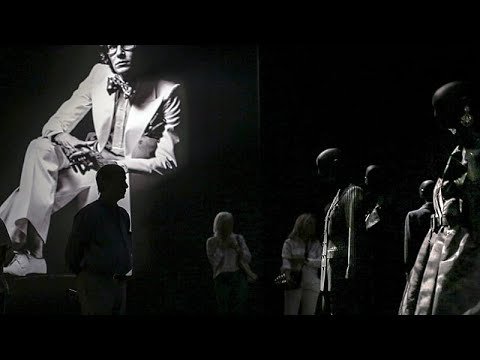
Marrakech, Morocco — The Musée Yves Saint Laurent Marrakech, nestled beside the famous Jardin Majorelle, has transformed its galleries into a stage of its own, where visitors can trace the designer's lifelong fascination with theatre through costumes, sketches and set designs that reveal an intimate part of his creative soul.
From Oran to the Runway: The Stage That Shaped a Visionary
Yves Saint Laurent was born in Oran, French Algeria, in 1936, and his North African roots ran deep from the start. In 1950, at age fourteen, he attended a performance of Molière's L'École des femmes in Oran directed by Louis Jouvet, with sets and costumes by Christian Bérard. The experience struck him as a revelation that would guide his entire career.
The production's theatrical magic showed how fabric, colour and silhouette could tell stories on their own. Bérard's designs blended French elegance with a sensitivity to light and texture that echoed the Maghreb region's textile traditions. Young Yves absorbed these lessons amid the vibrant markets and sunlit streets of Oran.
His French-Algerian upbringing gave him an instinctive feel for bold patterns and flowing lines that later appeared in his couture collections. The stage taught him that clothing must move with the body, a principle he carried into his first job at Christian Dior in Paris.
At Dior, Saint Laurent quickly applied stage design thinking to ready-to-wear and haute couture. He treated each collection like a theatrical production, where every garment advanced a narrative. This approach set him apart from purely commercial designers of the era.
North African light and colour stayed with him even after he left Algeria. The same dramatic contrasts that lit the Oran stage reappeared in his later use of saffron yellows and deep indigos, hues familiar to anyone who has walked through the souks of Marrakech or Dakar.
Those early lessons in Oran explain why his fashion always felt alive rather than static. The theatre had shown him that clothing could transform both the wearer and the audience, a truth he never forgot.
Inside the Exhibition: 150 Treasures of Stagecraft
The Yves Saint Laurent on Stage exhibition opened at the Musée Yves Saint Laurent Marrakech on January 30, 2026, and runs through January 5, 2027. Nearly 150 pieces fill the galleries, including costumes, original sketches, photographs and set designs that have rarely left private archives.
One centerpiece is the costume Saint Laurent created for French actress Arletty in Jean Cocteau's 1966 play Les Monstres sacrés. The long straight-cut dress is covered in fine silver sequins, finished with a simple round neckline and three-quarter sleeves that catch every spotlight.
Curators present each garment as a form of storytelling. Sketches show how Saint Laurent translated scripts and choreography into precise cuts and fabric choices. Visitors see the direct line from a director's notes to the final stitch.
The exhibition layout guides viewers through different periods of his theatrical work. Early ballet pieces sit beside later music-hall designs, revealing how his eye for proportion evolved while staying rooted in performance needs.
Photographs capture fittings and rehearsals, reminding visitors that these clothes were made to be worn under hot lights and during rapid changes. The practical demands of the stage shaped every decision.
By the end of the galleries, the message is clear: Saint Laurent never separated fashion from theatre. Each piece on display proves that costume design was not a side project but a core part of his creative life.
Roland Petit, Ballet and the Art of Movement
Saint Laurent's long collaboration with choreographer Roland Petit began in the 1950s and continued for decades. He designed costumes for several of Petit's ballet companies, learning exactly how fabric must behave during leaps and turns.
Stage costumes had to serve both beauty and function. Heavy beading could not weigh down a dancer, yet the visual impact had to reach the back row of the theatre. Saint Laurent solved these problems with lightweight silks and strategic placement of ornament.
His ballet work featured dramatic silhouettes, rich fabrics and bold colours that echoed his couture collections. The same sense of movement that defined his ready-to-wear lines appeared in tutus and tunics made for the corps de ballet.
Petit's productions gave Saint Laurent freedom to experiment with volume and line. These experiments later influenced evening gowns that seemed to float down the runway, as if the models were dancing rather than walking.
The intersection of fashion and movement taught him to respect the performer's body. Every seam had to allow full extension, a discipline that improved his understanding of how women actually live in couture.
Today, dancers and designers still study these costumes for their perfect balance of spectacle and practicality. The Roland Petit collaborations remain a masterclass in clothing that must perform as well as it photographs.
Why Marrakech? A City Woven into YSL's Story
Saint Laurent and Pierre Bergé discovered Marrakech in the 1960s and never looked back. They restored the Jardin Majorelle together, bringing the neglected garden back to life through careful planting and architectural respect.
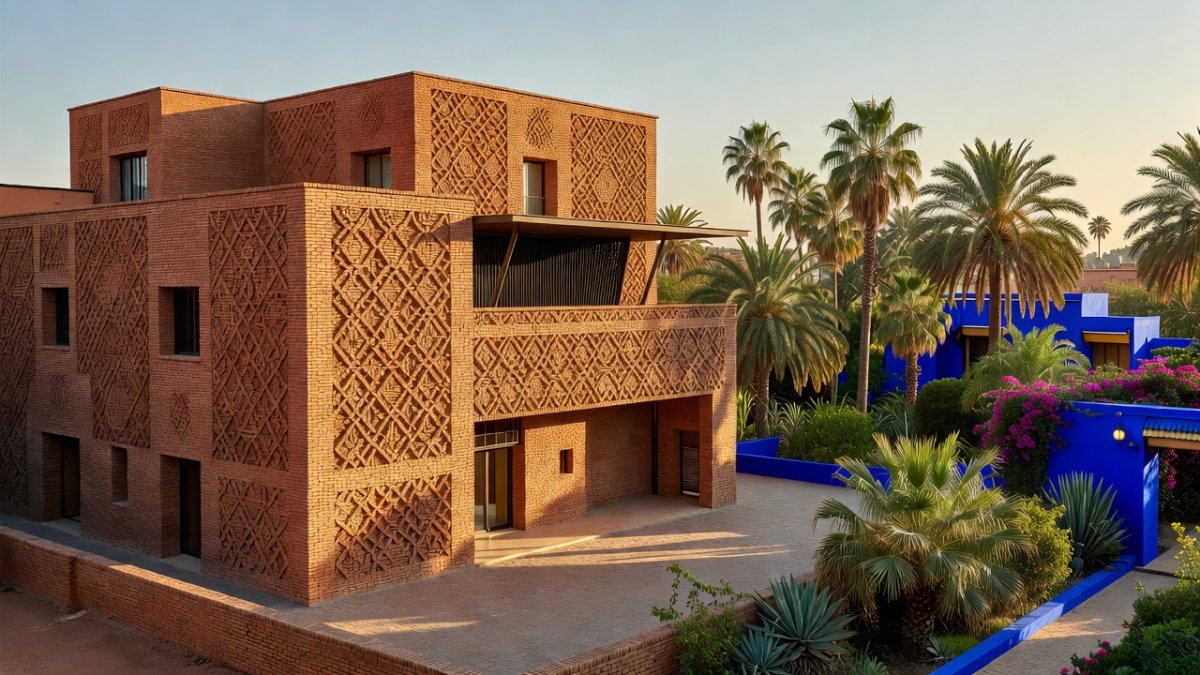
The Musée Yves Saint Laurent Marrakech, designed by Studio KO, opened in 2017 on Rue Yves Saint Laurent right beside the Jardin Majorelle. Its brick facade evokes woven fabric, a deliberate nod to the textile traditions of the region.
While the Paris museum remains closed for renovations until autumn 2027, Marrakech serves as the primary global destination for major YSL exhibitions. The location carries special weight because Saint Laurent's ashes were scattered in the Jardin Majorelle after his death.
The city's light and architecture influenced his colour palette throughout his career. The deep blues and terracotta tones of Marrakech appear again and again in his collections, linking European couture to North African visual culture.
Local craftspeople contributed to the museum's construction and ongoing exhibitions. Their skills in tilework and metal continue the same traditions of craftsmanship that Saint Laurent admired when he first arrived in the city.
For visitors today, walking from the museum into the restored garden feels like entering a living part of his story. Marrakech is not simply a venue; it is the place where his personal and creative worlds finally met.
A New Act: From Rome to Marrakech
The current exhibition builds on a 2024 presentation at the Fondazione Nicola Del Roscio in Rome. Curators reimagined the show as a new act tailored specifically for the Marrakech setting and its audiences.
The museum team adapted the layout to highlight connections between Saint Laurent's work and North African aesthetics. Larger display cases allow visitors to circle the Arletty costume and study its sequins from every angle.
North African audiences bring a different cultural lens to questions of costume, colour and performance. Viewers familiar with traditional caftans and embroidered textiles immediately recognise shared principles of drape and ornament.
The curatorial choices emphasise how Saint Laurent absorbed Maghreb influences without exoticising them. Sketches are displayed beside examples of local weaving, showing clear lines of inspiration rather than appropriation.
Lighting in the galleries mimics the strong Marrakech sun, helping visitors understand why certain fabrics and colours worked so well on stage in this climate. The adaptation feels natural rather than forced.
This reimagined version proves that exhibitions can travel and still feel rooted in their new home. The Rome foundation provided the core collection; Marrakech supplied the living context that makes the work sing.
Why This Matters for African Art and Fashion
The Yves Saint Laurent on Stage exhibition arrives at a moment when Morocco is establishing itself as Africa's fashion capital and a leading cultural tourism destination. International visitors now combine museum visits with stays in the medina and workshops with local artisans.
For African audiences, the show validates the continent as a serious destination for high-end cultural experiences. The presence of such a major European designer in Marrakech signals that African cities can host world-class exhibitions without apology.
The intersection of African textile traditions and European haute couture appears throughout the galleries. Visitors see how Saint Laurent's use of colour and pattern echoes practices found from the Maghreb to West Africa, including Senegal's own rich weaving heritage.
Morocco's growing fashion museum scene, anchored by mYSLm, encourages other African nations to invest in similar institutions. Dakar and Lagos are already developing their own spaces to celebrate both local designers and international figures who drew from the continent.
Young African designers studying the exhibition learn that craftsmanship and storytelling remain central to great fashion. The practical demands of stage costume remind them that clothing must serve real bodies, not just magazine pages.
By placing this work in Marrakech, the museum affirms that African creativity and European tradition have always spoken to each other. The exhibition does not simply display history; it invites the next generation to continue the conversation on their own terms.
By Amara Diop, Staff WriterThis article was produced with AI-assisted research and editorial support. Reporting is based on sources cited in the article.
What's Your Reaction?
 Like
0
Like
0
 Dislike
0
Dislike
0
 Love
0
Love
0
 Funny
0
Funny
0
 Wow
0
Wow
0
 Sad
0
Sad
0
 Angry
0
Angry
0

West Africa/Sahel Correspondent at Global1.News. Dakar-based journalist covering politics, security, climate, and development across Francophone and Anglophone West Africa. Tells the stories of a region undergoing profound transformation.















Comments (0)