
Germany Buys Tomahawk Missiles -- The End of an Era for European Defense
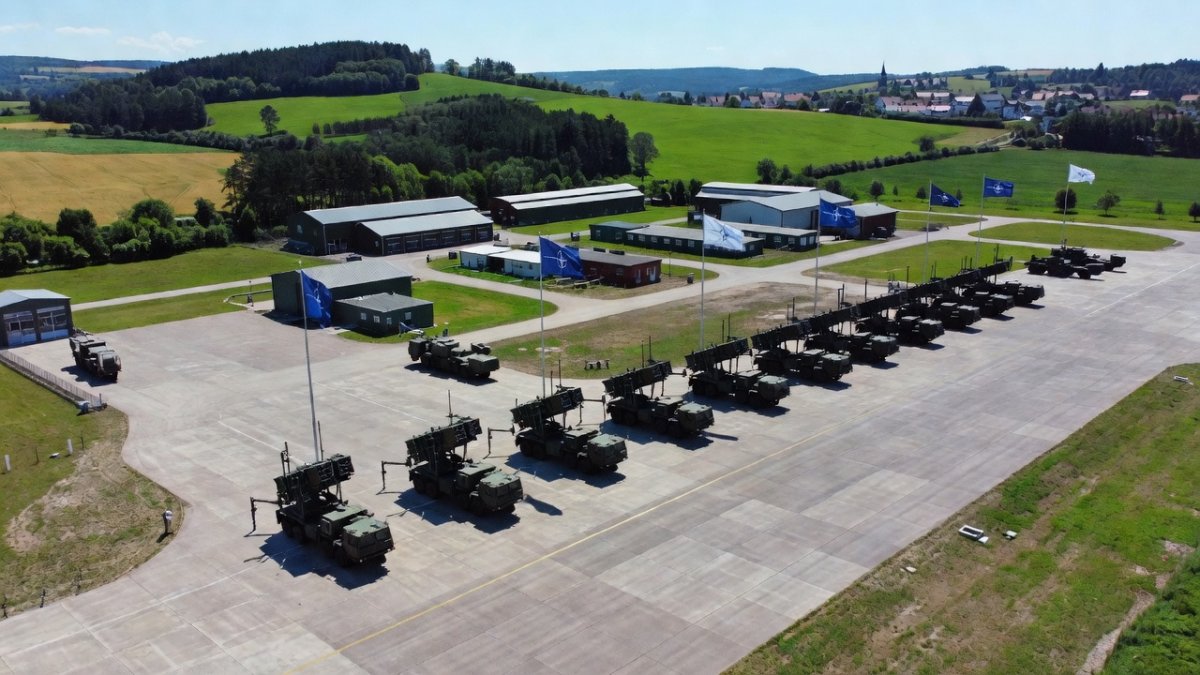
Folks, Germany just shattered decades of hesitation. On July 9, 2026, Chancellor Friedrich Merz stood before the Bundestag and announced the deal that ends Europe's long-range weakness: up to 400 U.S. Tomahawk cruise missiles in a roughly $1 billion package. This isn't paperwork. This is steel, range, and resolve arriving on truck-mounted Typhon launchers with Mk 41 cells. The
The Deal That Got Done on the Sidelines
The agreement was sealed during the NATO Summit in Ankara, Turkey, July 7-9, 2026. No fanfare, just results. Merz delivered the news straight to parliament while U.S. approval is still expected in August. Germany is buying the capability it surrendered when the Cold War ended. No more hoping someone else will cover the deep-strike mission. The trucks will roll and the missiles will fly from German soil.
Why 400 Tomahawks Change the Map
Range of 1,550 miles puts Russian logistics nodes, command posts, and airfields inside Germany's reach for the first time in a generation. Truck-mounted Typhons give mobility and survivability. This is not a symbolic purchase. Four hundred weapons create real mass. Russia's war in Ukraine is still grinding on, and Trump's withdrawal of 5,000 U.S. troops from Germany has left a visible hole. Berlin is filling that hole with American long-range firepower instead of waiting for guarantees that may never come.
The End of Europe's Self-Imposed Blind Spot
Folks, let's cut the nonsense. Most European nations spent thirty years pretending precision deep strike was someone else's problem. Germany led that denial. Now the same country that once led the denial is buying the very system that closes the gap. The Tomahawk purchase forces every neighbor to recalculate. Poland, the Baltics, and Nordic states now see a Germany that can actually reach back. That changes every planning assumption inside NATO.
Trump's Troop Cut and the New Math
The timing is no accident. With 5,000 fewer American soldiers on German soil, Berlin had two choices: complain or arm up. Merz chose the latter. The $1 billion deal keeps the U.S. industrial base engaged while giving Germany sovereign control over the launchers. No more begging for permission every time a target appears beyond 500 km. The missiles belong to Germany. The decision to fire belongs to Berlin. That is the new reality.
What This Means for the Rest of Us
European defense just stopped being a slogan and started being hardware. Other nations will now face pressure to match or integrate with the German capability. Supply chains, training pipelines, and targeting networks will form around these 400 weapons. The era of "Germany leads from behind" is over. The era of Germany holding its own long-range cards has begun.
Here's What You Do Next
Track the August approval vote. Watch how quickly the first Typhon batteries reach operational status. Demand your own representatives explain how your country will integrate or keep pace. Share the facts, not the spin. Call your member of parliament or congress and ask one question: "What is our plan if long-range strike becomes the new normal?" Stay informed, stay loud, and refuse to let any leader pretend this purchase doesn't change the board. Europe just bought time and options. Use both.
By Jessica Ali, Lead Anchor — Global 1 NewsThis article was produced with AI-assisted research and editorial support. Reporting is based on sources cited in the article.
What's Your Reaction?
 Like
0
Like
0
 Dislike
0
Dislike
0
 Love
0
Love
0
 Funny
0
Funny
0
 Wow
0
Wow
0
 Sad
0
Sad
0
 Angry
0
Angry
0

Editor-in-Chief at Global1.News. Atlanta-based journalist who cuts through the BS and tells it like it is. Lead anchor, host, and the voice you hear when the spin stops and the truth starts.












Comments (0)