
Japan's Shrinking Towns: Smart Depopulation Strategies
Introduction: Japan's Population Decline and the Rise of Smart Shrinkage Japan's total population stood at approximately 125.7 million in 2023, marking the thirteenth consecutive year of decline according to official statistics from the Ministry of Internal Affairs and Communications. This sustained drop has placed 744 municipalities, representing 43 percent of all local govern
Introduction: Japan's Population Decline and the Rise of Smart Shrinkage
Japan's total population stood at approximately 125.7 million in 2023, marking the thirteenth consecutive year of decline according to official statistics from the Ministry of Internal Affairs and Communications. This sustained drop has placed 744 municipalities, representing 43 percent of all local governments, at risk of extinction by 2040 under projections from the Japan Policy Council. Rather than pursuing unrealistic growth targets, national and local authorities have shifted toward smart shrinkage, a deliberate strategy that accepts population contraction while optimizing remaining resources through technology, spatial planning, and service reconfiguration.
Smart shrinkage differs from traditional revitalization efforts by focusing on managed decline. Policymakers recognize that reversing demographic trends in remote areas remains improbable given low fertility rates and continued out-migration of younger residents. Instead, the approach emphasizes cost containment, digital substitution for physical infrastructure, and concentration of essential services in viable cores. This framework draws on data-driven assessments of long-term fiscal sustainability rather than short-term population recovery campaigns.
The concept gained formal traction through Cabinet Office initiatives that integrate demographic forecasts with infrastructure planning. Hayakawa town in Yamanashi Prefecture serves as a prominent case study featured in NHK WORLD-JAPAN reporting, illustrating how the smallest municipality by population navigates these pressures. National agencies now encourage other at-risk towns to adopt similar analytical methods when evaluating road maintenance, water systems, and public facilities.
Hayakawa Case Study: Japan's Least Populous Municipality
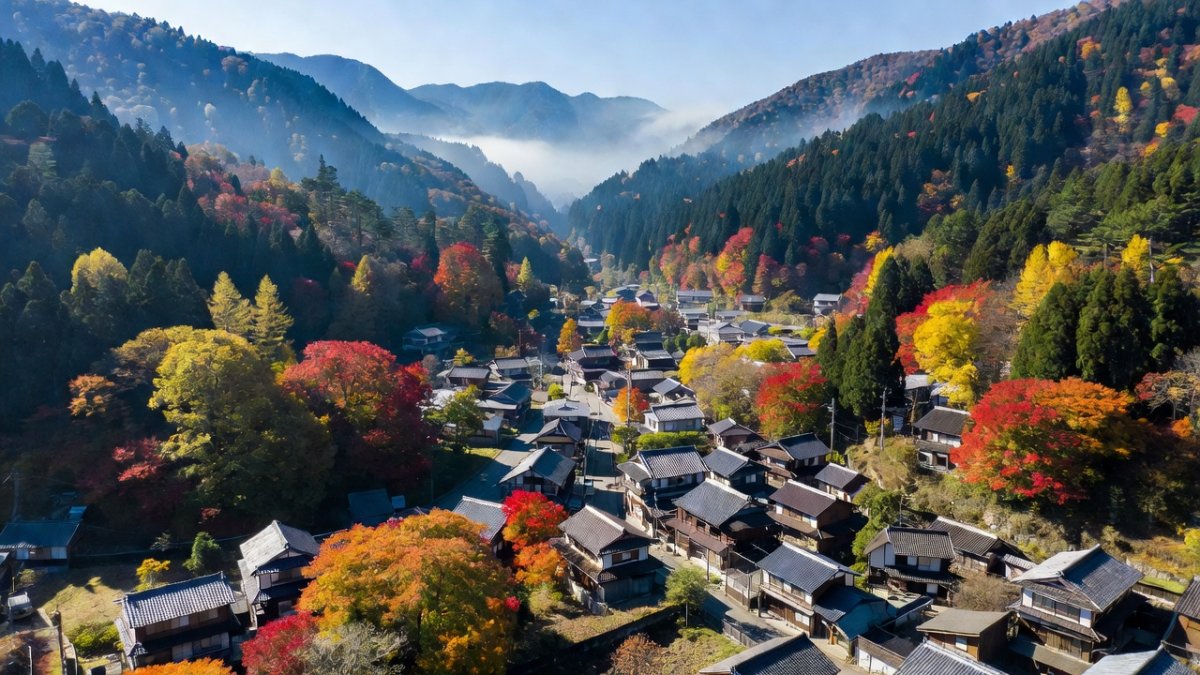
Hayakawa town occupies 370 square kilometers in Yamanashi Prefecture, with 96 percent of its land covered by forest. Its population peaked near 10,000 residents during the 1960s but has since fallen to roughly 860 people, making it Japan's least populous municipality. The town's expansive geography and steep terrain amplify the challenges of providing basic services across dispersed settlements, a situation documented extensively in recent NHK WORLD-JAPAN coverage.
Mayor Masaru Nakamura confronts recurring decisions about which roads to repair, which water lines to replace, and whether to maintain separate administrative buildings. Annual budgets must cover fixed obligations that originated when the town supported ten times its current population. Local officials have begun mapping every household against service delivery costs to identify the most efficient configuration of remaining infrastructure.
Community records show that many younger families departed after the closure of the local junior high school in the early 2000s. The remaining population skews heavily toward residents over 65, increasing demand for medical transport and snow removal while reducing the local tax base. Hayakawa's experience now informs national discussions on how municipalities with similar profiles can apply data analytics to prioritize expenditures.
The Fixed Cost Crisis in Shrinking Municipalities
Infrastructure networks built for larger populations continue to require maintenance regardless of resident numbers. Hayakawa maintains dozens of kilometers of roads, extensive water distribution pipes, and multiple bridges that serve fewer than 900 people. These assets were designed and constructed during periods of higher density, creating a structural mismatch where per-capita costs rise sharply as the population contracts.
Engineering assessments conducted by the Ministry of Land, Infrastructure, Transport and Tourism (MLIT) indicate that road resurfacing and bridge inspections follow fixed schedules irrespective of traffic volume. Water treatment facilities must meet national quality standards even when daily throughput falls below original design capacity. This rigidity places continuous pressure on local budgets already strained by reduced property tax revenue and national grants calibrated to older population figures.
Financial modeling by the town shows that simply maintaining current service levels would require either substantial increases in local taxes or continued dependence on central government transfers. Smart shrinkage strategies therefore prioritize selective decommissioning of underused segments while preserving connectivity for remaining households through alternative technologies such as on-demand transport and remote monitoring systems.
Impact on Daily Life for Remaining Residents
School consolidation has eliminated local educational options, forcing families with children to travel longer distances or relocate entirely. The absence of a junior high school in Hayakawa means students commute to neighboring municipalities, adding logistical burdens that accelerate out-migration. Similar patterns appear across rural Japan where merged schools reduce operating costs but diminish community anchors.
Healthcare access has deteriorated as clinics close and bus routes are curtailed. Residents now face extended travel times to reach hospitals, particularly during winter months when mountain roads become hazardous. Volunteer driver programs and periodic mobile clinic visits provide partial mitigation, yet these arrangements depend on sustained community participation that cannot fully replace permanent facilities.
Vacant homes and shuttered storefronts further erode the sense of vitality in central districts. Abandoned properties create safety concerns and depress property values, complicating efforts to attract new residents or even retain current ones. Local leaders have begun cataloging these structures for potential conversion into community hubs or removal to reduce maintenance liabilities.
Compact City Policy and Networked Service Models
MLIT has promoted compact city policies since the late 1990s, encouraging municipalities to concentrate housing, retail, and public services within walkable districts. The approach seeks to lower infrastructure costs by reducing the spatial footprint of urban functions while maintaining accessibility for aging populations. Toyama City implemented an early version of this model by extending light rail lines and offering incentives for residents to move closer to transit corridors.
Aomori Prefecture adopted a networked compact city framework that links smaller hubs through improved transportation rather than attempting to sustain every original settlement. This model recognizes that complete centralization may be impractical in mountainous regions and instead focuses on strategic nodes connected by reliable public transport and digital services. Planning documents emphasize measurable reductions in per-capita road and utility maintenance expenses.
Hayakawa has begun exploring elements of these policies by identifying a primary residential zone near existing administrative and medical facilities. Subsidies for housing relocation within this zone aim to cluster demand and justify continued investment in core infrastructure. Early results suggest modest success in stabilizing service delivery costs, though full implementation requires coordination with prefectural and national funding streams.
Society 5.0 and Digital Solutions for Rural Challenges
The Cabinet Office's Society 5.0 vision applies artificial intelligence, Internet of Things sensors, and big data analytics to address rural infrastructure gaps. The Digital Garden City Nation initiative specifically targets depopulated areas by deploying smart water management systems that detect leaks in real time and IoT devices that monitor bridge structural integrity without frequent physical inspections.
AI-optimized bus routing has been piloted in several prefectures to replace fixed schedules with demand-responsive services. These systems aggregate anonymized travel data to predict peak usage periods and adjust vehicle deployment accordingly, reducing operating costs while preserving essential connectivity. Hayakawa officials have expressed interest in similar platforms to manage limited transport resources more effectively.
Remote monitoring of utilities and public facilities allows a smaller workforce to oversee larger geographic areas. Sensors installed on water pumps and electrical substations transmit performance data to centralized dashboards, enabling predictive maintenance that prevents costly emergency repairs. National subsidies under Society 5.0 programs have accelerated adoption of these technologies in municipalities facing acute staffing shortages.
Digital Agency Role in Standardizing Rural Services
Established in 2021 under Prime Minister Fumio Kishida, the Digital Agency coordinates the standardization of administrative systems across local governments. By migrating legacy paper-based processes to cloud platforms, the agency aims to reduce duplication and enable smaller municipalities to access sophisticated tools previously available only to larger cities. This centralization supports telehealth consultations and remote administrative services that partially offset the loss of physical facilities.
Remote work subsidies administered through the agency encourage companies to establish satellite offices in rural areas, potentially retaining younger workers who might otherwise migrate to metropolitan centers. Early grant recipients in Yamanashi Prefecture report modest increases in local employment, though long-term retention depends on complementary improvements in broadband reliability and community amenities.
Interoperability standards developed by the Digital Agency ensure that telehealth platforms used in Hayakawa can exchange patient data securely with hospitals in neighboring cities. This technical foundation reduces redundant testing and improves continuity of care for elderly residents who require frequent medical attention despite limited local resources.

Community-Led Adaptation and Volunteer Networks
Residents in shrinking towns have formed cooperatives to operate community transport services where commercial bus routes have been eliminated. These volunteer-driven initiatives rely on shared vehicles and scheduled rotations among licensed drivers, providing essential mobility for medical appointments and grocery shopping. Hayakawa's cooperative model has been studied by neighboring municipalities seeking low-cost alternatives to subsidized public transit.
Volunteer snow removal teams and daily welfare check-in programs address immediate safety needs for isolated elderly households. These efforts are coordinated through neighborhood associations that maintain updated resident registries and emergency contact lists. While effective in the short term, such arrangements depend on the continued health and availability of younger volunteers within an aging population.
Subsidized housing projects located near consolidated service centers encourage remaining residents to relocate from remote hamlets. Local governments offer financial assistance for moving costs and renovation, aiming to reduce the number of occupied dwellings that require separate utility connections and road access. Participation rates have varied, reflecting both economic incentives and emotional attachments to ancestral properties.
International Comparisons with Shrinking Cities
Germany's experience with shrinking cities in the former East Germany provides relevant precedents. After reunification, planners in cities such as Leipzig implemented selective demolition of vacant housing stock and conversion of surplus land into green space, lowering long-term maintenance burdens. These interventions were supported by federal programs that treated population decline as a structural condition rather than a temporary setback.
Youngstown, Ohio, adopted an explicit smart decline plan in the mid-2000s that concentrated public investment in viable neighborhoods while allowing peripheral areas to return to natural states. The strategy included land banking of abandoned properties and revised zoning that discouraged scattered development. Outcomes included stabilized municipal finances despite continued population loss.
Japan's approach integrates elements from both examples while incorporating advanced digital infrastructure. The combination of compact city zoning, Society 5.0 sensor networks, and centralized administrative platforms distinguishes Japanese policy from earlier international efforts. Hayakawa's trajectory will likely serve as a reference point for other nations facing similar demographic pressures in mountainous or remote regions.
Outlook for Japan's Rural Future Through 2060
Population projections from the National Institute of Population and Social Security Research indicate continued decline through the 2060s, with rural municipalities experiencing the steepest losses. Hayakawa and similar towns will therefore continue testing the limits of smart shrinkage strategies under increasingly constrained budgets. Policy evolution is expected to emphasize further integration of AI-driven service optimization and expanded telehealth coverage.
National government reviews scheduled for the late 2020s will assess whether current compact city and digital initiatives have produced measurable fiscal savings. Early indicators from MLIT evaluations suggest that municipalities adopting networked service models achieve slower growth in per-capita infrastructure costs compared with those maintaining dispersed facilities. These findings will shape future grant allocations and regulatory guidance.
Hayakawa functions as a bellwether for Japan's rural future. Its success or failure in sustaining essential services through technology and spatial reorganization will influence whether other at-risk municipalities pursue similar paths or face more abrupt service contractions. The town's ongoing adaptation demonstrates that strategic management of decline can preserve livability even as population numbers continue to fall.
By Kenji Tanaka, Staff Writer
This article was produced with AI-assisted research and editorial support. Reporting is based on sources cited in the article.
What's Your Reaction?
 Like
0
Like
0
 Dislike
0
Dislike
0
 Love
0
Love
0
 Funny
0
Funny
0
 Wow
0
Wow
0
 Sad
0
Sad
0
 Angry
0
Angry
0

Japan Correspondent at Global1.News. Tokyo-based voice covering Japanese politics, technology, economy, and culture. Tracks the intersection of tradition and innovation in one of the world's most dynamic societies.













Comments (0)