
Egypt's World Cup Controversy: African Football's Call for Fair Play
The Weight of a Single Decision In Atlanta, Egypt left the World Cup with a 3-2 defeat to Argentina that still echoes across the continent. The Egyptian Football Association has lodged a formal complaint with Fifa, calling for an investigation into what it described as double standards in officiating. The request includes the removal of French referee Francois Letexier and his
The Weight of a Single Decision
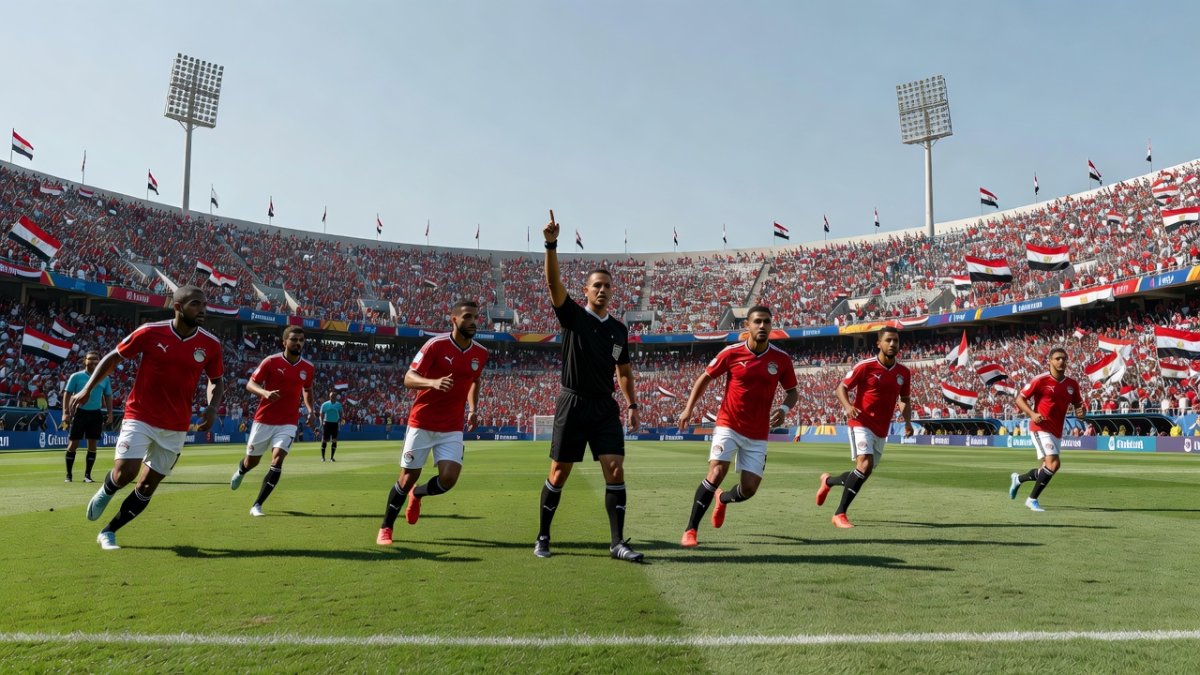
In Atlanta, Egypt left the World Cup with a 3-2 defeat to Argentina that still echoes across the continent. The Egyptian Football Association has lodged a formal complaint with Fifa, calling for an investigation into what it described as double standards in officiating. The request includes the removal of French referee Francois Letexier and his entire crew from the tournament. For many across Africa, the episode feels familiar: a moment when the margin between progress and exit rested on calls that left supporters asking whether every team faces the same standard.
Egypt had led 1-0 in the second half when the video assistant referee ruled out a goal by Mostafa Zico. The decision followed a foul called against midfielder Marwan Attia for stepping on Lisandro Martinez's foot at the start of the move. Egypt also believed Mohamed Salah had been fouled inside the Argentina penalty area seconds before the reigning champions scored the stoppage-time winner. These incidents form the core of the complaint filed by EFA president Hany Abou Rida.
Details Behind the Egyptian Complaint
The EFA statement makes clear that the federation wants Fifa to examine both the on-field team and the video technology officials. It cites what it calls blatant errors and an insistence on not reviewing certain footage. The complaint further alleges discrimination against the Egyptian national team and demands that the referee and crew be excluded after any investigation. Egypt have never reached the quarter-finals of the World Cup, so the stakes of these decisions carried extra weight for a side that had already navigated a difficult path to the last 16.
Argentina captain Lionel Messi set up the first goal in the 79th minute and scored the equaliser in the 83rd minute. The match ended 3-2 after the late winner. Argentina are scheduled to face Switzerland in Kansas City on Saturday at 02:00 BST. The EFA's protest now sits with Fifa, whose disciplinary processes have historically given limited public explanation when dismissing similar appeals.
Voices from Inside the Egyptian Camp
Manager Hossam Hassan stated after the match that Egypt had been treated unfairly and had suffered injustice. He suggested that perhaps the desire existed to keep the world champions in the competition and to allow Messi to remain in the running. Forward Mostafa Zico was more direct, describing the referee as unfair and the injustice as clear from the start of the match. He added that it appeared the tournament had been fixed.
These comments emerged in the immediate aftermath of elimination. They reflect the raw emotion that follows any exit at this level, yet they also highlight a deeper pattern observed by supporters across Africa: the sense that decisions must be beyond reproach when the outcome determines whether a nation advances or returns home.
Lessons from Past Protests at the World Cup
Protests against refereeing decisions rarely alter results at the World Cup. In 2022, France lodged a protest after a 1-0 defeat to Tunisia in their final group game. A stoppage-time goal was ruled out following a video assistant referee review that appeared inconsistent with protocol. Fifa's disciplinary committee dismissed the protest with a brief statement that offered no detailed explanation. The same pattern tends to hold whenever federations raise concerns after the final whistle.
The EFA's complaint follows this established route. Decisions remain largely subjective, and human error occurs in every tournament. Yet the language used by the Egyptian federation, including references to double standards and discrimination, points to a broader frustration felt by many African federations that believe their teams must overcome not only the opposition but also inconsistent application of the laws.
A Senegalese View of African Football's Shared Experience
From Dakar, the Egyptian case resonates because Senegal has known similar heartbreaks. The passion that fills stadiums from Cairo to Dakar carries the same intensity, yet the path to quarter-finals or beyond has often required African sides to perform at a higher level while accepting that marginal calls may not fall their way. The EFA's demand for an investigation reflects this lived reality rather than an isolated grievance.
Football in Senegal and across the continent is woven into daily life. Families gather around screens, streets empty during matches, and young players dream of lifting the trophy one day. When incidents like the ruled-out Zico goal or the disputed challenge on Salah occur, they feed a collective memory of moments where the outcome felt shaped by factors beyond the pitch. This does not diminish the quality of play; it simply adds another layer to the challenge African teams already navigate.
Looking Forward Without Easy Answers
Fifa has been contacted for comment on the Egyptian complaint, though past responses to similar protests have been concise and without elaboration. The match itself showcased Argentina's resilience and Egypt's determination, with Messi influential in the comeback. The EFA's call for accountability now moves through official channels, where outcomes depend on internal review rather than public pressure.
For supporters in Senegal and elsewhere on the continent, the episode serves as another reminder that progress in African football involves both on-field excellence and consistent standards off it. The conversation continues in homes, cafes, and training grounds, grounded in the belief that every team deserves the same scrutiny and the same protection under the rules. The coming matches will unfold under that same expectation.
By Amara Diop, Staff WriterThis article was produced with AI-assisted research and editorial support. Reporting is based on sources cited in the article.
What's Your Reaction?
 Like
0
Like
0
 Dislike
0
Dislike
0
 Love
0
Love
0
 Funny
0
Funny
0
 Wow
0
Wow
0
 Sad
0
Sad
0
 Angry
0
Angry
0

West Africa/Sahel Correspondent at Global1.News. Dakar-based journalist covering politics, security, climate, and development across Francophone and Anglophone West Africa. Tells the stories of a region undergoing profound transformation.











Comments (0)