
The Pentagon's CMC List Expansion and Korea's Dual-Use Technology Dilemma
The Pentagon's CMC List Expansion and Korea's Dual-Use Technology Dilemma (The Diplomat) The June 2025 Expansion of the Section 1260H List The U.S. Department of Defense expanded its Chinese Military Companies list to 188 entities on June 8, incorporating 64 additional firms under Section 1260H of the National Defense Authorization Act for Fiscal Year 2021. This development occ
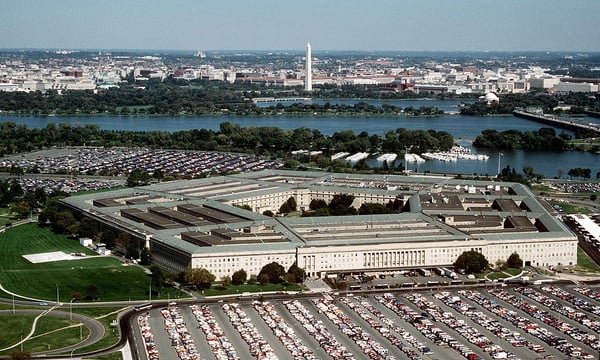
(The Diplomat)
The June 2025 Expansion of the Section 1260H List
The U.S. Department of Defense expanded its Chinese Military Companies list to 188 entities on June 8, incorporating 64 additional firms under Section 1260H of the National Defense Authorization Act for Fiscal Year 2021. This development occurred against the backdrop of the May meeting between Chinese President Xi Jinping and U.S. President Donald Trump in Beijing, where both sides endorsed pursuit of a constructive relationship of strategic stability. The scale of the update attracted attention because it encompassed prominent private enterprises such as Tencent, DJI, Unitree, and Alibaba.
Analysts at the Foundation for Defense of Democracies have framed the expansion as an element of Washington's response to China's Military-Civil Fusion strategy rather than an isolated administrative action. The National Bureau of Asian Research has similarly noted that the challenge for U.S. policymakers now centers on evaluating how civilian technological capabilities may support military modernization under that framework.
Classification Without Immediate Legal Restrictions
Inclusion on the CMC List does not prohibit commercial transactions, impose export controls, trigger economic sanctions, or bar listed firms from the U.S. market. The Georgetown Center for Security and Emerging Technology has observed that Military-Civil Fusion arrangements create forms of collaboration between civilian firms and the defense sector that fall outside traditional defense contracting models. The list therefore operates primarily as a shared reference point that reduces coordination costs across U.S. agencies possessing distinct legal authorities.
Legal analysts at Goodwin have pointed out that entities placed on the Section 1260H list are expected to feature in subsequent policy measures, as illustrated by the implementation trajectory of the BIOSECURE Act. The designation supplies a common baseline rather than an enforcement mechanism in its own right.
Korea's Chaebol and the Dual-Use Technology Domains
Korean semiconductor manufacturers Samsung Electronics and SK Hynix, together with LG's robotics and AI divisions, operate in precisely the technology areas highlighted by the CMC List expansion. These firms maintain extensive exposure to both U.S. alliance requirements and Chinese supply-chain integration. The K-Cloud initiative and Korea's broader semiconductor ecosystem now confront heightened scrutiny over potential mobilization of civilian capabilities for military purposes.
Because artificial intelligence, advanced computing, and robotics constitute core domains of strategic competition, Korean enterprises face parallel pressures to those confronting the Chinese firms newly added to the list. Seoul's policy apparatus must therefore assess how its own industrial base intersects with the classification logic applied by the Department of Defense.
Korea's Historical Military-Civil Cooperation Framework
Korea has maintained its own Military-Civil Fusion arrangements, known domestically as min-gun hyeopryeok, since the 1970s as part of defense research and development policy. This institutional precedent creates analytical parallels with the Chinese strategy that the CMC List seeks to illuminate. Korean defense procurement has long relied on technology spillovers from commercial sectors, particularly in electronics and materials science.
The existence of this longstanding domestic framework complicates Seoul's ability to treat the U.S. classification exercise as an external matter. Policymakers must reconcile historical patterns of civil-military integration with contemporary alliance expectations regarding technology governance.
Strategic Pressures on Korean Supply Chains
Korean firms remain positioned between U.S. expectations that advanced technologies not reach Chinese military end-users and Chinese demands for continued access to Korean components and manufacturing capacity. The semiconductor supply chain, central to both K-Cloud development and AI ecosystem growth, exemplifies this tension. Any future U.S. measures drawing on the CMC List baseline could affect Korean firms' licensing arrangements or joint ventures in China.
Seoul's strategic calculus therefore involves weighing alliance obligations against the economic costs of supply-chain reconfiguration. Historical precedents of technology export controls during earlier phases of U.S.-China friction provide limited guidance for the current scale of dual-use convergence.
Policy Implications for Korean Technology Governance
The CMC List's function as a coordination device among U.S. agencies suggests that Korean regulators may encounter similar demands for inter-agency alignment on technology risk assessment. Ministries responsible for trade, defense, and science policy will need shared criteria for evaluating civilian firms whose capabilities could support military applications. The precedent set by the BIOSECURE Act indicates that initial designations can inform later legislative or regulatory actions.
For Korean institutions, the challenge lies in developing transparent yet flexible mechanisms that satisfy alliance partners without unduly constraining commercial innovation. The analytical shift from direct military production to potential mobilization capacity requires new assessment tools that Korean agencies have not previously applied at this scope.
By Prof. David Park, Staff WriterThis article was produced with AI-assisted research and editorial support. Reporting is based on sources cited in the article.
What's Your Reaction?
 Like
0
Like
0
 Dislike
0
Dislike
0
 Love
0
Love
0
 Funny
0
Funny
0
 Wow
0
Wow
0
 Sad
0
Sad
0
 Angry
0
Angry
0
East Asia/Technology Correspondent at Global1.News. Seoul-based voice covering Korean politics, technology, business, and culture. Analyzes how technology and geopolitics intersect across East Asia.














Comments (0)