
Dr Nagham Nawzat: Yazidi Doctor Helping IS Survivors
Shireen’s Ordeal and the Personal Cost of Survival Shireen was studying for a high school examination at her home in the northern Iraqi town of Sinjar on 3 August 2014 when Islamic State group militants broke into her house and kidnapped her from her family. At the age of 19 she was sold as a sex slave to an IS militant in the north-western city of Tal Afar. Three months later
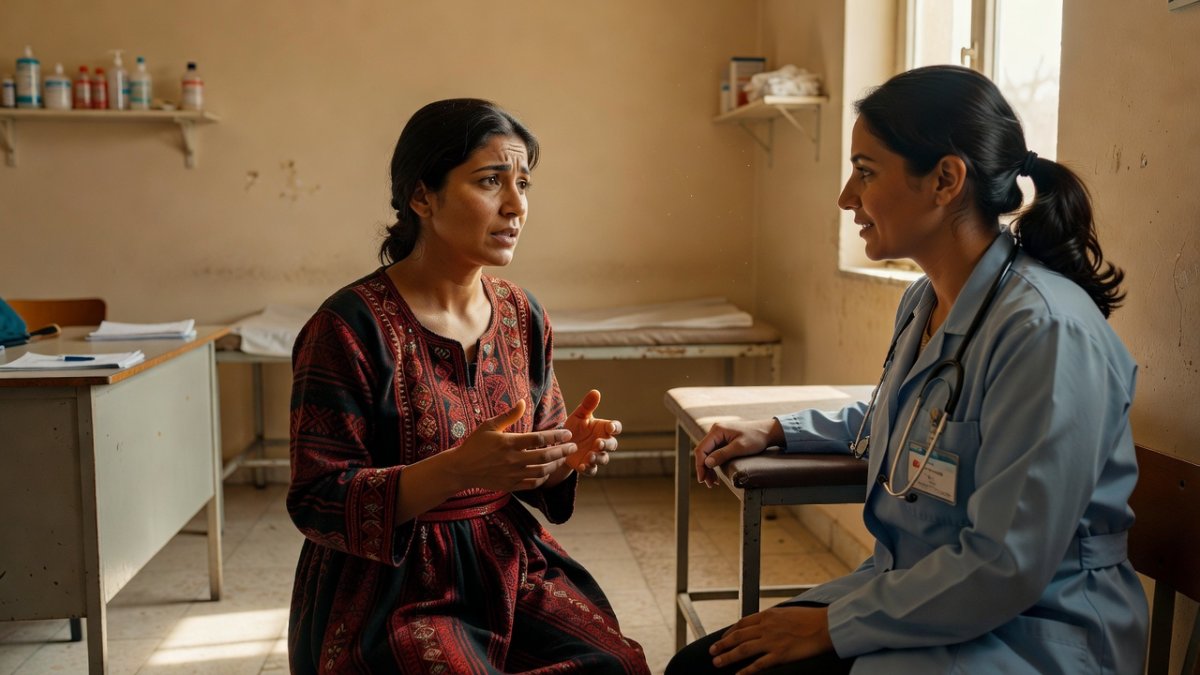
Shireen’s Ordeal and the Personal Cost of Survival
Shireen was studying for a high school examination at her home in the northern Iraqi town of Sinjar on 3 August 2014 when Islamic State group militants broke into her house and kidnapped her from her family. At the age of 19 she was sold as a sex slave to an IS militant in the north-western city of Tal Afar. Three months later Shireen was sold once again to Abu Omar another IS fighter in Mosul to become his third wife.
He said I love you but when you love someone you do not rape her. It destroyed my life Shireen tells those who listen. Although Abu Omar’s other wives lived in a separate house Shireen says that they used to beat her whenever they got together. For more than two years she was not allowed to leave the house in Mosul. She was forced to cook wash the dishes and clean every day.
In 2016 Shireen was released by Iraqi forces during the campaign to retake Mosul from IS. After more than two years of captivity she suffered from depression and constant nightmares. Her uncle and many of her friends were killed by IS while her father and one of her sisters have been missing since 2014. Upon her release she visited Dr Nagham Nawzat a Yazidi gynaecologist in the city of Duhok in Iraq’s Kurdish region. Nawzat not only gave her a physical examination she also listened to Shireen and offered her emotional support.
Dr Nawzat helped all of us. Without her help I would not be here today the 23-year-old says. Shireen’s account reflects the lived reality of Yazidi women who endured systematic sexual violence and forced domestic labour under IS control.
The Scale of the Yazidi Genocide
In 2014 IS seized almost a third of Iraq. At least 12,000 Yazidis were killed or kidnapped as part of what the United Nations describes as an ongoing genocide against the religious minority. The Yazidis are a Kurdish-speaking religious minority whose beliefs combine elements of Zoroastrianism Christianity and Islam. IS targeted them for systematic destruction killing men who refused to convert and taking women and girls as sex slaves.
According to Hussein al-Qaidi the director of the Kidnapped Affairs department at the Kurdistan Regional Government in Duhok 2,023 Yazidi women have been liberated from IS territories as of July 2018. These figures document the breadth of the assault on an entire community whose members faced killings sexual slavery enslavement torture and forced conversion.
The human rights consequences extend beyond the initial abductions. Families remain separated thousands remain missing or unaccounted for and survivors carry the physical and psychological consequences of prolonged captivity into their daily lives in displacement.
Dr Nagham Nawzat’s Background and Work at the Duhok Survivors’ Centre
Born in Mosul to a Yazidi family in 1976 Dr Nagham Nawzat’s life-long dream was to study medicine. Concerned about women’s issues from an early age she graduated with a degree in gynaecology from Mosul’s Medical College in 2002. In March 2016 Nawzat received the International Women of Courage Award from then-US Secretary of State John Kerry for providing psychological support to traumatised Yazidi survivors and for combating gender-based violence.
In 2014 IS seized almost a third of Iraq. The following year Nawzat decided to join the Duhok Survivors’ Centre where she volunteers to provide healthcare and psychological support for Iraqi women who survived IS. Funded by the United Nations Population Fund it is the only facility in Iraq that specialises in gender-based violence. Nawzat 42 has provided life-saving support to more than half of the liberated women helping an estimated 1,200 Yazidi women.
Nawzat uses a post-traumatic medical approach. She conducts a thorough physical check-up and then listens attentively as her patients talk about their fears and their traumatising experiences. She offers them support and positive reinforcement like a big sister the survivors can confide in. As she creates a relationship with her patients based on mutual trust they confide in her and reveal their deepest emotions and fears with ease.
Despite threats on her own life for her work with survivors Nawzat continues her mission. To see a woman come back to life that is why I do this she has said. Her presence at the centre embodies a sustained commitment to restoring dignity and health to women whose bodies and minds were targeted during the genocide.
United Nations Recognition of the Genocide
The UN Commission of Inquiry has documented in detail the scope of the genocide noting that IS committed genocide against the Yazidis through killings sexual slavery enslavement torture and forced conversion. This formal recognition places the crimes against the Yazidi community within the framework of international human rights law and underscores the obligation of states to prevent and punish such acts.
The classification as genocide carries implications for accountability and for the protection of remaining community members who continue to face displacement and insecurity. It also affirms the experiences of survivors like Shireen whose accounts of captivity and loss form part of the documented pattern of systematic destruction.
Ongoing Needs of Survivors and the Work Ahead
The Duhok Survivors’ Centre continues to operate providing not only medical care but also legal assistance and psychosocial support. Yet many survivors still struggle with the trauma of their captivity and thousands remain missing or unaccounted for. The centre’s specialised focus on gender-based violence remains essential for women who require sustained medical attention and mental health care.
Survivors face daily challenges in rebuilding their lives including the absence of missing relatives the need for secure housing and the requirement for economic opportunities that allow them to regain independence. The human rights perspective demands continued international attention to these needs so that the partial liberation of women does not become an endpoint but rather the beginning of comprehensive recovery.
Dr Nawzat’s work illustrates how individual medical professionals can address both the physical and emotional consequences of genocide. The centre’s model funded by the United Nations Population Fund demonstrates the value of dedicated facilities that treat survivors with consistency and respect. As long as women like Shireen carry the effects of captivity the demand for such services will persist.
By Fatima Al-Rashid, Staff Writer
This article was produced with AI-assisted research and editorial support. Reporting is based on sources cited in the article.
What's Your Reaction?
 Like
0
Like
0
 Dislike
0
Dislike
0
 Love
0
Love
0
 Funny
0
Funny
0
 Wow
0
Wow
0
 Sad
0
Sad
0
 Angry
0
Angry
0
Gulf/MENA Correspondent at Global1.News. Based in Doha, covering Gulf politics, energy markets, diplomacy, and development across the Middle East and North Africa. Tracks the economic transformation of the Gulf states.













Comments (0)