
Morena Rolls Out Anti-Corruption Screening for 2027 Candidates
Morena is taking a firm step to clean up its candidate lists for the 2027 midterms. Party president Ariadna Montiel announced that every hopeful will face both an internal party review and a full external check by the federal Security Cabinet. The move aims to rebuild trust with voters who have grown weary of past scandals. Morena Tightens Candidate Screening for 2027 MEXICO CITY — Morena is advancing an anti-corruption screening process for all aspiring candidates ahead of t
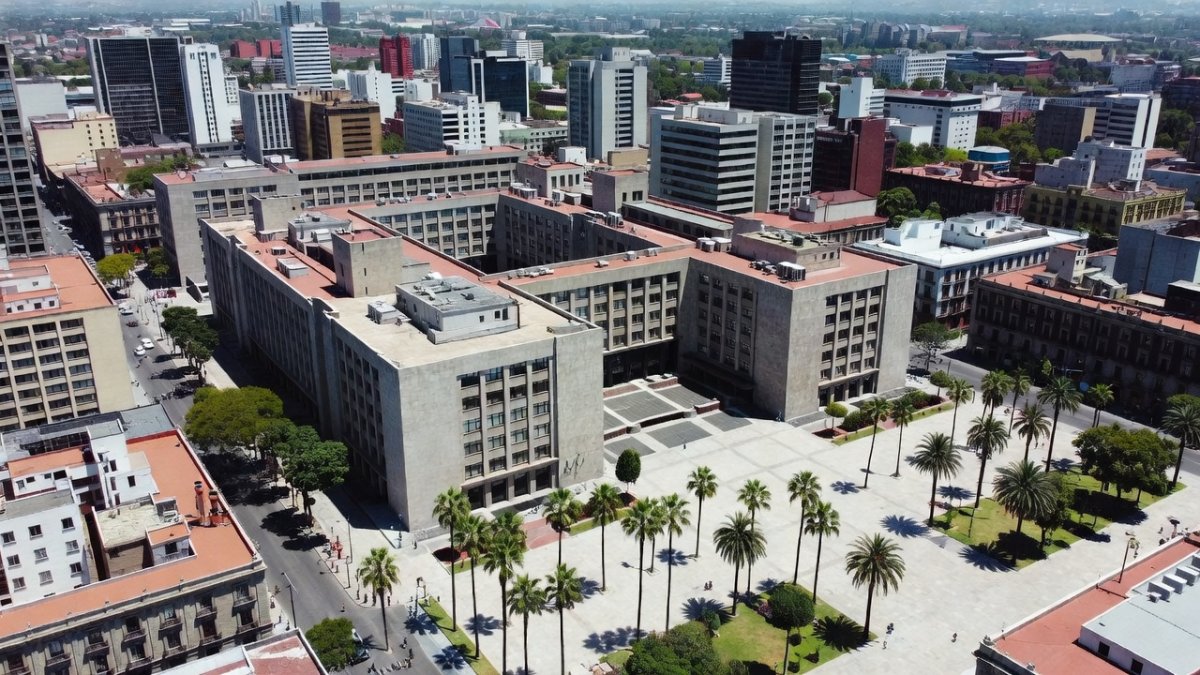
Morena is taking a firm step to clean up its candidate lists for the 2027 midterms. Party president Ariadna Montiel announced that every hopeful will face both an internal party review and a full external check by the federal Security Cabinet. The move aims to rebuild trust with voters who have grown weary of past scandals.
Morena Tightens Candidate Screening for 2027
MEXICO CITY — Morena is advancing an anti-corruption screening process for all aspiring candidates ahead of the 2027 elections. The measures include one internal evaluation conducted by the party and a second review performed by the federal government's Security Cabinet, according to party president Ariadna Montiel.
Morena Introduces Dual Filters for Candidate Selection
This approach builds on the party's ongoing efforts to strengthen its selection procedures. The internal check will be handled by the Comision Nacional de Elecciones, while the external assessment involves coordination with the Gabinete de Seguridad and the Instituto Nacional Electoral.
Party leaders emphasize that these steps apply to candidates seeking federal and state positions. The initiative forms part of broader work to address past concerns about candidate backgrounds.
Ordinary residents in colonias across Mexico watch these developments closely, as candidate quality directly shapes local governance and daily life in their communities.
The Gabinete de Seguridad, comprising the Secretaría de Seguridad y Protección Ciudadana, SEDENA, SEMAR, Fiscalía General de la República, and Guardia Nacional, plays a central role in Morena's external vetting for 2027 hopefuls by conducting thorough background checks and reviewing financial disclosures submitted to the Secretaría de Hacienda. This process, intensified since the party's founding in 2011, ensures candidates align with the Cuarta Transformación's anti-corruption ethos before advancing to internal filters. In practice, officials cross-reference data from the Servicio de Administración Tributaria and property registries to flag irregularities, drawing on protocols refined after Andrés Manuel López Obrador's 2018 victory.
Security Cabinet Role in External Review
The federal Security Cabinet will conduct one layer of the screening alongside the INE. This external filter aims to examine potential ties that could affect public trust in elected officials.
Morena President Ariadna Montiel, who assumed the role in May 2026, has highlighted the importance of this dual structure. The party itself manages the first evaluation through its national elections commission.
Coordination between these bodies reflects ongoing institutional collaboration. Details on exact procedures remain limited at this stage, with further clarification expected as preparations advance.
Communities in states holding elections in 2027 stand to benefit from greater transparency in who appears on ballots, particularly in areas where past concerns have surfaced.
Residents in ejidos and indigenous comunidades often feel the effects of leadership choices most directly through local services and security conditions.
Similar vetting has appeared in states like Michoacán and Tabasco during past local elections, where Morena adapted federal models to screen aspirants for governorships and municipal posts. Compared to the PAN and PRI's more centralized, party-elite driven selections that often relied on internal loyalty tests rather than independent financial audits, Morena's approach incorporates external security input for greater transparency. The Instituto Nacional Electoral then verifies final eligibility, confirming compliance with constitutional requirements for the 500-member Chamber of Deputies.
Context of 2027 Midterm Elections
The 2027 contests will select all 500 members of the Chamber of Deputies along with various state-level positions. These races represent a significant test for the Sheinbaum administration and Morena's organizational strength.
President Claudia Sheinbaum has expressed support for the screening initiative as a way to reinforce democratic processes. The measures align with the party's platform that has long prioritized anti-corruption efforts.
Multiple states will hold concurrent elections, increasing the scope of the vetting requirements. Party officials note that the process covers every level of candidacy under consideration.
Working families in maquiladora regions and rural areas follow these updates because elected representatives influence economic policies and public safety measures that touch daily routines.
The elections also serve as a checkpoint for the legacy of the Cuarta Transformacion, with voters assessing progress on key promises.
The 2027 midterms will renew all 500 seats in the Chamber of Deputies—300 by direct election and 200 through proportional representation—alongside races for governors and state legislatures in key battlegrounds. Estado de México, Mexico's most populous state, stands out as a pivotal contest, joined by Jalisco, Nuevo León, and Veracruz where Morena seeks to consolidate gains from the 2024 presidential transition. Historically, such midterms have tested presidential mandates, often reshaping legislative majorities and influencing policy momentum for the remainder of the term.
Heading into these elections, Sheinbaum's strong approval ratings bolster Morena's position, building on the party's welfare programs and energy sovereignty focus under the Cuarta Transformación. The opposition landscape features a fragmented PAN, PRI, PRD, and Movimiento Ciudadano alliance struggling to mount unified challenges after their 2024 setbacks. This dynamic positions the midterms as a critical gauge of whether Morena can sustain its dominance through 2030.
Addressing Criticisms Over Candidate Backgrounds
Morena has encountered scrutiny in recent years regarding some candidates and alleged connections to organized crime. The new screening process seeks to respond to those concerns through systematic checks.
By implementing both internal and external reviews, the party aims to improve the integrity of its candidate lists. This comes as part of wider efforts to distance the organization from past allegations.
Officials stress that the screening applies uniformly to all aspirants. The goal remains selecting individuals who can uphold public confidence in governance.
People in neighborhoods affected by earlier controversies welcome steps that prioritize cleaner selections, hoping for representatives more focused on community needs.
Campesinos and urban workers alike see potential for improved accountability when candidate vetting receives greater attention.
By integrating these layers, the mechanism aims to prevent scandals that plagued prior administrations, fostering public trust ahead of the midterms viewed as a referendum on Claudia Sheinbaum's early term.
Links to Security Reforms in Estado de Mexico
The candidate screening arrives alongside reported progress in security initiatives, including reductions in homicides in Estado de Mexico. These reforms have shown measurable results in certain regions.
Party leaders connect the vetting process to broader security strategies under the current administration. Cleaner candidate pools are viewed as complementary to enforcement efforts.
Coordination with the Security Cabinet extends this approach into the electoral arena. The combination seeks to limit influence from criminal elements in political contests.
Families in high-crime areas of the state observe these parallel tracks, noting how leadership choices intersect with daily safety and economic stability.
Continued success in such reforms could encourage similar applications in other parts of the country ahead of 2027.
Effects on Everyday Mexican Communities
Residents in colonias and comunidades indigenas stand to gain from candidates who undergo thorough review. Trust in elected officials often translates into better attention to local infrastructure and services.
The process may encourage more community-oriented individuals to seek office by signaling higher standards. This could shift dynamics in areas where skepticism toward politics has grown.
Sheinbaum administration backing adds institutional weight to the initiative. Ordinary citizens hope the changes lead to representatives who prioritize neighborhood concerns over external pressures.
Workers in various sectors watch for signs that the screening produces tangible improvements in governance quality and responsiveness.
Long-term outcomes will depend on consistent application across federal and state races.
High-quality candidates directly shape community outcomes, as seen in improved water access and public safety initiatives in Morena-led municipalities where vetted officials prioritized transparent budgeting. In Guerrero, Chiapas, and Oaxaca, past electoral controversies over unqualified picks led to stalled healthcare projects and persistent insecurity, underscoring the stakes for everyday families. Indigenous communities and ejidos actively engage in selection assemblies, voicing priorities that influence final slates and promote inclusive governance.
Mexican electoral law's gender parity requirement has boosted women candidates, ensuring balanced representation that amplifies voices on local issues like maternal health and education equity. These elements tie candidate screening to tangible progress in vulnerable regions, reinforcing democratic participation at the grassroots level.
Role Within Cuarta Transformacion Framework
Anti-corruption measures have formed a central element of Morena's platform since the start of the Fourth Transformation. The current screening extends that emphasis into candidate selection.
President Sheinbaum's public endorsement ties the effort to ongoing institutional strengthening. Party documents frame the dual checks as consistent with prior commitments.
Implementation will unfold gradually as 2027 approaches, with the internal and external components operating in sequence. Observers note the need for clear communication on results.
Communities across Mexico assess these steps against lived experiences of governance, seeking evidence that platforms translate into daily benefits.
The initiative reflects continued evolution within the ruling party as it prepares for upcoming electoral challenges.
What to Watch For
As 2027 draws closer, attention will turn to how consistently these dual filters are applied across states and whether the Security Cabinet shares enough detail to satisfy skeptics. Observers will also track whether the process opens doors for more women and community leaders or simply reinforces existing party structures. The real test will come when voters see the final lists and decide if the new standards truly deliver cleaner, more responsive government in their neighborhoods.
By Rosa Martinez, Staff Writer
This article was produced with AI-assisted research and editorial support. Reporting is based on sources cited in the article.
What's Your Reaction?
 Like
0
Like
0
 Dislike
0
Dislike
0
 Love
0
Love
0
 Funny
0
Funny
0
 Wow
0
Wow
0
 Sad
0
Sad
0
 Angry
0
Angry
0
Latin America/Andes Correspondent at Global1.News. Based in Bogota, covering politics, environment, energy, and social movements across the Andean region. Passionate about environmental journalism and communities protecting their land.











Comments (0)