
Russia's Independent Candidates Face Their Toughest Election Yet
The September 20 election this year unfolds against a backdrop of regional economic strain and tightened political controls, with independent candidates registering at historic lows that underscore the Kremlin's grip on Russia's legislative process. Just 79 independents have secured confirmation ...
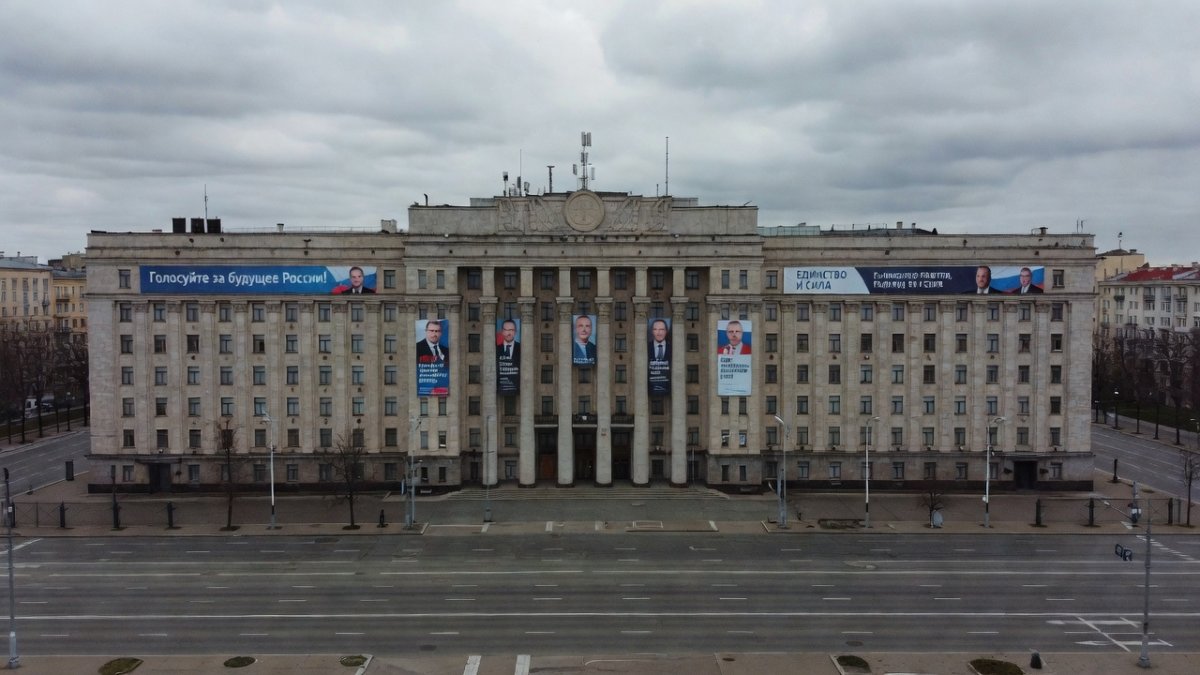
The September 20 election this year unfolds against a backdrop of regional economic strain and tightened political controls, with independent candidates registering at historic lows that underscore the Kremlin's grip on Russia's legislative process. Just 79 independents have secured confirmation for the 450-seat contest, a sharp decline from prior cycles that reflects deliberate barriers erected by United Russia and its allies. This contraction occurs as fuel shortages and drone-related disruptions ripple through provinces, testing the limits of managed democracy.
Independent Field Shrinks Sharply for Duma Poll
Moscow, Russia — Persistent fuel shortages and economic damage from Ukrainian drone attacks on energy infrastructure and warehouses operated by online retailer Wildberries have dominated headlines across Russia's regions over the past month. The turmoil has prompted many Russians to take to social media to vent frustrations. Yet the discontent shows little sign of translating into electoral competition, as confirmed figures reveal only 79 independent nominees cleared for the September 20 single election day this year.
Record Lows in Candidate Numbers
Confirmed facts establish that 79 independent candidates have advanced to the nomination stage for the State Duma election this year, compared with more than 170 five years ago and 300 a decade ago. United Russia currently holds 324 of the 450 seats, having secured 49.8 percent of the vote in the previous cycle. President Putin signed the decree scheduling the vote earlier this year, locking in a timeline that favors incumbents through administrative leverage.
Signature Collection Barriers Intensify
Yevgenia Kutsuyeva, a journalist and local activist from Ufa, Bashkortostan, reported that her team gathered fewer than 1,000 of the required 16,000 signatures by the Sunday deadline. With support from under 0.2 percent of residents in her single-member district, the effort left volunteers in tears despite exhaustive outreach. Kutsuyeva stated she worked 20 hours daily, lost four kilograms, and generated 10 million social media views, yet public indifference prevailed.
The mechanics of signature collection under Russian election law demand that independent candidates secure either 3 percent of registered voters in their single-member district or endorsements from at least 5 percent of municipal deputies, a dual-track system that Central Election Commission chair Ella Pamfilova has defended as necessary for verifying genuine support. Following the Kremlin’s amendments five years ago that raised the municipal filter threshold and mandated collection within narrowly defined administrative units rather than across the entire district, candidates must now navigate fragmented local councils where United Russia loyalists dominate. Filing deadlines for the September 20 contest this year close in mid-July, leaving little room for error as the CEC reviews submissions for technical compliance before any ballot access is granted.
Yevgenia Kutsuyeva’s experience in Ufa illustrates how these rules operate in practice, with her team required to gather signatures exclusively from specific municipalities in Bashkortostan rather than the broader district, a restriction that amplified logistical failures despite 10 million social media impressions. The law changes five years ago, signed by President Putin in May of that year, explicitly tightened verification procedures and empowered the CEC to disqualify petitions on minor formatting grounds, reducing independent participation nationwide. Observers note that this framework, combined with administrative pressure on local deputies, functions as a deliberate barrier that preserves United Russia’s 324-seat majority while projecting an image of procedural legitimacy to domestic and international audiences.
Campaign Abandonments in Remote Regions
In Yakutsk, Sakha Republic, volunteer Anton Vasilyev, who survived clinical death and has lived with a brain injury for 20 years, ended his Duma bid after securing only 1,000 of 20,000 needed signatures. Vasilyev concluded the process was simply too difficult and deferred any future attempt. These cases illustrate how signature thresholds function as effective filters in districts far from Moscow's political core.
Expert Assessment of Repression Risks
According to electoral expert Stanislav Andreychuk, last year's regional elections across 11 regions produced just 33 independent candidates, with only 14 advancing past nomination. The same regions saw 105 self-nominations and 35 competitors five years ago. Andreychuk observed that running for office carries high risk of repression and low expected benefits even in victory, a calculation that deters participation across the federation.
Stanislav Andreychuk, deputy chair of the independent election monitoring group Golos, brings two decades of fieldwork across Russia’s regions to his analysis, documenting how post-2022 legal expansions of the foreign agent statute and Article 280.3 criminalizing army discreditation have created cascading disqualification risks for candidates. Minor administrative offenses, such as unsanctioned pickets, now trigger automatic exclusion under CEC guidelines, while the foreign agent label bars individuals from running without prior de-registration that rarely occurs. In St. Petersburg’s municipal races last year, three independent hopefuls faced immediate probes after declaring candidacies, mirroring Moscow city council cases where activists received fines exceeding 300,000 rubles for social media posts deemed to undermine military operations.
Andreychuk’s data from last year’s regional contests across 11 subjects shows independent candidacies collapsing from 105 five years ago to 33 last year, with only 14 clearing nomination, a trend he attributes to the cumulative effect of these statutes rather than voter apathy alone. The risk calculus extends beyond election day, as victorious independents confront ongoing surveillance and potential Duma expulsion for dissenting votes, deterring participation even in districts where economic grievances run high. Geopolitically, these measures reinforce Moscow’s narrative of internal stability amid the Ukraine conflict, signaling to Western observers that Russia’s managed democracy remains intact despite external sanctions.
Economic Pressures and Regional Discontent
Fuel shortages tied to Ukrainian strikes on energy sites and Wildberries facilities have generated visible public anger in recent weeks. Yandex Market adjusted liability terms following the attacks, while the EU finalized its 21st sanctions package against Russia, with Greece exempted on Russian LNG shipping. Analysts suggest these disruptions could indicate growing strain on regional stability, though they have yet to produce organized political alternatives.
Fuel shortages have struck hardest in southern regions including Rostov, Krasnodar, and Stavropol, where Ukrainian drone strikes on refineries in March and April this year triggered queues exceeding three hours at stations and forced agricultural delays during planting season. Attacks on Wildberries warehouses in the Moscow region injured more than 70 workers in a single weekend incident, disrupting supply chains for consumer goods and amplifying household inflation that Rosstat pegs at 9.4 percent year-over-year for food and fuel. Yandex Market’s revised liability terms for delayed deliveries reflect the cascading effects on e-commerce, while the EU’s 21st sanctions package, finalized earlier this year, exempted Greek LNG shipping but tightened restrictions on Russian energy exports overall.
These disruptions have fueled social media complaints yet produced no surge in independent candidacies, as regional governors attribute shortages to external aggression rather than domestic policy failures. Analysts at the Carnegie Moscow Center note that the absence of organized political alternatives stems from the same signature and repression barriers that keep economic grievances from translating into electoral challenges. The resulting stability, however fragile, allows the Kremlin to maintain focus on the Ukraine theater without domestic political distractions ahead of the September vote.
Kremlin Strategies of Control
This could indicate that gerrymandering and pressure on the Communists to sideline stronger candidates form part of a broader architecture preserving United Russia's dominance. Registration denials and tightened administrative resources have become standard tools, limiting independents' access to ballots in single-member districts. Such mechanisms reinforce the vertical power structure centered in the Kremlin, where legislative outcomes remain predictable.
United Russia’s internal primaries, known as predvaritelnoe golosovanie, conducted annually through the party’s digital platform, pre-select loyalists for single-member districts while marginalizing outsiders, a process that Meduza and Rem investigative outlets have linked to coordinated gerrymandering of district boundaries ahead of the election this year. The municipal filter, originally designed for gubernatorial races, has been informally extended to Duma contests through pressure on local councils, requiring candidates to demonstrate administrative backing before signature drives begin. Administrative resource mechanisms, including state media access and workplace mobilization, further tilt the field, as documented in internal Kremlin directives leaked earlier this year.
Countermeasures against Alexei Navalny’s former smart voting initiative include algorithmic suppression on Telegram channels and state-sponsored monitoring of Maxim app discussions, where opposition coordination attempts are flagged for rapid intervention by regional election commissions. These layered controls, analyzed by Golos as a vertical power architecture, ensure that even modest regional discontent fails to produce viable challengers, sustaining United Russia’s dominance while allowing token systemic opposition from parties like the Communists. The strategy aligns with broader geopolitical aims of projecting electoral predictability to allies in the post-Soviet space amid ongoing Western isolation.
Historical Trends and Structural Implications
Comparisons to earlier cycles reveal a consistent narrowing of the independent lane, from 300 nominees a decade ago down to the current 79. The 9th convocation of the State Duma thus risks further insulation from regional voices, as economic grievances fail to translate into candidacies. Observers note that this pattern sustains the Kremlin's preference for managed competition over genuine contestation.
Outlook for September Voting
With the September 20 election date fixed, the confirmed scarcity of independents points to an outcome that further entrenches existing power alignments. Additional regions may yet see last-minute withdrawals as signature deadlines approach, amplifying the trend. The overall field underscores how tightly calibrated Russia's electoral system has become under sustained central direction.
The three-day voting window from September 18 to 20 this year incorporates expanded electronic voting through the DEG system, whose transparency has drawn criticism from Golos monitors for lacking independent audits and enabling potential remote manipulation in urban centers. Systemic opposition parties including Yabloko have adopted cautious platforms that avoid direct criticism of military policy, limiting their appeal among voters frustrated by fuel prices and regional instability. Analysts anticipate a deliberate drying-out strategy to suppress turnout below 45 percent, concentrating participation among state employees and pensioners mobilized through administrative channels.
Post-election implications point to further consolidation of the 9th Duma convocation around United Russia priorities, with reduced independent voices weakening legislative scrutiny of economic and foreign policy decisions. The scarcity of challengers reinforces the Kremlin’s preference for calibrated competition that sustains domestic control while projecting resilience to international partners amid sanctions and conflict. Observers expect minimal surprises on September 20, as the structural barriers erected since five years ago continue to shape outcomes in line with central directives.
By Irina Volkov, Staff WriterThis article was produced with AI-assisted research and editorial support. Reporting is based on sources cited in the article.
What's Your Reaction?
 Like
0
Like
0
 Dislike
0
Dislike
0
 Love
0
Love
0
 Funny
0
Funny
0
 Wow
0
Wow
0
 Sad
0
Sad
0
 Angry
0
Angry
0

Russia/Eastern Europe Correspondent at Global1.News. Covering Russian politics, energy, security, and the shifting dynamics of the post-Soviet space. Provides clear-eyed analysis on one of the world's most opaque regions.









Comments (0)