
The Yazidi Doctor Healing Survivors of Islamic State Captivity
The Assault on Sinjar: Shireen Story Shireen was studying for a high school examination at her home in the northern Iraqi town of Sinjar on 3 August 2014 when Islamic State group militants broke into her house and kidnapped her from her family. At the age of 19 she was sold as a sex slave to an IS militant in the north-western city of Tal Afar. Three months later Shireen was so
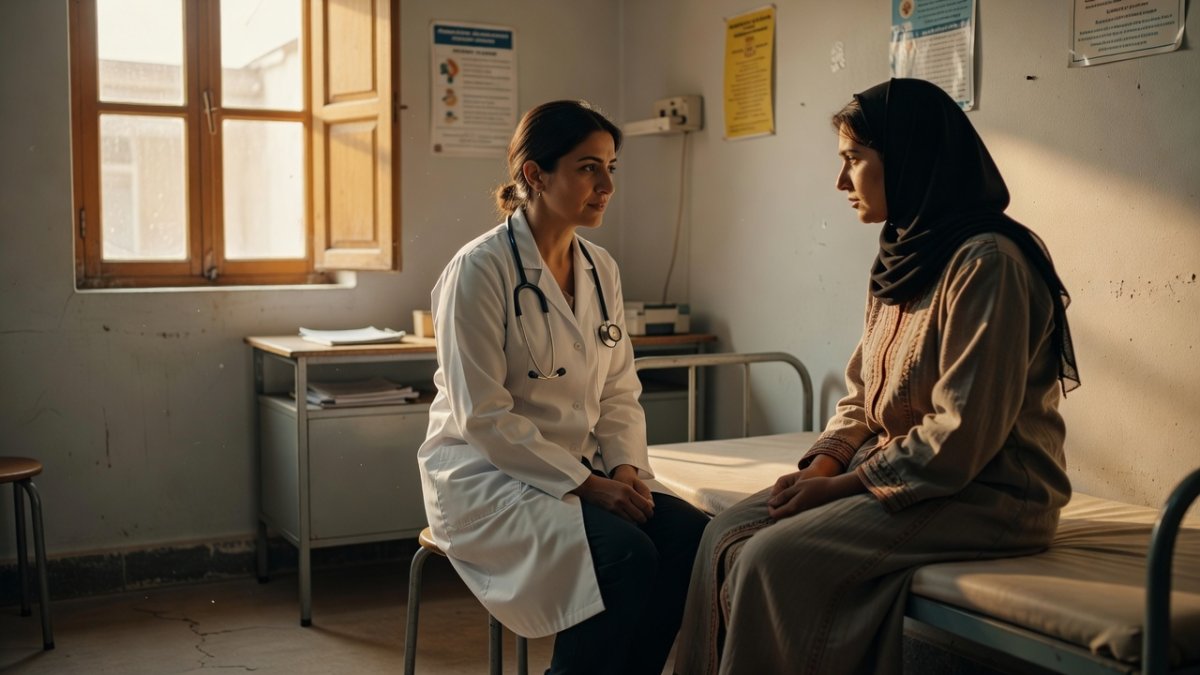
The Assault on Sinjar: Shireen Story
Shireen was studying for a high school examination at her home in the northern Iraqi town of Sinjar on 3 August 2014 when Islamic State group militants broke into her house and kidnapped her from her family. At the age of 19 she was sold as a sex slave to an IS militant in the north-western city of Tal Afar. Three months later Shireen was sold once again to Abu Omar another IS fighter in Mosul to become his third wife. The sequence of events illustrates the systematic targeting of Yazidi communities that began with the assault on Sinjar and quickly extended into organised trafficking networks across IS-controlled territories.
Shireen recounts that Abu Omar told her he loved her yet subjected her to repeated sexual violence. She states “He said ‘I love you’ but when you love someone you don’t rape her. It destroyed my life.” Abu Omar already had two Iraqi wives who lived in a separate house yet beat Shireen whenever they gathered. These details reveal how IS fighters used both direct coercion and the complicity of others within the household to enforce control over captured Yazidi women. The initial sale in Tal Afar followed by the transfer to Mosul demonstrates the commercial nature of the captivity system that treated women as commodities to be exchanged between fighters.
Yazidis believe in Yasdan a god who emanates seven angels. The angel they revere above all others is Melek Tawwus or the Peacock Angel yet Shireen was told by IS that Melek Tawwus was the devil and so was forced to convert to Islam. This religious persecution formed an integral part of the assault on Sinjar and the broader campaign against the Yazidi minority. The forced conversion accompanied physical captivity and underscored the intent to erase Yazidi identity through both violence and ideological pressure.
Life Under Captivity and Systematic Violence
For more than two years Shireen says she was not allowed to leave the house in Mosul. She was forced to cook wash the dishes and clean every day. There were two guards at the entrance of the house and she was not allowed to go outside or even to the garden to breathe fresh air. The daily routine of unpaid domestic labour combined with constant surveillance created an environment of total isolation that stripped survivors of personal autonomy and reinforced their status as property within the IS household structure.
According to Shireen Abu Omar later brought two other Yazidi girls to the house. One was six years old and was forced to clean the house while the other was 10. She was raped frequently by Abu Omar. The presence of these younger girls highlights how IS captivity extended across age groups and subjected children to both labour exploitation and sexual violence. The systematic nature of the abuse meant that multiple survivors shared the same confined space under the same perpetrator creating layers of trauma that affected entire groups of Yazidi women and girls simultaneously.
The two years of captivity involved continuous physical and psychological control that left lasting damage. Daily chores were performed under threat and any attempt at resistance was met with further violence. The accounts from Shireen illustrate how IS maintained power through a combination of armed guards household complicity and religious justification that together formed a comprehensive system of oppression designed to break the will of Yazidi captives over extended periods.
Release and the Scars That Remain
In 2016 Shireen was released by Iraqi forces during the campaign to retake Mosul from IS. After more than two years of captivity Shireen suffered from depression and constant nightmares. The moment of liberation marked the end of physical confinement yet introduced new challenges as survivors confronted the psychological consequences of prolonged abuse without immediate access to specialised support services in the immediate aftermath of rescue operations.
Upon her release she visited Dr Nagham Nawzat a Yazidi gynaecologist in the city of Duhok in Iraq’s Kurdish region for a check-up. But Nawzat not only gave her a physical examination she also listened to Shireen and offered her emotional support. Dr Nawzat helped all of us. Without her help I wouldn’t be here today the 23-year-old says. This statement underscores the critical role of integrated medical and psychological care in enabling survivors to begin processing their experiences and rebuilding a sense of stability after release.
The transition from captivity to freedom required survivors to navigate both physical health needs and severe mental health impacts. Depression and nightmares persisted long after the military campaign concluded demonstrating that release alone did not resolve the trauma inflicted during the two years of systematic violence. Access to a trusted medical professional who understood the cultural context of Yazidi survivors proved essential in addressing these ongoing effects and preventing further deterioration of mental health.
Dr Nagham Nawzat: A Life Dedicated to Healing
Nawzat is highly respected among the Yazidi community. According to Hussein al-Qaidi the director of the Kidnapped Affairs department at the Kurdistan Regional Government in Duhok 2,023 Yazidi women have been liberated from IS territories as of July 2018. Nawzat 42 has provided life-saving support to more than half of them helping an estimated 1,200 Yazidi women according to al-Qaidi. These figures reflect the scale of need and the concentrated impact of one practitioner working within limited resources to serve a large portion of the survivor population.
In March 2016 Nawzat received the International Women of Courage Award from then-US Secretary of State John Kerry for providing psychological support to traumatised Yazidi survivors and for combating gender-based violence. The recognition highlighted her dual focus on medical treatment and advocacy against the specific forms of violence targeting women during the IS campaign. Her work bridged clinical care with broader efforts to document and address gender-based atrocities.
Born in Mosul to a Yazidi family in 1976 her life-long dream was to study medicine. Concerned about women’s issues from an early age she graduated with a degree in gynaecology from Mosul’s Medical College in 2002. This educational background equipped her with specialised knowledge that later proved directly relevant to treating survivors of sexual violence. Her trajectory from medical student in Mosul to award recipient demonstrates a sustained commitment to addressing women’s health within the Yazidi community amid escalating conflict and displacement.
The Duhok Survivors Centre: A Safe Haven
In 2014 IS seized almost a third of Iraq. The following year Nawzat decided to join the Duhok Survivors’ Centre where she volunteers to provide healthcare and psychological support for Iraqi women who survived IS. Funded by the United Nations Population Fund it is the only facility in Iraq that specialises in gender-based violence. The centre’s unique mandate allowed it to concentrate resources on the specific medical and emotional needs arising from IS captivity rather than dispersing efforts across general health services.
Nawzat uses a post-traumatic medical approach. Afterwards she conducts a thorough physical check-up and then listens attentively as her patients talk about their fears and their traumatising experiences. She offers them support and positive reinforcement describing her role as like a big sister the survivors can confide in. This sequential method ensures that physical health assessments precede deeper psychological engagement creating a structured pathway for survivors to disclose experiences at their own pace within a supportive clinical environment.
The centre functions as the sole dedicated space in Iraq for addressing gender-based violence in the aftermath of the IS campaign. Its UNFPA funding and specialised focus enable consistent provision of care that combines gynaecological expertise with trauma-informed listening. Survivors such as Shireen have credited the centre’s approach with providing essential support that extends beyond immediate medical needs to encompass emotional recovery and long-term stability.
A Genocide Recognised, Justice Unfinished
At least 12,000 Yazidis were killed or kidnapped as part of what the United Nations describes as an ongoing genocide against the religious minority. The designation reflects the coordinated nature of killings forced conversions and sexual enslavement that targeted Yazidi communities beginning with the 2014 assault on Sinjar. Official recognition by the United Nations has established a legal and moral framework for understanding the scale of atrocities yet has not translated into comprehensive accountability mechanisms for perpetrators still at large.
The liberation of 2,023 women by July 2018 represents only a fraction of those initially taken. Hussein al-Qaidi’s documentation through the Kidnapped Affairs department at the Kurdistan Regional Government provides precise tracking of releases while underscoring the thousands who remain missing. These numbers illustrate the gap between international recognition of genocide and the practical outcomes of rescue and repatriation efforts that continue to depend on limited local resources and ongoing military operations.
Dr Nagham Nawzat’s treatment of an estimated 1,200 survivors demonstrates how individual medical practitioners have filled critical gaps left by incomplete justice processes. The Women of Courage Award presented by John Kerry in 2016 acknowledged this work yet the persistence of an ongoing genocide designation indicates that recognition alone has not halted the long-term consequences for survivors or ensured the return of all those still held in IS-controlled areas or dispersed networks.
The Long Road to Rebuilding Lives
The experiences of survivors such as Shireen reveal the extended challenges of reintegration after release from IS captivity. Depression nightmares and the need for sustained medical and psychological support persist well beyond the moment of physical freedom. Access to the Duhok Survivors’ Centre has provided a structured environment where survivors receive both gynaecological care and attentive listening that acknowledges the depth of trauma inflicted over two years of systematic violence and forced conversion.
Broader Yazidi recovery involves addressing the loss of 12,000 community members through killings and kidnappings while supporting the 2,023 women liberated by July 2018. Dr Nagham Nawzat’s contribution of care to an estimated 1,200 of these women illustrates how specialised services can mitigate some effects of captivity yet the scale of need exceeds the capacity of a single centre. Reintegration requires continued investment in trauma-informed approaches that respect Yazidi cultural identity and facilitate community acceptance of survivors.
Justice remains unfinished when thousands continue to live with the physical and psychological consequences of IS captivity without full accountability for those responsible. The post-traumatic medical approach employed at the Duhok Survivors’ Centre offers one model for supporting recovery but long-term rebuilding depends on sustained international and regional efforts to locate missing Yazidis provide comprehensive care and pursue legal mechanisms that match the United Nations recognition of an ongoing genocide with concrete outcomes for survivors and their communities.
By Fatima Al-Rashid, Staff WriterThis article was produced with AI-assisted research and editorial support. Reporting is based on sources cited in the article.
What's Your Reaction?
 Like
0
Like
0
 Dislike
0
Dislike
0
 Love
0
Love
0
 Funny
0
Funny
0
 Wow
0
Wow
0
 Sad
0
Sad
0
 Angry
0
Angry
0
Gulf/MENA Correspondent at Global1.News. Based in Doha, covering Gulf politics, energy markets, diplomacy, and development across the Middle East and North Africa. Tracks the economic transformation of the Gulf states.












Comments (0)