
Settler Arson Attacks Torch Mosque Vehicles in West Bank Villages
In a recent Middle East Eye report, footage captured Israeli settlers carrying out coordinated arson attacks across the occupied West Bank, torching a mosque and terrorising Palestinian residents in the villages of Burqa and Deir Dibwan east of Ramallah during the night of June 14-15, 2026. Settler Arson Attacks Torch Mosque, Vehicles in West Bank Villages Ramallah, Occupied We
In a recent Middle East Eye report, footage captured Israeli settlers carrying out coordinated arson attacks across the occupied West Bank, torching a mosque and terrorising Palestinian residents in the villages of Burqa and Deir Dibwan east of Ramallah during the night of June 14-15, 2026.
Settler Arson Attacks Torch Mosque, Vehicles in West Bank Villages
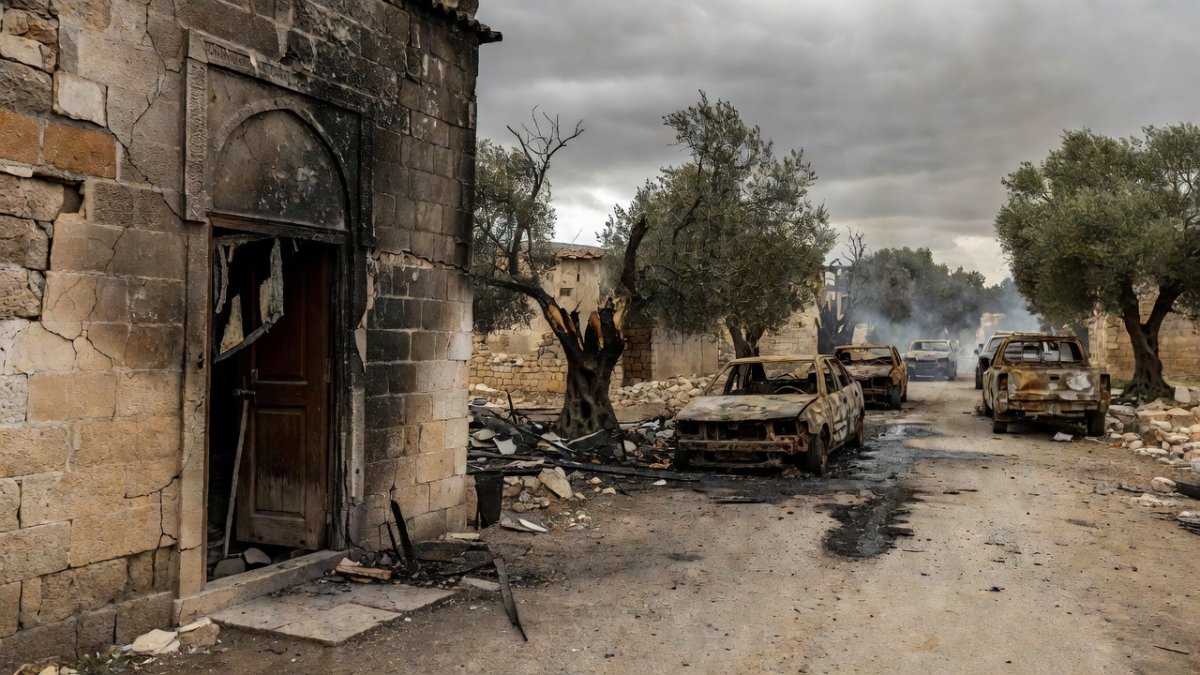
Ramallah, Occupied West Bank – June 15, 2026 — The incidents unfolded overnight as groups of settlers targeted Palestinian property in two villages near Ramallah. In Burqa, attackers set fire to a car and forced their way into a local mosque before igniting its entrance. An elderly Palestinian man in the village was doused with gasoline during the assault, though he escaped without burns.
Israeli military forces confirmed they had dispatched units to multiple locations in response to the violence. The operations occurred simultaneously in Burqa and Deir Dibwan, indicating a planned series of raids rather than isolated events. Palestinian residents reported hearing shouts and seeing flames spread across residential areas before security personnel arrived.
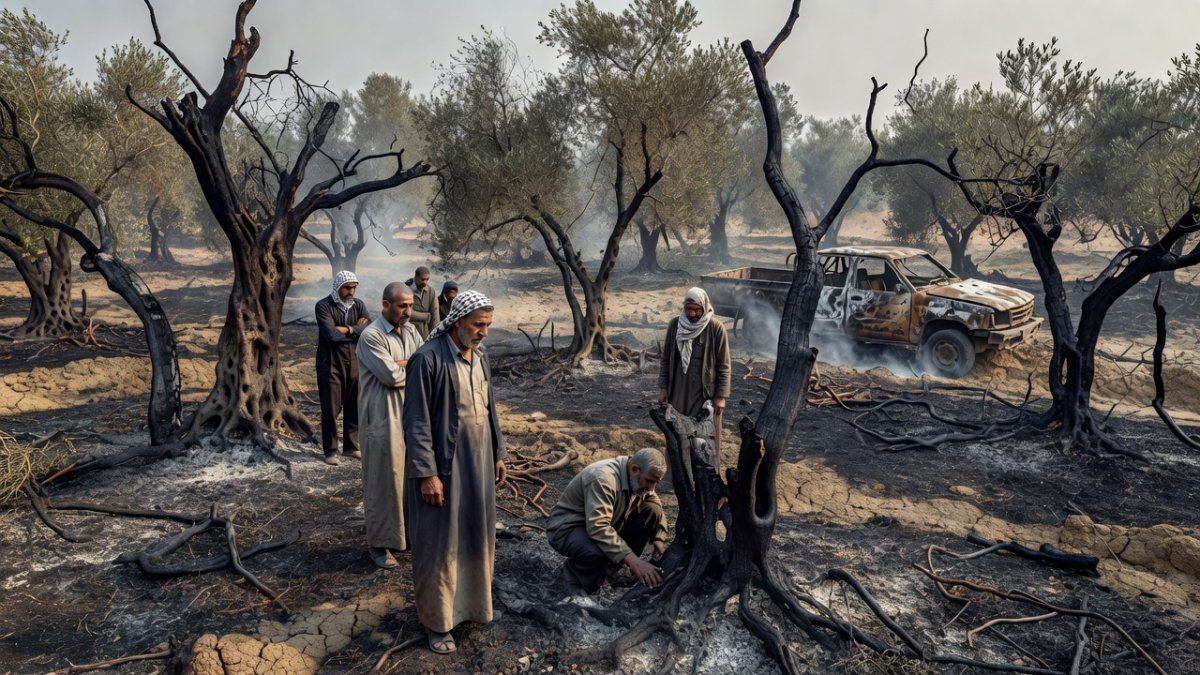
In Deir Dibwan, at least two Palestinian vehicles were burned completely. Farmland and olive groves were also set alight, destroying crops that local families depend on for their livelihood. The military presence continued into the following morning as investigators examined the damage.
These events followed a similar pattern seen in nearby communities earlier in the month. Residents described the attacks as sudden and intense, with little time to respond before property was destroyed. The military statement noted that forces had been sent to contain the situation but provided no immediate details on arrests.
Broader Pattern of Escalating Settler Violence
The United Nations recorded more than 1,000 settler attacks across the West Bank since January 2026, according to a statement issued on June 11. This figure reflects a sharp increase that rights groups have linked to the period following the start of the Iran war. The attacks in Burqa and Deir Dibwan fit into this documented surge.
Earlier incidents included raids on the Christian village of Taybeh on June 9-10 and further assaults near Odla outside Nablus on June 12. In each case, property damage and intimidation were reported without subsequent prosecutions. Rights organizations have described these actions as organized operations conducted with apparent impunity.
International sanctions imposed by the United Kingdom, Canada, France, and Norway on settlement entities took effect after a June 9 announcement. These measures targeted specific groups involved in settlement expansion but have not altered the frequency of attacks on the ground. Palestinian officials have noted that such diplomatic steps rarely translate into accountability for individual perpetrators.
The pattern shows repeated targeting of religious sites, vehicles, and agricultural land. Military responses have focused on containment rather than prevention or investigation. This approach has allowed the violence to continue across multiple districts east of Ramallah and beyond.
Human Impact on Palestinian Communities
Daily life in Burqa and Deir Dibwan has been disrupted by the constant threat of nighttime raids. Farmers who tend olive groves now face the loss of trees that have taken decades to mature, affecting both income and food security for extended families. The destruction of vehicles limits mobility for work and medical needs in areas where public transport is limited.
Elderly residents, such as the man doused with gasoline in Burqa, experience heightened fear that restricts their movement after dark. Families report sleeping in shifts to watch for intruders, altering routines that once centered on community gatherings and seasonal harvests. Children in these villages grow up witnessing repeated property damage without recourse.
Local agriculture forms the backbone of the economy in these Ramallah-area villages. Burned farmland reduces the ability to sell produce at markets in Ramallah and surrounding towns. This economic pressure compounds existing restrictions on movement and access to water resources under occupation.
Community leaders have emphasized that the attacks erode any remaining sense of safety. Palestinian voices from the affected areas describe a reality where basic activities like tending fields or visiting the mosque carry new risks. The cumulative effect leaves residents questioning their ability to remain on their land long term.
International Response and Accountability Failure
Condemnations from multiple governments followed the June 14-15 attacks, echoing earlier statements after the Taybeh and Odla incidents. The sanctions announced on June 9 by the United Kingdom, Canada, France, and Norway represented one concrete step, yet prosecutions remain rare. Rights groups continue to document cases where evidence of settler involvement does not lead to charges.
The United Nations monitoring of over 1,000 incidents since January 2026 highlights the scale of the problem. Despite these records, mechanisms for holding perpetrators accountable have not produced visible results. Palestinian communities note that international attention often fades without changes in military policy on the ground.
Settlement entities under sanction continue to operate in the broader West Bank context. The failure to link diplomatic measures to enforcement on the ground allows the pattern of arson and intimidation to persist. This gap between statements and outcomes has been a recurring feature of responses to settler violence.
Local organizations working on human rights have called for independent investigations that include Palestinian testimony. Without such steps, the cycle of attacks followed by limited military presence continues. The June 11 United Nations statement underscored the need for accountability that has yet to materialize.
Implications for West Bank Stability
The coordinated nature of the June 14-15 attacks signals a further deterioration in security conditions east of Ramallah. When military forces respond only after damage occurs, the underlying drivers of violence remain unaddressed. This dynamic affects not only the targeted villages but also neighboring communities that fear similar raids.
Olive groves and farmland represent generational investments for Palestinian families. Their destruction removes economic anchors that help sustain communities under prolonged occupation. The resulting instability extends beyond immediate property loss to questions of long-term viability for rural life.
International sanctions and United Nations documentation have not reversed the upward trend in incidents. The surge tied to the period after the Iran war began suggests external events can accelerate existing tensions. Stability in the West Bank therefore depends on measures that go beyond reactive deployments.
Palestinian residents describe a landscape where daily decisions are shaped by the possibility of further attacks. This environment limits opportunities for normal economic and social activity. Without shifts in accountability, the risk of wider escalation remains present in the region.
Looking Ahead Amid Continued Violence
The events in Burqa and Deir Dibwan illustrate how settler attacks have become a recurring feature of life under occupation. With more than 1,000 incidents recorded by the United Nations since January 2026, the pattern shows no sign of slowing. Palestinian communities continue to absorb the consequences while awaiting meaningful intervention.
International responses, including the June 9 sanctions by several governments, have yet to produce prosecutions or deterrence. The human cost appears in destroyed vehicles, burned groves, and the trauma experienced by residents including the elderly. These outcomes connect directly to policies that permit settlement expansion without restraint.
Stability in the West Bank requires addressing the root causes of impunity rather than managing symptoms after each incident. The attacks of June 14-15 serve as another reminder that current approaches have not protected Palestinian civilians or their property. Future developments will depend on whether accountability mechanisms are strengthened or remain ineffective.
By Fatima Al-Rashid, Staff Writer
This article was produced with AI-assisted research and editorial support. Reporting is based on sources cited in the article.
What's Your Reaction?
 Like
0
Like
0
 Dislike
0
Dislike
0
 Love
0
Love
0
 Funny
0
Funny
0
 Wow
0
Wow
0
 Sad
0
Sad
0
 Angry
0
Angry
0

Gulf/MENA Correspondent at Global1.News. Based in Doha, covering Gulf politics, energy markets, diplomacy, and development across the Middle East and North Africa. Tracks the economic transformation of the Gulf states.













Comments (0)