
Xi Jinping's Strategic Shanghai Visit Underscores China's Push for AI Leadership and Global Governance Reform
In an era of intensifying US-China technological rivalry and shifting global power dynamics, President Xi Jinping's July 2026 inspection of Shanghai offers a window into Beijing's integrated strategy for AI dominance and institutional reform. The visit blends financial market upgrades, urban governance experiments, and the launch of a new multilateral AI body, revealing how domestic planning cycles now intersect with foreign policy outreach.
In an era of intensifying US-China technological rivalry and shifting global power dynamics, President Xi Jinping's July 2026 inspection of Shanghai offers a window into Beijing's integrated strategy for AI dominance and institutional reform. The visit blends financial market upgrades, urban governance experiments, and the launch of a new multilateral AI body, revealing how domestic planning cycles now intersect with foreign policy outreach. These moves position China to navigate supply-chain pressures while courting Global South partners wary of Western-led technology regimes.
Xi's Shanghai Visit Signals AI Leadership and Governance Reform
Shanghai, China — Article continues...
The CGTN video on Xi Jinping's trip to Shanghai captures the Chinese president's multi-day inspection from July 15 to 17, 2026, highlighting his engagements at the Shanghai Futures Exchange, technological innovation exhibitions, and the opening of the World AI Conference. These scenes provide a visual entry point into a broader set of policy signals that blend domestic governance priorities with international outreach. The footage shows Xi examining futures trading mechanisms and AI infrastructure projects, setting the stage for an analysis of how this visit advances China's long-term strategic objectives amid intensifying global technological competition.
Domestic Priorities in Urban Governance and Financial Reform
Xi Jinping's inspection of the Shanghai Futures Exchange during the visit emphasized ongoing efforts to strengthen China's financial market infrastructure. This stop aligns with the broader objectives of the Dual Circulation strategy, which seeks to enhance domestic market resilience while maintaining selective international linkages. By focusing on futures trading platforms, the leadership signals intent to improve risk management tools essential for supporting high-tech industries under the forthcoming 15th Five-Year Plan covering 2026 to 2030.
The visit to Minhang District's New Era Urban Builders and Managers Home further illustrated the 'People's City' concept, a framework that integrates citizen welfare with smart urban management. Shanghai's role as a testing ground for these policies reflects central government emphasis on balancing rapid technological adoption with social stability. Such inspections underscore how local governance experiments in megacities like Shanghai feed into national planning processes coordinated by bodies such as the National Development and Reform Commission.
Xi Jinping's engagements with Shanghai's financial institutions build upon a pattern established in earlier visits, including the 2018 China International Import Expo where emphasis was placed on market opening measures and the 2020 commemoration of Pudong's development which highlighted institutional innovation. These prior occasions framed Shanghai as a testing ground for policy experimentation, yet the current focus on futures trading mechanisms introduces a distinct layer of financial infrastructure development aimed at supporting broader monetary objectives. Such continuity suggests an incremental approach to embedding Shanghai within national reform trajectories rather than abrupt shifts.
Reforms signaled through the Shanghai Futures Exchange inspection carry implications for yuan internationalization by potentially expanding the range of denominated contracts and settlement mechanisms available to domestic and overseas participants. This aligns with efforts to reduce reliance on external clearing systems while enhancing price discovery in key commodities, though the pace of adoption remains contingent on regulatory harmonization across borders. Integration with the Dual Circulation framework under National Development and Reform Commission oversight positions these measures as tools for strengthening internal financial resilience alongside selective external engagement.
Shanghai's designation as a financial hub within this architecture reflects coordinated direction from central planning bodies, where urban governance experiments in districts such as Minhang serve to pilot scalable models for resource allocation and service delivery. The interplay between local implementation and national strategy underscores the challenges of balancing rapid financial liberalization with systemic risk controls, particularly as global capital flows respond to evolving domestic priorities.
Technology Self-Sufficiency and the 15th Five-Year Plan
At the Shanghai Technological Innovation Achievements Exhibition and the Shanghai Foundation Model Innovation Center, Xi highlighted the centrality of artificial intelligence to China's innovation drive. These sites showcased domestic progress in foundational models and related infrastructure, areas targeted for accelerated investment under the 15th Five-Year Plan. The plan positions AI as a core pillar alongside advanced manufacturing and digital infrastructure, aiming to reduce external dependencies exposed by prior export restrictions.
China's approach draws from lessons of the 14th Five-Year Plan period, during which state support for indigenous innovation intensified. The symposium chaired by Xi on the 15th Five-Year Plan during the Shanghai trip reinforced this trajectory, directing resources toward AI talent development and computing resources. This domestic focus serves strategic interests by bolstering economic security in an era of supply-chain fragmentation.
Targeted advancements in foundation models, semiconductor chip design, and autonomous systems form core components of the technology agenda, extending lessons from the preceding planning cycle into more specialized domains. These subsectors receive coordinated support through industrial policy instruments that prioritize domestic capability building, with emphasis on reducing external dependencies in critical hardware and software layers. The transition to the 15th Five-Year Plan framework suggests an intensification of these efforts, focusing resources on areas where incremental gains can compound into strategic advantages over extended time horizons.
Parallel developments in the United States, including the CHIPS Act and associated export controls targeting advanced NVIDIA semiconductors, illustrate contrasting approaches to technology governance that directly influence China's planning calculus. Such measures have prompted accelerated domestic substitution strategies, yet their long-term effectiveness depends on the adaptability of global innovation networks. China's response incorporates adjustments in research priorities and supply chain configurations to mitigate disruptions while maintaining momentum in artificial intelligence applications.
The Ministry of Industry and Information Technology plays a central coordinating function in aligning these initiatives across state-owned enterprises, research institutes, and private sector actors. This institutional arrangement facilitates resource allocation and standard-setting processes essential for scaling targeted technologies, although detailed implementation pathways under the new plan remain subject to further elaboration in forthcoming policy documents.
Multilateral AI Governance Through WAICO
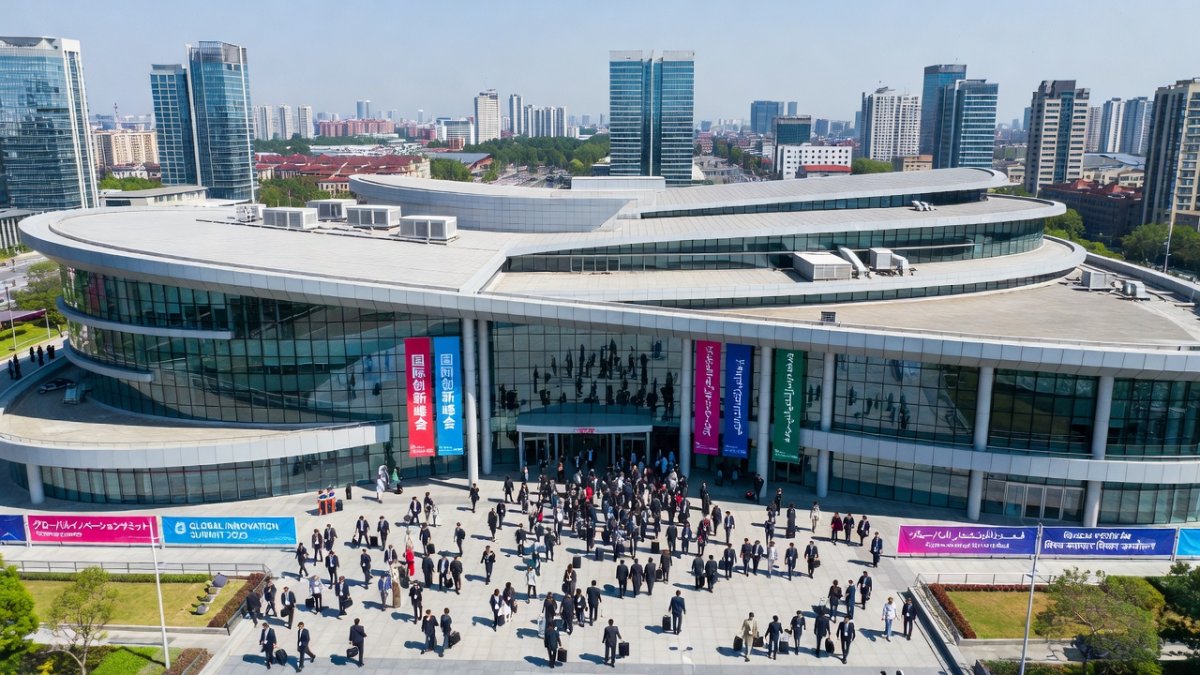
The announcement of the World Artificial Intelligence Cooperation Organization, or WAICO, during the keynote address at the World AI Conference marked a significant institutional initiative. Initially joined by 29 countries representing major Global South economies, the body seeks to establish cooperative norms for AI development and deployment. Xi's statement that AI should constitute a symphony of international cooperation rather than a solo performance framed the effort as an alternative to unilateral technology controls.
This development connects directly to China's foreign policy doctrine of supporting a UN-centered international system. The timing, overlapping with the High-Level Meeting on Global AI Governance, allowed Beijing to position WAICO as a complementary mechanism that amplifies voices from developing nations. Antonio Guterres's participation and his caution against AI monopolies by wealthy countries lent additional multilateral legitimacy to the proceedings.
The composition of WAICO's initial membership, with pronounced representation from Global South nations, reflects an institutional design oriented toward inclusive participation rather than exclusive technological leadership circles. This emphasis distinguishes the initiative from frameworks dominated by advanced economies and positions it as a platform for articulating governance preferences shaped by developmental priorities. The absence of publicly detailed membership lists at this stage limits precise assessment of regional balance, yet the overall orientation signals intent to broaden the constituency for AI norm-setting.
Comparisons with the European Union's AI Act and various United States-led initiatives reveal differing regulatory philosophies, where WAICO's emphasis on cooperative framing may appeal to jurisdictions seeking alternatives to prescriptive compliance regimes. For ASEAN economies, African states, and Latin American countries, participation could offer avenues for capacity building and standard influence that complement or diverge from Western-oriented structures, depending on domestic policy alignments and technology adoption trajectories.
Analyses from research organizations such as MERICS and CSIS highlight uncertainties surrounding WAICO's operational viability, particularly regarding enforcement mechanisms and resource commitments among diverse members. These assessments note that second-order effects will likely hinge on whether the initiative generates tangible technical cooperation outcomes or remains primarily declarative, with implications for how middle-income countries navigate overlapping governance forums.
Diplomatic Engagement and Global South Alignment
Xi's meeting with UN Secretary-General Antonio Guterres during the Shanghai visit reinforced China's commitment to inclusive global governance frameworks. Discussions touched on preventing AI from becoming the preserve of advanced economies, echoing longstanding Chinese advocacy for equitable technology access. This engagement builds on prior diplomatic patterns where Beijing leverages UN platforms to cultivate partnerships across Africa, Latin America, and Southeast Asia.
The strategic calculus here involves countering narratives of technological decoupling by offering alternative cooperation venues. WAICO's initial membership composition suggests deliberate outreach to nations seeking development assistance without stringent political conditionalities. Such moves advance China's interests in expanding influence within emerging technology standards bodies while mitigating isolation risks from Western-led export regimes.
Geopolitical Calculus in US-China Technology Rivalry
From the US perspective, China's AI initiatives represent an attempt to reshape governance architectures in ways that dilute American advantages in semiconductor and algorithmic capabilities. Export controls imposed in recent years have accelerated Beijing's indigenous efforts, yet they have also prompted countermeasures such as WAICO that appeal to third countries wary of great-power bifurcation. The visit thus signals China's determination to internationalize its AI agenda rather than retreat into autarky.
For China, the Shanghai engagements reflect a calculated response to external pressures. By hosting the conference and unveiling WAICO, Beijing demonstrates both technological maturity and diplomatic agility. This dual track supports the goal of achieving greater autonomy in critical technologies while preserving channels for selective global engagement, consistent with the principles of peaceful development articulated in official doctrine.
Export control measures encompassing semiconductor manufacturing equipment restrictions and prohibitions on advanced artificial intelligence chips have prompted measurable adaptations within China's technology ecosystem, including accelerated development at firms such as SenseTime, Baidu, and Alibaba Cloud. These controls aim to constrain access to leading-edge components, yet their impact on overall innovation velocity varies across subsectors and depends on the availability of alternative sourcing or indigenous substitutes. Effectiveness assessments continue to evolve as both sides adjust policy parameters in response to observed outcomes.
Prospects for multi-alignment among countries including India, Indonesia, and Brazil involve navigating participation in WAICO alongside Western-led AI frameworks, creating potential for differentiated engagement strategies that prioritize specific technology domains or governance issues. Such flexibility could mitigate risks of binary alignment pressures while allowing selective access to diverse innovation pools, though coordination challenges may arise from conflicting standards or data governance requirements.
Repercussions for global supply chains extend beyond bilateral technology flows to encompass reconfiguration of manufacturing networks and research collaborations, with downstream effects on component availability and investment patterns. The dual-track approach evident in China's strategy suggests an ongoing calibration between defensive measures and outward institutional initiatives, the sustainability of which will depend on evolving geopolitical conditions and domestic economic performance indicators.
Implications for Future AI Governance and International Order
The Shanghai visit illustrates how China integrates domestic planning cycles with foreign policy initiatives to advance comprehensive national strength. AI's elevation within the 15th Five-Year Plan, paired with the creation of WAICO, points toward sustained investment and coalition-building in the years ahead. Observers will monitor whether additional countries accede to the organization and how its operational mechanisms evolve alongside existing UN processes.
Ultimately, the events captured in the CGTN coverage reveal a coherent strategy: leveraging Shanghai's status as a financial and innovation hub to project both internal resolve and external outreach. This approach seeks to navigate the complexities of technological competition while advancing China's preferred vision of a multipolar order in which developing nations hold greater sway over emerging governance rules.
By Prof. Marcus Chen, Staff WriterThis article was produced with AI-assisted research and editorial support. Reporting is based on sources cited in the article.
What's Your Reaction?
 Like
0
Like
0
 Dislike
0
Dislike
0
 Love
0
Love
0
 Funny
0
Funny
0
 Wow
0
Wow
0
 Sad
0
Sad
0
 Angry
0
Angry
0
World Politics Analyst at Global1.News. Based in Beijing, covering US-China relations, global trade, and geopolitical strategy. Brings deep analytical perspective to the power dynamics shaping international affairs.











Comments (0)