
China's Response to British Steel Nationalisation Highlights Investment Protection Priorities
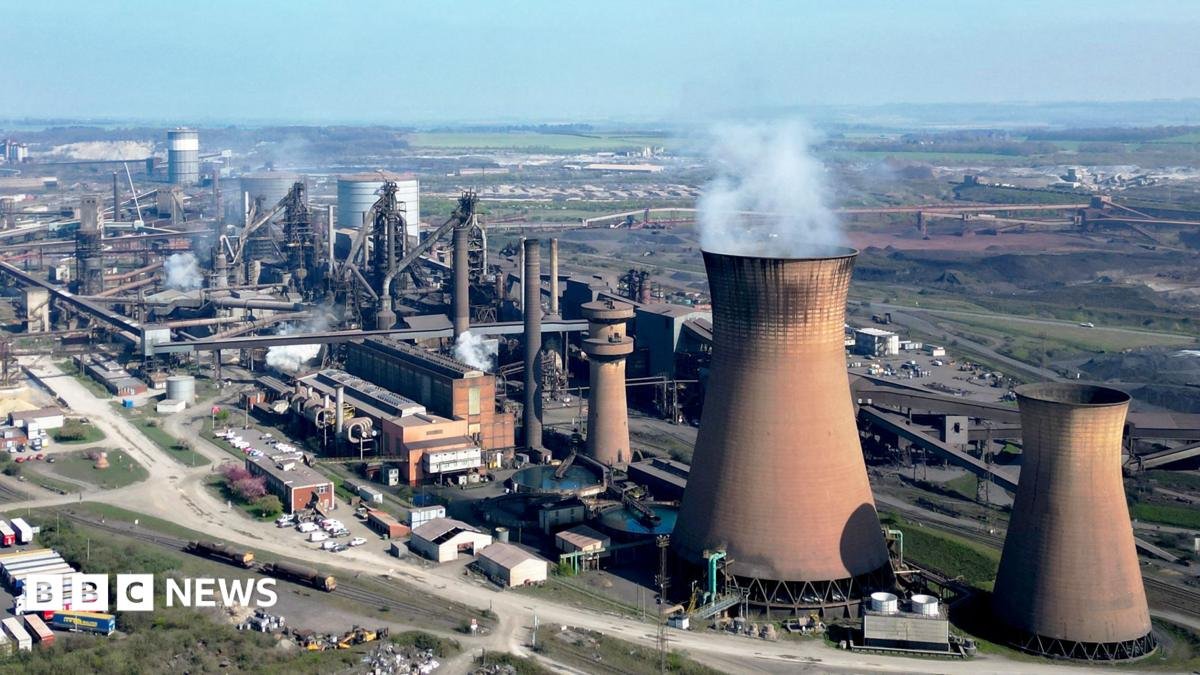
In a sharp diplomatic rebuke, China's Ministry of Commerce has condemned the United Kingdom's nationalisation of British Steel's Scunthorpe plant, accusing London of infringing on Chinese investor rights under the guise of national security. This move, which places the facility under public control while ownership remains with Jingye Group, has sent ripples through bilateral investment relations.
China Fights Back: MOFCOM Condemns British Steel Nationalisation
Beijing, China — Article continues...
Background to the Nationalisation Decision
The United Kingdom government assumed operational control of British Steel's Scunthorpe plant last year while ownership remained with China's Jingye Group. On 16 July 2026 Parliament passed legislation enabling public ownership where a public interest test was met. The move followed sustained losses at the facility, reported at approximately £700,000 per day by the owner, alongside National Audit Office figures indicating daily running costs to the state of around £1.3 million as of March 2026. Officials cited the need to preserve 2,700 direct jobs and thousands more in the supply chain, together with maintaining domestic capacity for steel grades required by Network Rail and the construction sector. Without Scunthorpe, the United Kingdom would become the sole G7 member lacking virgin steel production capability, as remaining domestic output relies on electric arc furnaces processing scrap.
China's Official Response from MOFCOM
China's Ministry of Commerce (MOFCOM) issued a formal statement on 17 July 2026 expressing firm opposition and strong dissatisfaction with the decision. The ministry stated that the action seriously infringed upon Jingye's legitimate rights and interests and severely undermined the confidence of Chinese companies investing in the United Kingdom. It further characterised the nationalisation as a forcible takeover conducted in the name of national security, while disregarding Jingye's contributions to the British economy and society. MOFCOM indicated that Beijing would monitor developments closely and support Chinese firms in protecting their rights, without detailing specific measures. This calibrated public rebuke aligns with established Chinese practice of defending overseas commercial interests through diplomatic channels rather than immediate escalation.
Legal Dimensions Under the 1986 Bilateral Investment Treaty
The 1986 China-United Kingdom Bilateral Investment Treaty remains the operative legal framework governing such disputes. MOFCOM explicitly called upon Britain to faithfully fulfil its obligations under this agreement, which was designed to promote and protect investments between the two countries. Jingye has indicated it will seek compensation, and an independent valuer is scheduled to be appointed in autumn 2026 to assess any amount due, which a government minister noted could be nil. The treaty's provisions on fair and equitable treatment and protection against expropriation without compensation provide the formal basis for any future arbitration or negotiation. Both sides have so far avoided public discussion of formal dispute settlement mechanisms, preserving space for bilateral talks once the incoming administration assumes office.
The 1986 China-United Kingdom Bilateral Investment Treaty establishes core substantive protections including fair and equitable treatment, safeguards against uncompensated expropriation, and most-favoured-nation treatment that allows investors to invoke stronger provisions from other UK treaties. These clauses mirror language in many first-generation Chinese BITs concluded during the 1980s, which emphasised post-establishment protection rather than liberal market access. In practice, any Jingye claim would likely centre on whether the nationalisation constituted a compensable taking or breached legitimate expectations created by prior regulatory assurances. Comparable disputes illustrate the range of outcomes: the Ping An v Belgium arbitration under the 1986 China-Belgium BIT tested indirect expropriation following the Fortis nationalisation, while Sanum v Laos examined treaty coverage and MFN importation under the China-Laos BIT, ultimately reaching an ad hoc UNCITRAL tribunal after jurisdictional challenges.
Arbitration options remain open under the treaty’s dispute settlement provisions, which permit recourse to ICSID or ad hoc arbitration under UNCITRAL rules once local remedies or negotiation periods are exhausted. Historical timelines in similar cases show that filing often occurs within 18–36 months of the contested measure, followed by multi-year proceedings. National security exceptions in Chinese BITs have received varied treatment; tribunals have generally required host states to demonstrate a genuine, non-pretextual link to security rather than accepting blanket invocations, though some treaties contain self-judging language that narrows review. This precedent suggests any defence mounted by the United Kingdom would face rigorous scrutiny on both procedural and substantive grounds.
Implications for Chinese Investment in the United Kingdom
The episode directly affects perceptions of the United Kingdom as a destination for Chinese capital. MOFCOM's statement emphasised that the decision undermines confidence among Chinese enterprises considering British projects. While the United Kingdom government spokesperson reiterated that the country highly values its relationship with China and remains open to Chinese investment, the nationalisation introduces new uncertainty for existing and prospective investors in strategic sectors. Chinese firms may now apply heightened scrutiny to political risk assessments when evaluating British opportunities, particularly in manufacturing and infrastructure. This recalibration occurs against the backdrop of China's broader strategy of expanding high-quality outbound investment under the Dual Circulation framework, which seeks to balance domestic resilience with selective international engagement.
Chinese foreign direct investment in the United Kingdom has historically concentrated in energy, infrastructure, real estate and financial services, reflecting both market-seeking and strategic-asset motivations. Official data from the past decade show cumulative inflows exceeding £50 billion, with notable positions in nuclear projects such as Hinkley Point and Sizewell, commercial property portfolios in London, and equity stakes in banking and insurance. The British Steel episode introduces fresh political-risk premia precisely in manufacturing assets that had previously been viewed as less sensitive than technology or critical infrastructure. This development parallels the 2020 Huawei 5G restrictions, where national security concerns similarly prompted abrupt policy shifts, yet differs in that steel involves direct ownership transfer rather than market-access denial.
China’s Dual Circulation strategy encourages selective outbound investment that supports domestic upgrading while diversifying away from high-risk jurisdictions. Within this framework, UK assets now compete less favourably against opportunities in the European Union post-Brexit single market and ASEAN economies offering production-sharing networks with lower political volatility. Institutional investors and state-linked enterprises are therefore expected to apply stricter stress-testing of UK regulatory stability, potentially tilting new commitments toward greenfield projects in Southeast Asia or portfolio investments routed through EU member states that retain clearer investment-screening predictability.
Strategic Interests in Steel Production and Industrial Policy
Steel remains central to China's industrial self-sufficiency objectives and its position as the world's largest producer. The Jingye acquisition of British Steel several years ago represented an attempt to secure overseas assets and markets, consistent with efforts to internationalise parts of the domestic steel sector. The United Kingdom's decision to retain blast furnace operations at Scunthorpe, at least temporarily, reflects parallel concerns about supply security, even as long-term policy favours a shift to lower-carbon electric arc furnaces. For Beijing, the case illustrates tensions between host-country industrial policy and the protection of Chinese overseas assets. Second-order effects could include adjustments in Chinese steel export strategies toward the European Union and other markets, as well as renewed emphasis on securing alternative investment destinations in ASEAN economies where political risk perceptions may differ.
The Incoming Burnham Government's Challenges
Andy Burnham is scheduled to enter Downing Street on 20 July 2026, placing immediate responsibility for managing the aftermath on the new administration. The government must balance domestic priorities around employment and supply-chain security against the economic benefits of stable commercial ties with the world's second-largest economy. Business Secretary Peter Kyle has indicated that the state will cover running costs for the immediate future, yet long-term state ownership is considered unlikely given ongoing losses. The appointment of an independent valuer offers a procedural route to address compensation claims, but any outcome will be scrutinised by both domestic stakeholders and international investors. Early signals from the incoming prime minister will shape whether the episode remains a bilateral irritant or evolves into a more sustained cooling of economic relations.
Andy Burnham’s prior record as Greater Manchester mayor featured active promotion of China trade ties, including multiple delegations and memoranda on infrastructure and education cooperation. These local-level engagements contrast with Labour’s internal spectrum, where centrist figures emphasise economic pragmatism while the left wing voices concerns over human rights and supply-chain resilience. The incoming administration therefore inherits a divided parliamentary base that will scrutinise any compensation settlement for British Steel. The independent valuer appointment scheduled for autumn 2026 places an early procedural milestone within Burnham’s first 100 days, forcing rapid decisions on fiscal exposure and diplomatic messaging that could define the government’s China posture before broader legislative priorities advance.
Balancing alignment with the United States on technology and security issues against China’s role as a major export market and capital source will require careful sequencing. Early statements reaffirming openness to commercial engagement, paired with transparent valuation criteria, may mitigate immediate confidence erosion while satisfying domestic constituencies demanding job preservation. Failure to manage this calibration risks accelerating capital diversion already underway under China’s outbound investment screening mechanisms.
Geopolitical Ramifications for UK-China Relations and Beyond
The nationalisation arrives at a moment when both London and Beijing are recalibrating their strategic postures. From China's perspective, consistent defence of corporate interests abroad supports broader foreign policy goals of safeguarding national enterprises and projecting reliability as an investment partner. The United Kingdom, for its part, retains leverage through its large market and financial services sector, yet faces constraints in an era of heightened scrutiny over critical supply chains. Effects may extend to the European Union, where steel trade dynamics could shift if British production stabilises under public ownership, and to Global South economies that observe how major powers treat Chinese investment. Over time, the episode may encourage Chinese policymakers to diversify investment portfolios and strengthen legal protections in future bilateral agreements, while prompting British officials to refine the criteria under which national security justifications are invoked in commercial disputes.
The nationalisation carries implications for the suspended EU-China Comprehensive Agreement on Investment, whose investment-protection chapter was intended to codify stronger disciplines on expropriation and fair treatment. A visible dispute under the older UK bilateral treaty may embolden European negotiators to insist on tighter national-security carve-outs and rapid arbitration timelines in any revived talks. Other G7 members currently refining investment-screening regimes, notably Germany and Canada, will observe whether the United Kingdom’s approach produces sustained Chinese disinvestment or merely episodic friction, informing their own threshold-setting for critical-sector interventions.
From an ASEAN vantage point, the case underscores the value of diversified legal protections and political-risk insurance when hosting Chinese capital in steel, nickel and rare-earth processing. Beijing’s accelerated pursuit of strategic self-reliance in critical minerals, already evident in domestic stockpiling and alternative supplier development, is likely to intensify, reducing future exposure to jurisdictions perceived as willing to override treaty commitments under industrial-policy pretexts.
By Prof. Marcus Chen, Staff Writer
This article was produced with AI-assisted research and editorial support. Reporting is based on sources cited in the article.
What's Your Reaction?
 Like
0
Like
0
 Dislike
0
Dislike
0
 Love
0
Love
0
 Funny
0
Funny
0
 Wow
0
Wow
0
 Sad
0
Sad
0
 Angry
0
Angry
0

World Politics Analyst at Global1.News. Based in Beijing, covering US-China relations, global trade, and geopolitical strategy. Brings deep analytical perspective to the power dynamics shaping international affairs.















Comments (0)