
US-Iran War: Eighth Night of Strikes Escalates Toward All-Out Regional Conflict
The US-Iran war has entered its eighth consecutive night of strikes, with CENTCOM hitting IRGC sites across Iran while Tehran retaliates against US allies in Kuwait, Jordan, and Bahrain. Two American soldiers were killed in Jordan, and Iran's health ministry reports 50 dead and 500 wounded as the...
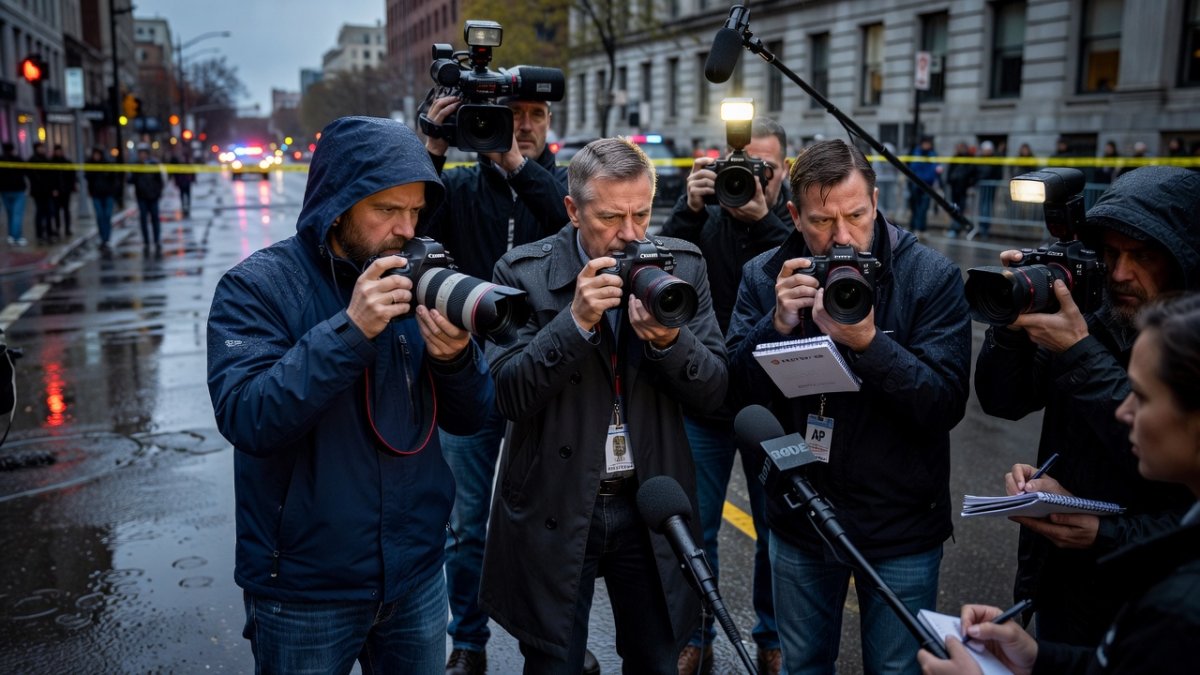
What You Need to Know About the US-Iran War Right Now
Overnight, U.S. forces hammered Iranian Revolutionary Guard sites across multiple provinces in the eighth straight night of strikes, pushing the conflict past any remaining pretense of limited engagement.
Two American soldiers were killed and one remains missing after Iranian missiles struck the Azraq air base in Jordan, while Iran's health ministry now reports at least 50 killed and more than 500 wounded in the latest wave of retaliation.
Global stakes have never been higher: one-fifth of the world's oil moves through the Strait of Hormuz, insurance rates are spiking, and any sustained closure would slam energy prices from Europe to Asia while dragging Arab states deeper into the fight.
The Strikes Roll On — Night Eight
Listen up, folks. The US-Iran war just punched through another night of hell. CENTCOM wrapped its eighth straight round of strikes on July 18, hammering Iranian Revolutionary Guard coastal surveillance posts, air defenses, maritime hubs, and underground missile and drone caches. Trump called the April truce dead on arrival, labeling Khamenei's signature on it "worthless and invalid." Iran answered with fresh salvos aimed at US allies. This is no longer posturing. The region is sliding toward all-out war, and the body count is climbing fast.
The escalation on Night Eight marks a deliberate strategic pivot by U.S. forces, with strikes extending beyond military targets to include the Kahurestan Bridge and residential zones in Sirik, Ahvaz, and Yazd. Geopolitically, this broadening signals an intent to degrade Iran's logistical and energy backbone, echoing the 2003 Iraq invasion's focus on infrastructure but risking wider civilian fallout that could alienate regional allies. Analysts note the paradox highlighted by expert Khalfa: neither Washington nor Tehran desires full-scale war, yet each views de-escalation as political surrender, locking both into a cycle of retaliation.
President Trump's calculus appears driven by domestic midterm pressures, where projecting strength against Iran could rally his base amid economic unease, though it risks alienating moderates wary of another Middle East quagmire. Historical parallels to the 1991 Gulf War show how initial air campaigns can rapidly expand when bridges and power nodes are hit, potentially drawing in proxies across the region. Al Jazeera reports confirm the U.S. has "broadened its military campaign," with amateur videos of the Kahurestan Bridge strike underscoring a shift from precision to area denial.
Human costs compound as power infrastructure damage threatens Iran's already strained grid during extreme summer heat, while U.S. military families face prolonged deployments with little clarity on rotations. The IRGC's claims of destroying two U.S. fighter aircraft in the Azraq attack, disputed by Pentagon sources, add layers of information warfare that could influence global perceptions of the conflict's momentum.
American Blood: Two Soldiers Killed in Jordan
Two US troops died and one remains missing after Iranian missiles and drones slammed into the Azraq air base in Jordan. These mark the first American combat deaths since the April truce collapsed. The attack hit hard, exposing how Iranian reach extends beyond its borders even as US jets pound Iranian soil nightly. Families back home are getting the calls no one wants. Jordanian forces scrambled but could not stop every incoming threat. The human cost is no longer abstract numbers on a briefing slide.
The deaths of two U.S. soldiers in Jordan, part of the 16 service members killed and 430+ wounded since February 28, underscore the widening theater of operations and the vulnerability of forward-deployed forces. Geopolitically, this raises questions about Jordan's role as a staging ground and whether Iranian-backed militias are exploiting porous borders, reminiscent of tanker attacks during the 1980s Gulf conflicts. Military implications include potential reviews of base security protocols at sites like Ali Al Salem, where IRGC claims of radar destruction have already prompted heightened alerts.
Family reactions, though not fully detailed in initial reports, echo the grief seen in prior conflicts, with loved ones questioning the pace of escalation and calling for clearer exit strategies. The IRGC's assertion of hitting Camp Arifjan in Kuwait alongside Jordanian targets suggests coordinated multi-front pressure designed to stretch U.S. resources thin. This human toll, combined with reports of strikes on U.S. radar sites in Qatar and Oman, illustrates how ordinary service members bear the brunt of strategic miscalculations.
Comparisons to the 2003 invasion highlight how initial low-casualty phases can give way to sustained attrition when adversaries target support infrastructure, forcing Washington to weigh reinforcement against political costs at home.
Tehran Strikes Back: Water Wars in the Gulf
Iran turned its fire on Kuwait's critical infrastructure. Missiles and drones struck a major power and water desalination plant that supplies 90 percent of the country's drinking water. Kuwait closed its airspace immediately. Firefighters and plant workers suffered injuries while battling blazes. Kuwait Petroleum Corp confirmed significant material losses at an adjacent oil facility. Shutting off water in a desert nation is not a warning shot. It is a direct assault on civilian survival, and the fallout will last weeks.
Iran's reported strikes on desalination and water facilities in the Gulf carry profound humanitarian implications, particularly for Kuwait where 90% of water supply depends on these plants. The Kuwaiti foreign ministry's statement that "the repeated targeting of these vital facilities reveals a systematic hostile approach targeting civilian sites and vital infrastructure" frames the attacks as potential war crimes, drawing international scrutiny. Geopolitically, this tactic mirrors historical Gulf tanker wars but targets civilian lifelines, risking regional famine and refugee flows if repairs stretch beyond weeks.
Timeline estimates for restoring damaged Kuwaiti facilities range from 30 to 90 days depending on spare parts availability, during which ordinary Kuwaitis face rationing and health risks from contaminated alternatives. In Iran, parallel power cuts exacerbate extreme heat, leaving civilians without cooling or medical support and fueling internal unrest. Fars news agency reports of Iranian forces attacking Ali Al Salem airbase in Kuwait further entangle civilian and military domains, complicating humanitarian access.
Al Jazeera updates indicate Iran's health ministry now tallies 50 killed and 500+ wounded from retaliatory strikes, underscoring how water and energy infrastructure battles disproportionately harm non-combatants on both sides of the Gulf.
'War Crimes': The GCC Fires Back
GCC Secretary General Jasem al-Budaiwi condemned Iran's strikes on civilian infrastructure as war crimes and a grave violation of international law and the UN Charter. Bahrain activated air-raid sirens and ordered residents into shelters. Jordanian air defenses shot down ten Iranian missiles with zero reported casualties on the ground. The legal dimension is sharpening. Gulf states are documenting every hit and preparing cases that could reshape international responses for years. Rhetoric from Tehran shows no sign of backing down.
Documentation efforts are accelerating across the GCC, with Bahrain and Jordan compiling detailed incident reports that could feed into future UN or ICC proceedings. The pattern of targeting power and water nodes has already drawn parallel condemnations from Saudi Arabia and the UAE, tightening the diplomatic noose around Tehran even as missiles continue to fly.
Regional capitals are now weighing whether to expand their own defensive pacts or request direct U.S. reinforcements, a decision that could lock Arab states into the conflict for months rather than weeks.
The Strait of Hormuz Boils Over
The IRGC claimed two oil tankers struck mines inside the Strait of Hormuz. The US denied the claims but could not dismiss a third tanker hit by a projectile off the Oman coast. Shipping lanes that carry one-fifth of global oil traffic are now contested. Insurance rates have already spiked. Any prolonged closure would send energy prices soaring worldwide and trigger supply shocks felt from Europe to Asia. The economic stakes are no longer theoretical.
Maritime traffic has slowed to a crawl as operators reroute or wait for escorts, pushing spot charter rates higher by the hour. Analysts warn that even a partial blockage lasting ten days could add several dollars per barrel to global crude benchmarks.
Naval assets from multiple nations are converging on the area, raising the odds of miscalculation at sea that could turn an economic crisis into a direct naval clash.
Iran's Ultimatum: 'No Border Will Be Safe'
Maj Gen Mohsen Rezaei, senior military advisor to Iran's supreme leader, warned that full-scale offensive operations would begin if US strikes continue for another two to three days. He stated plainly that no political border will be safe. Iran's energy ministry simultaneously urged citizens to cut power consumption after US strikes damaged generation and transmission assets. Southern provinces are baking under extreme summer heat with rolling blackouts. The pressure on ordinary Iranians is mounting even as military leaders promise escalation.
Domestic messaging from Tehran blends defiance with appeals for endurance, while state media highlights civilian suffering to stoke nationalist sentiment. Blackout schedules are being published daily, yet public frustration is already visible in scattered protests over lost refrigeration and medical services.
Rezaei's timeline has put every neighboring capital on notice that the next phase could include deeper strikes into Saudi Arabia or the UAE, forcing Gulf leaders to accelerate their own contingency planning.
How We Got Here: From Ceasefire to All-Out War
The war opened on February 28 when US and Israeli forces struck Iranian targets. Iran responded by effectively closing the Strait of Hormuz. An April truce briefly paused major operations, but that agreement unraveled in July. CENTCOM launched its first strike of the current wave on July 10 and has not stopped since. Iran's health ministry reports 38 killed and more than 400 wounded in the latest escalation phase alone. Since February, 16 US service members have been killed and over 430 wounded. China and Pakistan have called for renewed talks, yet mediators have made little visible progress. David Khalfa of the Jean-Jaurès Foundation noted that neither side sees strategic value in continued fighting, yet both view compromise as capitulation. That deadlock keeps the missiles flying.
Each round of strikes has hardened positions on both sides, with Washington citing Iranian proxy attacks and Tehran pointing to civilian infrastructure damage as justification for further retaliation. The absence of credible back-channel progress has left the conflict on an escalatory trajectory.
Regional actors are now openly discussing whether a wider war is inevitable or whether a sudden diplomatic shock could still pull the parties back from the brink.
The Bottom Line
Eight nights of strikes have not broken Iranian resolve, and Iranian retaliation has not forced Washington to stand down. The next 48 hours will decide whether this remains a punishing exchange or tips into wider regional war involving more Arab states and potentially direct naval clashes in the Gulf. Global oil markets are already pricing in disruption. Civilian infrastructure on both sides of the conflict is now fair game. The window for de-escalation is narrowing by the hour. Stay with Global 1 News. We will keep cutting through the spin.
By Jessica Ali, Staff Writer
This article was produced with AI-assisted research and editorial support. Reporting is based on sources cited in the article.
What's Your Reaction?
 Like
0
Like
0
 Dislike
0
Dislike
0
 Love
0
Love
0
 Funny
0
Funny
0
 Wow
0
Wow
0
 Sad
0
Sad
0
 Angry
0
Angry
0

Editor-in-Chief at Global1.News. Atlanta-based journalist who cuts through the BS and tells it like it is. Lead anchor, host, and the voice you hear when the spin stops and the truth starts.












Comments (0)