
Claudia Sheinbaum Accepts Trump World Cup Final Invitation
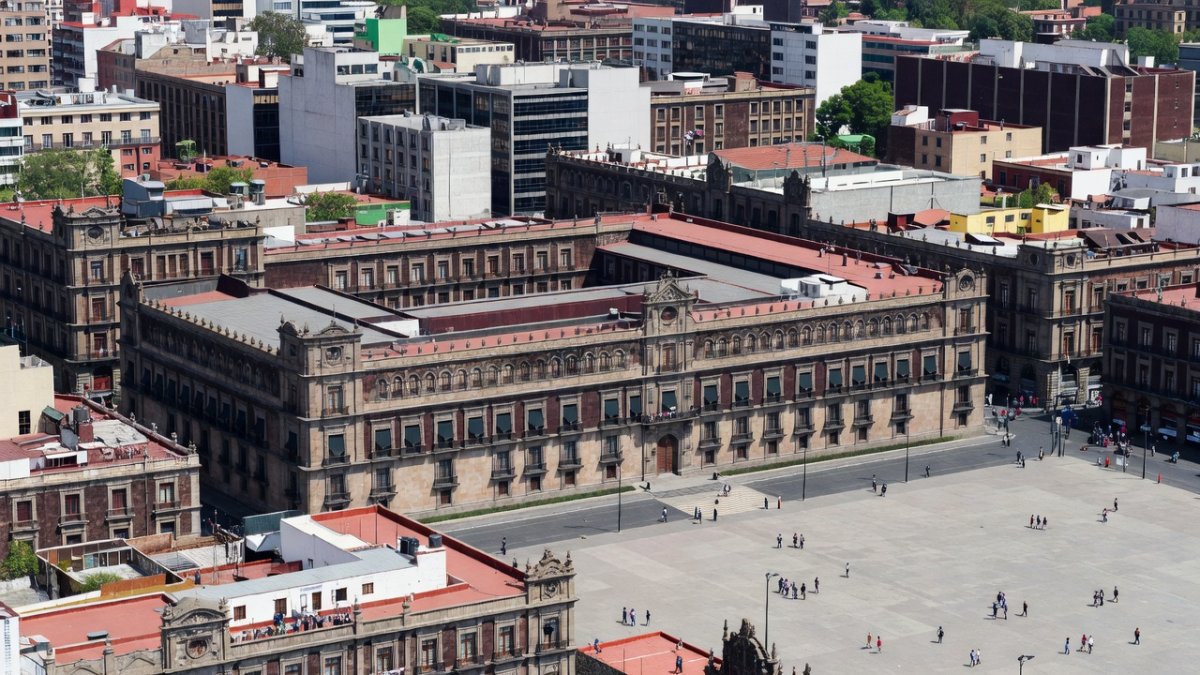
Sheinbaum Accepts Personal Invitation from Trump President Claudia Sheinbaum confirmed on Friday, July 17, during an event in Playa del Carmen, Quintana Roo, that she will travel to the FIFA World Cup 2026 final. She accepted a direct invitation from US President Donald Trump to attend the match between defending champions Argentina and Spain at MetLife Stadium in East Rutherford, New Jersey, on Sunday, July 19. The decision marks the first in-person meeting between the tw...
Sheinbaum Accepts Personal Invitation from Trump
President Claudia Sheinbaum confirmed on Friday, July 17, during an event in Playa del Carmen, Quintana Roo, that she will travel to the FIFA World Cup 2026 final. She accepted a direct invitation from US President Donald Trump to attend the match between defending champions Argentina and Spain at MetLife Stadium in East Rutherford, New Jersey, on Sunday, July 19.
The decision marks the first in-person meeting between the two leaders since the World Cup group draw at the Kennedy Center in Washington on December 5, 2025. Sheinbaum noted that Canadian Prime Minister Mark Carney will also be present, underscoring the trilateral nature of the tournament hosted by Mexico, the United States, and Canada.
Sheinbaum will depart Mexico on Saturday afternoon and return Monday morning. This brief trip stands in contrast to her choice not to attend the opening match in Mexico City, where she instead gave her ticket to an indigenous girl who plays soccer, reflecting her administration's focus on community access to the sport.
Diplomatic Context Shapes the Visit
The upcoming face-to-face encounter occurs against a backdrop of ongoing bilateral strains. Issues involving security cooperation, migration flows, and trade tariffs continue to require careful management by the Secretaría de Relaciones Exteriores and the US State Department.
The review of the 53 Mexican consulates following the CIA officers incident in Northern Mexico adds a layer of careful coordination to everyday consular services that families depend on for passports, legal help, and emergency support. These offices serve as lifelines for migrants and dual-national households, and steady management helps maintain trust in both directions along the border.
Since January 2026, Sheinbaum and Trump have held roughly twenty phone calls to address these matters. The leaders have worked through the Presidencia de la República and relevant agencies to maintain open lines of communication despite differing priorities on border enforcement and regional stability. Sheinbaum and Trump have maintained a pattern of direct phone calls that allows quick responses to emerging issues before they grow larger. This approach keeps lines open on topics ranging from security to commerce, giving both teams space to address concerns without public escalation. Analysts in Mexico and members of the Congreso de la Unión have pointed to the value of consistent communication that respects each country’s priorities while seeking practical outcomes.
The Secretaría de Relaciones Exteriores plays a steady role in guiding these exchanges, drawing on long experience to balance national interests with neighborly cooperation. This stands in contrast to the AMLO-era relationship, which often emphasized domestic focus and selective engagement. The World Cup setting now provides a fresh opportunity for personal diplomacy that can carry forward into more formal channels, helping communities on both sides of the border feel the benefits of steady, respectful ties.
King Felipe VI of Spain is also expected at the final, adding another layer of international interest. Trump attended a FIFA reception at Trump Tower in Manhattan on Friday and will join FIFA President Gianni Infantino for the trophy presentation, bringing high visibility to the event.
T-MEC Negotiations Loom Large
The third round of T-MEC talks is scheduled for July 21-23 in Mexico City, just days after the final. On July 1, Washington chose not to extend the agreement under its current terms for another sixteen years, keeping it active until 2036 with annual reviews instead.
The July 1 decision carries real weight for Mexican businesses that have built their operations around steady cross-border supply chains. Manufacturers in communities across the north and central regions now face clearer signals about how contracts and investments will unfold in the coming years, allowing them to plan hiring and equipment upgrades with fewer sudden shifts. This stability reaches into the auto plants and parts suppliers that employ generations of families, where predictable rules help keep assembly lines running and paychecks steady for workers who return home each evening to their neighborhoods.
Unlike the longer 16-year extension that once set the rhythm for trade relations, the annual review process brings communities closer to the conversations that shape their livelihoods. Each cycle offers a chance for local voices to highlight what works on factory floors and in agricultural fields, from tomato growers in the countryside to steel fabricators in industrial parks. Mexican officials have noted that these regular check-ins can strengthen ties when both sides focus on shared gains rather than abrupt changes, and the upcoming talks gain extra context from the World Cup gathering, where leaders can begin informal discussions before formal sessions begin.
These negotiations directly affect Mexican workers in manufacturing hubs, agricultural communities, and small export businesses that rely on stable access to US and Canadian markets. Families across northern states and central industrial corridors watch closely as talks approach. Mexican manufacturing, the auto industry, and agriculture all stand to feel these adjustments in daily operations. Auto suppliers worry about parts flows that cross the border multiple times before final assembly, while farmers track how fresh produce reaches U.S. tables without added costs. The World Cup meeting offers a natural bridge to these talks, letting economic teams build rapport in a setting that celebrates common interests and sets a constructive tone for the reviews ahead.
Sheinbaum's presence at the final offers an opportunity for informal discussions before formal sessions begin. The outcome of these talks will influence job security for thousands of Mexican households tied to cross-border supply chains.
World Cup Reflects Shared North American Pride
This marks the first World Cup co-hosted by three North American nations, creating moments of regional connection even amid policy disagreements. Spain advanced with a 2-0 victory over France on July 14 in Arlington, Texas, while Argentina defeated England 2-1 on July 15 in Atlanta.
Lionel Messi will become only the second player to appear in three World Cup finals, matching Brazil's Cafu. Mexican fans in colonias from Tijuana to Mérida follow every match with deep passion, seeing the tournament as a celebration of the continent's shared love for the game.
Cheapest tickets reached approximately $10,000 on FIFA's platform by Saturday afternoon, pricing many ordinary supporters out of attendance yet not diminishing their enthusiasm at home through community viewings and family gatherings.
Impact on Everyday Mexican Families
Residents in rural communities and urban neighborhoods hope the leaders' meeting can ease tensions that affect remittances, cross-border family visits, and local economies. Many households depend on stable relations for seasonal work opportunities and trade that supports tiendas and talleres.
Trade negotiations touch the jobs that sustain households from border towns to rural villages, where shifts in manufacturing or farming rules can mean the difference between steady work and periods of uncertainty. Families tied to the auto sector watch production schedules closely, knowing that steady orders support everything from school supplies to local markets. Agricultural communities likewise track export pathways, since many households rely on seasonal harvests that feed both Mexican tables and U.S. demand.
Remittances sent from relatives working across the border remain a quiet backbone for many homes, covering groceries, medical visits, and small home improvements that strengthen entire blocks. When trade talks move smoothly, these flows tend to stay reliable, giving families breathing room to invest in their children’s futures. Border crossings add another layer, as relatives on both sides coordinate visits for holidays or emergencies, and smoother commercial rules often ease the everyday logistics that keep extended families connected.
Indigenous groups and migrant worker families particularly watch how security and migration policies evolve. Sheinbaum's earlier gesture of giving her opening-match ticket to a young soccer player highlighted the administration's emphasis on youth and community inclusion. Indigenous communities bring their own perspective to these relations, emphasizing how land, water, and traditional crafts intersect with larger economic flows. Small businesses such as neighborhood tiendas and talleres feel tariff uncertainty most directly, adjusting inventory and service prices while still trying to serve the same loyal customers who stop by each day. These local anchors keep community life vibrant even as national talks continue.
Small business owners in border regions see potential for reduced uncertainty if the personal encounter helps build trust ahead of the T-MEC round. These daily realities remain central to how Mexicans interpret high-level diplomatic moments.
Path Forward for Bilateral Relations
The Sunday final provides a visible platform for continued dialogue between the Sheinbaum administration and the Trump White House. Both sides have maintained contact through established channels despite strains over cartels, tariffs, and consular matters.
Observers note that sustained engagement through the Congreso de la Unión and relevant US counterparts will be necessary to address outstanding issues before and during the July negotiations. The presence of all three North American leaders adds symbolic weight to the sports occasion.
Mexican communities across the country will follow the match and its diplomatic sidelines with interest, hoping the shared celebration of soccer can contribute to practical progress on matters that shape daily life for families from the northern border to southern states.
Tags: Sheinbaum Trump World Cup, T-MEC negotiations, US Mexico relations, Claudia Sheinbaum, FIFA World Cup 2026, MetLife Stadium, Mexican families, bilateral diplomacy
By Rosa Martinez, Staff Writer
This article was produced with AI-assisted research and editorial support. Reporting is based on sources cited in the article.
What's Your Reaction?
 Like
0
Like
0
 Dislike
0
Dislike
0
 Love
0
Love
0
 Funny
0
Funny
0
 Wow
0
Wow
0
 Sad
0
Sad
0
 Angry
0
Angry
0

Latin America/Andes Correspondent at Global1.News. Based in Bogota, covering politics, environment, energy, and social movements across the Andean region. Passionate about environmental journalism and communities protecting their land.













Comments (0)