
Belgium Approves Import Ban on Goods from Occupied Palestinian Territories
Belgium has approved an import ban on goods from occupied Palestinian territories, though implementation details remain pending. The step responds to the Gaza crisis where the Health Ministry reports over 73,000 killed and 90 percent infrastructure damage since 2023, with ongoing ceasefire violations since October 2025. The policy connects to international law on occupation economies and may influence European solidarity efforts.
Belgium Approves Import Ban on Goods from Occupied Palestinian Territories
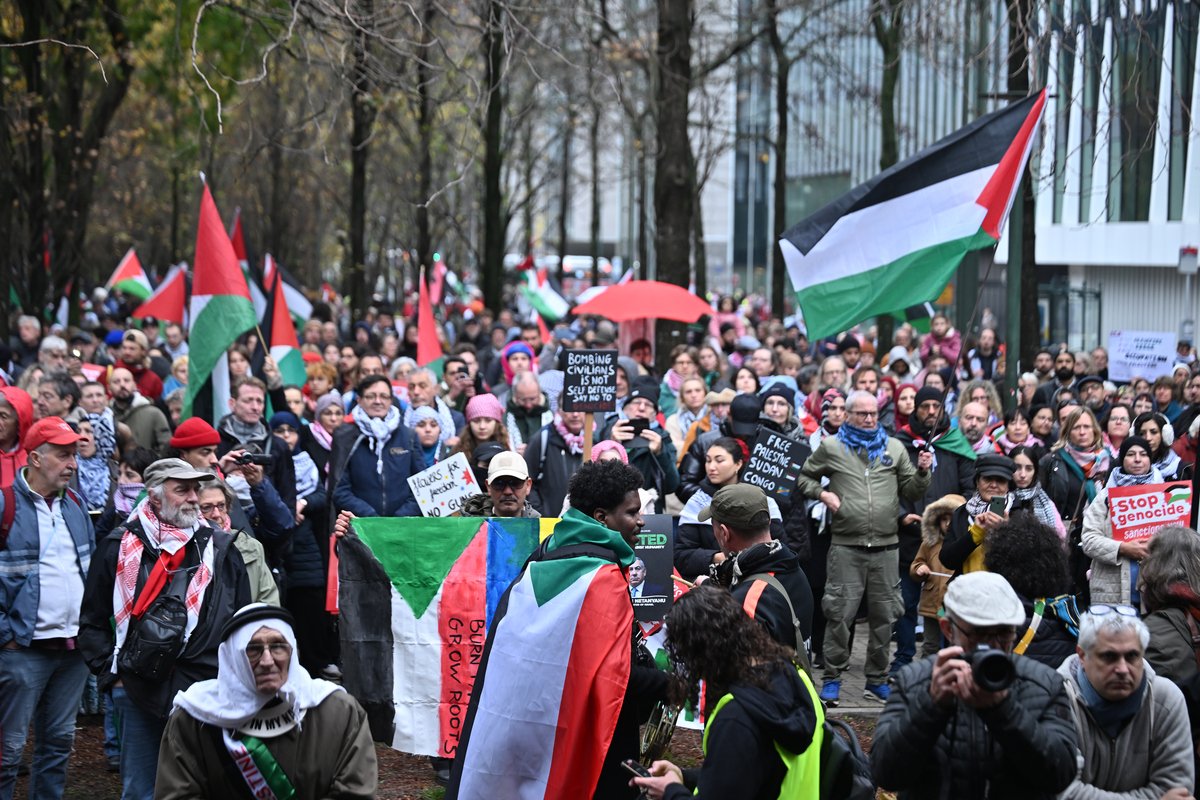
Brussels, Belgium — The Belgian federal government on Saturday approved an import ban on goods from the occupied Palestinian territories during its final meeting before the summer recess.
Belgium Takes a Stand: Import Ban on Settlement Goods
Belgium's decision positions the country among European states taking concrete steps on goods linked to settlements in the occupied Palestinian territories. The federal cabinet reached the agreement last summer amid widespread concern over the scale of destruction in Gaza. Officials described the import restrictions as a direct response to the ongoing occupation and its economic structures. Implementation timelines and verification procedures have not yet been released, leaving the practical effects dependent on future regulatory steps.
The ban targets products originating from areas under Israeli control beyond the 1967 lines. Palestinian agricultural and manufacturing sectors have long highlighted how settlement production undercuts local economies and sustains the occupation's infrastructure. Belgian authorities have not named specific product categories or monitoring bodies at this stage.
The Human Toll: Ceasefire Violations Continue
Despite the ceasefire that took effect on October 10, 2025, Gaza's Health Ministry reports that Israeli violations have killed more than 1,100 Palestinians and injured over 3,600 others. The ministry's cumulative figures since October 2023 record more than 73,000 Palestinians killed and over 173,000 wounded. Approximately 90 percent of the enclave's civilian infrastructure has sustained damage or destruction.
These numbers reflect daily realities for families in Gaza, where access to medical care, clean water, and shelter remains severely limited. Residents describe repeated incidents of fire from Israeli positions even after the formal ceasefire date. The import ban arrives against this backdrop of continued casualties and restricted movement of people and goods.
International Law and the Occupation Economy
International humanitarian law prohibits the transfer of an occupying power's civilian population into occupied territory and requires third states to avoid supporting such activities. Belgium's measure aligns with calls from United Nations bodies and human-rights organizations to differentiate between Israel proper and settlement-based production. The occupation economy relies on land, water, and labor resources drawn from Palestinian areas, creating structural dependencies that the ban seeks to address at the import stage.
Legal experts note that similar restrictions in other jurisdictions have required clear labeling and customs verification. Without finalized Belgian procedures, the extent to which the policy will alter trade flows remains to be seen. Palestinian civil-society groups have welcomed the announcement as recognition of long-standing legal arguments against settlement trade.
The Fourth Geneva Convention’s Article 49 explicitly bars an occupying power from transferring its own civilians into occupied territory, a prohibition the International Court of Justice reinforced in its 2004 Wall advisory opinion and again in the July 2024 ruling that declared the entire Israeli occupation unlawful. These frameworks establish that settlement production occurs within an illegal regime, rendering goods extracted or manufactured there incompatible with international humanitarian law. Belgium’s import ban therefore aligns domestic trade policy with binding legal obligations rather than creating new restrictions.
Settlement agriculture, quarrying and manufacturing now account for a growing share of Israeli exports to Europe, with products such as dates, herbs, cosmetics and stone directly competing against Palestinian equivalents in the same markets. Because settlement enterprises benefit from subsidized land, water and security infrastructure denied to Palestinian producers, the resulting trade imbalance deepens economic displacement. The ban interrupts this advantage at the point of entry, offering a practical mechanism to reduce the profitability of unlawful settlement activity.
The EU’s existing labeling regime, mandated by the Court of Justice judgment in case C-363/18, requires only that settlement goods be identified as such; it leaves them free to circulate. Belgium’s prohibition moves beyond transparency to exclusion, signaling that consumer information alone cannot remedy the underlying violation of international law. This step underscores a shift from procedural compliance toward substantive respect for the rights of the occupied population.
European Momentum: From EU Divisions to National Action
EU member states have differed on coordinated action regarding settlement goods, with some governments favoring voluntary labeling and others resisting any restrictions. Belgium's unilateral step follows its earlier diplomatic statements on Gaza and reflects domestic parliamentary pressure. The decision may encourage parallel measures in countries where similar debates have occurred.
Advocacy networks across Europe have tracked national-level initiatives on trade and human rights. Belgium's approval, though still awaiting implementation details, adds to a pattern of individual states acting where collective EU policy has stalled. Observers will watch whether other capitals reference the Belgian precedent in upcoming policy discussions.
Ireland, Spain, Norway, Slovenia and Malta have each advanced measures ranging from parliamentary resolutions urging import restrictions to formal reviews of settlement trade. While none yet match Belgium’s outright ban, their actions reflect a widening consensus that labeling has proved insufficient. Since October 2023, multiple European parliaments have passed motions condemning settlement expansion, driven by sustained public mobilization and documented humanitarian consequences in Gaza and the West Bank.
These national initiatives place direct pressure on the EU-Israel Association Agreement, whose human-rights clause has long been invoked by civil society yet rarely activated. Belgium’s decision supplies a concrete precedent that other member states can cite when demanding a formal review of preferential tariffs granted to settlement goods. The cumulative effect could compel Brussels to confront whether continued trade preferences remain compatible with the EU’s own treaty obligations and stated commitment to international law.
Palestinian Voices: What This Means on the Ground
Palestinian farmers and manufacturers in the West Bank have described how settlement goods compete directly with their produce in European markets. The import ban, if enforced, could reduce that competition and support local livelihoods tied to agriculture and light industry. Community leaders in Gaza have linked economic pressure on the occupation to broader accountability efforts.
Residents emphasize that symbolic gestures alone will not restore destroyed homes or reopen borders. They stress the need for sustained measures that address both trade and the movement of people. The announcement has prompted cautious optimism among solidarity groups that have campaigned for years on settlement products.
West Bank olive growers and farmers routinely watch settlement produce—often grown on confiscated land with access to restricted water resources—flood European shelves at lower prices. This competition erodes already fragile livelihoods, forcing many families to abandon traditional agriculture. The resulting loss of income compounds the daily restrictions on movement and land access that define life under prolonged occupation.
The Palestinian Authority faces mounting fiscal strain as settlement expansion fragments territory and diverts customs revenue. Trade imbalances favor settlement exporters while Palestinian producers encounter barriers that limit their ability to reach the same markets. Belgium’s measure, though modest in volume, symbolically affirms that the international community recognizes these structural distortions.
Palestinian civil society organizations, trade unions and the BDS movement have advocated precisely such import prohibitions for more than a decade, framing them as essential to upholding Palestinian rights to self-determination and economic sovereignty. Their sustained documentation of settlement production has supplied the evidentiary foundation for Belgium’s policy, demonstrating how local campaigns can translate into concrete state action.
The Road Ahead: Implementation and Enforcement
Belgian customs authorities will require clear guidelines on origin verification and penalties for non-compliance before the ban can take practical effect. Government statements indicate that technical work on these procedures continues. Palestinian trade officials have offered to share documentation practices developed under existing labeling regimes.
Monitoring by civil-society organizations will likely focus on whether shipments from settlement areas continue to reach Belgian ports. The absence of finalized rules means the measure's immediate economic impact cannot yet be quantified. Future updates from Brussels will determine whether the policy translates into measurable changes in trade data.
Customs authorities must rely on certificates of origin and supply-chain audits to distinguish settlement goods from those produced inside Israel’s 1967 borders—an administratively demanding task that requires close cooperation with exporters. Effective verification protects the integrity of the ban while minimizing disruption to legitimate Israeli trade.
Israel or affected companies may challenge the measure before domestic courts or through WTO dispute mechanisms, arguing discrimination or insufficient justification. Belgium will need to ground its defense in the ICJ’s findings on the illegality of the occupation, presenting the ban as a proportionate response to serious breaches of international law rather than a political sanction.
Should additional EU states adopt comparable restrictions, the combined loss of market access could significantly reduce settlement profitability, particularly in agriculture and manufacturing sectors oriented toward European consumers. Over time, such coordinated action would narrow the economic incentives that sustain settlement expansion and reinforce the legal principle that occupation cannot yield commercial gain.
By Fatima Al-Rashid, Staff Writer
This article was produced with AI-assisted research and editorial support. Reporting is based on sources cited in the article.
What's Your Reaction?
 Like
0
Like
0
 Dislike
0
Dislike
0
 Love
0
Love
0
 Funny
0
Funny
0
 Wow
0
Wow
0
 Sad
0
Sad
0
 Angry
0
Angry
0

Gulf/MENA Correspondent at Global1.News. Based in Doha, covering Gulf politics, energy markets, diplomacy, and development across the Middle East and North Africa. Tracks the economic transformation of the Gulf states.











Comments (0)