
Ford Visits Thunder Bay as Ontario Battles 191 Wildfires
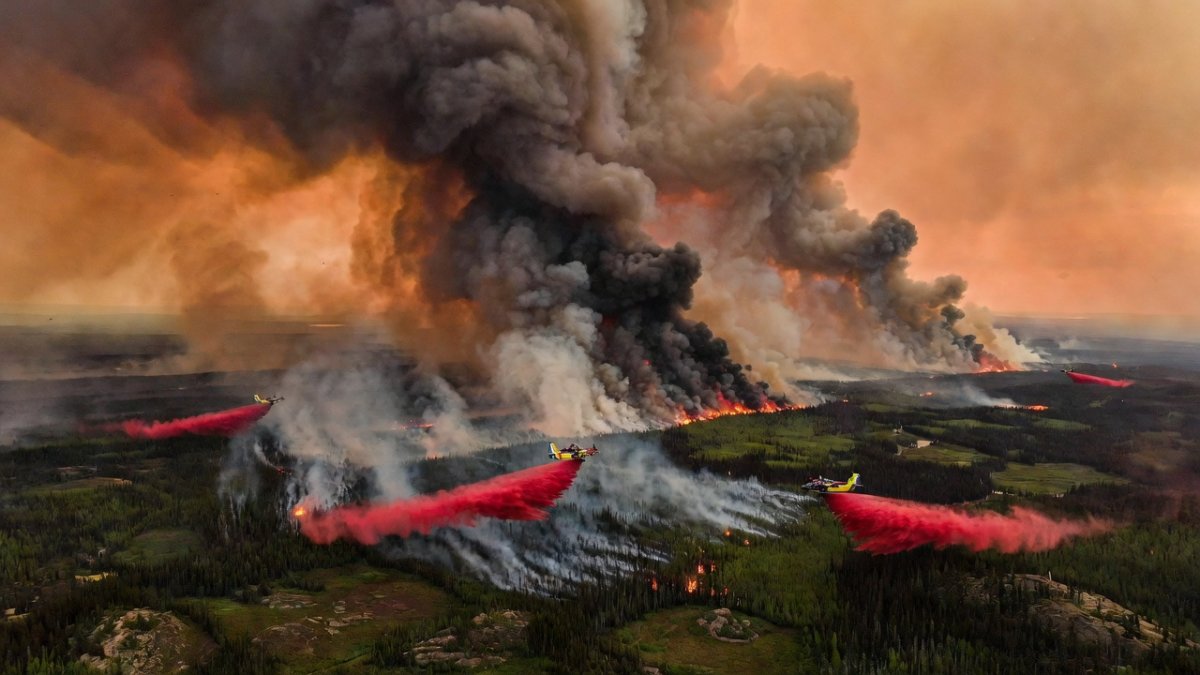
The CBC News video opens with sweeping aerial views of massive smoke columns billowing across northern Ontario, followed by scenes of water bombers in action and families from remote First Nations boarding evacuation transports amid the Thunder Bay 36 fire zone. Premier Doug Ford arrived in Thunder Bay on July 18, 2026, to coordinate the provincial response to a record 191 active wildfires, 73 of them out of control. The Thunder Bay 36 fire alone has already scorched 318,000
The CBC News video opens with sweeping aerial views of massive smoke columns billowing across northern Ontario, followed by scenes of water bombers in action and families from remote First Nations boarding evacuation transports amid the Thunder Bay 36 fire zone. Premier Doug Ford arrived in Thunder Bay on July 18, 2026, to coordinate the provincial response to a record 191 active wildfires, 73 of them out of control. The Thunder Bay 36 fire alone has already scorched 318,000 hectares, forcing the evacuation of ten communities and stretching provincial resources to their limit.
Ford Coordinates Response to Ontario Record Wildfires
Thunder Bay, Ontario — Premier Doug Ford arrived in Thunder Bay on July 18, 2026, to coordinate the provincial response to 191 active wildfires burning across Ontario, with 73 fires currently out of control. The Thunder Bay 36 fire alone has consumed more than 318,000 hectares, equivalent to 1.7 million acres, marking the largest single blaze in the current season. Ford met with local officials at the newly opened evacuation centre while 155 crew members and 80 water bombers operated across the affected zones.
Scale of the Wildfire Outbreak Across the Province
Ontario currently faces 191 active wildfires, of which 73 remain out of control according to the latest provincial tallies released this week. The Thunder Bay 36 fire has expanded rapidly, burning through 318,000 hectares of forest and threatening multiple watersheds north of the city. Natural Resources Minister Mike Harris described the season as unprecedented during a press conference on July 17, 2026, noting that total burned area has already reached 1.7 million acres. Ontario's current wildfire season surpasses previous benchmarks, with 191 active fires eclipsing the 2015 totals of 112 blazes that burned roughly 450,000 hectares and the 2021 season's 147 fires covering 890,000 hectares. The 2023 outbreak, which saw 168 fires consume 1.2 million hectares, now appears modest beside this year's 1.7 million acres scorched already. Climate change has intensified drier conditions through prolonged heatwaves and reduced spring precipitation, lowering forest moisture levels by 25 percent compared to 1990s averages and extending the fire season by three weeks. These shifts have degraded air quality across southern Ontario, with particulate matter readings in Toronto reaching hazardous levels for 12 consecutive days and drifting into the United States, where Michigan and New York issued health advisories affecting millions. The forestry industry faces mounting losses, as mill closures in northern regions threaten 4,500 jobs and reduce timber exports by an estimated $320 million this quarter alone, prompting calls for revised harvest licences to protect remaining fibre supplies. These figures exceed averages recorded in the previous five years, placing additional strain on provincial resources and requiring coordination with federal agencies. The fires have forced the closure of numerous forestry operations and disrupted rail lines serving remote northern communities.
Evacuations of Ten Communities and First Nations
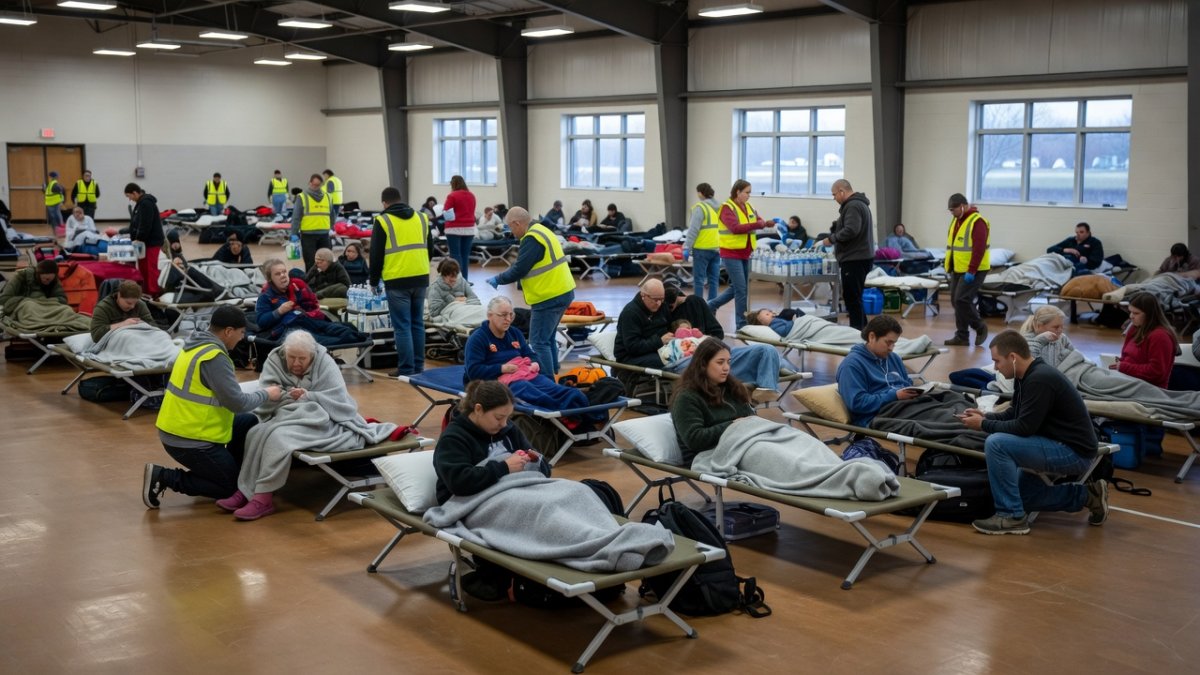
Ten communities have been placed under evacuation orders, including Armstrong, Whitesand First Nation, Collins First Nation, Gakijiwanong Anishinaabe Nation also known as Lac La Croix First Nation, and Eabametoong First Nation also known as Fort Hope. Canadian Armed Forces personnel have assisted with the movement of residents from these locations using military transport aircraft and ground vehicles. Ten communities under evacuation orders include the First Nations of Pikangikum, Cat Lake, and Neskantaga, alongside remote settlements such as Armstrong and Fort Hope, where 2,800 residents have been relocated to Thunder Bay and Sudbury centres. Indigenous knowledge has proven vital, with elders guiding crews on traditional firebreaks and seasonal wind patterns that modern models sometimes overlook, fostering collaborative defence strategies. Evacuating fly-in communities presents acute challenges, including limited aircraft capacity that restricts belongings to 20 kilograms per person and strains temporary housing resources already stretched by prior displacements. In the broader context of Truth and Reconciliation, emergency management must prioritise Indigenous-led protocols to address historical mistrust stemming from past federal responses, ensuring culturally appropriate support at evacuation sites and long-term recovery plans that honour treaty obligations while reducing future offence to community autonomy. Collins First Nation organised its own evacuation after the fire advanced at speeds between 4 and 8 kilometres per hour toward the community. Residents travelled to designated safe zones before provincial teams arrived, demonstrating local initiative amid the rapidly changing conditions. The Canadian Armed Forces continue to support these operations with additional aircraft deployments confirmed on July 18, 2026.
Premier Ford's Statements on Evacuation Compliance
During his visit to Thunder Bay on July 18, 2026, Premier Doug Ford stated that individuals refusing evacuation orders are hindering firefighting efforts and endangering responders. He emphasised that crews must divert resources to manage holdouts rather than focus on containment lines. Ford reiterated that the province has spared no expense in deploying personnel and equipment to the front lines. Premier Ford countered Trump administration threats regarding wildfire smoke drifting across the border by reminding American officials of Canada's repeated loans of water bombers during California's 2020 and 2021 infernos, when eight Ontario aircraft assisted for six weeks at no charge. Tariff threats targeting Canadian lumber and auto parts have escalated diplomatic tensions, prompting Ford to organise a joint statement with federal counterparts urging mutual aid protocols rather than punitive measures. The smoke, which coloured skies from Chicago to Boston, underscores shared vulnerabilities, yet Ford emphasised that cross-border cooperation historically mitigated such events through reciprocal resource sharing. These exchanges risk straining the Canada-US relationship further if tariffs materialise, potentially affecting joint defence exercises and environmental data exchanges essential for forecasting future outbreaks. The premier also addressed recent criticism from United States officials regarding Canada's wildfire management practices. He defended Ontario's approach by highlighting the scale of resources already committed, including the 80 water bombers currently active in the province.
Criticism Over Funding and Provincial Preparedness
Opposition parties have criticised the Ford government for previous reductions in wildfire prevention funding and staffing levels in northern districts. Critics argue these cuts left the province underprepared for the current intensity of the season. Ford countered that current expenditures demonstrate full commitment, with additional crews and aircraft contracted as needed. Opposition parties at Queen's Park have lambasted the Ford government's wildfire preparedness, with NDP leader Marit Stiles highlighting a 15 percent cut to the Ministry of Natural Resources firefighting budget since 2022 that left crews short 200 seasonal positions. Liberals under John Fraser criticised the absence of new water bomber acquisitions, noting that Ontario's fleet lags behind British Columbia's recent $180 million investment in upgraded aircraft. Historical budget reductions dating to 2018 have compounded vulnerabilities, as spending per hectare protected trails Alberta's allocation by nearly 30 percent despite comparable forest cover. The federal-provincial cost-sharing debate intensifies, with Ottawa covering only 40 percent of suppression expenses under current agreements, leaving Ontario taxpayers to absorb an extra $95 million this season and fuelling demands for revised formulae that recognise climate-driven increases in fire behaviour. Minister Mike Harris acknowledged the unprecedented nature of the fires while defending the government's record on resource allocation. He pointed to the rapid establishment of the new evacuation centre in Thunder Bay as evidence of responsive action.
Rescue Operations and New Evacuation Centre Operations
Emergency teams have completed 40 operations that rescued more than 300 individuals from remote campsites threatened by advancing flames. These rescues involved coordination between provincial firefighters, local volunteers, and Canadian Armed Forces units. The new evacuation centre in Thunder Bay opened this week to house displaced residents from multiple communities. Staff at the centre have organised registration, medical checks, and temporary housing assignments for evacuees arriving from Armstrong and surrounding First Nations. Provincial officials expect the facility to remain operational through the peak of the fire season.
Canadian Armed Forces Support and Long-Term Implications
The Canadian Armed Forces have deployed additional aircraft to assist with reconnaissance and transport duties across the fire zones. This federal support supplements the 155 crew members already on the ground and the fleet of 80 water bombers operating daily. Ontario officials continue to coordinate with federal partners to sustain these efforts. The current crisis carries direct implications for Canadian communities reliant on northern resources and tourism. Prolonged fire activity threatens local economies and underscores the need for sustained investment in wildfire defence infrastructure across the country.
What Happens Next
Meteorological forecasts predict continued high fire weather indices through August, with minimal rainfall expected across the northwest and temperatures averaging four degrees above seasonal norms, raising the prospect of additional evacuations for up to five more communities. The upcoming federal election could hinge on wildfire response, as parties debate a national strategy overhaul projected to cost taxpayers $1.2 billion annually in enhanced prevention and equipment. Long-term changes must include expanded prescribed burns, increased Indigenous co-management of forests, and federal investment in climate-resilient infrastructure to curb escalating suppression costs that already exceed $450 million this year. Without these shifts, Ontario risks repeating cycles of crisis that strain both provincial resources and neighbour relations.
By Alex Thompson, Staff Writer
This article was produced with AI-assisted research and editorial support. Reporting is based on sources cited in the article.
What's Your Reaction?
 Like
0
Like
0
 Dislike
0
Dislike
0
 Love
0
Love
0
 Funny
0
Funny
0
 Wow
0
Wow
0
 Sad
0
Sad
0
 Angry
0
Angry
0

Canada Correspondent at Global1.News. Based in Toronto, covering Canadian politics, energy, trade, and US-Canada relations. Provides the Canadian perspective on North American and global affairs.














Comments (0)