
FramePack Open Source AI Video Changes Everything -- 120 Seconds on 6GB VRAM
FramePack by lllyasviel enables 120s image-to-video on 6GB VRAM GPUs as open-source alternative to Kling AI, with easy install via Aitrepreneur tutorial, democratizing AI video creation through tech breakthroughs and broad implications.
In a bold move that challenges the dominance of proprietary AI video tools, FramePack emerges as a groundbreaking open-source image-to-video diffusion model developed by lllyasviel, the visionary behind ControlNet and Fooocus. This innovation allows users to generate up to 120 seconds of high-quality video from a single image using nothing more than consumer-grade GPUs with just 6GB of VRAM. As the lead anchor for Global1.News, I see this not as incremental progress but as a direct assault on the paywalled ecosystems that have locked down advanced AI video generation for too long.
What FramePack Is
FramePack is an accessible, community-driven AI model designed specifically for image-to-video conversion. Built on diffusion techniques refined through lllyasviel prior work, it processes input images into extended video sequences with remarkable coherence and motion realism. Unlike closed systems that require cloud subscriptions, FramePack runs locally, empowering creators, researchers, and hobbyists alike. The model's open-source nature means anyone can inspect, modify, or improve its code, fostering rapid iteration that proprietary alternatives simply cannot match.
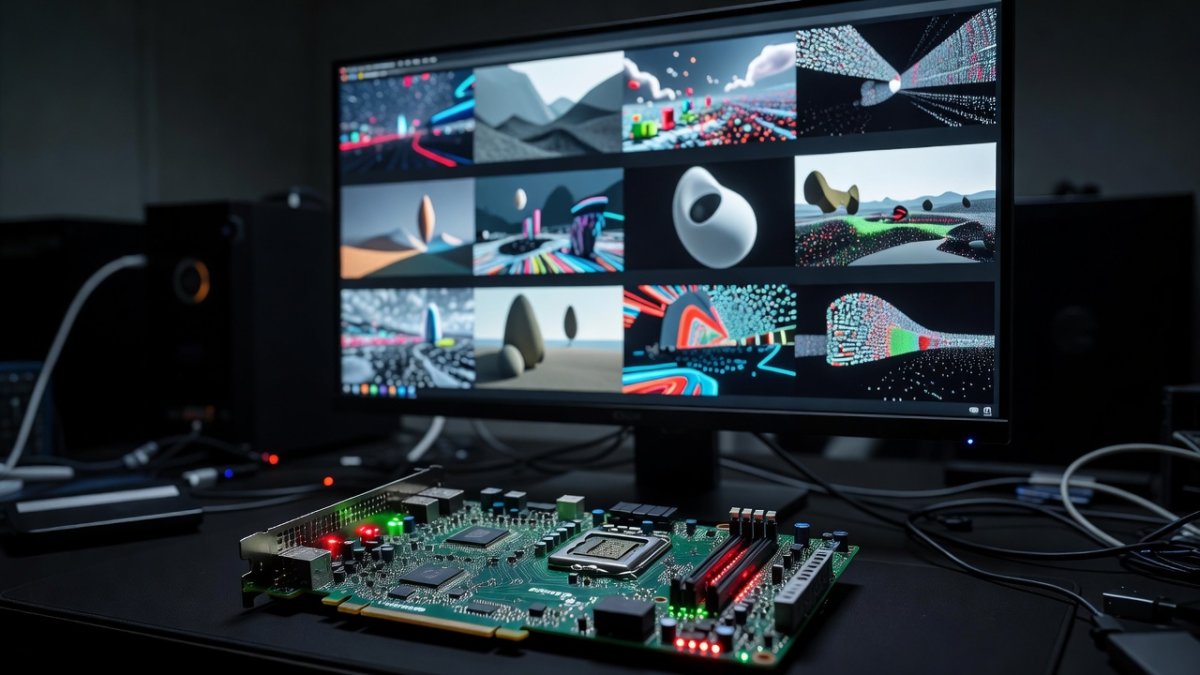
lllyasviel first gained prominence with ControlNet, a neural network architecture that injects spatial conditioning into diffusion models like Stable Diffusion, enabling precise control over pose, depth, and edges. Fooocus followed as a streamlined interface that abstracts away complex parameters, making advanced generation accessible to non-experts. FramePack extends this lineage by focusing on temporal extension, transforming static images into coherent motion sequences through optimized diffusion pipelines that prioritize memory efficiency over raw scale.
Technically, FramePack leverages a modified latent diffusion framework where input images are encoded into compressed representations before iterative denoising steps generate subsequent frames. This builds directly on lllyasviel expertise in modular control mechanisms, allowing users to fine-tune motion strength or camera paths without retraining the entire model from scratch.
The FramePack Technology Breakthrough
At its core, FramePack introduces efficient frame-packing algorithms that optimize memory usage during the diffusion process. This allows for extended temporal consistency across 120-second clips without the typical artifacts or drift seen in lesser models. lllyasviel engineering prowess shines here, leveraging techniques honed in ControlNet for precise control and Fooocus for user-friendly interfaces. The result is a model that maintains visual fidelity over long durations, handling complex scenes with natural physics and lighting transitions that feel cinematic rather than artificial.
Frame packing works by grouping multiple temporal frames into shared latent tensors during the forward diffusion pass, reducing redundant computation and VRAM footprint through techniques like grouped attention and progressive noise scheduling. Instead of processing each frame independently, the algorithm packs 8-16 frames into a single tensor batch, applying cross-frame consistency losses that enforce smooth optical flow and prevent flickering.
This approach draws from efficient transformer variants, incorporating sparse attention patterns that focus only on relevant spatial-temporal regions. Users report stable outputs even in scenes with rapid motion, such as flowing water or character interactions, where traditional models often introduce ghosting or inconsistent lighting.
How It Compares to Kling AI
Kling AI has positioned itself as a premium player in AI video, boasting impressive outputs but at the cost of accessibility and data privacy. FramePack directly competes by delivering comparable or superior length and quality without the hefty fees or usage limits. Where Kling relies on remote servers that can throttle performance or harvest user data, FramePack operates offline on personal hardware. My take: Kling's slick marketing masks its gatekeeping; FramePack cuts through that nonsense with raw capability and zero strings attached, making it the choice for those tired of corporate oversight.
Kling AI charges approximately $10-30 monthly for credit-based access, limiting generations to shorter clips under 60 seconds in free tiers and requiring uploads that expose user prompts to cloud processing. FramePack offers unlimited local runs at zero cost, with features like direct image conditioning, adjustable frame rates from 8-24 FPS, and export options in MP4 or image sequences that Kling restricts behind paywalls.
Specific Kling features such as motion brush tools and multi-shot storyboarding are matched or exceeded in FramePack through community extensions, including integration with ControlNet-style adapters for pose guidance. Privacy-conscious users particularly benefit from FramePack's offline mode, avoiding Kling's data retention policies that have raised concerns in creative industries.
The 6GB VRAM Milestone
Achieving 120-second generations on just 6GB VRAM represents a seismic shift in hardware requirements. Previous models demanded high-end cards with 24GB or more, pricing out everyday users. FramePack's optimizations slash this barrier dramatically, running smoothly on mid-range GPUs like older RTX series cards. This milestone democratizes access in the truest sense, proving that advanced AI need not be the domain of tech giants with server farms. It forces the industry to confront how over-engineered many solutions have become.
Comparisons highlight the gap: Stable Video Diffusion typically requires 16-24GB VRAM for even 4-second clips, while Runway Gen-3 and Pika Labs cloud services mask underlying demands exceeding 40GB on enterprise hardware. FramePack's 6GB threshold enables deployment on laptops with RTX 3060 mobile GPUs or older GTX 1660 cards, broadening access to students and freelancers previously excluded.
Memory optimizations include 8-bit quantization of key layers and dynamic offloading of unused tensors to system RAM, techniques refined from Fooocus's efficiency focus. This allows sustained generation without swapping or crashes, a feat unmatched by open alternatives like AnimateDiff that still demand 12GB+ for comparable durations.
Installation and Ease of Use
Getting started with FramePack is straightforward, thanks to detailed guidance in Aitrepreneur's comprehensive video tutorial. Users download the repository, install dependencies via simple commands, and load models locally in minutes. The interface echoes Fooocus's intuitive design, requiring minimal technical know-how. Aitrepreneur walks through setup on Windows and Linux systems, troubleshooting common VRAM issues with practical tips. This ease of use stands in stark contrast to the convoluted setups of competing tools, making FramePack a plug-and-play revolution for the masses.
The Aitrepreneur tutorial details exact steps: cloning the GitHub repo with git clone, creating a Python 3.10 virtual environment, and running pip install -r requirements.txt to pull diffusion libraries and CUDA dependencies. Model weights download automatically from Hugging Face, with options to select quantized variants for even lower VRAM use.
Troubleshooting covers common issues like CUDA out-of-memory errors via --lowvram flags and Windows-specific path fixes for torch installations. The Fooocus-inspired UI presents sliders for motion scale, seed control, and prompt weighting, allowing first-time users to generate clips within 15 minutes of setup on supported hardware.
Implications for AI Video Generation Democratization
FramePack signals the end of an era where AI video tools were siloed behind paywalls and elite hardware. By enabling long-form content creation on consumer devices, it levels the playing field for independent filmmakers, educators, and content creators worldwide. No longer must one rely on unstable online services prone to outages or censorship. This open approach accelerates innovation through community contributions, potentially outpacing closed models in features and reliability. The broader impact? A surge in creative output unhindered by corporate gatekeepers.
Industry-wide, this could disrupt Hollywood pre-visualization workflows, letting indie directors prototype 2-minute sequences on laptops instead of renting cloud render farms. Educators gain tools for interactive history lessons or science simulations, while social media creators produce extended narratives without subscription fatigue.
Broader implications include accelerated open-source forks for specialized domains like medical imaging or architectural walkthroughs, pressuring closed vendors to lower prices or open APIs. The result fosters a more inclusive ecosystem where global talent contributes without hardware or financial barriers.
Analysis
FramePack is not without limitations—early versions may require fine-tuning for niche styles, and output quality can vary with prompt engineering. Yet its potential dwarfs these hurdles. As an opinionated observer, I argue this release exposes the fragility of proprietary dominance; lllyasviel track record suggests FramePack will evolve swiftly via open contributions. It challenges Kling AI's market position head-on while inspiring similar breakthroughs. In the end, tools like this remind us that true progress stems from accessibility, not exclusivity. The AI video landscape will never be the same.
FramePack stands as a testament to what open-source ingenuity can achieve when freed from commercial constraints. Its arrival marks a pivotal moment where consumer hardware suffices for professional-grade results, urging the industry to adapt or fade.
- Jessica Ali, Global 1 NewsThis article was produced with AI-assisted research and editorial support. Reporting is based on sources cited in the article.
What's Your Reaction?
 Like
0
Like
0
 Dislike
0
Dislike
0
 Love
0
Love
0
 Funny
0
Funny
0
 Wow
0
Wow
0
 Sad
0
Sad
0
 Angry
0
Angry
0

Editor-in-Chief at Global1.News. Atlanta-based journalist who cuts through the BS and tells it like it is. Lead anchor, host, and the voice you hear when the spin stops and the truth starts.











Comments (0)