
Venezuela Launches Talks for Democratic Roadmap After Quakes and Regime Change
Venezuela's interim government, backed by the US after Maduro's capture, will begin formal opposition talks on 1 August led by returned exile Dinorah Figuera. The move follows devastating 24 June earthquakes that killed over 4,734 people and occurs amid 372 remaining political prisoners and Machado's blocked return. The article examines implications for democratic institutions, skepticism toward foreign roles, and connections to Latin American political patterns.
Venezuela Launches Talks for Democratic Roadmap After Quakes and Regime Change
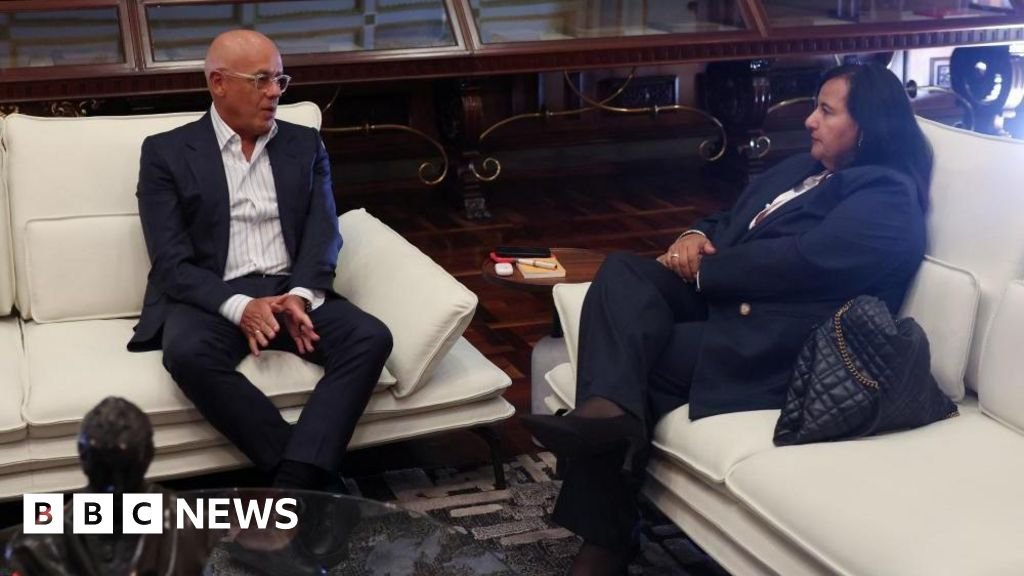
Caracas, Venezuela — In the wake of unimaginable loss from twin earthquakes that claimed thousands of lives, Venezuela's interim government has announced formal talks with select opposition figures beginning 1 August. These discussions emerge six months after US forces captured Nicolás Maduro in a Caracas raid and transported him to New York on drug charges, leaving Delcy Rodríguez in power with explicit Trump administration support. Yet the timing raises questions about whether humanitarian urgency or political calculation drives the process, especially as María Corina Machado remains blocked from returning and 372 political prisoners stay detained.
Earthquakes Expose Fragile Infrastructure and Force Political Reckoning
The twin earthquakes that struck northern Venezuela on 24 June left at least 4,734 confirmed dead, with the toll still climbing according to local reports. Jorge Rodríguez, brother of interim president Delcy Rodríguez, explicitly tied the decision for talks to this devastation, arguing that reconstruction requires a unified route map toward democracy. Communities along the northern coast continue to face collapsed homes, disrupted water systems, and overwhelmed hospitals, conditions that echo long-standing neglect of public infrastructure under previous administrations.
Daily life in affected areas such as the coastal regions near Caracas has ground to a halt, with families relying on makeshift shelters while aid distribution remains uneven. These disasters have intensified pressure on the interim government to demonstrate results beyond the removal of Maduro, whose capture occurred roughly six months before the current announcement.
Interim Leadership and the Shadow of External Backing
Delcy Rodríguez has held power since the US operation that seized Maduro, operating with direct support from the Trump administration. This arrangement has drawn scrutiny from observers across Latin America who recall past instances of foreign involvement in regional transitions, from Chile in the 1970s to more recent episodes in Bolivia. The interim government's announcement of talks scheduled for 1 August frames the process as an internal Venezuelan matter, yet the presence of external actors remains impossible to ignore.
Critics within Venezuela note that true sovereignty requires decisions made without external veto power, a concern rooted in the country's history of resource-driven interventions. The talks' stated goal of creating a route map toward democracy must therefore navigate these layered influences if they are to gain broad legitimacy.
Dinorah Figuera's Return and the Opposition's Composition
Dinorah Figuera's return in June after nearly eight years in exile carries the unmistakable imprint of Washington's logistical and diplomatic machinery. US State Department officials coordinated her reentry, providing security assurances and media amplification that no domestic opposition network could muster alone. This pattern echoes the selective elevation of figures in Bolivia after 2019 and in Nicaragua's fragmented exile circles, where proximity to US funding and visas often determines who speaks for "democracy" rather than who commands grassroots loyalty inside the country.
Critics inside Venezuela note that Figuera's selection was announced in Miami and Washington briefings before any broad consultation with regional parties or social movements occurred. Such top-down anointing risks repeating the legitimacy deficit that plagued earlier opposition coalitions, where leaders perceived as externally vetted struggled to mobilize beyond urban middle-class enclaves. The absence of figures rooted in labor unions or rural networks further narrows the delegation's claim to represent the full spectrum of post-earthquake discontent.
Regional observers recall how similar externally curated oppositions in Chile during the 1970s and 1980s initially enjoyed media favor yet later faced accusations of prioritizing foreign investor interests over national reconciliation. If Figuera's leadership is to transcend these precedents, the August talks must demonstrate that her mandate flows from Venezuelan constituencies rather than from the same corridors that facilitated Maduro's removal.
Persistent Political Prisoners Undermine Transition Claims
Venezuela's continued detention of 372 political prisoners stands in stark contrast to the transitional mechanisms that lent credibility to earlier Latin American shifts. Argentina's 1983 truth commission and Chile's National Commission on Truth and Reconciliation both treated the release and documentation of detainees as non-negotiable prerequisites for international recognition. Uruguay's prolonged amnesty debates similarly revealed that unresolved detentions can poison public trust long after formal power transfers occur.
Without parallel mechanisms—independent verification commissions, reparations frameworks, or public registries—Venezuela's interim authorities risk presenting a transition that satisfies external timelines while leaving families in limbo. Regional governments have already signaled that sanctions relief and reconstruction aid will hinge on measurable progress in this area, not merely on the scheduling of talks.
Failure to address these cases swiftly could fracture the fragile coalition supporting the 1 August process. Opposition figures who remain silent on prisoner releases may find their own legitimacy questioned by the very communities whose suffering the earthquakes have laid bare, turning a potential democratic roadmap into another chapter of selective accountability.
The Blocked Return of María Corina Machado: A Litmus Test for Inclusivity
Cross-referencing the exclusion of Machado with Figuera's externally facilitated reentry reveals a troubling pattern of selective inclusion that undermines the talks' credibility. In recent days, reports from Caracas indicate that Machado's continued barring—despite her broad domestic support—intersects directly with the prisoner crisis, as her advocacy has long centered on those 372 detainees. This dynamic, when analyzed alongside the earthquakes' displacement of 1.2 million more people, exposes how the interim government's roadmap risks prioritizing Washington-approved voices over those who could unify fractured communities across class and region.
The Nobel laureate's inability to set foot on Venezuelan soil despite having dedicated her Peace Prize to the same US administration that now blocks her return constitutes one of the more bitter ironies of this transition. Unless the August process includes credible mechanisms to repatriate leaders with genuine grassroots followings, the roadmap will remain hollow at its core.
Interwoven Crises: Humanitarian Fallout Meets Political Calculation
The earthquakes have compounded an already catastrophic humanitarian landscape: an estimated 1.2 million additional people displaced, hospitals operating at 30 percent capacity, and food insecurity affecting 7.8 million citizens according to regional monitoring groups. Oil production, already down to roughly 700,000 barrels per day from pre-sanctions levels near 2.5 million, faces further disruption from damaged coastal infrastructure, deepening fiscal dependence on uncertain external financing.
Discussions of sanctions relief remain tethered to political deliverables rather than reconstruction benchmarks, a linkage that has historically prolonged suffering in sanctioned economies. Inflation, hovering above 1,000 percent annually, continues to erode any prospect of rapid recovery unless talks produce credible commitments on governance transparency and resource management.
Should the August process collapse, the consequences will radiate beyond Venezuela's borders. Renewed migration surges could strain Colombia's border regions and Brazil's northern states, while weakened state control risks empowering transnational crime networks already active along the Orinoco and Amazon corridors. ALBA and UNASUR mechanisms, already sidelined, may face renewed pressure to reconstitute or risk ceding influence to bilateral arrangements dominated by external powers, reshaping the continent's diplomatic architecture for years to come.
By Elena Vasquez, Staff WriterThis article was produced with AI-assisted research and editorial support. Reporting is based on sources cited in the article.
What's Your Reaction?
 Like
0
Like
0
 Dislike
0
Dislike
0
 Love
0
Love
0
 Funny
0
Funny
0
 Wow
0
Wow
0
 Sad
0
Sad
0
 Angry
0
Angry
0
Latin America Correspondent at Global1.News. Based in Mexico City, covering politics, economics, energy, and culture across the region. Brings an on-the-ground perspective to stories spanning from the Rio Grande to Patagonia.












Comments (0)