
44 Nations Back 2016 Arbitral Award on West Philippine Sea
At least 44 nations back the 2016 Arbitral Award upholding Philippine West Philippine Sea rights as DND confirms growing UNCLOS support. Fourteen countries call it final and binding. The ruling impacts fishermen, OFWs and coastal communities as Secretary Rubio arrives for ASEAN talks.
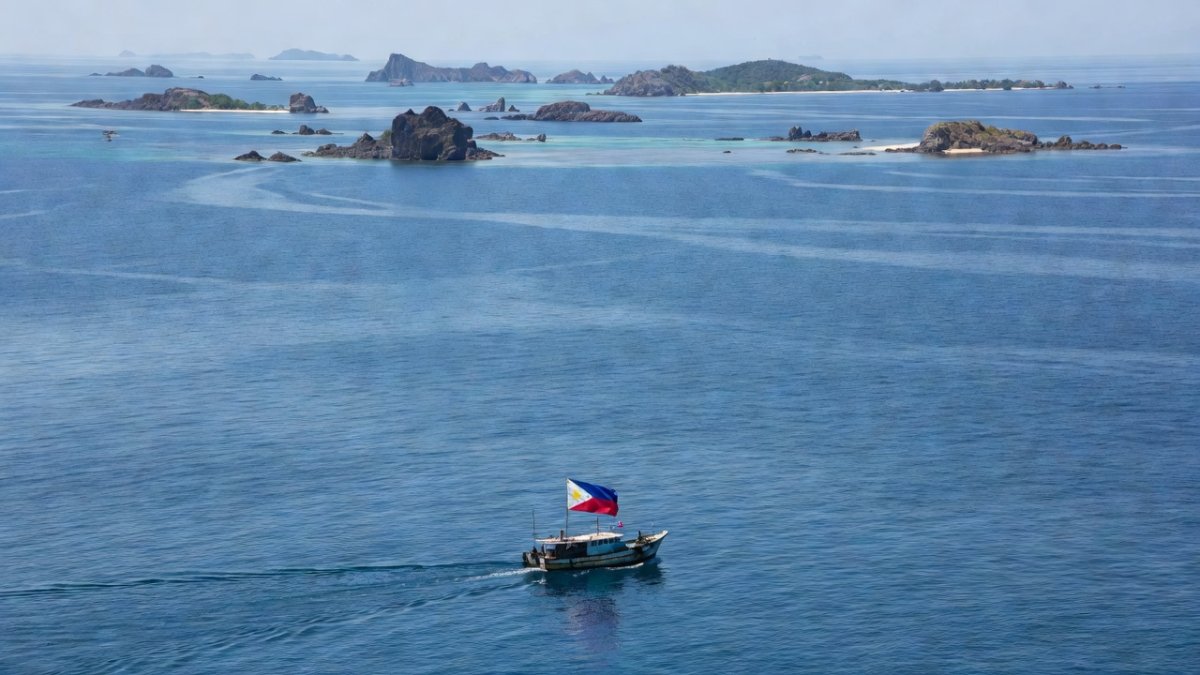
A Decade of Unity: 44 Nations Stand with the Philippines on the Arbitral Award
Ten years after the Permanent Court of Arbitration delivered its ruling on July 12, 2016, at least 44 countries have openly backed the award that upheld the Philippines' rights under the United Nations Convention on the Law of the Sea. Department of National Defense spokesman Arsenio Andolong noted that support from the international community has grown steadily, with more nations joining Manila in affirming the award's importance for regional stability.
Fourteen Nations Issue Joint Call for Compliance
On the tenth anniversary, fourteen countries—the Philippines, Australia, Canada, Estonia, Germany, Italy, Japan, Latvia, Lithuania, New Zealand, Romania, Slovenia, the United Kingdom, and the United States—released a joint statement describing the award as final, legally binding, and definitive. The statement reinforces the collective view that the ruling must guide maritime conduct in the South China Sea and protect the rights of coastal states.
The joint statement issued by fourteen nations, including the United States, Australia, Japan, and several European partners, represents a coordinated diplomatic signal that the 2016 arbitral award remains legally binding and must be respected. Such multilateral declarations work by creating cumulative pressure without triggering immediate confrontation; each signatory lends its voice, making it harder for any single power to dismiss the consensus as bilateral posturing. China’s Ministry of Foreign Affairs quickly labeled the move “irresponsible” and reiterated its non-recognition of the tribunal, yet the breadth of support underscores growing international fatigue with Beijing’s rejection of established maritime rules.
Similar calls have come from the European Union in its 2020 statement and from various UN General Assembly side events, though ASEAN itself has yet to issue a collective endorsement. Still, the fourteen-nation initiative quietly strengthens the hand of Philippine diplomats at ongoing Code of Conduct talks. For Filipino families watching from the sidelines, these statements offer a measure of reassurance that their country’s maritime rights are not being forgotten on the world stage, even as daily challenges at sea persist.
President Marcos Reflects on an Unfolding Legacy
President Bongbong Marcos observed that the award's legacy continues to unfold a decade later. His remarks highlight how the 2016 decision remains a living reference point for Philippine diplomacy and for communities whose daily lives depend on secure access to traditional fishing grounds within the country's exclusive economic zone.
Sovereign Rights Confirmed Under International Law
The ruling confirmed that the Philippines holds sovereign rights within its exclusive economic zone as defined under UNCLOS. This clarification carries direct meaning for coastal barangays, where families have long relied on the sea for livelihood and where the certainty of legal boundaries supports continued economic activity.
US Secretary of State Marco Rubio's Visit Strengthens Ties
US Secretary of State Marco Rubio is scheduled to arrive in the Philippines for a five-day visit to attend the ASEAN Post-Ministerial Conference. The timing of his arrival underscores ongoing cooperation under the Enhanced Defense Cooperation Agreement, which permits US forces access to designated Philippine bases and supports joint efforts to maintain maritime security in the region.
Illustrative Stories from Coastal Communities
Fishermen in coastal barangays often describe the quiet determination that comes from knowing their fishing areas are protected by international law. These accounts reflect the broader experience of families who rise before dawn to prepare their boats, mindful that clear maritime boundaries help sustain the catch that feeds households and supplies local markets. Similar sentiments appear among overseas Filipino workers whose remittances help keep barangay schools and clinics running; they view the award as one more thread in the bayanihan spirit that binds communities across distances.
Students in provinces near the sea frequently discuss the ruling in classrooms, connecting it to lessons on geography and national identity. Their conversations illustrate how awareness of the award travels from generation to generation, shaping a shared sense of stewardship over waters that have sustained Filipino life for centuries.
Background of the 2016 Ruling
The Philippines initiated the case in 2013. China chose not to participate. The tribunal, composed of judges from Ghana, France, the Netherlands, Poland, and Germany, issued a unanimous decision that addressed features including Scarborough Shoal and Second Thomas Shoal, as well as other areas inside the Philippine exclusive economic zone. The award clarified that certain maritime claims exceeded entitlements under international law.
The Philippines turned to international arbitration in 2013 after years of mounting frustration with China’s expansive claims in the South China Sea. The immediate spark was the tense 2012 Scarborough Shoal standoff, when Chinese vessels blocked Filipino fishermen from their traditional grounds just 124 nautical miles from Zambales. Manila realized that bilateral talks were going nowhere and that Beijing’s nine-dash line—a sweeping assertion covering nearly the entire sea—had no basis in the United Nations Convention on the Law of the Sea. Filing under UNCLOS offered a peaceful, rules-based path to clarify maritime entitlements without directly confronting China’s military might.
The five-member tribunal, drawn from Ghana, France, the Netherlands, Poland, and Germany, delivered a unanimous ruling in July 2016 that struck down the nine-dash line and affirmed the Philippines’ exclusive economic zone rights. China responded by accelerating its island-building campaign in the Spratlys, turning submerged reefs into airfields and radar stations almost overnight. For ordinary Filipinos, especially those in fishing communities along the western seaboard, the decision felt like long-overdue validation of their daily struggle to earn a living from waters that had sustained their families for generations.
China's Continued Position and Regional Implications
China has maintained its rejection of the ruling and has continued reclamation activities. In this setting, the growing number of nations expressing support for the award, as noted by the Department of National Defense spokesman, signals a widening consensus that the 2016 decision provides a stable framework for managing disputes and protecting the rights of smaller coastal states.
Since the 2016 award, China has doubled down on its physical presence in the Spratlys through continued dredging and militarization of features such as Mischief Reef and Subi Reef. It has also enforced an annual fishing ban that extends deep into the Philippines’ exclusive economic zone, while coast-guard and maritime-militia vessels routinely harass Filipino fishermen at Ayungin Shoal. The most visible symbol of this pressure remains the grounded BRP Sierra Madre at Second Thomas Shoal, where Philippine marines endure regular blockades and water-cannon incidents simply to maintain a token presence on the rusting ship.
Within ASEAN, reactions remain cautious yet increasingly unified in private. The long-running Code of Conduct negotiations with China have dragged on for more than two decades, producing little more than vague drafts that avoid enforcement mechanisms. Many Southeast Asian diplomats quietly welcome statements like the recent joint call by fourteen nations, seeing them as gentle but necessary reminders that the 2016 ruling cannot be wished away. For coastal communities in Palawan and Zambales, these diplomatic maneuvers translate into real anxiety each time a Chinese vessel appears on the horizon.
Connecting the Award to Everyday Filipino Life
The ruling's practical effects reach ordinary citizens in ways that extend beyond headlines. Barangay leaders often speak of how clearer maritime rules support local planning for fisheries and small-scale tourism. Jeepney drivers in coastal towns note that steady fish supplies help keep market prices manageable for families. These everyday observations show how an international legal outcome intersects with the rhythms of Philippine community life.
Overseas Filipino workers, many of whom come from provinces bordering the South China Sea, follow developments closely because remittances depend on stable conditions at home. Their perspective adds a human dimension to the diplomatic statements, reminding readers that legal victories ultimately serve people who maintain households, educate children, and contribute to the national economy from afar.
The West Philippine Sea supplies roughly one-fifth of the country’s total fish catch, a vital source of protein and income for thousands of families. When fuel prices spike and fishing grounds are restricted by foreign vessels, the cost of daing na bangus and tinapa in public markets rises sharply, squeezing household budgets from Navotas to Cebu. Fisherfolk who once sailed freely now weigh the risk of losing their boats against the need to feed their children, a daily calculation that rarely makes headlines yet shapes entire provincial economies.
Many of these same families rely on remittances from seafarer relatives working on international vessels, remittances that reached over $36 billion last year and often fund the very bancas now threatened by distant-water confrontations. Meanwhile, the rich marine ecosystems around Palawan and Coron draw tourists eager to snorkel vibrant reefs, generating jobs in eco-lodges and dive shops. When illegal reclamation and destructive fishing degrade those corals, the ripple effects touch not only marine biodiversity but also the livelihoods of tour guides, tricycle drivers, and sari-sari store owners who depend on seasonal visitors.
Looking Ahead with the Spirit of Bayanihan
As US Secretary of State Marco Rubio prepares for his visit and ASEAN meetings continue, the Philippines draws on its tradition of collective effort. The support of 44 nations, the joint statement of fourteen partners, and the affirmations of Philippine officials together illustrate a sustained commitment to the rule of law. For fishermen, students, and barangay residents, this commitment translates into continued hope that the waters they have known for generations will remain open and protected for those who follow.
By Bella Reyes, Staff Writer
This article was produced with AI-assisted research and editorial support. Reporting is based on sources cited in the article.
What's Your Reaction?
 Like
0
Like
0
 Dislike
0
Dislike
0
 Love
0
Love
0
 Funny
0
Funny
0
 Wow
0
Wow
0
 Sad
0
Sad
0
 Angry
0
Angry
0

Philippines/Southeast Asia Correspondent at Global1.News. Manila-based journalist covering Philippine politics, environment, maritime security, and social issues. Passionate about marine conservation and the communities protecting the Philippines' natural heritage.













Comments (0)