
Misan Harriman Steps Down After Smear Campaign Over Palestine Advocacy
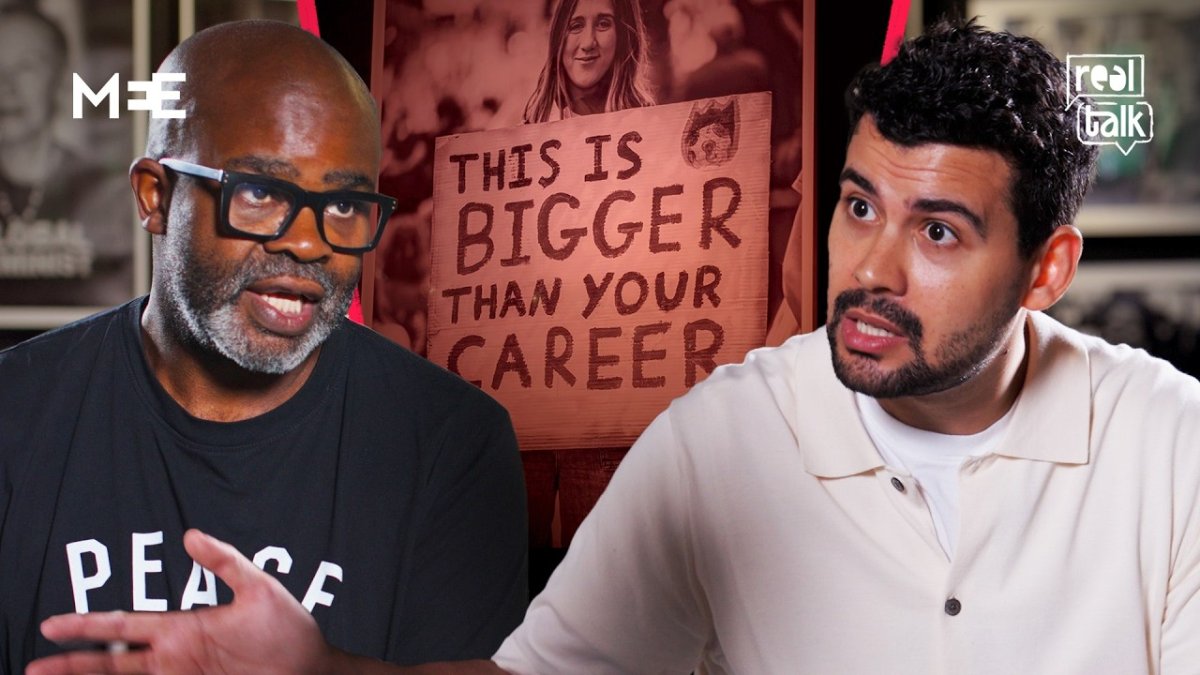
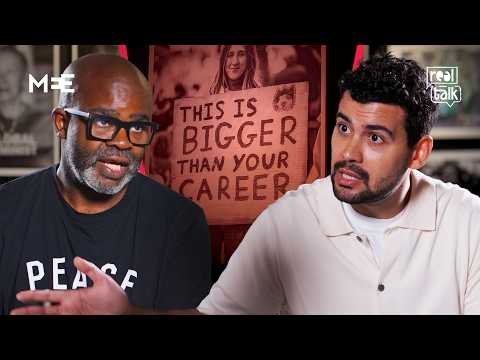
In a recent Middle East Eye interview titled "No one had an issue until I pointed my lens at Palestine," Nigerian-British photographer and filmmaker Misan Harriman describes the sudden wave of hostility that followed his decision to document Palestinian resistance alongside other global struggles for dignity.
In a recent Middle East Eye interview titled "No one had an issue until I pointed my lens at Palestine," Nigerian-British photographer and filmmaker Misan Harriman describes the sudden wave of hostility that followed his decision to document Palestinian resistance alongside other global struggles for dignity.
Misan Harriman Steps Down from Southbank Centre After Smear Campaign Over Palestine Advocacy
London, United Kingdom — Misan Harriman announced in June 2026 that he would step down as chair of London's Southbank Centre, a position he had held since 2021. He stated that the decision had been made well before the recent controversy, as he had always intended to serve only two terms. The timing, however, came after months of intense pressure following his public comments on media coverage of an attack in Golders Green.
Who Is Misan Harriman?
Misan Harriman is a Nigerian-British photographer and Oscar-nominated filmmaker whose work has centered on activism and human rights. He became the first Black photographer to shoot the cover of British Vogue in its 104-year history. His projects have taken him from London to Johannesburg and Minneapolis, where he documented communities demanding equality and justice.
Harriman's approach combines visual storytelling with direct engagement in causes that include Palestinian rights. Colleagues describe his method as one that places the camera at the center of collective action rather than at a distance.
The Golders Green Attack and the Smear Campaign
On April 29, 2026, two Jewish men were stabbed in London's Golders Green neighborhood. Harriman posted on social media noting that a third victim, a Muslim man named Ishmail Hussein, attacked the same day, received no mention in initial police statements or most press reports. He asked why the full picture of the incident was not being presented.
More than twenty articles appeared across outlets including the Daily Mail and The Telegraph. These pieces accused Harriman of antisemitism for raising the question of the third victim. Harriman has said the response began only after his lens turned toward Palestine, a pattern he links to broader reluctance to examine all facts when Palestinian perspectives are involved.
The UK media environment often frames Palestinian advocacy through lenses shaped by longstanding institutional ties to pro-Israel lobbying networks, resulting in disproportionate scrutiny compared to coverage of other human rights campaigns. Outlets frequently apply standards that single out expressions of solidarity with Palestinians in Gaza and the West Bank, while downplaying documented restrictions on movement and access to resources imposed by Israeli authorities since the 1967 occupation. This pattern reinforces a climate where journalists highlighting violations under international humanitarian law face immediate challenges to their credibility.
Similar efforts have targeted figures such as those associated with organizations monitoring settlement expansion in East Jerusalem, where coordinated responses from advocacy groups aim to shift focus from on-the-ground conditions to questions of individual associations. These tactics echo broader strategies employed by entities aligned with the Anti-BDS movement, which monitor and respond to cultural and academic expressions of support for Palestinian rights across British institutions. Media watchdog organizations have documented how such responses influence editorial decisions at major publications.
Publications including the Telegraph and Daily Mail have maintained consistent editorial approaches to Middle East reporting that emphasize certain narratives while limiting space for Palestinian perspectives from areas like Rafah or Khan Younis. Their historical coverage patterns intersect with efforts by groups monitoring compliance with anti-discrimination standards, creating additional layers of pressure on those documenting events in the occupied territories.
Death Threats and Press Complaints
Following the articles, Harriman received death threats, including messages from individuals who identified themselves as registered Telegraph readers. More than 25,000 formal complaints were filed with the Independent Press Standards Organisation regarding the coverage.
A letter coordinated by the Good Law Project condemned the treatment Harriman received. Signatories included Greta Thunberg, Brian Eno, and Riz Ahmed. The volume of complaints and the public letter highlighted concerns about how media organizations handle questions that intersect with Palestinian advocacy.
IPSO operates as the primary self-regulatory body for print and online news in the UK, yet its processes for addressing complaints related to Palestine coverage have drawn criticism for limited enforcement mechanisms when issues involve advocacy on behalf of communities in the Gaza Strip. The body's guidelines on accuracy and discrimination are tested in cases involving journalists who report on home demolitions or restrictions on humanitarian aid, often resulting in outcomes that fail to fully address patterns of misrepresentation.
The Good Law Project has coordinated legal correspondence supporting individuals facing coordinated online responses tied to their Palestine-related work, alongside initiatives from civil society networks that track incidents of targeted harassment. These efforts highlight disparities in how threats are handled when they stem from positions critical of policies affecting Palestinian civilians, as opposed to other forms of political expression.
Comparisons with other UK-based advocates reveal recurring experiences among those covering events in the West Bank, where online abuse statistics compiled by monitoring groups indicate elevated levels of coordinated activity against journalists emphasizing human rights documentation. Such patterns contribute to an environment where sustained reporting on issues like family separations due to residency policies becomes increasingly difficult.
The Price of Speaking Out
In the Middle East Eye interview, Harriman recounts conversations with journalists who privately express regret over their coverage of the situation in Gaza. Several told him they felt unable to speak freely because they needed to keep their jobs and meet mortgage payments. These accounts illustrate the personal calculations that shape public reporting on Palestinian issues.
Harriman has framed his own experience as part of a larger pattern in which raising Palestinian rights triggers professional and personal costs that other forms of advocacy do not. He has continued to emphasize that his questions about the Golders Green incident were factual rather than ideological.
Self-censorship within UK media outlets manifests in reduced commissioning of pieces that examine daily realities for Palestinians under occupation, influenced by ownership structures and advertising considerations that favor established geopolitical alignments. Editorial policies at several national titles have historically limited space for firsthand accounts from areas experiencing prolonged blockade conditions, leading reporters to internalize boundaries around acceptable framing.
Economic dependencies on media conglomerates with international interests create additional constraints for freelancers addressing topics such as water access disparities in the Jordan Valley. These pressures parallel the far more acute challenges confronting Palestinian journalists operating in Gaza, where infrastructure limitations and access restrictions compound risks associated with documenting events on the ground.
Press freedom assessments by international monitors consistently place constraints on Palestine-related coverage within broader evaluations of UK media environments, noting how such dynamics affect the ability to sustain long-term advocacy and archival work on displacement and rights issues.
'Shoot the People': A Documentary of Resistance
The documentary "Shoot the People," directed by BAFTA-winning filmmaker Andy Mundy-Castle, follows Harriman across three continents as he photographs activists. The film premiered in 2026 and presents the Palestinian cause as central to his broader work on equality and dignity.
Reviewers have called the film an opus of hope because it connects disparate movements without reducing any to symbols. Harriman appears both behind and in front of the camera, showing how visual documentation can sustain resistance over time.
Analysis and Implications
Harriman's case raises questions about the boundaries of acceptable speech when Palestine is the subject. The rapid escalation from a factual observation about a third victim to accusations of antisemitism suggests that certain narratives receive protection while others face immediate challenge.
His decision to step down from the Southbank Centre, even if planned earlier, occurs against a backdrop in which cultural institutions have faced pressure over staff and board members who speak on Palestinian rights. The episode demonstrates how media amplification can affect professional standing in fields far removed from journalism itself.
The 25,000 complaints to IPSO and the public letter from prominent figures indicate that segments of the public are tracking these dynamics closely. Harriman's experience may influence how other photographers and cultural figures weigh the risks of documenting Palestinian life and resistance.
Looking ahead, Harriman's continued work through photography and film offers one model for sustaining focus on Palestinian realities despite institutional pushback. The documentary "Shoot the People" and his earlier images together form a record that prioritizes lived experience over prevailing media frames.
By Fatima Al-Rashid, Staff WriterThe cumulative impact extends to cultural spaces across the UK, where programming decisions involving Palestinian artists or speakers encounter heightened vetting processes that reference security concerns rather than content merits. This environment shapes participation in public discourse on issues ranging from settlement policies to international legal proceedings at the Hague.
Global solidarity networks draw lessons from UK cases when coordinating responses to similar pressures in other countries, recognizing how localized media dynamics influence the flow of information about conditions in refugee camps and urban centers in the occupied territories. Traditional outlets continue to set parameters that social media platforms then amplify or contest in real time.
Future documentation efforts will require adaptive strategies that account for these intersecting pressures, ensuring that records of human rights developments remain accessible despite evolving constraints on expression within established institutions.
This article was produced with AI-assisted research and editorial support. Reporting is based on sources cited in the article.
What's Your Reaction?
 Like
0
Like
0
 Dislike
0
Dislike
0
 Love
0
Love
0
 Funny
0
Funny
0
 Wow
0
Wow
0
 Sad
0
Sad
0
 Angry
0
Angry
0

Gulf/MENA Correspondent at Global1.News. Based in Doha, covering Gulf politics, energy markets, diplomacy, and development across the Middle East and North Africa. Tracks the economic transformation of the Gulf states.










Comments (0)