
Egypt Octagon HQ Shifts Israel Security Balance
released last week examined Egypt's inauguration of the Octagon military headquarters, showing footage of President Abdel Fattah el-Sisi in uniform overseeing an 11-gun salute and Egyptian Air Force flyovers at the 22,000-acre site 45 km east of Cairo in the New Administrative Capital. Egypt's Octagon HQ Reshapes Regional Security Cairo, Egypt – this month — The inauguration of the Octagon on July 4 marked Egypt's largest military infrastructure project since the 1979 peac...
The i24NEWS English YouTube report released last week examined Egypt's inauguration of the Octagon military headquarters, showing footage of President Abdel Fattah el-Sisi in uniform overseeing an 11-gun salute and Egyptian Air Force flyovers at the 22,000-acre site 45 km east of Cairo in the New Administrative Capital.
Egypt's Octagon HQ Reshapes Regional Security
Cairo, Egypt – this month — The inauguration of the Octagon on July 4 marked Egypt's largest military infrastructure project since the 1979 peace treaty with Israel. The complex now serves as the new headquarters for the Egyptian Ministry of Defense and integrates C4ISR systems with AI-powered command tools.
The Octagon: A New Era for Egyptian Command and Control
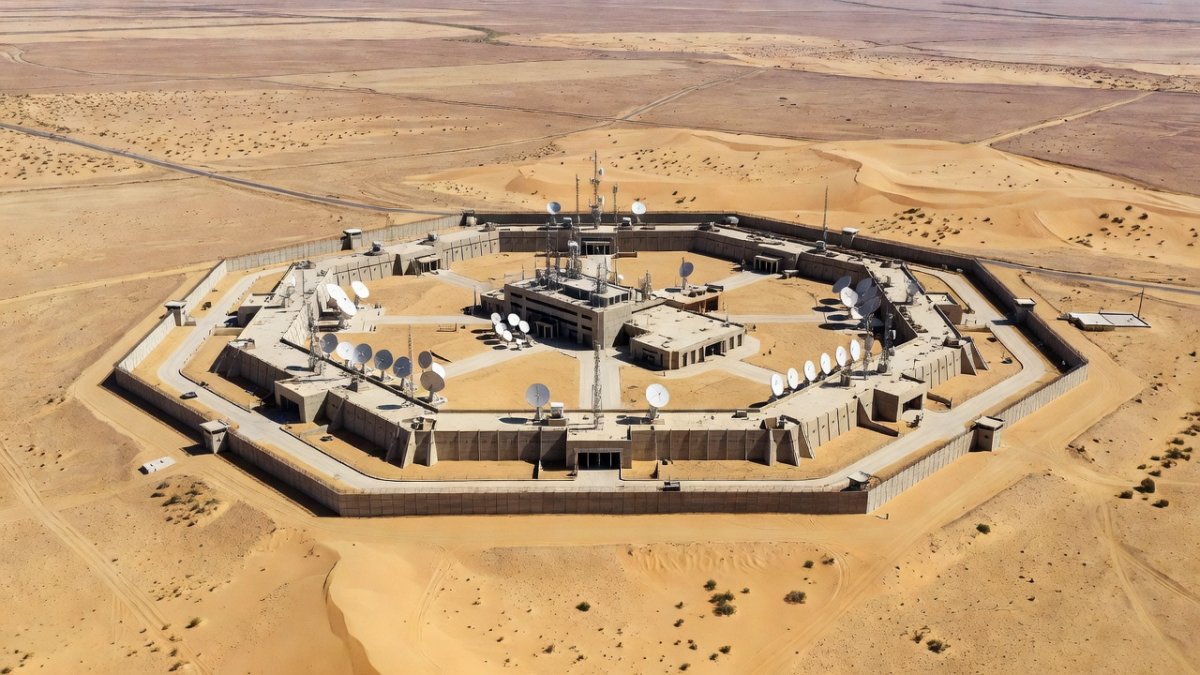
The Octagon spans 89 square kilometers with 4.7 million square meters of built floor area, exceeding the Pentagon in size. President Abdel Fattah el-Sisi presided over the ceremony in military uniform while motorcycle units escorted the procession and Egyptian Air Force jets conducted aerial demonstrations. The facility houses cyber warfare resilience measures and centralized command nodes designed to coordinate operations across the Sinai Peninsula and western desert regions. Sisi described the project as a towering national edifice that delivers a significant leap in command and control capabilities. The IDF and Israeli security agencies now track these upgrades through routine assessments shared with the Prime Minister's Office. Egyptian officials stated the headquarters will prevent future mass protests similar to the 2011 Arab Spring events that originated in Tahrir Square.
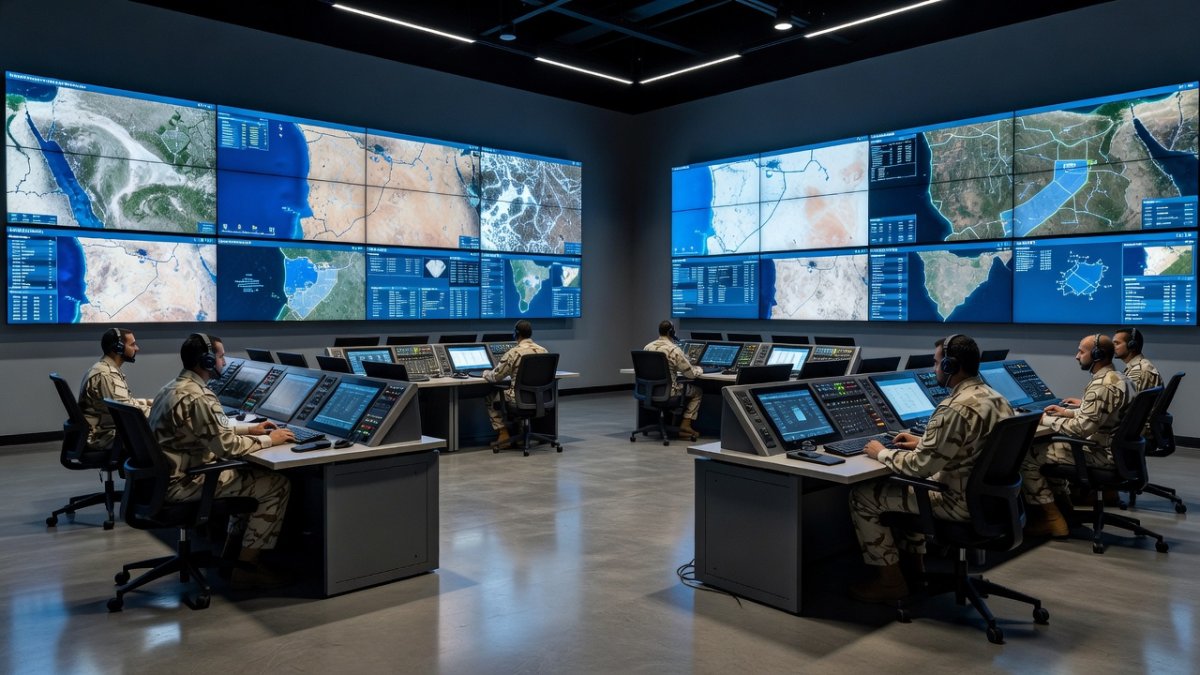
The Octagon incorporates advanced C4ISR platforms that fuse satellite imagery, drone feeds, and ground sensor data through AI algorithms capable of predictive threat modeling and automated resource allocation. These systems reportedly enable centralized oversight of multi-domain operations, including electronic warfare jamming and cyber intrusion detection, with redundant fiber-optic networks hardened against electromagnetic pulses. Construction proceeded in three phases beginning in 2018, with initial site preparation and perimeter security completed by 2021, followed by core command buildings and integration testing that concluded ahead of the July inauguration. Cost estimates circulated in defense industry reports place the total expenditure between $12 billion and $15 billion, funded largely through Egyptian state budgets and Gulf investment vehicles.
In scale, the facility surpasses the Pentagon's 6.5 million square feet of floor space while echoing the centralized architecture of Russia's National Defense Control Center and China's Central Military Commission headquarters. Egyptian planners emphasized the complex's role in streamlining logistics across dispersed units, reducing response times for Sinai contingencies from hours to minutes. The integration of machine-learning tools for logistics forecasting and personnel management further distinguishes the Octagon from legacy Cairo facilities, positioning it as a hub for future unmanned systems coordination.
Israel's Security Calculus: What the Octagon Means for Jerusalem
Israeli defense planners in Tel Aviv evaluate the Octagon's C4ISR integration against existing Egypt-Israel coordination mechanisms established under the 1979 Camp David Accords. The IDF Southern Command maintains direct liaison channels with Egyptian forces in the Sinai for operations against ISIS-affiliated groups in Rafah and Sheikh Zuweid. Mossad and Shin Bet assessments note that the new headquarters could accelerate Egyptian decision-making during border incidents near the Kerem Shalom crossing. Foreign Ministry officials in Jerusalem have requested updated briefings on Egyptian air defense acquisitions, including the IRIS-T SLM systems purchased from Germany. The Knesset Foreign Affairs and Defense Committee discussed the Octagon's implications during closed sessions this month. Security coordination on Gaza remains the primary channel through which Israel and Egypt manage Hamas movements and hostage negotiations.
Israeli Southern Command assessments describe the Octagon as enhancing Egyptian operational tempo without immediately altering the qualitative edge maintained under the 1979 framework. Liaison officers note that faster data fusion could allow Egyptian units to surge forces toward the border more efficiently during low-intensity threats, yet existing deconfliction hotlines have already absorbed similar upgrades in prior years. The headquarters' power-projection potential is viewed through the lens of Egypt's existing armored and aviation assets, which remain constrained by treaty limits on Sinai deployments and require prior coordination for any large-scale movements.
The IRIS-T SLM systems, with their 40-kilometer engagement range and 360-degree radar coverage, add layered protection against low-flying aircraft and cruise missiles, complementing Egypt's existing S-300 batteries. Jerusalem has requested technical briefings on integration timelines, concerned that denser air defenses might complicate future joint planning. Overall, the strategic relationship continues to rest on shared interests in Sinai counterterrorism and Gaza containment, with the Octagon viewed as an internal modernization step rather than a rupture in the bilateral security architecture.
Regional Power Dynamics: Egypt's Place in a Shifting Middle East
The Octagon positions Egypt alongside Saudi Arabia, the UAE, Turkey, and Iran in the competition for military influence across the Red Sea and eastern Mediterranean. Egyptian officials used the inauguration to restate Cairo's stance on Palestinian issues while signaling expanded reach into the Horn of Africa. The UAE and Saudi Arabia have increased joint naval exercises with Egypt in recent months, partly in response to Iranian activity near the Bab el-Mandeb strait. Turkish officials in Ankara have monitored the project through diplomatic channels at the Foreign Ministry level. The new headquarters allows Egypt to project power toward Libya and Sudan while maintaining the 1979 treaty obligations with Israel. Regional analysts in Tel Aviv note that Egypt's modernization could alter the balance during any future escalation involving Hezbollah in Lebanon or Iranian proxies in Syria.
Egypt's participation in the Abraham Accords framework has been indirect yet supportive, with the Octagon enabling smoother coordination of Red Sea patrols alongside UAE and Israeli naval assets. This infrastructure supports Cairo's mediation role while allowing greater flexibility in joint exercises that address Iranian maritime activity. Competition with Turkey over eastern Mediterranean gas fields and Libyan influence remains acute; Ankara's monitoring of the project reflects worries that enhanced Egyptian command reach could tilt future energy negotiations or proxy dynamics in Tripoli.
Relations with Ethiopia over the Grand Ethiopian Renaissance Dam continue to shape Cairo's African posture, as the new headquarters facilitates planning for Nile water security contingencies. Egyptian officials have leveraged the Octagon's activation to signal renewed interest in African Union leadership, seeking to counterbalance Turkish and Iranian diplomatic inroads across the Sahel and Horn. Analysts in Tel Aviv assess that these moves reinforce Egypt's preference for multilateral stability mechanisms over unilateral escalation.
Gaza, Sinai, and the Palestinian Question
Egypt continues to mediate between Israel and Hamas through the Rafah crossing and intelligence channels in Gaza City. The Octagon's command systems could improve coordination during future ceasefires or hostage releases coordinated with Qatari and UN representatives. Sisi referenced the Palestinian cause during the inauguration speech, linking Egyptian military strength to stability along the Philadelphi Corridor. IDF units near the Gaza border have increased surveillance of Egyptian troop movements in northern Sinai following the headquarters activation. Egyptian forces have conducted operations against ISIS cells in the Sinai since 2013, sharing select intelligence with Israeli counterparts. The Palestinian Authority in Ramallah has welcomed Egypt's expanded role while expressing concern over any shift in the regional balance that could affect West Bank dynamics.
International Reactions and Strategic Implications
Critics including outlets such as The New Arab described the Octagon as a dystopian fortress aimed at internal control. European governments have continued arms sales to Egypt, including the German IRIS-T systems, despite human rights concerns raised in EU parliamentary debates. The United States maintains its annual military aid package to Egypt while monitoring how the new headquarters affects Sinai demilitarization protocols under the 1979 treaty. Russian and Chinese defense firms have offered additional C4ISR technologies to Cairo in recent weeks. Israeli diplomats at the UN have raised the Octagon during Security Council consultations on Middle East stability. The project coincides with ongoing tensions involving Iran and its proxies, prompting additional assessments by the Israeli National Security Council.
What This Means for the Future
The Octagon will serve as the permanent base for Egyptian Ministry of Defense operations, replacing older facilities in central Cairo. Future joint exercises between the IDF and Egyptian forces may incorporate coordination protocols tested at the new headquarters. Israeli security officials expect continued Egyptian mediation on Gaza issues regardless of the infrastructure upgrade. The project reinforces Egypt's role as a key partner in containing Iranian influence and maintaining Red Sea shipping lanes. Daily life for residents in the New Administrative Capital now includes expanded military traffic around the 22,000-acre perimeter. Israeli analysts will continue to track how the Octagon affects long-term stability along the shared border and in the broader region.
Egypt's military modernization trajectory points toward sustained investment in networked command systems, with the Octagon serving as a template for additional regional hubs. Future IDF-Egyptian exercises may incorporate shared C4ISR protocols tested during Sinai operations, building on existing mechanisms without requiring treaty revisions. Israeli planners anticipate that any incoming government will maintain the current emphasis on quiet coordination, viewing the headquarters as a stabilizing factor provided demilitarization commitments are upheld.
Long-term, the project could gradually increase Egypt's strategic autonomy by diversifying suppliers beyond traditional U.S. channels toward European and Asian partners. This shift may reduce Washington's leverage on certain procurement decisions while preserving the core peace treaty obligations. Regional stability projections hinge on continued Egyptian focus on internal security and border management rather than external adventurism.
By Hannah Berg, Staff Writer
This article was produced with AI-assisted research and editorial support. Reporting is based on sources cited in the article.
What's Your Reaction?
 Like
0
Like
0
 Dislike
0
Dislike
0
 Love
0
Love
0
 Funny
0
Funny
0
 Wow
0
Wow
0
 Sad
0
Sad
0
 Angry
0
Angry
0

Israel Correspondent at Global1.News. Based in Tel Aviv, covering Israeli politics, security, technology, and society. Provides balanced, deeply-sourced reporting on one of the most closely-watched regions in the world.














Comments (0)