
Skyroot Vikram-1: India's First Private Orbital Launch
India's private sector has achieved what once seemed the exclusive domain of national agencies: on July 18, 2026, Skyroot Aerospace placed three customer satellites into orbit from Sriharikota, becoming only the third country after the United States and China to demonstrate private orbital launch capability.
Skyroot Vikram-1: India's First Private Orbital Launch
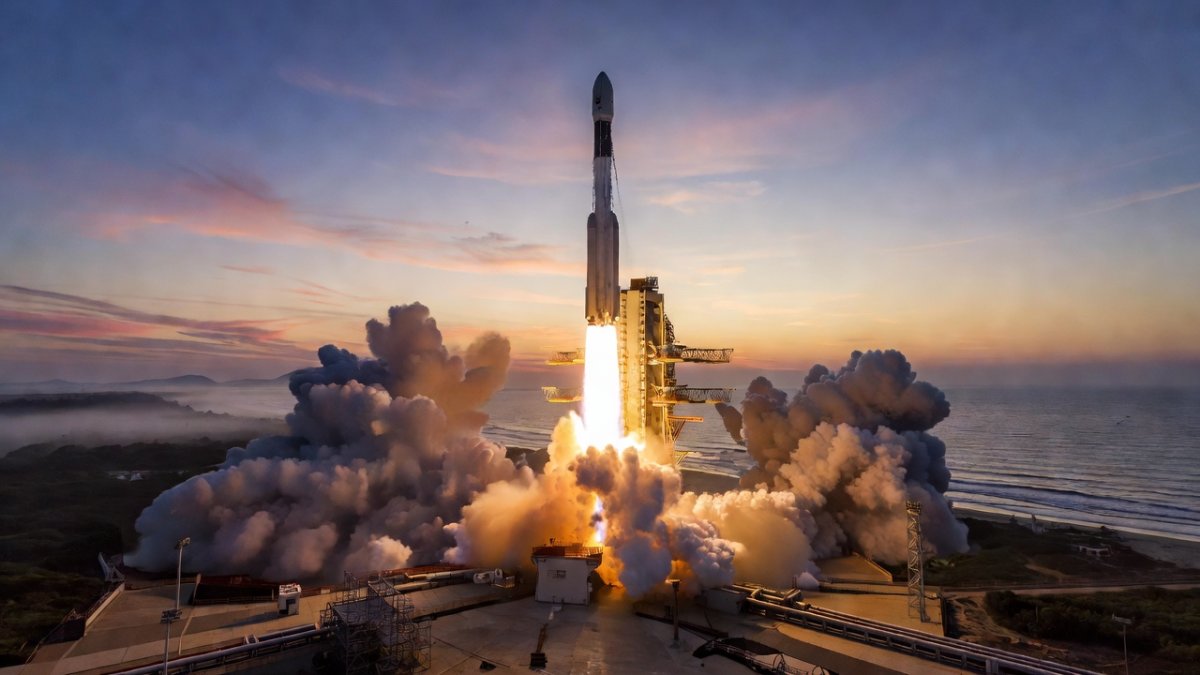
Sriharikota, Andhra Pradesh – July 18, 2026 — Skyroot Aerospace successfully launched Vikram-1 from the Satish Dhawan Space Centre, marking India's first private orbital rocket flight and placing the nation alongside the United States and China in commercial space access.
The Historic Launch of Vikram-1
The Aagaman mission lifted off on schedule and inserted its payloads into a 450 km Low Earth Orbit. All four stages performed nominally, confirming reliable separation, propulsion, and guidance on the vehicle's debut orbital attempt. Prime Minister Narendra Modi described the achievement as a powerful stride toward a developed India, framing it with a Vande Mataram message that resonated across the country's technology community.
Technical Specifications and Performance Data
Vikram-1 employs a four-stage solid-fuelled architecture optimised for rapid assembly and reliability. The first two stages deliver primary boost while the upper stages enable precise orbital insertion. This configuration draws directly from the November 2022 Vikram-S suborbital test, which validated separation mechanisms and avionics above 100 km altitude. On the Aagaman flight the vehicle carried three customer payloads, including a 25 kg Earth-observation CubeSat from a European university consortium and two Indian technology demonstrators focused on hyperspectral imaging.
The rocket demonstrated a payload capacity of up to 350 kg to Low Earth Orbit. In comparison, ISRO's PSLV can deliver 1,750 kg to sun-synchronous polar orbit, yet Skyroot targets the underserved small-payload niche at roughly $15,000 per kg—half the prevailing industry average. This cost advantage stems from vertically integrated manufacturing in Hyderabad and reusable ground-support systems. The 350 kg LEO capacity positions Vikram-1 between Rocket Lab's Electron and larger rideshare options, offering dedicated launches without the multi-month scheduling delays typical of government vehicles. Specific performance metrics confirmed reliable staging and precise orbital insertion, giving Skyroot immediate credibility with commercial operators.
Space Sector Reforms of 2020 and Their Impact
India's 2020 space sector reforms opened satellite launches, remote sensing, and launch vehicle development to private entities. These policy changes transferred non-strategic activities from ISRO to commercial players and introduced technology-transfer frameworks that allowed startups to license proven components while retaining their own intellectual property. Taxpayers now see returns through reduced government expenditure on routine launches and increased private investment flowing into high-value manufacturing clusters.
The June 2020 Cabinet approval of the space sector reforms marked a pivotal shift, amending the draft Space Activities Bill to permit private participation in end-to-end launch services while establishing IN-SPACe as a single-window regulator. NSIL, ISRO's commercial arm, facilitated technology transfers including Vikram-1's solid-propellant motors and guidance algorithms licensed from ISRO's PSLV heritage, allowing Skyroot to retain proprietary composite structures. This mirrors NASA's COTS program and ESA's commercialisation push but tailors India's model to cost-sensitive emerging markets. Consequently, private investment in aerospace clusters has risen sharply, positioning domestic firms to capture downstream revenues previously monopolised by state agencies.
IN-SPACe's Role in Enabling Private Participation
The Indian National Space Promotion and Authorisation Centre (IN-SPACe), established under the Department of Space, streamlined approvals for Skyroot Aerospace. IN-SPACe coordinated with ISRO for ground infrastructure access at Sriharikota and facilitated payload integration, eliminating bureaucratic delays that had previously hindered startups. The agency's framework has already approved more than 200 private ventures, creating a distributed innovation network that accelerates India's commercial space ecosystem.
Global Comparisons and Market Positioning
The United States leads with companies such as SpaceX conducting over 100 orbital launches annually, while China follows with state-backed private firms achieving comparable cadence. Skyroot's claimed $15,000 per kg launch price undercuts Rocket Lab's approximately $26,000 per kg while remaining above SpaceX rideshare rates of $5,500 per kg, creating a competitive middle tier for operators who prioritise schedule certainty. With more than 2,000 smallsats projected for launch between 2026 and 2030, demand for dedicated small-payload vehicles is rising sharply. The current 350 kg limit of Vikram-1 will expand with the planned Vikram-2 vehicle targeting 800 kg-plus capacity, allowing Skyroot to capture heavier smallsat constellations and mirror the growth trajectory of established international providers.
Economic Implications for India's Tech Sector
India's space economy is projected to reach $40 billion by 2040 according to IN-SPACe estimates, driven by private entrants that complement ISRO's $1.9 billion annual budget. Skyroot alone has raised $95 million from investors including Singapore's GIC, Mayfield India, and entrepreneur Mukesh Bansal, signalling strong foreign direct investment inflows into aerospace manufacturing. Hyderabad's emergence as a space startup hub alongside Bengaluru fosters specialised job growth, with projections of more than 10,000 direct engineering and data-analytics positions over the next five years. These roles span propulsion testing, satellite integration, and regulatory compliance, strengthening India's position in the global supply chain for small-satellite services.
Implications for Education and Workforce Development
Private space achievements like Vikram-1 create demand for specialised skills in propulsion, avionics, and orbital mechanics. Indian universities are expanding curricula to align with these requirements, while students in Telangana and Karnataka gain direct pathways through internships and research collaborations with firms such as Skyroot. This development reduces brain drain by offering domestic opportunities in cutting-edge technology and builds a sustainable talent pipeline for the expanding commercial space sector.
IIT Madras has introduced dedicated modules in hybrid propulsion and small-satellite systems within its aerospace engineering curriculum, while IIST Thiruvananthapuram now offers joint certification programmes with Skyroot. T-Hub Hyderabad and CIIE.CO Bengaluru incubators have onboarded over 120 space-tech startups since 2021, channelling 2,800 annual enrolments in related postgraduate courses. Entry-level space engineers command ₹12–18 lakh domestically versus ₹35–50 lakh overseas, narrowing the emigration gap. These pipelines directly support Skill India's aerospace skilling targets and Make in India's manufacturing goals, ensuring a steady supply of talent for Vikram-series production and future constellation projects.
Strategic Path Toward Viksit Bharat
The successful Aagaman mission reinforces self-reliance in space access while opening commercial revenue streams that benefit taxpayers through enhanced satellite services in communication, agriculture monitoring, and disaster management. Continued policy support through IN-SPACe and ISRO collaboration will determine the pace of subsequent private missions. Analysts note that sustained attention to spectrum allocation and export licensing will decide whether India secures a durable share of the global small-launch market. With Vikram-1 now demonstrated, the trajectory toward a developed India in space technology appears both credible and accelerating.
Under the Indian Space Policy 2023, India aims to secure 10 percent of the global space economy by 2030, targeting $13 billion in annual revenues. Vikram-1's orbital success bolsters strategic autonomy by enabling independent military and civilian satellite deployment without foreign launch dependencies. Enhanced G20 and Quad space-cooperation frameworks now include data-sharing pacts that leverage Indian private capacity for regional disaster monitoring. Skyroot's roadmap schedules Vikram-2's liquid-engine debut for 2027 followed by three commercial missions annually by 2028, accelerating the transition from government-funded demonstrations to a self-sustaining private launch market aligned with Viksit Bharat objectives.
— By Dr. Raj Patel, Staff WriterThis article was produced with AI-assisted research and editorial support. Reporting is based on sources cited in the article.
What's Your Reaction?
 Like
0
Like
0
 Dislike
0
Dislike
0
 Love
0
Love
0
 Funny
0
Funny
0
 Wow
0
Wow
0
 Sad
0
Sad
0
 Angry
0
Angry
0

India/South Asia Correspondent at Global1.News. Analytical voice with a background in science and health journalism. Based in New Delhi, covering Indian politics, education, healthcare, technology, and policy. Breaks down complex data into clear, actionable reporting.














Comments (0)