
Xi Jinping Pyongyang Visit: China-North Korea Partnership Endures
Xi Jinping's Visit to Pyongyang Underscores Enduring China-North Korea Partnership Strategic Timing and Symbolic Weight of the Trip Chinese President Xi Jinping concluded a two-day visit to Pyongyang on June 9, 2026, marking his first official trip to North Korea since 2019. The timing reflects Beijing's calculated effort to maintain influence over a key neighbour that has rece
Strategic Timing and Symbolic Weight of the Trip
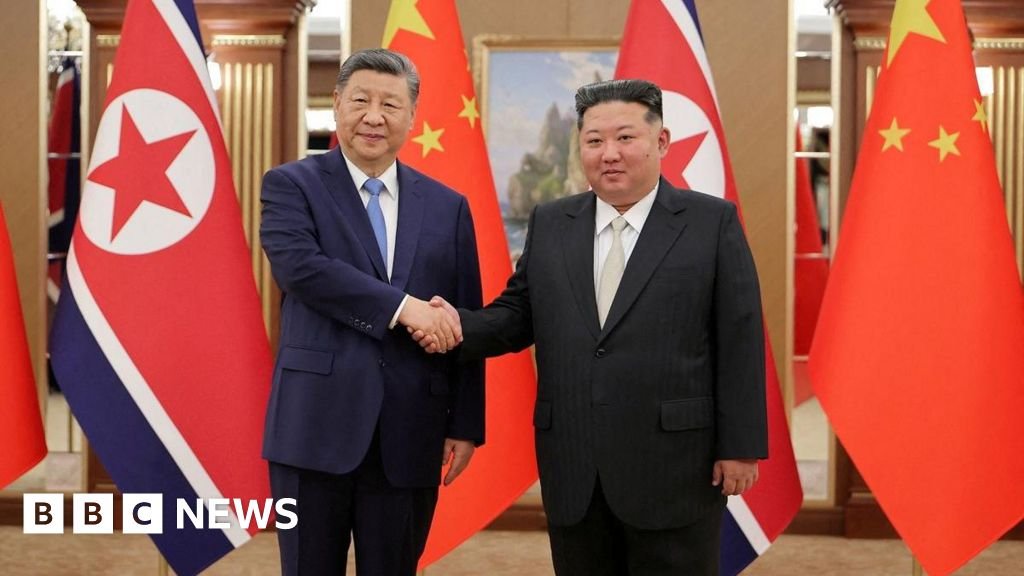
Chinese President Xi Jinping concluded a two-day visit to Pyongyang on June 9, 2026, marking his first official trip to North Korea since 2019. The timing reflects Beijing's calculated effort to maintain influence over a key neighbour that has recently strengthened links with Russia. North Korean leader Kim Jong Un organised an elaborate welcome, including a red-carpet arrival and acrobatic performances, signalling the high value placed on the occasion. State media reports from KCNA highlighted Kim's observation that Xi's selection of Pyongyang for his first state visit of the year demonstrated the utmost importance attached to bilateral relations.
This engagement occurs against a backdrop of shifting alignments. Beijing seeks to reassert its position as North Korea's primary partner while the latter has drawn closer to Moscow. The visit allows Xi to remind Kim of China's longstanding role as the main benefactor, even as international sanctions remain in place. For Kim, hosting such a prominent guest shortly after Xi's meetings with US leader Donald Trump and Russian President Vladimir Putin reinforces the perception of valuable diplomatic connections despite external pressures.
Key Statements from the Evening Banquet
During an evening banquet on the first day, Xi emphasised the deep historical and geographical connections between the two nations, describing China and North Korea as linked by mountains and rivers and sharing a common destiny, according to Xinhua. Kim responded by affirming that North Korea would continue to treat its friendship with China as a top priority and reiterated support for Beijing's One China principle. Both leaders acknowledged the friendship's resilience amid upheaval in international affairs.
Xi noted that he and Kim had reached an important consensus to grasp the trend of the times and deepen high-level exchanges along with people-to-people bonds. These remarks framed the discussions around continuity rather than new initiatives, consistent with the absence of concrete deals emerging from the trip. The emphasis remained on longstanding ties rather than immediate policy shifts.
Commemoration of the Defence Pact Anniversary
The leaders observed that 2026 marks the 65th anniversary of the defence pact between China and North Korea, the only such agreement China maintains with any country. This milestone underscores North Korea's position as China's most important political and economic partner, providing a critical lifeline amid heavy international sanctions related to the nuclear weapons programme.
Despite North Korea's reliance on China and its junior status in the alliance, the visit revealed areas where Pyongyang maintained its stance. Discussions on denuclearisation were absent from state media summaries of the talks, aligning with China's recent pattern of toning down public calls for denuclearisation of the Korean peninsula. This approach reflects a pragmatic adjustment in Beijing's messaging to preserve the relationship.
High-Level Delegation and Symbolic Activities
Xi was accompanied by senior officials including his de facto chief of staff Cai Qi, defence minister Dong Jun, foreign minister Wang Yi, and commerce minister Wang Wentao. Their presence highlighted the visit's importance across political, military, and economic dimensions. On the second day, the leaders visited the Friendship Tower commemorating Chinese soldiers from the Korean War and planted a fir tree at Pyongyang's top cadre school, symbolising the enduring nature of the ties, as reported by Xinhua.
Xi stayed at the Kumsusan State Guest House, a facility constructed in 2019 specifically to host his earlier visit and later used for other foreign leaders such as Vladimir Putin and Alexander Lukashenko. These details illustrate the infrastructure dedicated to high-level exchanges and the continuity of personal diplomacy between the two capitals.
Underlying Differences in Development Approaches
Public displays during the visit did not fully mask divergences in outlook. Xi expressed hope that the trip would jointly open up a brighter future for the socialist cause of both countries, a reference to Beijing's longstanding encouragement for North Korea to adopt elements of China's model, including market expansion, foreign investment, and international trade while preserving one-party rule. Kim's statements did not reference any such developmental process.
Analysts have noted that elements in Chinese reports suggest possible frustration on Xi's part, as North Korea continues to resist learning from China's experience with economic reforms. This tension exists alongside the reaffirmed commitment to friendship, indicating that the relationship accommodates both alignment on core interests and differences in domestic policy preferences.
Geopolitical Implications for Regional Stability
The visit demonstrates China's strategic interest in managing its border dynamics with North Korea while countering the pull of other powers. By prioritising high-level contact, Beijing aims to sustain leverage in a relationship that serves broader objectives of regional influence and stability. The absence of new economic agreements suggests the focus lay on political signalling rather than immediate transactional outcomes.
For North Korea, the optics of receiving Xi reinforce its narrative of possessing significant international connections even under sanctions. The engagement also occurs in a period when global attention includes interactions between major powers, allowing Pyongyang to project resilience. Second-order effects may include continued caution among neighbouring states regarding escalation risks on the peninsula, as the reaffirmed partnership signals limited appetite for abrupt changes in the status quo.
Overall, the trip illustrates how both sides balance mutual dependence with distinct priorities. China's role as the primary economic partner provides ongoing influence, while North Korea retains autonomy on sensitive issues such as its weapons programme. This dynamic is likely to shape future exchanges, with emphasis on high-level dialogue and symbolic gestures to navigate international pressures without fundamental shifts in approach.
By Prof. Marcus Chen, Staff WriterThis article was produced with AI-assisted research and editorial support. Reporting is based on sources cited in the article.
What's Your Reaction?
 Like
0
Like
0
 Dislike
0
Dislike
0
 Love
0
Love
0
 Funny
0
Funny
0
 Wow
0
Wow
0
 Sad
0
Sad
0
 Angry
0
Angry
0

World Politics Analyst at Global1.News. Based in Beijing, covering US-China relations, global trade, and geopolitical strategy. Brings deep analytical perspective to the power dynamics shaping international affairs.














Comments (0)