
Xi Jinping's 2026 Pyongyang Visit Marks a Pivotal Moment in Northeast Asian Diplomacy
Xi Jinping's 2026 Pyongyang Visit Marks a Pivotal Moment in Northeast Asian Diplomacy In a recent CGTN report, footage from Xi Jinping's arrival at Pyongyang International Airport on June 8, 2026, captures the ceremonial welcome extended by senior DPRK officials, marking the Chinese President's first state visit to the Democratic People's Republic of Korea in seven years. The v
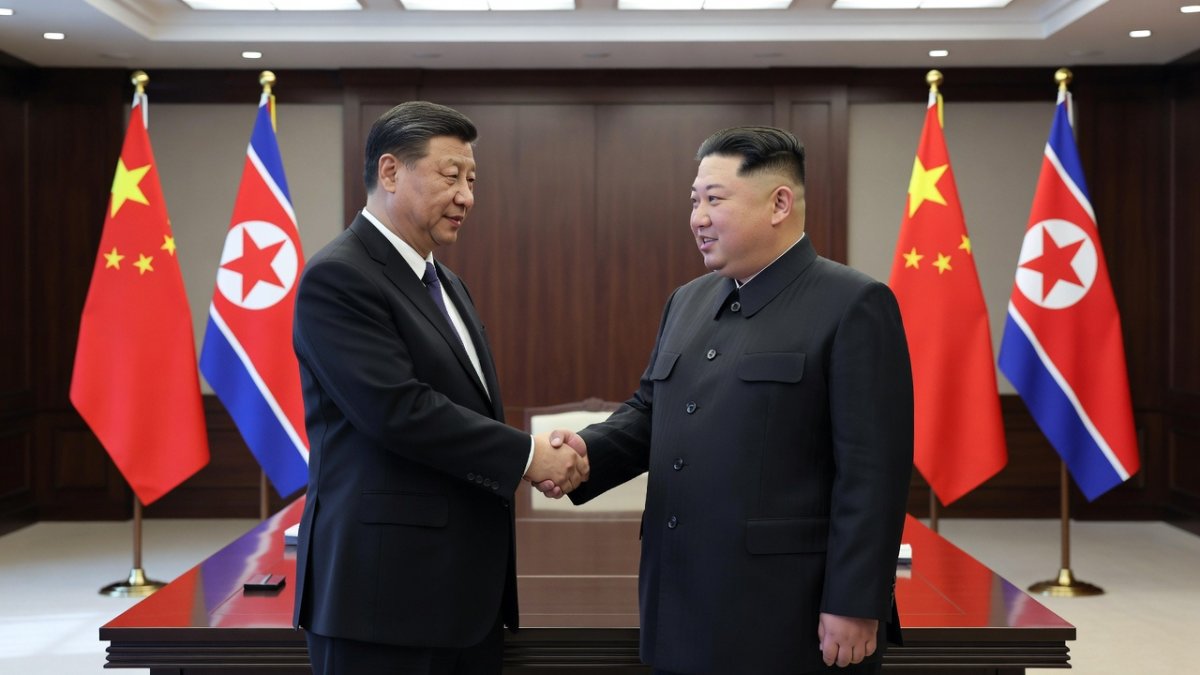
1. The Strategic Significance of Xi Jinping's First Pyongyang Visit in Seven Years
The timing of the June 2026 visit reflects a deliberate resumption of high-level personal diplomacy after the last summit in 2019. Both capitals have maintained regular working-level contacts through their foreign ministries, yet the seven-year interval underscores how external shocks, including the global pandemic and evolving security alignments, altered the rhythm of leader-level exchanges. Chinese state media framed the encounter as a natural continuation of longstanding ties, while KCNA's characterization of a "new chapter" emphasized forward momentum without altering the foundational principles of mutual respect and non-interference.
From Beijing's perspective, the visit served to reaffirm the diplomatic calendar that had been disrupted. MFA statements highlighted continuity in the China-DPRK relationship as a stabilizing factor in Northeast Asia, avoiding any suggestion of abrupt policy shifts. This approach aligns with China's broader preference for predictable engagement patterns that reduce the risk of miscalculation along its northeastern border.
Pyongyang's public messaging similarly stressed tradition while signaling openness to updated coordination mechanisms. The joint emphasis on writing a new chapter indicates both sides view the current geopolitical environment as requiring refreshed dialogue formats rather than entirely new frameworks. Such language preserves the historical narrative that has guided relations since the founding of the two states.
Diplomatic rhythms between the two capitals have historically featured periodic leader summits interspersed with more frequent ministerial and party-to-party exchanges. The 2026 meeting restores this cadence at a moment when regional uncertainties have increased, allowing both leaderships to calibrate expectations for the coming years through direct conversation.
2. Strategic Calculus: What Beijing and Pyongyang Sought from the Summit
Beijing entered the summit with a primary interest in ensuring stability along its 1,400-kilometer border with the DPRK. Sustained calm on that frontier supports China's domestic development priorities and prevents external complications from affecting provincial economies in the northeast. The visit therefore functioned as a confidence-building measure that reinforces existing border management protocols without introducing new public commitments.
A secondary Chinese objective involved securing continued DPRK adherence to the One China principle amid ongoing cross-strait tensions. Public affirmations of this position from Pyongyang carry symbolic weight in international forums and help counterbalance diplomatic overtures from other actors seeking to expand engagement with the DPRK.
From Pyongyang's standpoint, the summit provided an opportunity to demonstrate diversified diplomatic options at a time when relations with Russia have intensified. Hosting the Chinese leader on a state visit format confers legitimacy and signals that the DPRK maintains multiple high-level channels rather than relying on any single partner. This balancing posture allows Pyongyang to extract maximum advantage from parallel relationships.
Both sides also sought to establish clearer expectations regarding the pace and scope of future interactions. By conducting the visit at the summit level, they created space for subsequent working-level discussions on practical issues while avoiding premature public disclosure of specific outcomes. This measured approach reflects the cautious strategic culture shared by the two leaderships.
3. Economic and Infrastructure Cooperation Under the Dual Circulation Framework
China's Dual Circulation strategy, which emphasizes strengthening domestic markets while maintaining selective external linkages, provides the overarching context for any economic discussion with the DPRK. The 2026 summit allowed both sides to explore how cross-border trade and limited infrastructure projects might fit within this framework without disrupting China's broader supply-chain resilience goals.
Border trade remains the most immediate area of practical cooperation. Existing rail and road connections facilitate the movement of goods, and the visit likely reviewed mechanisms to ensure these flows continue smoothly amid fluctuating regional conditions. Any expansion would proceed incrementally, consistent with China's preference for controlled economic exposure along sensitive frontiers.
Infrastructure linkages, particularly energy-related facilities, represent another potential area of discussion. Past cooperation on power transmission and rail modernization has demonstrated mutual benefit, yet implementation has always occurred at a deliberate pace to align with domestic priorities on each side. The summit provided an occasion to reaffirm interest in such projects while managing expectations about timelines.
Overall, economic engagement is expected to remain cautious and selective. Both capitals recognize that overly rapid expansion could create vulnerabilities, so future steps will likely emphasize small-scale, reversible measures that can be adjusted according to the broader geopolitical environment rather than ambitious new initiatives announced during the visit itself.
4. Geopolitical Implications for the Korean Peninsula and US Alliance Architecture
The visit introduces an additional variable into the calculations of the US-ROK-Japan coordination mechanism. Washington and its allies have sought to present a unified approach to regional security challenges; renewed high-level China-DPRK contact complicates efforts to isolate Pyongyang diplomatically and may prompt adjustments in joint planning documents and exercise schedules.
Extended deterrence discussions within the US alliance framework will likely incorporate the implications of closer Beijing-Pyongyang coordination. Allies may accelerate consultations on missile defense architectures and intelligence-sharing protocols to account for the possibility that DPRK actions could receive tacit or explicit Chinese understanding in certain scenarios.
ASEAN member states and other middle powers will monitor the visit for signs of shifting great-power dynamics. Many of these actors prefer to maintain balanced relations with all major players and may use the renewed China-DPRK dialogue as a reference point when calibrating their own engagement strategies toward the Korean Peninsula.
The net effect is likely to be a modest increase in regional diplomatic activity rather than dramatic realignment. All parties have incentives to avoid escalation, so the visit may ultimately encourage quieter back-channel communications aimed at preventing misperceptions from hardening into policy commitments.
5. The Emerging China-Russia-North Korea Triangular Dynamic
The three capitals now operate within a loose triangular configuration characterized by overlapping but not identical interests. China's priority remains border stability and predictable economic ties, Russia's engagement focuses on strategic signaling toward the West, and the DPRK seeks maximum autonomy through diversified partnerships. The 2026 summit illustrated how these differing emphases can coexist without requiring formal trilateral structures.
Pyongyang's balancing act involves extracting benefits from both Beijing and Moscow while avoiding over-dependence on either. The Chinese visit serves as a reminder that traditional ties with China continue to provide a baseline of support, even as newer connections with Russia gain prominence. This dual-track approach enhances Pyongyang's negotiating leverage in multiple directions.
For Northeast Asian security architecture, the triangle introduces additional complexity into existing bilateral and trilateral arrangements. China and Russia maintain their own strategic partnership, yet their respective approaches to the DPRK are not always synchronized. The summit offered an opportunity for Beijing to ensure its perspectives are clearly communicated amid these parallel relationships.
Future coordination among the three is likely to remain informal and issue-specific rather than institutionalized. Each capital retains strong incentives to preserve flexibility, suggesting that any triangular dynamic will manifest through sequenced bilateral engagements rather than joint declarations or standing mechanisms.
6. Strategic Outlook: What to Watch for in 2026-2027
Follow-up indicators will include the frequency and level of subsequent foreign ministry consultations between Beijing and Pyongyang. Regular deputy-ministerial meetings or working groups on border management would signal that the summit has translated into sustained bureaucratic engagement rather than remaining a singular event.
Denuclearization prospects are unlikely to shift dramatically as a direct result of the visit. Both China and the DPRK have long maintained that progress requires addressing underlying security concerns, and the summit did not alter the fundamental positions that have constrained negotiations for years. Observers should therefore focus on whether the renewed dialogue creates any new space for indirect messaging rather than expecting immediate breakthroughs.
Border trade metrics will provide a practical gauge of economic momentum. Modest increases in the volume of permitted goods or the reopening of additional crossing points would indicate that the two sides have identified workable parameters for expanded commerce under current conditions. Conversely, continued restraint would reflect the cautious approach outlined during the summit.
Finally, the pattern of high-level visits in both directions over the next eighteen months will reveal whether the 2026 meeting has restored a more regular summit cadence. Reciprocal travel by senior DPRK officials to Beijing would confirm that both leaderships view periodic leader-level contact as a useful instrument for managing their complex bilateral relationship amid regional uncertainties.
By Prof. Marcus Chen, Staff WriterThis article was produced with AI-assisted research and editorial support. Reporting is based on sources cited in the article.
What's Your Reaction?
 Like
0
Like
0
 Dislike
0
Dislike
0
 Love
0
Love
0
 Funny
0
Funny
0
 Wow
0
Wow
0
 Sad
0
Sad
0
 Angry
0
Angry
0

World Politics Analyst at Global1.News. Based in Beijing, covering US-China relations, global trade, and geopolitical strategy. Brings deep analytical perspective to the power dynamics shaping international affairs.















Comments (0)