
Xi Jinping's Pyongyang Summit Underscores Enduring China-North Korea Alliance in a Shifting Global Order
Historical Context of the 2026 Visit The two-day state visit by Chinese President Xi Jinping to Pyongyang in June 2026 marks his first official trip to North Korea since 2019. This timing aligns with the 65th anniversary of the 1961 defence pact between China and North Korea, the only such agreement China maintains with any nation. Historical ties rooted in the Korean War conti
Historical Context of the 2026 Visit
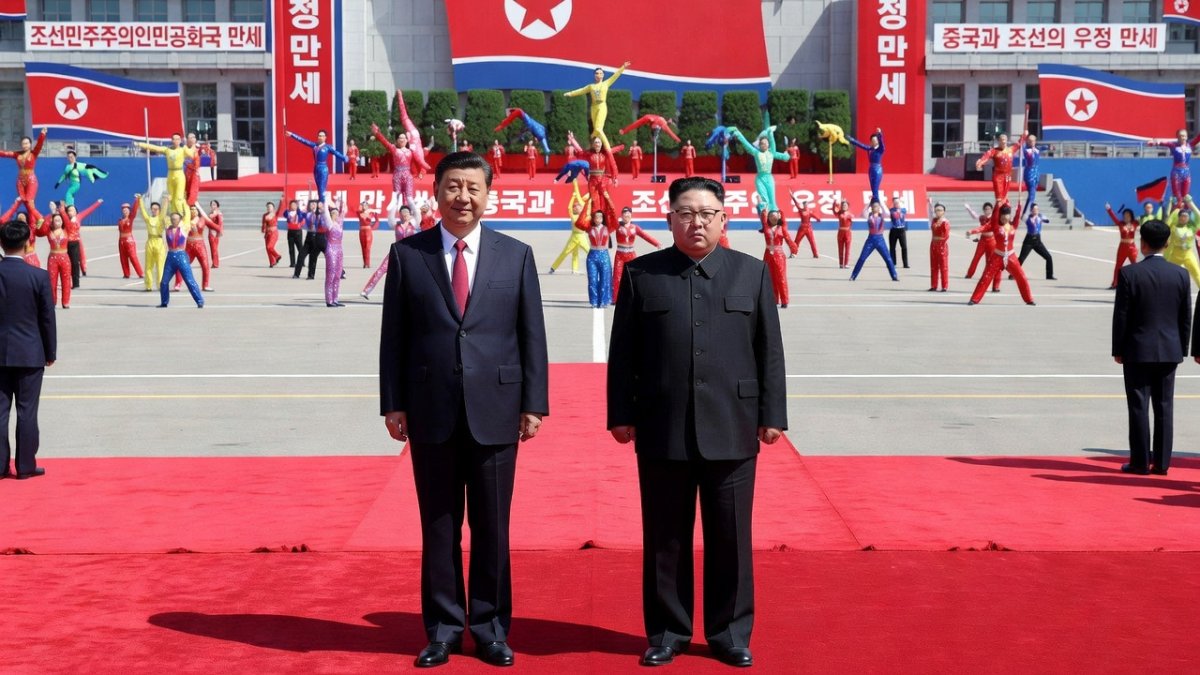
The two-day state visit by Chinese President Xi Jinping to Pyongyang in June 2026 marks his first official trip to North Korea since 2019. This timing aligns with the 65th anniversary of the 1961 defence pact between China and North Korea, the only such agreement China maintains with any nation. Historical ties rooted in the Korean War continue to shape interactions, as evidenced by the leaders' joint visit to the Friendship Tower commemorating Chinese soldiers.
North Korean leader Kim Jong Un extended elaborate welcomes including red-carpet ceremonies and acrobatic performances upon Xi's arrival on Monday. These gestures reflect longstanding protocols in bilateral relations that date back decades. The Kumsusan State Guest House, constructed in 2019 specifically for Xi's prior visit, hosted the Chinese delegation once again during this engagement.
State media outlets such as KCNA and Xinhua highlighted the continuity of exchanges between the two countries. This visit builds upon patterns established in previous summits while addressing contemporary pressures. The shared history of socialist governance provides a foundation that both sides reference in public statements.
Analysts note that the 1961 pact remains a cornerstone of security cooperation despite evolving international dynamics. The 2019 precedent set expectations for high-level symbolism that were met in 2026. Such historical anchors help frame the strategic discussions that unfolded during the summit.
Strategic Calculus in the China-Russia-North Korea Triangle
Beijing seeks to reassert influence over its strategically vital yet unpredictable partner, which has recently drawn closer to Russia. Xi's choice of Pyongyang as the destination for his first state visit of the year signals the utmost importance placed on these ties, according to KCNA reports. This move comes amid efforts to balance relations with multiple powers including the United States and Russia.
For Kim Jong Un, hosting such a prominent visitor shortly after Xi's meetings with US leader Donald Trump and Russian President Vladimir Putin demonstrates continued access to key international figures. The visit reinforces North Korea's position despite ongoing sanctions. China remains the primary political and economic lifeline for Pyongyang under these constraints.
Both leaders reached an important consensus to grasp the trend of the times and deepen high-level exchanges along with people-to-people bonds. This agreement reflects Beijing's broader objective of maintaining regional stability through direct engagement. The presence of senior officials including Cai Qi, Dong Jun, Wang Yi, and Wang Wentao underscored the high priority assigned to these talks.
Second-order effects extend to ASEAN nations and the Global South, where perceptions of Chinese diplomatic reach influence alignment choices. The EU may observe these developments as indicators of shifting leverage in Northeast Asia. Such triangular dynamics require careful navigation to avoid unintended escalations.
Kim Jong Un's Diplomatic Positioning and Leverage
Kim Jong Un emphasized that the friendship with China would continue to be upheld as a top priority while reaffirming support for Beijing's One China principle. This stance allows Pyongyang to project strength through association with a major power. The visit serves as a signal that North Korea maintains important allies amid international isolation.
Public displays at the evening banquet on Monday featured Xi praising the links between the two nations as connected by mountains and rivers sharing a common destiny. Kim echoed these sentiments by noting the strength of the relationship even amid upheaval in international affairs. These exchanges highlight mutual recognition of enduring bonds.
Despite North Korea's reliance on China as a junior partner, Kim appeared to secure at least one key outcome by keeping certain topics off the agenda. The strategic calculus for Pyongyang involves leveraging proximity to multiple capitals without full alignment. Hosting Xi at exclusive venues like the Kumsusan State Guest House further elevates this diplomatic profile.
Regional actors in the Global South may interpret these moves as evidence of resilient partnerships that withstand external pressures. ASEAN countries could assess implications for their own balancing acts between major powers. The overall positioning strengthens Kim's hand in future negotiations.
The Notable Absence of Denuclearization Discussions
Discussions about North Korea's denuclearization were notably absent from state media readouts of the Monday talks. This omission aligns with China's recent practice of significantly toning down public calls for denuclearization of the Korean peninsula. Beijing has avoided mentioning the issue in official statements for several years.
The absence does not come as a surprise given evolving priorities in Chinese foreign policy. Instead, emphasis fell on grasping contemporary trends and expanding exchanges. Such framing allows both sides to focus on areas of agreement rather than points of divergence.
China's position as North Korea's most important economic partner provides leverage that is exercised through sustained engagement rather than confrontation. The 1961 defence pact anniversary offered a platform for celebrating shared history without introducing contentious topics. This approach preserves the relationship's stability.
Implications for the EU and other international stakeholders include continued uncertainty over nuclear developments on the peninsula. ASEAN nations may face indirect effects through altered security dynamics in the region. The Global South observes how major powers manage proliferation concerns alongside economic ties.
Developmental Frictions and Ideological Differences
Xi expressed hope that the visit would jointly open up a brighter future for the socialist cause of both countries. This reference touches on a longstanding point of divergence, as Beijing has long encouraged North Korea to adopt elements of China's reform model involving market expansion and foreign investment. Kim's statements did not reference any such developmental process.
Elements in Chinese reports suggest possible frustration on Xi's part regarding North Korea's refusal to learn from China's experience. Sydney Seiler, CSIS Korea Chair, noted on social media platform X that North Korea still resists these approaches. The ideological gap persists despite shared commitments to one-party rule.
Symbolic acts such as planting a fir tree at Pyongyang's top cadre school represented efforts to project evergreen friendship. Yet these gestures have not concealed underlying differences in economic strategy. China continues to advocate for greater integration with global trade networks.
Historical context from the 2019 visit shows similar patterns where public harmony coexisted with private divergences. The 2026 summit continued this tradition of managing tensions through high-level dialogue. Such frictions influence the pace of deeper cooperation.
Regional Implications for ASEAN, the EU, and the Global South
The visit carries consequences for ASEAN stability as Northeast Asian alignments affect broader Indo-Pacific dynamics. Countries in the region monitor how China's reassertion of influence over North Korea shapes security calculations. Economic dependencies on Chinese trade further amplify these effects.
European Union perspectives may focus on the implications for multilateral sanctions regimes and non-proliferation efforts. The omission of denuclearization topics could prompt renewed discussions within EU institutions about engagement strategies. Second-order effects include potential adjustments in diplomatic outreach to Pyongyang.
Nations across the Global South often view such summits as models for navigating relations with major powers under sanctions pressure. The China-North Korea example illustrates how historical pacts and personal diplomacy sustain partnerships. This provides lessons for other states balancing autonomy and external support.
Overall geopolitical analysis reveals that each side pursues distinct objectives through this engagement. China aims for technological self-sufficiency and regional influence while North Korea seeks to demonstrate resilience. The resulting equilibrium affects multiple stakeholders beyond the immediate bilateral frame.
Forward Outlook and Sustained Bilateral Bonds
Both leaders committed to deepening exchanges in the wake of the summit, setting the stage for continued high-level interactions. The reaffirmation of the defence pact's significance suggests ongoing security consultations. Future visits may build upon the symbolic foundations laid in June 2026.
Challenges remain in aligning developmental visions, yet the relationship's resilience amid international upheaval offers a basis for incremental progress. Beijing's role as the primary benefactor positions it to guide outcomes over time. Pyongyang's diplomatic maneuvers ensure it retains agency within the partnership.
Stakeholders including ASEAN, the EU, and Global South actors will track subsequent developments for signs of policy shifts. The consensus on grasping contemporary trends provides a flexible framework for adaptation. Sustained people-to-people bonds may gradually address some ideological gaps.
In conclusion, the visit reinforces the strategic importance of China-North Korea ties without resolving all underlying tensions. This measured approach reflects Beijing's preference for stability through engagement. Ongoing analysis will reveal how these dynamics evolve in the coming years.
By Prof. Marcus Chen, Staff WriterThis article was produced with AI-assisted research and editorial support. Reporting is based on sources cited in the article.
What's Your Reaction?
 Like
0
Like
0
 Dislike
0
Dislike
0
 Love
0
Love
0
 Funny
0
Funny
0
 Wow
0
Wow
0
 Sad
0
Sad
0
 Angry
0
Angry
0

World Politics Analyst at Global1.News. Based in Beijing, covering US-China relations, global trade, and geopolitical strategy. Brings deep analytical perspective to the power dynamics shaping international affairs.













Comments (0)