
China Advances Alternative Human Rights Architecture at 2026 Beijing Forum
China Advances Alternative Human Rights Architecture at 2026 Beijing Forum In a recent CGTN report on the 2026 Global Human Rights Governance Forum held in Beijing, more than 400 guests from nearly 100 countries and international organizations gathered to discuss the theme of "the right to development in a changing world." The event, hosted under the auspices of China's State C
China Advances Alternative Human Rights Architecture at 2026 Beijing Forum
In a recent CGTN report on the 2026 Global Human Rights Governance Forum held in Beijing, more than 400 guests from nearly 100 countries and international organizations gathered to discuss the theme of "the right to development in a changing world." The event, hosted under the auspices of China's State Council Information Office, Ministry of Foreign Affairs, and the China International Development Cooperation Agency, featured a keynote address by Li Shulei, Head of the Publicity Department of the CPC Central Committee, and the release of China's National Human Rights Action Plan (2026-2030). This gathering underscores Beijing's deliberate effort to reshape global discourse on human rights away from Western-centric models toward one emphasizing development priorities.
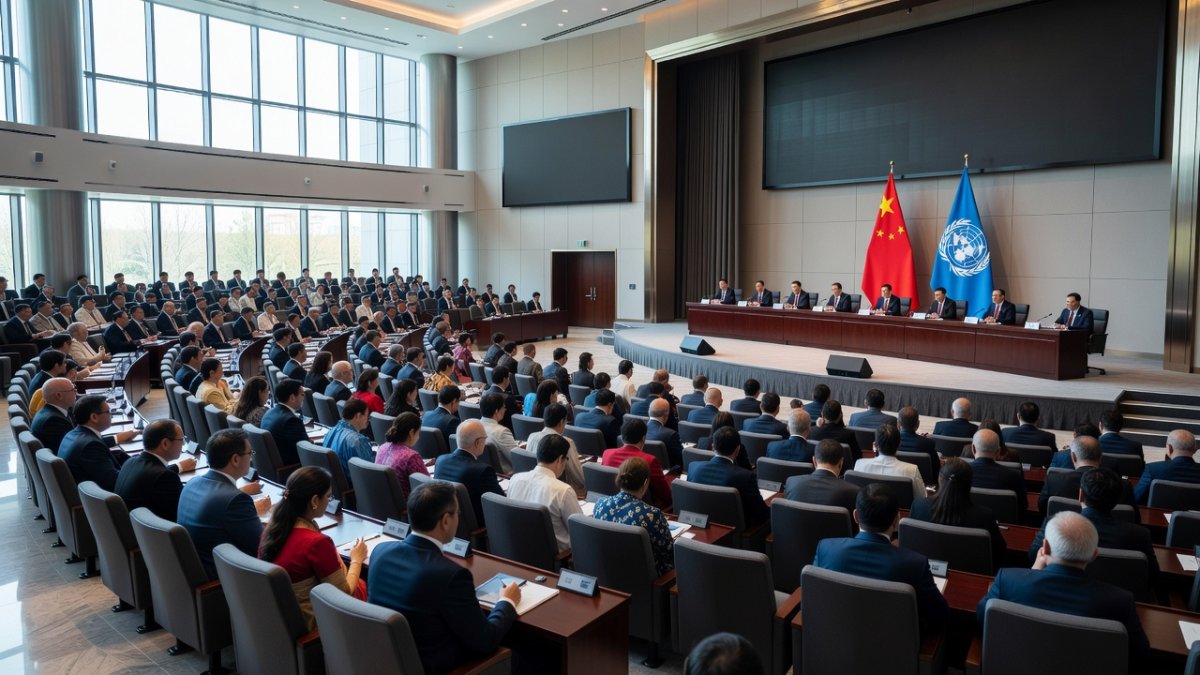
The Forum in Context: China's Alternative Human Rights Framework
The 2026 forum represents the latest iteration in an annual or biannual series designed to institutionalize China's perspective on human rights governance. By convening representatives from the Global South alongside select international figures, Beijing seeks to build consensus around a framework that prioritizes collective economic advancement over individual political liberties. Li Shulei's keynote emphasized this shift, positioning China as a contributor to global human rights norms rather than a passive recipient of external standards. This approach aligns with China's broader foreign policy doctrine of promoting multilateralism tailored to developing nations' realities. The preceding "Human Rights Actions in China" thematic tour in Chongqing for international dignitaries served to showcase domestic achievements in poverty alleviation and infrastructure, framing these as tangible human rights outcomes.The Right to Development: A Counter-Narrative to Western Human Rights Doctrine
Central to the forum's proceedings was the elevation of the right to development as a foundational principle. This narrative directly challenges the emphasis placed by Western institutions on civil and political rights, arguing instead that sustainable economic progress forms the prerequisite for all other rights. Attendees including former Peruvian Prime Minister Eduardo Arana highlighted the need for inclusive governance that respects national diversity, echoing China's position that one-size-fits-all models fail to account for varied historical and developmental contexts. China's strategy here draws on its own experience with the Dual Circulation approach, where internal market strengthening complements external engagement. By linking human rights to development metrics such as infrastructure access and poverty reduction, Beijing offers a pragmatic alternative that resonates in regions where immediate material needs outweigh abstract legal protections.
Global South Alignment: Why Developing Nations Are Engaging
Participation from figures such as the Somali Ambassador and Gambia's Vice President illustrates the forum's appeal across Africa and Latin America. These nations often view China's model as more attuned to their priorities of industrialization and capacity building than conditional aid frameworks advanced by traditional Western donors. A CGTN poll indicating global respondents' recognition of China's human rights contributions further signals soft power gains in these regions. The engagement reflects strategic calculus on both sides. Developing countries gain platforms to voice development-centric views, while China secures diplomatic support in multilateral forums. Second-order effects include potential shifts in ASEAN and African Union positions on governance issues, where economic cooperation increasingly influences human rights stances.The National Human Rights Action Plan (2026-2030): Key Provisions and Strategic Timing
The release of the National Human Rights Action Plan (2026-2030) during the forum marks a forward-looking document intended to guide domestic policy while projecting international influence. Specific provisions remain subject to further elaboration by relevant ministries, yet the timing coincides with China's ongoing 14th Five-Year Plan implementation and preparations for subsequent cycles. This sequencing allows Beijing to integrate human rights language into broader economic and technological self-sufficiency goals. The plan's emphasis on development rights is expected to be phased in gradually, with initial focus areas likely including rural revitalization and digital inclusion. Such measures aim to demonstrate measurable progress that can be cited in future diplomatic engagements.Geopolitical Implications: Competing Visions for Global Governance
The forum highlights deepening competition between China's development-oriented human rights vision and established Western frameworks centered on accountability mechanisms. Each side leverages distinct tools: the West through sanctions and normative pressure via bodies like the UN Human Rights Council, and China through bilateral partnerships and South-South cooperation channels. For the EU and Global South, this creates navigation challenges as economic ties with Beijing grow alongside normative divergences. Second-order effects may include fragmented global standards, where regional organizations adopt hybrid approaches blending elements from both paradigms. ASEAN nations, for instance, could prioritize infrastructure-linked rights discourse while maintaining selective engagement with Western partners.
What to Watch For: The Road Ahead for China's Human Rights Diplomacy
Future iterations of the forum will likely expand participation and refine messaging around the 2026-2030 action plan. Observers should monitor how China integrates feedback from Global South partners into subsequent policy documents and whether new institutional mechanisms emerge under the China International Development Cooperation Agency. The interplay between these efforts and ongoing technological initiatives, such as digital governance standards, will shape Beijing's long-term influence. By Prof. Marcus Chen, Staff WriterThis article was produced with AI-assisted research and editorial support. Reporting is based on sources cited in the article.
What's Your Reaction?
 Like
0
Like
0
 Dislike
0
Dislike
0
 Love
0
Love
0
 Funny
0
Funny
0
 Wow
0
Wow
0
 Sad
0
Sad
0
 Angry
0
Angry
0

Marcus Chen
World Politics Analyst at Global1.News. Based in Beijing, covering US-China relations, global trade, and geopolitical strategy. Brings deep analytical perspective to the power dynamics shaping international affairs.












Comments (0)