
Japan-China Diplomats Hold First Talks Since Taiwan Crisis
In a notable sign of easing tensions, Japanese Foreign Minister Toshimitsu Motegi and Chinese Foreign Minister Wang Yi held their first direct contact since the November 2025 diplomatic crisis sparked by Prime Minister Sanae Takaichi’s Taiwan remarks. The brief exchange occurred on the sidelines of ASEAN meetings in Manila in July 2026, offering a cautious reopening of communication channels after eight months of silence.
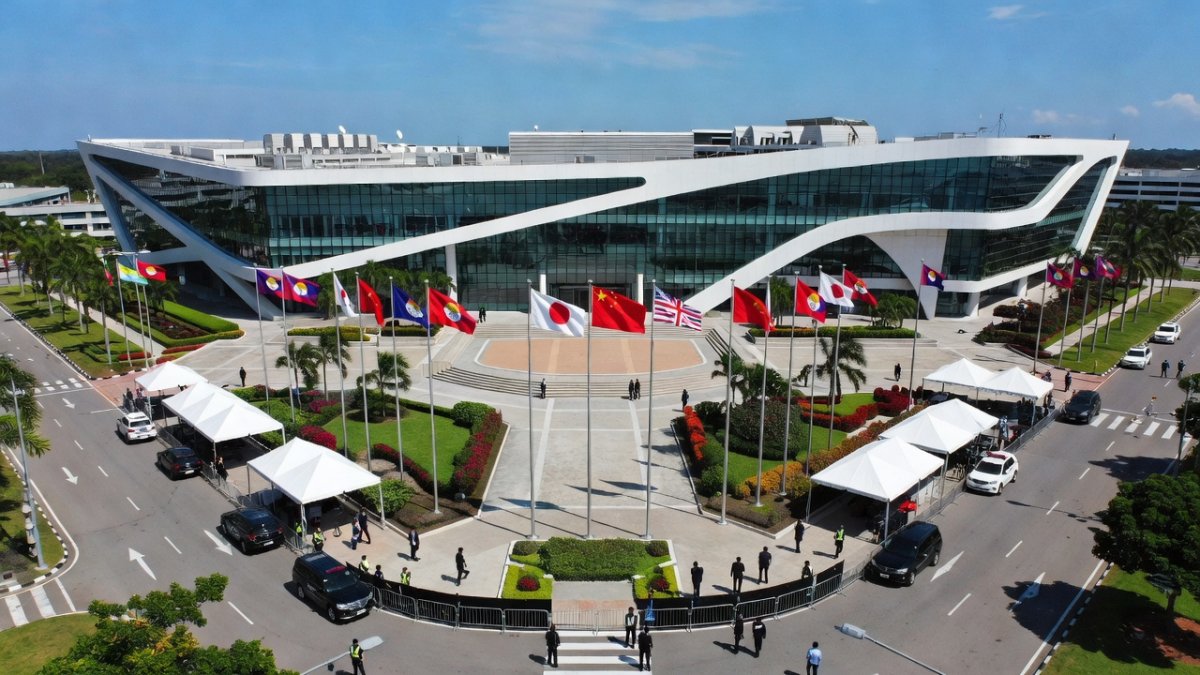
First Direct Contact Between Top Diplomats
Japanese Foreign Minister Toshimitsu Motegi and Chinese Foreign Minister Wang Yi exchanged brief remarks on July 22, 2026, during ASEAN-related meetings in Manila. This marked the first direct communication between the two nations' chief diplomats since November 2025.
The short exchange occurred on the margins of the regional gatherings and focused on procedural matters rather than substantive negotiations. Motegi later confirmed the interaction on July 23, describing it as a brief conversation without detailing outcomes.
The confirmation of even a brief exchange between Motegi and Wang carries outsized diplomatic weight in the context of prolonged silence. Japanese officials have historically treated any acknowledgment of contact as a deliberate signal of intent to reopen channels, especially after extended freezes. This mirrors the cautious approach following the 2012 Senkaku Islands nationalization crisis, when bilateral meetings ceased for over 18 months before limited working-level talks resumed in 2013. By publicly noting the Manila interaction on July 23 without claiming substantive progress, Tokyo avoided provoking Beijing while testing the waters for incremental engagement. Analysts note that such calibrated disclosures prevent domestic backlash in Japan while preserving face for Chinese counterparts wary of appearing conciliatory.
The sidelines format itself underscores the fragility of current relations compared to earlier thaws. During the 2014-2015 Abe-Xi rapprochement, initial contacts occurred through formal bilateral side meetings at APEC and later expanded to structured dialogues on economic cooperation. In contrast, the July 2026 encounter remained strictly informal and procedural, signaling that Beijing has not yet authorized a return to routine diplomatic machinery. Motegi’s phrasing, emphasizing the exchange as “brief” and devoid of outcomes, was deliberately restrained to align with Japan’s strategy of maintaining low expectations. This approach prevents overinterpretation that could derail fragile momentum, particularly amid ongoing South China Sea frictions and Taiwan sensitivities that continue to constrain both sides’ room for maneuver.
Context of the November 2025 Diplomatic Crisis
Prime Minister Sanae Takaichi's November 2025 statement described a potential Chinese invasion of Taiwan as an "existential crisis for Japan" that could prompt a Japanese military response. The remarks led China to cancel scheduled bilateral meetings and summon the Japanese ambassador in Beijing.
The episode created the most severe strain in Japan-China relations in recent years. No high-level diplomatic engagements took place for the following eight months, halting routine channels between the Ministry of Foreign Affairs and its Chinese counterpart.
The crisis unfolded rapidly after Prime Minister Takaichi’s November 12, 2025, remarks at a parliamentary session, which explicitly linked a Taiwan contingency to Japan’s security under the Legislation for Peace and Security. Within 48 hours, Beijing canceled the planned December foreign ministers’ meeting in Macao and summoned Japan’s ambassador to protest what it termed interference in internal affairs. By late November, all scheduled working groups on maritime affairs and economic dialogue had been suspended, creating an eight-month vacuum in high-level communication. This sequence echoed but exceeded the 2010 trawler incident in duration and scope, as it halted even technical exchanges on fisheries and aviation safety.
Economic repercussions materialized gradually rather than through outright sanctions. Japan-China bilateral trade, valued at approximately $320 billion in 2024, saw a 7 percent contraction in the first quarter of 2026, driven primarily by a 12 percent drop in Japanese machinery exports to China. Foreign direct investment flows from Japan into China declined by 18 percent year-on-year in the same period, according to METI data, as firms accelerated supply-chain diversification toward Vietnam and India. Public opinion polls conducted by the Cabinet Office in March 2026 revealed that 68 percent of Japanese respondents viewed China as a security threat, up from 54 percent the previous year, while support for strengthening defense cooperation with the United States on Taiwan contingencies reached 61 percent. These shifts reinforced Takaichi’s invocation of the 2015 security legislation as a framework for potential rear-area support operations.
ASEAN Meetings Overshadowed by Multiple Flashpoints
The July 22-23, 2026, gatherings in Manila also featured a reported clash between Philippine and Chinese vessels at Second Thomas Shoal in the South China Sea. Separate discussions included a 90-minute meeting between U.S. Secretary of State Marco Rubio and Wang Yi, alongside talks on the U.S.-Iran conflict.
Motegi held additional bilateral sessions with Rubio and South Korean Foreign Minister Cho Hyun. During the ASEAN sessions, Motegi emphasized Japan's support for ASEAN unity and centrality while pledging cooperation in digital transformation and artificial intelligence.
The Second Thomas Shoal incident on July 15, 2026, involved Chinese coast guard vessels using water cannons against Philippine resupply boats, marking the most aggressive confrontation at the feature since 2023. This event directly influenced the tone of ASEAN gatherings, as Manila sought stronger regional statements on freedom of navigation. The subsequent 90-minute meeting between U.S. Secretary of State Marco Rubio and Wang Yi reportedly covered groundwork for a potential Xi visit to Washington, alongside Taiwan and bilateral trade disputes, yet produced no joint readout. Japan’s interest lies in preventing escalation that could draw in U.S. forces and disrupt regional stability, given Tokyo’s reliance on sea lanes passing near the shoal.
The concurrent U.S.-Iran conflict added another layer of complexity, with shipping insurance costs in the Strait of Hormuz rising 40 percent and indirectly affecting energy imports to ASEAN economies. Japan, which imports 85 percent of its crude oil via routes vulnerable to secondary disruptions, has quietly advocated for de-escalation mechanisms within ASEAN forums. Tokyo’s mediation role remains limited to behind-the-scenes encouragement of dialogue, consistent with its preference for multilateral confidence-building rather than direct intervention in either the South China Sea or Middle East flashpoints. These overlapping tensions explain why the Motegi-Wang exchange stayed narrowly procedural.
Implications for Japan-China Bilateral Relations
The brief Motegi-Wang exchange signals a possible, albeit limited, reopening of communication lines. Both sides have avoided public statements framing the contact as a breakthrough, consistent with the cautious approach maintained by Japan's Ministry of Foreign Affairs since the 2025 downturn.
Reappointment of Motegi as foreign minister under the Takaichi administration in late 2024 has kept continuity in Japan's diplomatic messaging. Any follow-up engagements would likely require careful calibration to avoid renewed friction over Taiwan-related issues.
Regional Dynamics and Japanese Foreign Policy Priorities
Japan's engagement at the Manila meetings reflects ongoing efforts to balance relations with China while strengthening ties with the United States and ASEAN partners. The Ministry of Economy, Trade and Industry has separately promoted technology cooperation initiatives that align with Motegi's stated priorities in digital and AI fields.
Stability in the Asia-Pacific remains a core objective for Tokyo, particularly given Japan's geographic proximity to both Taiwan and the South China Sea. The absence of deeper bilateral progress with China leaves several economic and security coordination mechanisms in limbo.
Japan continues to navigate the tension between its U.S. security alliance and economic interdependence with China through a strategy of compartmentalization. While the 2024 U.S.-Japan security treaty updates expanded joint planning for Taiwan contingencies, Tokyo simultaneously maintains over 30,000 Japanese-affiliated companies operating in China. Bilateral trade reached $298 billion in 2025 despite the diplomatic freeze, with Japanese investment in Chinese semiconductor and automotive sectors totaling $8.7 billion. This duality requires careful signaling that avoids alienating either partner, as evidenced by Takaichi’s administration upholding the 1972 Japan-China Joint Communiqué’s “one China” formulation while expanding defense cooperation with Washington.
METI has prioritized supply-chain resilience initiatives, allocating ¥420 billion in subsidies since 2023 to diversify rare-earth and electronics production away from China. These efforts align with Japan’s official Taiwan policy under Takaichi, which emphasizes maintaining peace and stability across the strait without endorsing independence. The approach allows Tokyo to support U.S. deterrence while preserving economic access, though prolonged diplomatic isolation risks eroding business confidence and complicating coordination on shared challenges such as climate and pandemic preparedness.
What to Watch For
Observers will monitor whether the July 22 contact leads to resumed working-level talks or the scheduling of a formal bilateral meeting later in 2026. Any movement on South China Sea confidence-building measures or adjustments in Taiwan-related rhetoric could influence the pace of normalization.
Further developments at upcoming multilateral forums, including potential side meetings at the United Nations General Assembly in September, will indicate whether the current thaw remains procedural or evolves into substantive dialogue.
Tags: Japan China diplomacy, Motegi Wang Yi, Takaichi Taiwan remarks, ASEAN Manila, South China Sea, Asia-Pacific stability, MOFA Japan, regional security
The September 2026 UN General Assembly offers the next plausible venue for a follow-up encounter, potentially at the foreign ministers’ level if preliminary working contacts prove productive. Japanese diplomats have historically used the UNGA sidelines to reset relations after crises, as occurred in 2014. Success would likely hinge on whether Beijing agrees to resume the suspended Japan-China High-Level Economic Dialogue before year-end.
The November APEC summit in Peru represents a higher-stakes testing ground, where leaders’ attendance could facilitate a Takaichi-Xi meeting if tensions ease. Parallel prospects for reviving the Japan-China-South Korea trilateral summit, dormant since 2019, depend on Seoul’s willingness to host amid its own China frictions. Should normalization advance, Japanese business sentiment—currently at a five-year low per the Bank of Japan’s Tankan survey—could improve, boosting capital expenditure plans. Conversely, stalled progress risks accelerating corporate exits from China and further tightening supply-chain decoupling measures.
By Kenji Tanaka, Staff Writer
This article was produced with AI-assisted research and editorial support. Reporting is based on sources cited in the article.
What's Your Reaction?
 Like
0
Like
0
 Dislike
0
Dislike
0
 Love
0
Love
0
 Funny
0
Funny
0
 Wow
0
Wow
0
 Sad
0
Sad
0
 Angry
0
Angry
0
Japan Correspondent at Global1.News. Tokyo-based voice covering Japanese politics, technology, economy, and culture. Tracks the intersection of tradition and innovation in one of the world's most dynamic societies.













Comments (0)