
World Cup 2026 Extreme Heat Risks Threaten Players and Fans in US and Mexico
The 2026 FIFA World Cup opens June 11 across 16 venues in the United States, Mexico and Canada, yet southern host cities already face routine temperatures above 40°C with heat indexes nearing 50°C. Urban heat island effects compound the danger in concrete fan zones and open-air stadiums. Climate Central data show the number of extremely hot June and July days has tripled since
The 2026 FIFA World Cup opens June 11 across 16 venues in the United States, Mexico and Canada, yet southern host cities already face routine temperatures above 40°C with heat indexes nearing 50°C. Urban heat island effects compound the danger in concrete fan zones and open-air stadiums. Climate Central data show the number of extremely hot June and July days has tripled since the 1994 tournament, locking the event into a warming trajectory that previous hosts avoided. FIFPRO has identified six stadiums with extreme heat stress risk: Atlanta, Dallas, Houston, Kansas City, Miami and Monterrey. Twenty-six of the 104 matches are projected to exceed the 26°C WBGT hazardous threshold, while roughly 67 matches carry potential heat-illness danger. WBGT values above 28 equate to dangerous conditions equivalent to 38°C dry-bulb or 30°C humid readings. Unlike Qatar 2022, which shifted to winter, this summer schedule places athletes and spectators directly in peak heat. Latin American squads from hotter regions hold an acclimatization edge, while European teams face steeper physiological challenges.
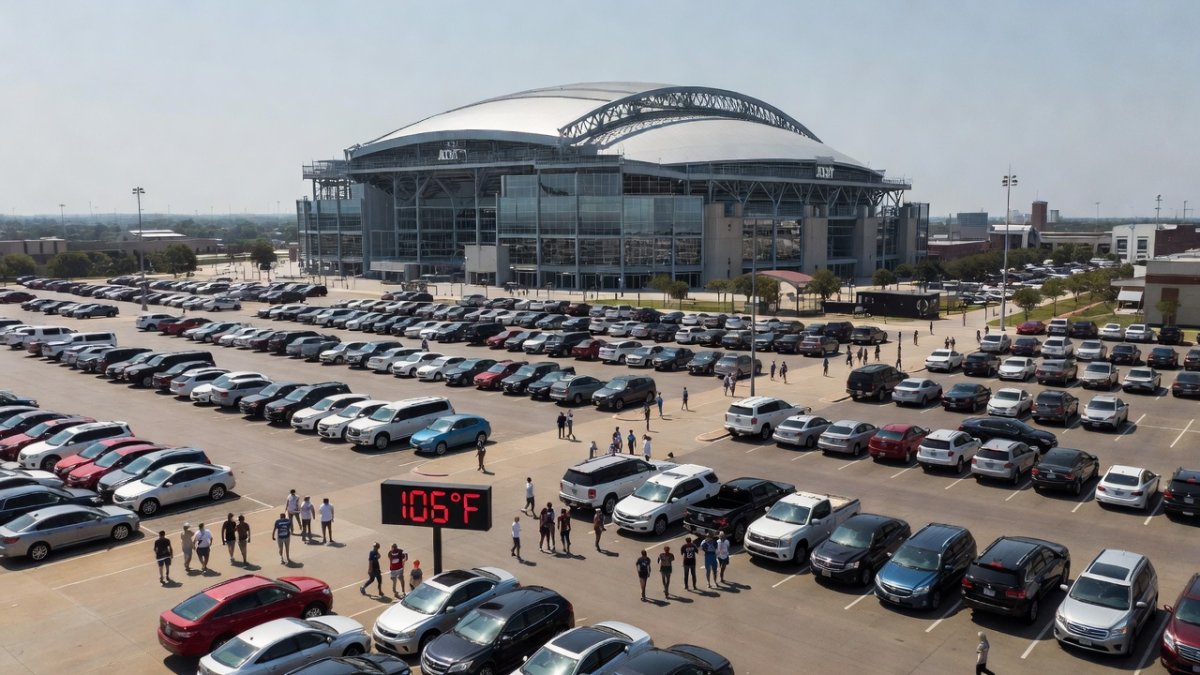
Dallas, Texas - USA, June 7, 2026 — The most severe heat stress will concentrate in six FIFPRO-flagged venues where afternoon conditions routinely push WBGT past 28. Dallas and Houston operate retractable roofs with air conditioning, yet Monterrey, Kansas City and Miami remain fully open-air, exposing players to direct solar load and humidity. Heat index readings in Monterrey and the Texas cities are forecast to exceed 49°C during June and July windows. Twenty-six matches will surpass the 26°C WBGT line, and approximately 67 total fixtures sit inside the heat-illness danger band. Al Jazeera English correspondent Phil Lavelle, reporting from Dallas for the segment "World Cup 2026 set to face scorching temperatures in southern US," documented surface temperatures on stadium concourses already surpassing 60°C by mid-afternoon. Atlanta and Miami add high humidity that slows evaporative cooling, while Kansas City's open bowl amplifies radiant heat. Mexico's three host cities present a sharp gradient: Mexico City at 2,240 m altitude stays cooler, Guadalajara records mild evenings, yet Monterrey's afternoon indexes threaten 49°C. FIFA has mandated three-minute cooling and hydration breaks each half plus later evening kickoffs, but these measures cannot fully offset the projected thermal load across the 104-match schedule.
The Science of Heat Stress: WBGT and Player Safety
WBGT integrates temperature, humidity, wind and solar radiation into a single index that directly predicts heat illness. Readings above 26°C mark the hazardous threshold; values exceeding 28 equate to 38°C dry or 30°C humid conditions and trigger mandatory interventions. FIFPRO's analysis flags Atlanta, Dallas, Houston, Kansas City, Miami and Monterrey as extreme-risk sites because their June-July climatology routinely crosses these lines. Twenty-six of 104 matches will exceed 26°C WBGT, while 67 fixtures carry measurable heat-illness probability. Heat impairs sprint speed, accelerates glycogen depletion and degrades decision-making accuracy within minutes of exposure. Recent Copa América matches already recorded referee collapses and player dizziness under comparable stress. Dallas and Houston can close roofs and activate air conditioning, yet Monterrey, Kansas City and Miami lack this protection. FIFA's three-minute cooling breaks each half and later kickoff times represent partial mitigation, yet they do not alter the underlying WBGT trajectory. Teams must therefore integrate repeated heat-acclimation protocols and real-time WBGT monitoring to safeguard athletes across the southern cluster of venues.
Latin America at the Center: Mexico's Heat Challenge
Monterrey's open-air stadium places Mexico at the epicenter of the tournament's heat crisis. Universidad Nacional Autónoma de México researchers have issued repeated warnings about "golpe de calor" incidence when heat indexes surpass 49°C, a threshold Monterrey meets on multiple matchdays. In contrast, Mexico City's 2,240 m elevation keeps average temperatures 8-10°C lower, while Guadalajara benefits from Pacific moderation and evening breezes. These intra-national disparities mean Mexican organizers must deploy distinct medical and scheduling strategies for each host city. Latin American squads from tropical lowlands arrive already heat-acclimated, conferring measurable advantages in recovery and sustained high-intensity output. FIFPRO data confirm Monterrey among the six highest-risk venues, with afternoon WBGT values projected to exceed 28 on multiple occasions. Local health authorities plan mobile cooling stations and mandatory hydration checkpoints, yet the open-air design limits their effectiveness. The contrast with Mexico City and Guadalajara underscores how geography, not merely national borders, will determine player safety outcomes during the 2026 tournament.
Climate Change Has Rewritten the Rules of Summer Sport
Climate Central analysis documents a tripling of extremely hot June-July days across the southern United States and northern Mexico since the 1994 World Cup. This emissions-driven trend converts what were once exceptional heat events into baseline conditions for the 2026 schedule. Qatar 2022 avoided peak summer by moving to winter; no such calendar shift protects the 2026 hosts. Twenty-six matches will exceed the 26°C WBGT hazardous line, and 67 fixtures fall inside the broader danger envelope. Open-air stadiums in Monterrey, Kansas City and Miami absorb additional radiant heat that retractable-roof venues in Dallas and Houston can partially exclude. The physiological consequences - reduced sprint distances, faster fatigue and impaired cognition - scale directly with WBGT. Latin American and African federations have long incorporated heat protocols into domestic calendars, giving their players a measurable edge. European squads, including England's Florida training camps, confront steeper adaptation curves. Without accelerated decarbonization, future World Cups will inherit still hotter baselines that current mitigation measures cannot fully neutralize.
What This Means for Fans — And Who Has the Advantage
Fan zones in Dallas, Houston and Monterrey will experience heat indexes above 49°C, prompting FIFA to reverse its earlier water-bottle ban after widespread criticism. Spectators are advised to pre-hydrate, seek shade every 20 minutes and monitor for dizziness. The same WBGT thresholds that affect players also threaten supporters in open concourses. Squads from hotter climates in Africa and South America hold clear acclimatization advantages, maintaining higher work rates and sharper decision-making under load. European teams, by contrast, require extended pre-tournament heat camps to approach parity. Recent Copa América incidents of referee collapse and player disorientation illustrate the narrow margin between discomfort and medical emergency. Monterrey's extreme readings, combined with Mexico City's altitude advantage and Guadalajara's milder profile, create a three-tier risk map that traveling fans must navigate. Practical steps include electrolyte replacement, light-colored clothing and avoidance of midday fan festivals. These measures, paired with FIFA's mandated cooling breaks, form the minimum safety net for the 2026 tournament.
The Bottom Line — A Tournament in the Crosshairs of Climate Crisis
The 2026 World Cup arrives at the intersection of fixed infrastructure and accelerating climate trends. FIFPRO's identification of six extreme-risk stadiums, the 26 matches above 26°C WBGT and the 67 fixtures inside the danger band quantify the scale of the challenge. Monterrey's open-air design, Texas heat indexes above 49°C and the tripling of hot days since 1994 leave little margin for error. FIFA's cooling breaks and later kickoffs provide immediate relief, yet long-term solutions require climate-smart venue retrofits and calendar flexibility. Latin American hosts possess both the greatest exposure and the deepest experiential knowledge to manage these conditions. Future bidding processes must embed WBGT modeling and urban heat mitigation as core criteria rather than afterthoughts. Without such integration, player welfare, fan safety and competitive equity will continue to erode under rising thermal loads. The data are unambiguous; the window for adaptation is narrowing.
By Elena Vasquez, Staff Writer
This article was produced with AI-assisted research and editorial support. Reporting is based on sources cited in the article.
What's Your Reaction?
 Like
0
Like
0
 Dislike
0
Dislike
0
 Love
0
Love
0
 Funny
0
Funny
0
 Wow
0
Wow
0
 Sad
0
Sad
0
 Angry
0
Angry
0

Latin America Correspondent at Global1.News. Based in Mexico City, covering politics, economics, energy, and culture across the region. Brings an on-the-ground perspective to stories spanning from the Rio Grande to Patagonia.















Comments (0)