
Ecuador Energy Emergency: Drought and El Niño Crisis 2026
Ecuador has declared an energy emergency as a punishing drought withers the rivers feeding its hydroelectric dams and a looming El Niño threatens to deepen the crisis. With more than 80 percent of the nation's electricity coming from hydropower, every dry day inches the grid closer to the kind of catastrophic blackouts that paralyzed the country in 2024 — when 14-hour cuts cost
Ecuador has declared an energy emergency as a punishing drought withers the rivers feeding its hydroelectric dams and a looming El Niño threatens to deepen the crisis. With more than 80 percent of the nation's electricity coming from hydropower, every dry day inches the grid closer to the kind of catastrophic blackouts that paralyzed the country in 2024 — when 14-hour cuts cost an estimated $2 billion. Now, experts warn the 2026-2027 dry season could unfold a deficit of 1,300 megawatts or more, pushing hospitals, water systems, and millions of households to the breaking point.
Ecuador's Energy Emergency: Drought and El Niño Threaten Blackouts Across a Hydro-Dependent Nation
Quito, Ecuador – July 14, 2026 —
The Drought That Cripples a Hydro Nation
Ecuador generates more than 80 percent of its electricity from hydropower, primarily through massive facilities like Coca Codo Sinclair and the Paute/Mazar complex. This heavy reliance leaves the nation acutely vulnerable when rainfall patterns shift. Severe drought conditions have already pushed the country into a formal energy emergency, with experts projecting a 1,000 to 1,500 MW deficit during the critical 2026-2027 dry season. The situation echoes the painful 2024 crisis that brought up to 14-hour daily blackouts and roughly $2 billion in economic losses, equivalent to about 2 percent of GDP.
Latin American nations dependent on Andean water cycles face similar threats, yet Ecuador’s exposure stands out because of its limited thermal backup capacity. CENACE, the national electricity operator, has repeatedly flagged these risks as reservoirs begin their seasonal decline. Dry conditions typically intensify between September and October, amplifying pressure on every hydro asset. Communities across the highlands and coast already feel the strain through rolling power cuts labeled as “mantenimientos programados” that began rolling out in May and June 2026 across dozens of cantons. The combination of natural drought and the looming El Niño phenomenon creates a perfect storm for energy insecurity that threatens both households and industries throughout the region.
Energy Emergency: What Ecuador's Government Is Doing
Energy Minister Juan Carlos Blum has outlined a multi-pronged contingency strategy under the declared energy emergency. Officials are prioritizing reservoir optimization, accelerated repairs to the existing thermal fleet, and deployment of floating power barges known as barcazas to inject immediate megawatts. Additional measures include strengthening interconnections with Colombia and Peru to secure emergency imports, though political tensions and tariff disputes continue to complicate flows that could reach 450 MW from Colombia alone.
These steps reflect a broader Latin American pattern where governments scramble to diversify away from drought-sensitive hydro resources. Minister Blum’s team is also tracking solar imports that have risen sharply as businesses and households seek private adaptation solutions. Despite these efforts, opposition voices accuse authorities of attempting to “maquillar la realidad,” or mask the true severity of the shortfall. CENACE warnings remain stark: without rapid execution of thermal repairs and barge arrivals, the 2026-2027 dry season could expose a gap exceeding 1,300 MW. The government’s race to implement these measures will determine whether Ecuador can avoid repeating the widespread blackouts that devastated the economy just two years earlier.
Reservoir Realities: Full Today, Uncertain Tomorrow
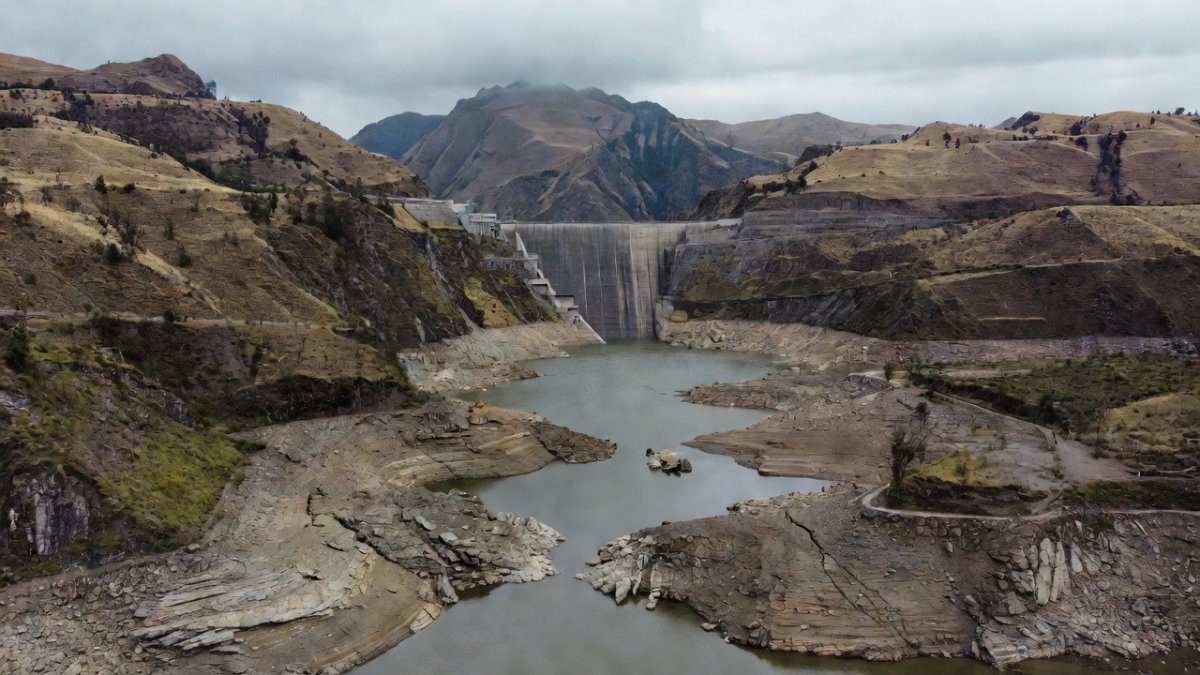
Current reservoir levels offer a deceptive sense of security. The Mazar reservoir sits at 2,152.8 to 2,153 meters above sea level, roughly 54 meters above its minimum operating threshold as of July 2026. CELEC EP reports that these levels remain optimal for now, yet the agency cautions that the dry season will intensify sharply from September through October. Ecuador’s hydro-dominated grid depends entirely on timely rainfall to replenish these storages before the next critical period arrives.
Experts warn that even full reservoirs today cannot guarantee stability if El Niño materializes with strong intensity. The 2026-2027 dry season deficit projections of 1,000 to 1,500 MW hinge on how quickly water levels drop once rains cease. Similar patterns have already affected neighboring Andean countries, underscoring the regional nature of climate-driven energy risks. Government contingency plans emphasize careful drawdown management, but historical data shows that prolonged drought can deplete even the largest Andean reservoirs faster than expected. Without accelerated diversification, Ecuador risks entering the peak demand months with dangerously low storage, forcing deeper reliance on costly imports or emergency thermal generation that the country has struggled to maintain.
The Coca Codo Sinclair Threat: Erosion at the Water Intake
Coca Codo Sinclair, one of Ecuador’s flagship hydropower plants, faces an existential threat from regressive erosion along the Coca River that is steadily approaching the water intake structure. This geological hazard has accelerated in recent years, raising alarms among engineers and energy planners. Any disruption at this facility would immediately slash national generation capacity, compounding the already projected 1,000 to 1,500 MW shortfall during the 2026-2027 dry season.
The erosion problem highlights how climate variability and geological instability intersect in Latin America’s most ambitious hydro projects. While CELEC EP maintains that current reservoir levels are adequate, the structural vulnerability at Coca Codo Sinclair cannot be ignored. Maintenance crews are monitoring the river’s advance daily, yet long-term solutions require significant engineering investment that competes with other emergency priorities. If erosion reaches critical points before reinforcements are completed, the plant could face forced shutdowns precisely when hydropower output is most needed. This threat adds another layer of uncertainty to Ecuador’s energy security outlook and demonstrates why over-reliance on single river basins creates systemic fragility across the region.
Failed Contracts and Billions Spent: The Accountability Gap
Since 2023, Ecuador has spent more than $2 billion on energy contracts that have largely failed to deliver reliable capacity. Notable among these are deals with PROGEN and Austral Technical Management, the latter reportedly resulting in approximately $150 million worth of “scrap” generators that never provided meaningful output. These procurement failures have left the country dangerously exposed as drought tightens its grip and El Niño approaches.
The accountability gap has drawn sharp criticism from opposition leaders who argue that public funds were mismanaged at the worst possible moment. Instead of building resilient thermal backup or advancing non-hydro alternatives, resources vanished into underperforming assets. This pattern of costly missteps mirrors challenges seen elsewhere in Latin America where rushed emergency procurement often produces substandard results. With a potential 1,300 MW deficit looming, the legacy of these failed contracts now forces greater dependence on Colombia imports and floating barges. Rebuilding trust and ensuring future spending delivers actual megawatts will be essential if Ecuador hopes to stabilize its grid before the 2026-2027 dry season peaks.
Health and Water: The Human Cost of Power Outages
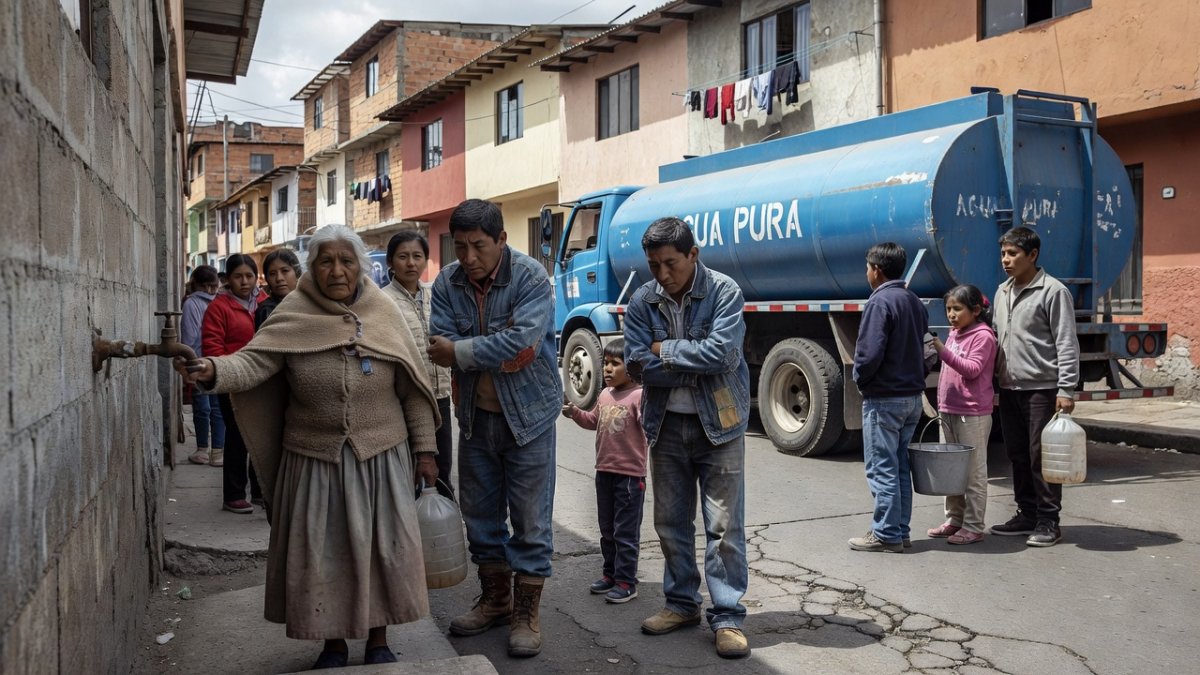
Power shortages inflict direct harm on public health across Ecuador. Water treatment plants lose pumping capacity during blackouts, leaving neighborhoods in Quito and Guayaquil dependent on water trucks known as camiones cisterna for basic supply. Hospitals operating on backup generators face fuel shortages and equipment failures, while dialysis units report disrupted sessions that endanger patients with chronic kidney conditions.
The 2024 crisis already demonstrated these cascading effects, with up to 14-hour outages producing measurable increases in waterborne illness and emergency room visits. As the country prepares for potential 2026-2027 shortfalls, health authorities warn that similar or worse outcomes could emerge if generation gaps reach 1,000 to 1,500 MW. Vulnerable populations in rural cantons suffer most, lacking private generators or access to alternative water sources. The human cost extends beyond economics, revealing how energy insecurity undermines essential services throughout Latin America’s most hydro-dependent nations. Addressing these health impacts requires not only new generation but also resilient water and medical infrastructure that can withstand prolonged outages.
El Niño and the Regional Energy Interconnection
El Niño has been officially confirmed, though its intensity remains uncertain, with some models flagging the possibility of a Super El Niño event that could devastate rainfall across the Andean region. Ecuador’s energy emergency is therefore inseparable from broader climate dynamics affecting Colombia, Peru, and beyond. Regional interconnections offer one potential buffer, yet political tensions and tariff disputes threaten the reliability of up to 450 MW that could flow from Colombia.
Strengthening cross-border ties with both Colombia and Peru forms a central pillar of Minister Juan Carlos Blum’s contingency plans. Floating barges and repaired thermal units can provide short-term relief, but sustained regional cooperation will be necessary to manage the 2026-2027 dry season deficit. Latin American energy planners increasingly recognize that isolated national grids cannot withstand synchronized climate shocks. If El Niño intensifies, coordinated import agreements and shared reserve margins become vital lifelines. Ecuador’s current push to secure these interconnections reflects a pragmatic acknowledgment that climate resilience in the energy sector demands collective action across borders rather than purely domestic solutions.
The Bottom Line — A Race Against the Dry Season
Ecuador stands at a critical juncture where every month of preparation matters. With hydropower supplying over 80 percent of electricity and the Mazar reservoir’s current buffer finite, the government must execute thermal repairs, barge deployments, and interconnection deals before September-October intensification. The 1,000 to 1,500 MW deficit projected for 2026-2027, combined with Coca Codo Sinclair erosion risks and failed contract legacies, leaves little margin for error.
Solar imports are rising as citizens adapt, yet systemic solutions remain essential. Health services, water access, and economic stability all hinge on avoiding a repeat of 2024’s $2 billion losses. Opposition demands for transparency and Minister Blum’s emergency measures must converge on rapid, verifiable results. As El Niño uncertainty looms, Ecuador’s ability to secure reliable power will test the resilience of its institutions and the broader Latin American commitment to climate-adaptive energy systems. The dry season will arrive regardless; whether the lights stay on depends on actions taken today.
By Elena Vasquez, Staff WriterThis article was produced with AI-assisted research and editorial support. Reporting is based on sources cited in the article.
What's Your Reaction?
 Like
0
Like
0
 Dislike
0
Dislike
0
 Love
0
Love
0
 Funny
0
Funny
0
 Wow
0
Wow
0
 Sad
0
Sad
0
 Angry
0
Angry
0

Latin America Correspondent at Global1.News. Based in Mexico City, covering politics, economics, energy, and culture across the region. Brings an on-the-ground perspective to stories spanning from the Rio Grande to Patagonia.














Comments (0)