
Why South Korean Boycotts Are So Relentless: The Starbucks Tank Day Affair
On 18 May 2026, Starbucks Korea launched a promotional campaign for its new Tank series of tumblers under the banner "Tank Day" — a date that coincides with the 46th anniversary of the Gwangju Uprising, one of the most painful episodes in modern South Korean history. Within hours, the promotion was withdrawn. Within days, the local chief executive had been dismissed, the chairm
On 18 May 2026, Starbucks Korea launched a promotional campaign for its new Tank series of tumblers under the banner "Tank Day" — a date that coincides with the 46th anniversary of the Gwangju Uprising, one of the most painful episodes in modern South Korean history. Within hours, the promotion was withdrawn. Within days, the local chief executive had been dismissed, the chairman of the parent conglomerate had bowed in televised apology, and a nationwide boycott had taken hold that would prove remarkably persistent, revealing deep fault lines in Korean society around historical memory, corporate governance, and the enduring power of organized consumer action.
Starbucks Korea Tank Day Boycott: Chaebol Accountability and the Persistence of Korean Consumer Activism
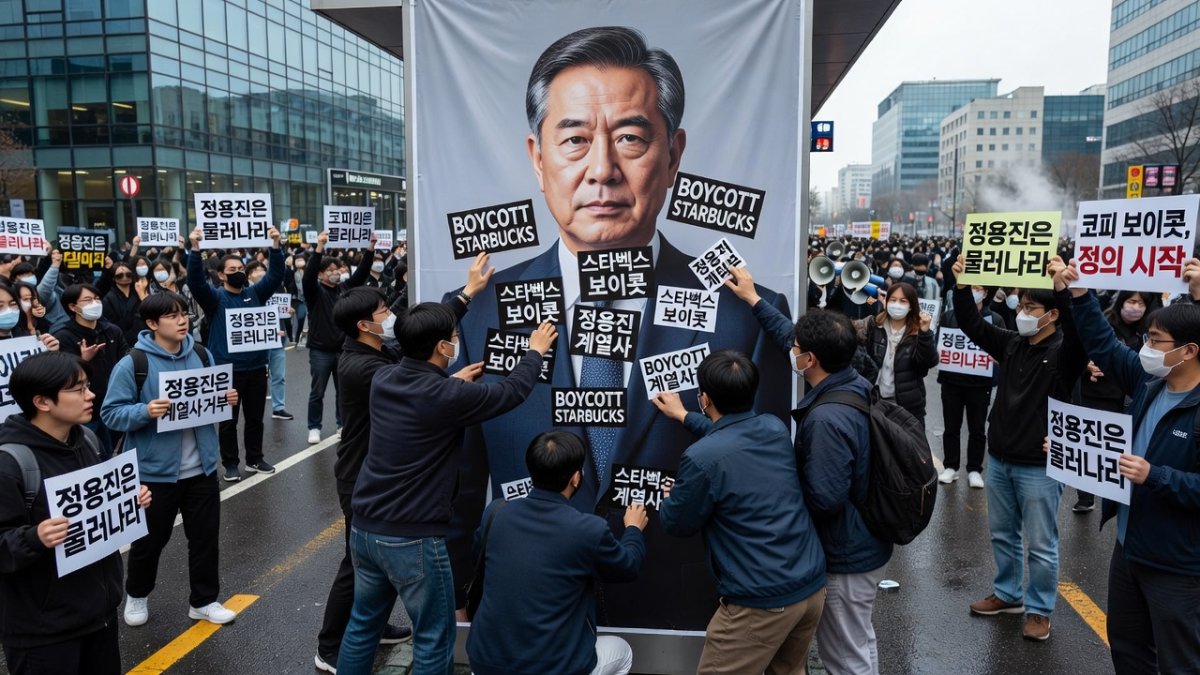
Seoul, South Korea — June 2026 — On 18 May 2026, Starbucks Korea ran a marketing campaign for its new Tank range of tumblers, using the promotional slogan "Tank Day" and the tagline "thwack on the desk." The date was the 46th anniversary of the Gwangju Uprising, when military forces under Chun Doo-hwan violently suppressed pro-democracy protests, leaving hundreds dead. The phrase "thwack on the desk" echoed a notorious cover story used by police after the 1987 torture death of student activist Park Jong-chul. The combination of imagery, wording, and timing immediately ignited public fury, setting off a chain of events that would test the limits of corporate accountability in South Korea's chaebol-dominated economy.
The Historical Wound of the Gwangju Uprising
The Gwangju Uprising of May 1980 remains a foundational event in South Korea's democratization narrative. Citizens of the southwestern city rose up against the extension of martial law under Chun Doo-hwan's military junta; paratroopers were deployed, and over ten days of violence, hundreds were killed. The event has since been recognized as a pivotal moment in the country's transition to democracy, and the date carries profound symbolic weight. A 2021 special act imposes criminal penalties of up to five years' imprisonment for distorting or defaming the uprising, underscoring the legal framework that protects its memory.
Far-right online communities, particularly the platform Ilbe, have perpetuated discredited narratives that Gwangju protesters were North Korean sympathizers — a claim the Supreme Court ruled defamatory in February 2026. Against this backdrop, a major international brand treating 18 May as a promotional opportunity was always likely to provoke an acute reaction. The fact that it occurred just eighteen months after former President Yoon Suk-yeol's short-lived martial law declaration in December 2024 — which revived public fears of authoritarian backsliding — only intensified the response.
Corporate Accountability in Real Time
Starbucks Korea's parent company is E-Mart, a subsidiary of Shinsegae Group, one of South Korea's largest chaebol conglomerates. The speed of executive consequences was striking. CEO Son Jeong-hyun was dismissed on the same day the promotion was cancelled — less than 24 hours after the campaign launched. Shinsegae Group Chairman Chung Yong-jin issued a written apology on 19 May and a second, televised apology on 26 May, during which he bowed three times before the nation. "I take it very seriously the fact that many people felt deep pain and anger because of Starbucks Korea's inappropriate marketing campaign," Chung stated. Bereaved families and Gwangju advocacy groups rejected the apology, and both Chung and Son were subsequently booked as criminal suspects by police on complaints of insulting the memory of victims.
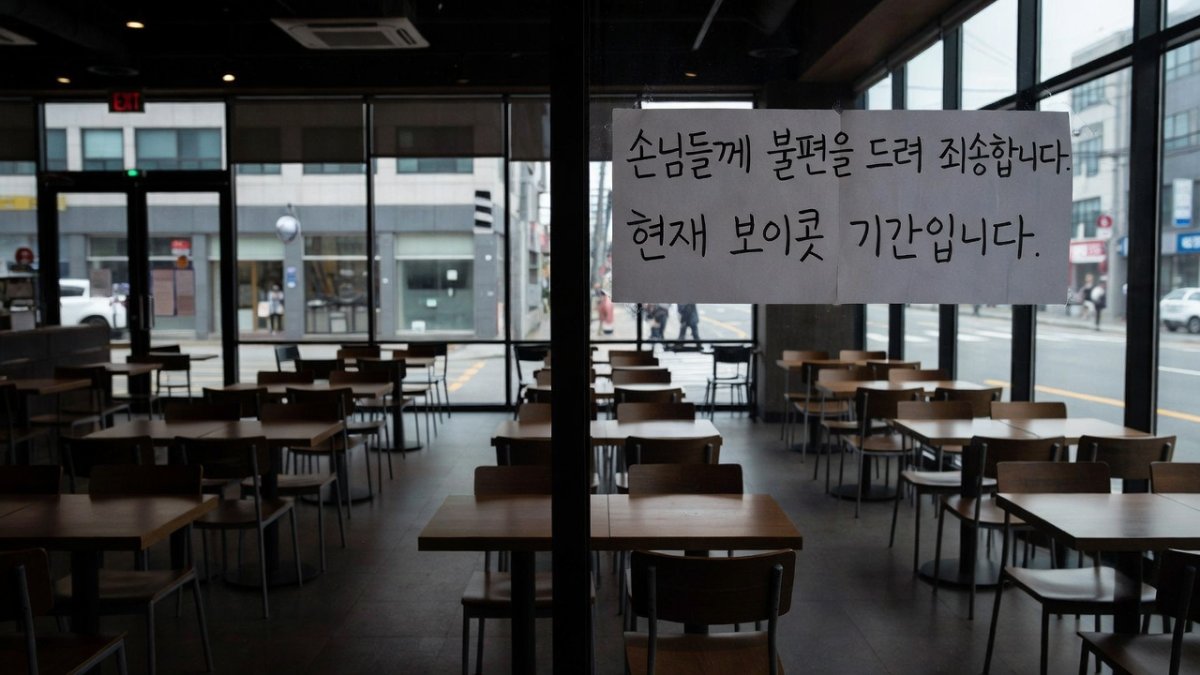
Market data captured the scale of the commercial damage. Card payment volumes at Starbucks outlets fell 26 percent within a single week, and overall May card payments dropped 10 percent month-on-month. Customers began demanding refunds from an estimated 400 billion won (approximately $260 million) held in prepaid Starbucks cards. The Defense Ministry suspended its partnership with the chain, and multiple government agencies curtailed official dealings with the company.
Political Mobilization and Electoral Timing
The boycott intersected directly with South Korea's local elections, held on 3 June 2026. Democratic Party of Korea (DPK) leader Jung Chung-rae publicly instructed party members and campaign staff to avoid Starbucks, warning that patronage of the chain would send an inappropriate signal to voters. The DPK's Seoul mayoral candidate, Chong Won-o, issued an internal ban on Starbucks, requiring staff to remove any Starbucks-branded items from campaign offices. Minor party figures, including Progressive Party lawmaker Son Sol and Justice Party Seoul mayoral candidate Kwon Young-kook, posted boycott calls on social media.
President Lee Jae-myung weighed in forcefully, describing those responsible for the campaign as "low-class peddlers" and raising the prospect of legal measures against Ilbe and similar platforms that propagate discredited historical narratives. The political response elevated the boycott from a corporate scandal to a matter of national policy debate, reinforcing the legal and political consensus around protecting the legacy of the democratization movement.
The Anatomy of Korean Consumer Boycotts: Why They Persist
What distinguishes the Starbucks boycott from similar campaigns in other markets is its persistence. Weeks after the initial incident, consumers continued to smash branded tumblers in protest videos shared on social media, demand refunds on stored-value cards, and apply social pressure to public figures photographed in Starbucks locations. Actor Jung Min-chan stepped down from a musical production after photographs of him inside a Starbucks circulated online. The Seoul Jazz Festival removed its planned Starbucks booth after backlash from performers and attendees. Cho Youngho, a political scientist at Sogang University, attributes this persistence to generational attitudes: "For people who supported democratization in the 1980s and 1990s, now in their forties and fifties, the idea of commercializing, mocking, or trivializing 5/18 is simply unacceptable."
South Korea's boycott culture has a well-documented track record. Earlier campaigns — from the 2017 China-led Lotte boycott over THAAD deployment to domestic movements targeting Japanese products during the 2019 trade dispute — demonstrated unusual organizational capacity and endurance. The Starbucks campaign shares these characteristics, amplified by social media, coordinated offline protests, and a legal framework that provides avenues for criminal complaint against perceived historical defamation.
Implications for Multinational Operations in Korea
Korea represents Starbucks' third-largest market globally, with more than 2,100 stores. The speed and severity of the institutional response — promotion withdrawn, CEO terminated, chairman booked as a criminal suspect — within days rather than weeks offers a sharp lesson for foreign brands operating in the country. Reports indicate that the offending "thwack on the desk" slogan was generated by an AI tool and that some managers who approved the campaign never reviewed the final marketing materials. Such procedural gaps carry disproportionate risk in a market where historical sensitivities remain politically active and civil society is both organized and legally empowered.
The episode also raises broader questions about chaebol governance. Shinsegae Group's handling of the crisis — from initial delay in acknowledging the offense to the televised apology — reflected patterns seen in earlier chaebol controversies, where public accountability measures follow only after sustained pressure from civil society and political actors. As South Korea continues to grapple with the legacy of authoritarianism in the wake of Yoon's 2024 martial law declaration, the standards of corporate historical awareness are likely to become more, not less, stringent.
Looking Ahead
The legal and commercial consequences of the Tank Day affair are still unfolding. Police investigations into Chung and Son continue, and potential prosecution under the 2021 special act on Gwangju defamation could set new precedents for corporate accountability regarding historical memory. The boycott's longevity — sustained for weeks after the initial incident — suggests that Korean consumers are increasingly willing to use purchasing power as a tool of political and historical advocacy. For multinational corporations and domestic chaebol alike, the bar for culturally competent marketing in South Korea has been permanently raised. The Starbucks Tank Day episode will likely be studied as a case study in how quickly reputation capital can be destroyed when institutional safeguards fail to account for the lived historical consciousness of Korean society.
By Prof. David Park, Staff Writer
This article was produced with AI-assisted research and editorial support. Reporting is based on sources cited in the article.
What's Your Reaction?
 Like
0
Like
0
 Dislike
0
Dislike
0
 Love
0
Love
0
 Funny
0
Funny
0
 Wow
0
Wow
0
 Sad
0
Sad
0
 Angry
0
Angry
0

East Asia/Technology Correspondent at Global1.News. Seoul-based voice covering Korean politics, technology, business, and culture. Analyzes how technology and geopolitics intersect across East Asia.









Comments (0)