
Japan's Lunar Push: Artemis II and Toyota Rover Plans
Artemis II: A Historic Return to the Moon The Artemis II mission marked a notable milestone in crewed lunar exploration when it launched on April 1, 2026. With a crew of four, the flight represented the first time astronauts traveled to the vicinity of the Moon since the final Apollo mission in 1972. The spacecraft splashed down on April 10 after completing its trajectory, havi
Artemis II: A Historic Return to the Moon
The Artemis II mission marked a notable milestone in crewed lunar exploration when it launched on April 1, 2026. With a crew of four, the flight represented the first time astronauts traveled to the vicinity of the Moon since the final Apollo mission in 1972. The spacecraft splashed down on April 10 after completing its trajectory, having established a new record for distance traveled by a crewed vehicle from Earth.
During the mission, more than 7,000 lunar images were captured, providing fresh data on surface features and lighting conditions. Analysts note that these visuals could support planning for future landings and resource mapping. The flight also tested life-support systems and navigation protocols under extended deep-space conditions, offering practical lessons for sustained operations beyond low-Earth orbit.
From a broader perspective, Artemis II underscores renewed international interest in lunar return. Japan’s participation through hardware contributions and astronaut opportunities aligns with longstanding US-Japan security and technology cooperation. In the Asia-Pacific context, such missions occur alongside China’s parallel lunar ambitions, highlighting both competitive and collaborative dynamics in regional space activities.
Observers emphasize that while the mission achieved its primary objectives, translating short-duration flights into routine lunar presence will require incremental technological advances. Japan’s involvement supplies specialized expertise in environmental controls and robotics, areas where domestic industry has accumulated decades of experience through the International Space Station program.
Japan Forges Deeper Space Partnership with NASA
In April 2024, NASA and the Japanese government formalized an agreement that expanded bilateral cooperation on lunar exploration. NASA Administrator Bill Nelson and MEXT Minister Masahito Moriyama signed the document, under which Japan will supply a pressurized rover in exchange for two seats for Japanese astronauts on future Artemis landing missions. This arrangement builds on earlier joint work aboard the ISS Kibo module.
The partnership integrates with Japan’s wider technology strategy, including Society 5.0, which envisions seamless fusion of cyber and physical systems. Lunar surface operations demand precisely the kind of autonomous robotics and data integration that Japanese firms have refined in terrestrial applications. METI’s industrial policy further supports component supply chains for space hardware, linking semiconductor advancements to radiation-hardened electronics required for deep-space missions.
Regional dynamics add another layer. Strengthened US-Japan space ties serve as a counterbalance to China’s growing lunar program while leaving room for selective scientific exchanges. MEXT’s fiscal 2026 budget increase for lunar programs reflects domestic political consensus on maintaining technological parity in this domain. The agreement also positions Japanese industry to participate in Gateway station development, where environmental control and life-support systems are slated for Japanese provision.
Toyota Lunar Cruiser: Engineering for Extreme Environments
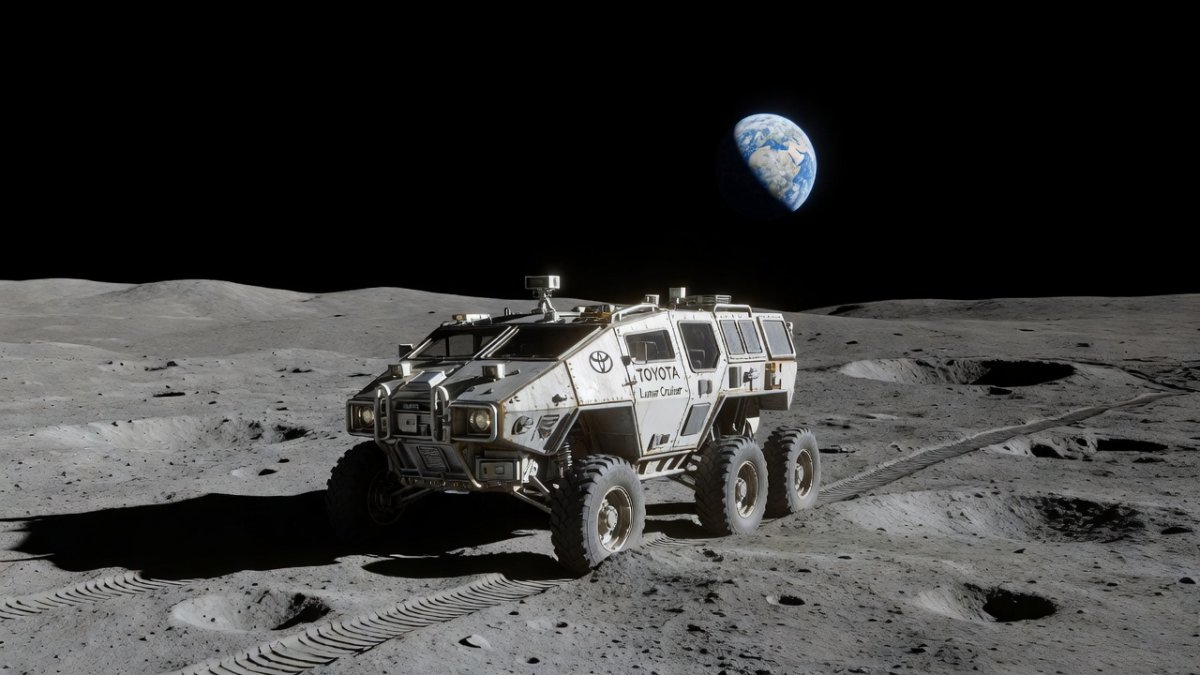
Toyota and JAXA have collaborated on the Lunar Cruiser, a pressurized rover concept powered by hydrogen fuel cells and modeled after the company’s terrestrial Land Cruiser lineage. The vehicle is designed for a range exceeding 10,000 kilometers, enabling extended traverses across the lunar surface. Current planning targets delivery around 2029, with crewed operations envisioned for the early 2030s.
Engineers face substantial challenges adapting automotive technologies to vacuum, extreme temperature swings, and abrasive regolith. Toyota’s experience with fuel-cell durability and thermal management offers transferable know-how, yet lunar gravity at one-sixth of Earth’s introduces new variables for suspension and traction systems. Prototypes undergo iterative testing to validate performance under simulated conditions.
The project exemplifies corporate Japan’s strategy of leveraging core competencies in mobility and energy systems for space applications. It also connects to national robotics leadership, as autonomous navigation features could later support terrestrial disaster-response vehicles. In the Asia-Pacific setting, successful demonstration of such a rover would reinforce Japan’s reputation as a reliable partner in high-technology domains amid intensifying regional competition.
Lower-Gravity Research: Japan's Scientific Contribution
Japanese researchers have conducted extensive studies on physiological effects of reduced gravity through experiments in the ISS Kibo module. These investigations examine bone density loss, muscle atrophy, and cardiovascular changes, generating data relevant to long-duration lunar stays. Findings inform habitat design and crew health protocols for Artemis-era missions.
Kyoto University and Kajima Corporation have proposed “The Glass,” an artificial-gravity concept that rotates habitats to mitigate health risks. The approach combines architectural engineering with medical research, illustrating cross-sector collaboration typical of Japan’s innovation ecosystem. Such concepts remain at the conceptual stage, requiring further validation before operational deployment.
Integration with MEXT-funded programs ensures continuity between basic science and applied technology development. Results from these studies also feed into Society 5.0 objectives by advancing remote health-monitoring systems that could benefit aging populations on Earth. In the wider geopolitical context, shared scientific data strengthens US-Japan interoperability while offering potential avenues for limited cooperation with other spacefaring nations.
JAXA's Precision Landing Legacy
JAXA's SLIM spacecraft achieved a precision landing on the Moon in January 2024, making Japan the fifth nation to accomplish a soft landing. The "Moon Sniper" mission demonstrated touchdown accuracy within a 100-meter target ellipse, a technical achievement that reduces risks for future resource prospecting and infrastructure placement.
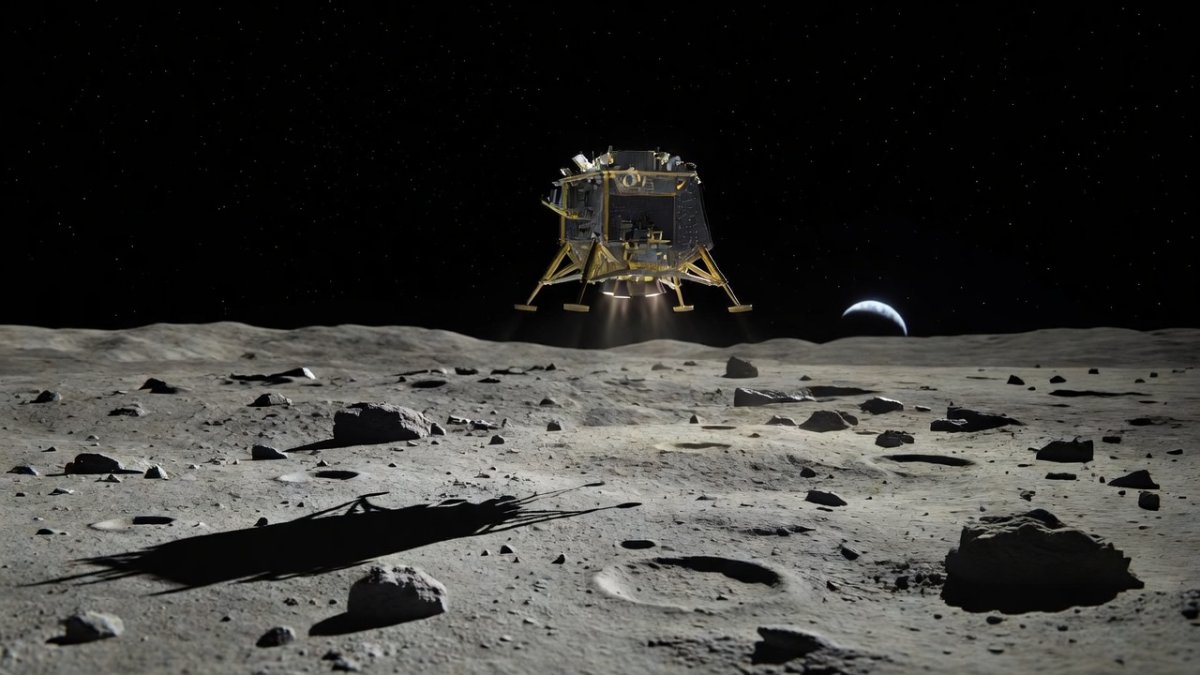
This success builds on JAXA’s cumulative experience with asteroid sample-return missions and satellite technology. Precision landing capability directly supports Artemis objectives by enabling safer delivery of cargo and crewed assets near scientifically interesting sites. Data from SLIM continues to be analyzed for insights into descent dynamics and surface interaction.
The achievement also enhances Japan’s standing in the Asia-Pacific space community. While China pursues its own landing programs, JAXA’s demonstrated reliability strengthens the case for expanded international participation in lunar activities. Continued investment through MEXT budgets aims to sustain this trajectory of incremental capability growth.
Industrial and Economic Implications for Japan
Japan’s lunar initiatives intersect with national strategies in semiconductors, robotics, and advanced manufacturing. Components developed for space environments often migrate to terrestrial sectors, supporting METI goals of high-value export industries. The Toyota-JAXA rover project, for instance, accelerates hydrogen technology maturation with potential automotive and stationary power applications.
Supply-chain participation by Japanese firms in Gateway and Artemis hardware creates skilled employment and maintains technological sovereignty in critical domains. Fiscal 2026 budget allocations signal sustained government commitment, yet long-term returns depend on successful technology transfer and commercial follow-on opportunities.
Within the Asia-Pacific framework, these programs reinforce alliance interoperability with the United States while positioning Japan as a preferred partner for emerging space economies. Competition with China’s state-backed efforts underscores the importance of maintaining pace in both public and private investment.
The Road Ahead: What to Watch For
Upcoming milestones include further development of the Lunar Cruiser prototype and integration of Japanese life-support systems for the Gateway station. NASA’s March 2026 decision to pause certain Gateway elements in favor of accelerated lunar base planning may shift timelines, requiring Japanese partners to adapt accordingly.
Attention will focus on whether MEXT and METI can coordinate sustained funding amid competing domestic priorities. Progress on artificial-gravity concepts and lower-gravity health research will influence habitat architecture decisions later this decade. International astronaut selection processes under the 2024 agreement also merit monitoring.
Ultimately, Japan’s lunar engagement reflects a calculated extension of established strengths in robotics, materials, and systems integration. Success hinges on disciplined execution and continued alignment between government agencies, industry, and academic institutions within the evolving US-Japan alliance structure.
By Kenji Tanaka, Staff Writer
This article was produced with AI-assisted research and editorial support. Reporting is based on sources cited in the article.
What's Your Reaction?
 Like
0
Like
0
 Dislike
0
Dislike
0
 Love
0
Love
0
 Funny
0
Funny
0
 Wow
0
Wow
0
 Sad
0
Sad
0
 Angry
0
Angry
0

Japan Correspondent at Global1.News. Tokyo-based voice covering Japanese politics, technology, economy, and culture. Tracks the intersection of tradition and innovation in one of the world's most dynamic societies.













Comments (0)