
Venezuela Twin Quakes Kill Hundreds, Trigger Regional Aid
The earth beneath Venezuela's central coast did not shake once. It ripped apart twice in 45 seconds. On the evening of June 24, 2026, twin earthquakes — a magnitude 7.1 foreshock followed by a 7.5 mainshock — turned the coastal state of La Guaira into a graveyard of collapsed concrete, shattered hospitals, and thousands of displaced families racing against the closing golden wi
The earth beneath Venezuela's central coast did not shake once. It ripped apart twice in 45 seconds. On the evening of June 24, 2026, twin earthquakes — a magnitude 7.1 foreshock followed by a 7.5 mainshock — turned the coastal state of La Guaira into a graveyard of collapsed concrete, shattered hospitals, and thousands of displaced families racing against the closing golden window of survival.
Venezuela's Twin Earthquake Catastrophe: Up to 920 Dead as Hospitals Collapse and International Aid Floods In
Caracas, La Guaira, Venezuela — June 27, 2026 —
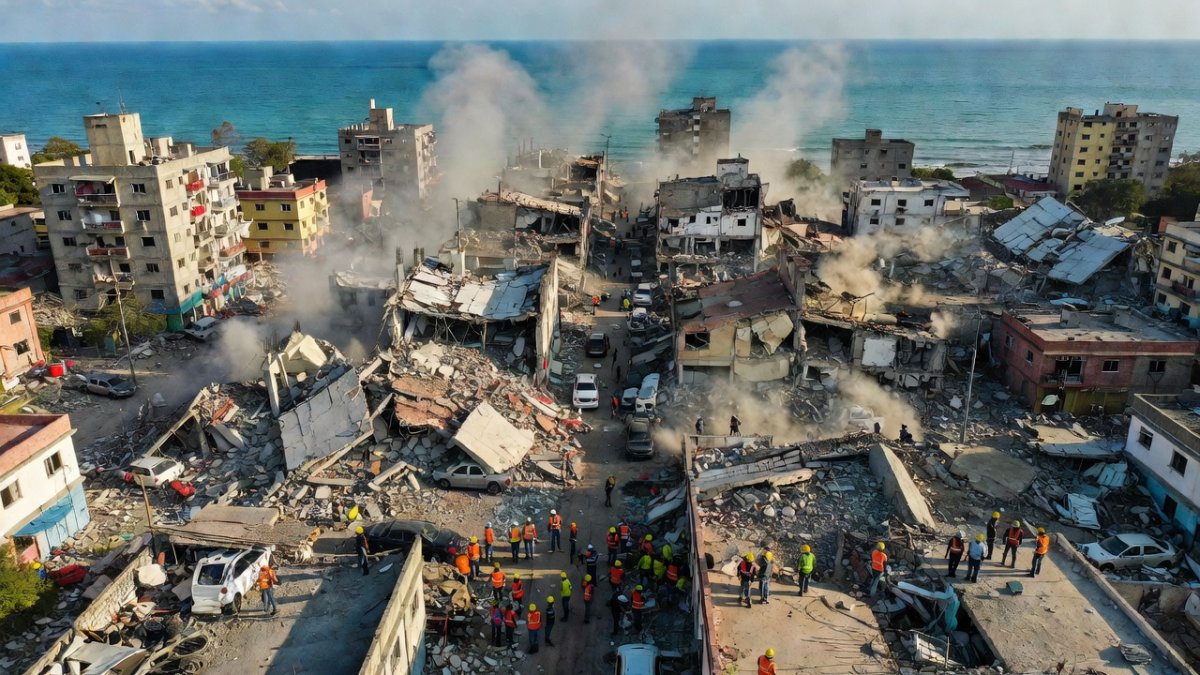 Caracas, June 25, 2026 —
Twin Seismic Shock: How Venezuela's Coast Collapsed in 45 Seconds
The earth beneath Venezuela's central coast convulsed twice in rapid succession on June 24, 2026, at 6:04 and 6:05 p.m. local time. A magnitude 7.1–7.2 foreshock struck first, followed 45–60 seconds later by the 7.5 mainshock. Both events originated at shallow depths of 10–22 km near San Felipe in Yaracuy state and extended into Carabobo, close to Yumare and Morón. The combined energy flattened more than 250 buildings across La Guaira, declared a disaster zone within hours, and ripped through Caracas neighborhoods including Palos Grandes and Altamira.
Funvisis recorded the sequence as one of the most destructive shallow events in the Caribbean basin this century. Power lines snapped as Corpoelec grids failed across three states, plunging hospitals and rescue centers into darkness. The Ministry of Health immediately activated emergency protocols, yet the scale overwhelmed every prepared contingency. Official tallies later confirmed 589 deaths according to Delcy Rodríguez, while Jorge Rodríguez of the National Assembly cited 920 fatalities, reflecting the chaos of body recovery in collapsed structures. Between 2,980 and 3,360 people suffered injuries, and thousands more found themselves displaced as entire blocks pancaked into rubble. The 72-hour golden window for trapped survivors began closing almost immediately under tropical heat and aftershock conditions.
Hospitals at the Breaking Point: Perez Carreno and the Medical Emergency
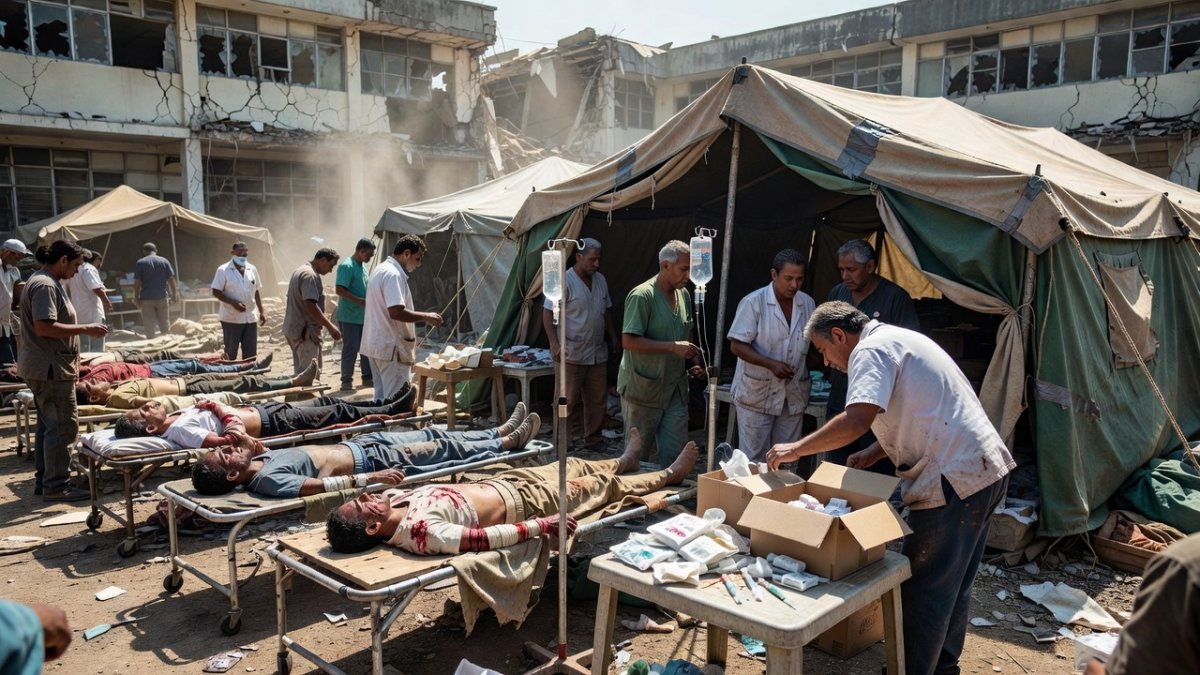
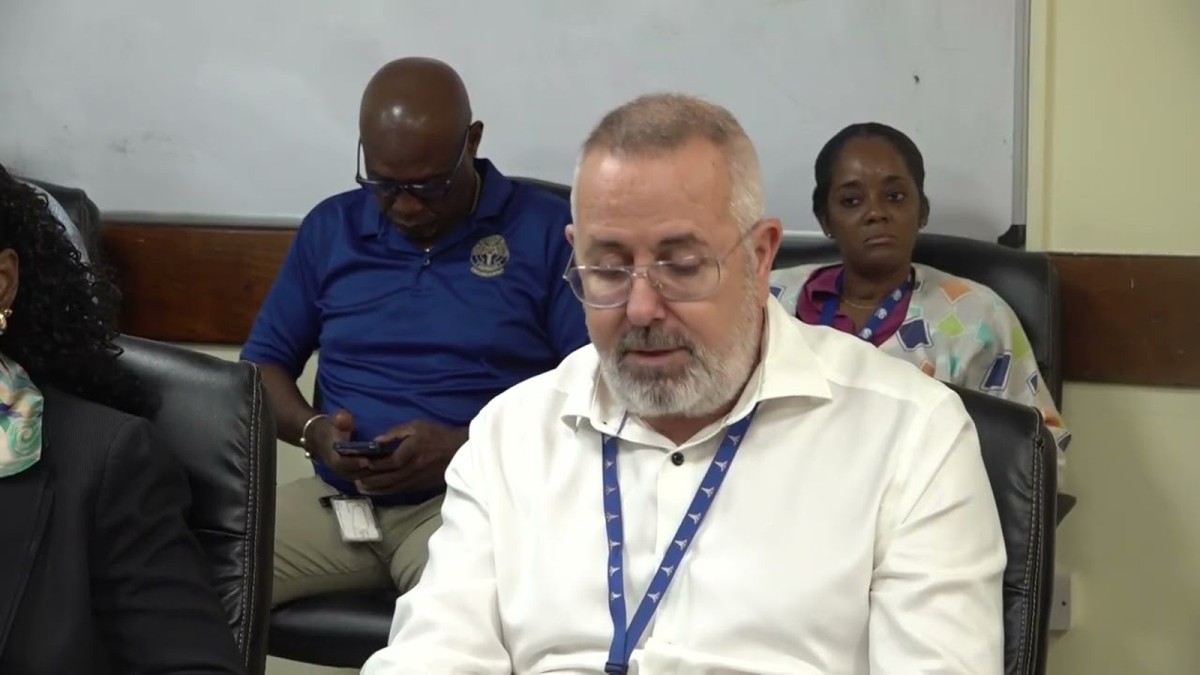
Miguel Pérez Carreño Hospital in Caracas became the epicenter of Venezuela's medical catastrophe. Its laboratory ceased functioning within the first hour, while critical shortages of antibiotics, IV fluids, anesthetics, ventilators, and Ambu bags left surgeons unable to operate on crush injuries and compound fractures. Staff issued urgent public appeals for blood donors as the wounded arrived by the hundreds. Eight hospitals across the affected region sustained structural damage, further reducing capacity at a time when the Ministry of Health estimated thousands required immediate surgical intervention.
Chronic underfunding of the Venezuelan health system, documented for years by regional health observatories, turned a natural disaster into a prolonged humanitarian crisis. Pre-existing deficits in generator fuel, surgical gloves, and sterile water meant that even arriving international teams encountered facilities operating at 30 percent functionality. Nurses described patients dying on gurneys while waiting for imaging that no longer existed. The Ministry of Health coordinated triage centers in parking lots, yet the absence of basic consumables forced doctors to reuse limited supplies under candlelight. By dawn on June 25, the death toll inside Pérez Carreño alone had climbed past 180, underscoring how decades of disinvestment magnified every aftershock's human cost.
Aftershocks Compound Trauma: Mental Health and Displacement
More than 200 aftershocks, including multiple events between 4.9 and 5.4 magnitude, continued to rattle the Yaracuy-Carabobo corridor monitored around the clock by Funvisis. Each tremor reopened wounds, both physical and psychological, among survivors huddled in makeshift camps. Thousands displaced from La Guaira and Caracas now shelter in sports stadiums and schoolyards, where sanitation failures and limited access to clean water accelerate secondary health risks. Mental health teams from the Ministry of Health report rising cases of acute stress disorder, particularly among children who witnessed buildings collapse onto family members.
Funvisis seismologists warn that the aftershock sequence could persist for weeks, prolonging displacement and deepening collective trauma across the Andean-Caribbean seismic corridor. Community leaders describe entire neighborhoods where residents refuse to re-enter remaining structures, fearing another collapse. The psychological toll compounds the physical one: many injured patients at Pérez Carreño Hospital exhibit signs of post-traumatic stress that hinder recovery. Regional experts note that similar patterns followed the 2010 Haiti and 2017 Mexico quakes, where unaddressed mental health needs extended suffering long after rubble was cleared. Venezuela now faces the same prolonged recovery horizon.
International Aid Arrives: A Race Against the Golden Window
International assistance mobilized within hours, yet the 72-hour golden window for live rescues was closing fast by June 26. Mexico dispatched 261 rescuers with heavy equipment. India launched Operation Amistad, sending a C-17 aircraft carrying a field hospital and 41-member medical team. Brazil contributed another field hospital, while the United States pledged $150 million alongside specialized rescue teams. Colombia activated USARCOL1 urban search-and-rescue units. The United Arab Emirates transferred $10 million, and teams from Russia, China, Cuba, and El Salvador arrived with doctors and supplies.
Starlink terminals provided critical free communications when Corpoelec power failures silenced conventional networks. Despite these efforts, opposition figures criticized delays in customs clearance for blocked aid shipments. The Ministry of Health coordinated distribution from Maiquetía's closed Simón Bolívar International Airport, now serving solely as a humanitarian hub. Every hour lost reduced survival probabilities for those still trapped beneath pancaked concrete. Regional solidarity mechanisms developed after past Andean quakes proved essential, yet Venezuela's pre-existing infrastructure gaps limited how quickly even the most sophisticated foreign teams could reach victims in time.
Political Tensions: Governance, Underfunding, and the Response Divide
Acting interim president Delcy Rodríguez declared a nationwide state of emergency and suspended all classes as the death toll climbed. Her administration coordinated with Funvisis and the Ministry of Health to prioritize search-and-rescue corridors. However, opposition leaders accused the government of politicizing aid entry points and failing to maintain basic hospital stockpiles despite years of warnings. The chronic underfunding of Venezuela's health system, long criticized by Latin American medical associations, left facilities like Pérez Carreño Hospital without reserves of blood products or antibiotics when the twin shocks struck.
These governance fractures echo patterns seen across seismically active Latin American nations where political polarization slows disaster response. While Delcy Rodríguez appealed for unity, critics highlighted how pre-quake budget cuts to emergency services amplified casualties. The National Assembly's higher fatality figure of 920 versus the executive's 589 underscored deepening institutional distrust. As aftershocks continued, public frustration grew over perceived inequities in aid distribution between Caracas districts and poorer coastal communities. Rebuilding trust alongside infrastructure now stands as a parallel national emergency.
What This Means for Latin America: Seismic Risk and Regional Solidarity
The Venezuela quakes underscore the shared seismic vulnerability stretching from the Andes through the Caribbean plate boundary. Funvisis data reveal that shallow events like these can devastate densely populated coastal zones within seconds, a risk faced by Colombia, Ecuador, Peru, and Central American nations. The rapid mobilization of Mexican, Colombian, Brazilian, and Cuban teams demonstrates how regional cooperation mechanisms, refined after the 2010 Chile and 2017 Mexico earthquakes, can save lives when activated swiftly. Yet Venezuela's experience also exposes how chronic health-system underfunding turns manageable disasters into prolonged catastrophes.
Starlink's role in restoring communications offers a model for other vulnerable states lacking robust backup infrastructure. Corpoelec's collapse further illustrates the need for seismic hardening of power grids across the region. Latin American institutions must now accelerate joint early-warning investments and standardized hospital resilience protocols. The 2,980–3,360 injured and thousands displaced represent not only Venezuelan suffering but a warning for every capital along the Pacific and Caribbean rims where similar shallow faults lie dormant.
The Bottom Line — What Comes Next
With the golden window closed, attention shifts to long-term recovery, disease surveillance, and rebuilding Venezuela's shattered health infrastructure. The Ministry of Health, supported by arriving Cuban and Indian field hospitals, must address both physical reconstruction and mental health needs amplified by 200-plus aftershocks. International pledges totaling over $160 million plus personnel will prove decisive only if political barriers to aid are removed. For Latin America, the June 24 twin shocks serve as a stark reminder that seismic risk respects no borders and that underfunded health systems multiply every tremor's lethality. Venezuela's next steps will test whether regional solidarity can overcome domestic divisions to prevent further loss of life in one of the hemisphere's most vulnerable zones. By Elena Vasquez, Staff Writer Keywords: Venezuela earthquake, twin quakes 2026, Delcy Rodriguez, Perez Carreno Hospital, Funvisis, La Guaira disaster, international aid Venezuela, seismic risk Latin America, aftershocks Caracas, Miguel Perez Carreno, Starlink Venezuela, golden hour rescue, Corpoelec blackout, Ministry of Health Venezuela
This article was produced with AI-assisted research and editorial support. Reporting is based on sources cited in the article.
What's Your Reaction?
 Like
0
Like
0
 Dislike
0
Dislike
0
 Love
0
Love
0
 Funny
0
Funny
0
 Wow
0
Wow
0
 Sad
0
Sad
0
 Angry
0
Angry
0

Latin America Correspondent at Global1.News. Based in Mexico City, covering politics, economics, energy, and culture across the region. Brings an on-the-ground perspective to stories spanning from the Rio Grande to Patagonia.











Comments (0)