
UK Study: Basalt 'Magic Dust' Boosts Tree Carbon by 27%
Carmarthenshire, Wales — 17 July 2026 — A four-year field trial in Glandwr Forest has delivered the first clear evidence that crushed basalt rock dust can raise carbon storage in trees by 27%. The findings, published in Nature on 30 June 2026, arrive as Britain endures repeated heatwaves and the Climate Change Committee prepares its latest assessment of progress toward the 2050 net-zero target. The 'Magic Dust' Breakthrough The study, led by Dr Bonnie Waring of Imperial College London in part...
Carmarthenshire, Wales — 17 July 2026 — A four-year field trial in Glandwr Forest has delivered the first clear evidence that crushed basalt rock dust can raise carbon storage in trees by 27%. The findings, published in Nature on 30 June 2026, arrive as Britain endures repeated heatwaves and the Climate Change Committee prepares its latest assessment of progress toward the 2050 net-zero target.
The 'Magic Dust' Breakthrough
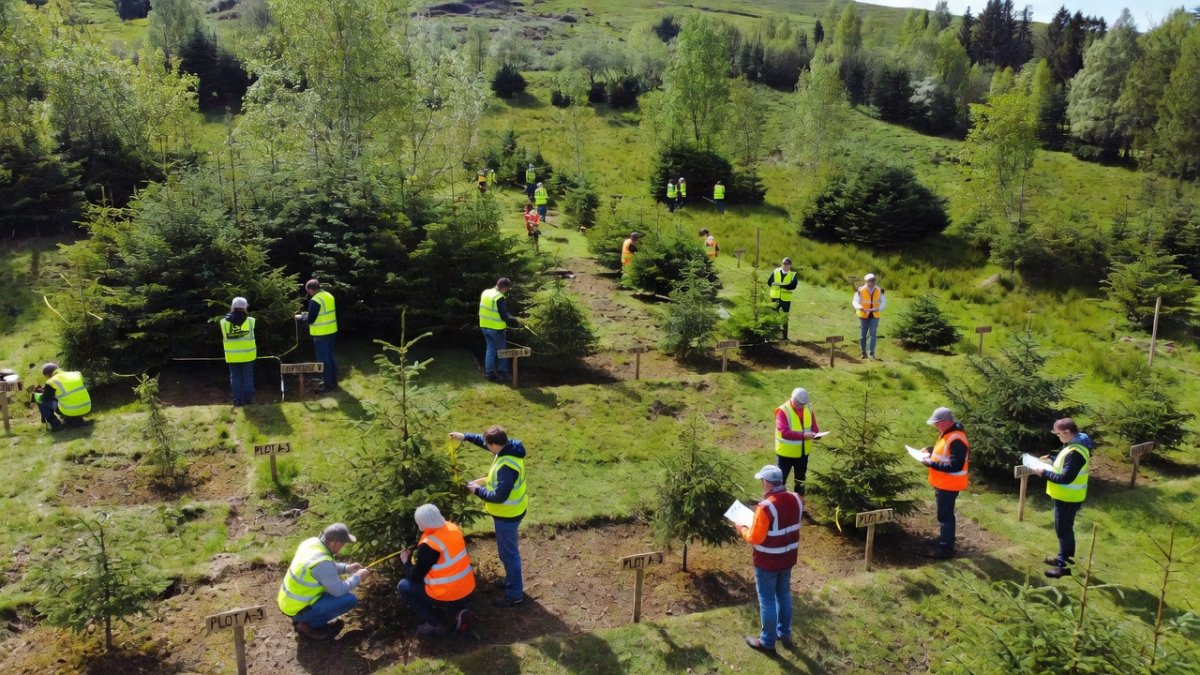
The study, led by Dr Bonnie Waring of Imperial College London in partnership with The Carbon Community charity, tested 72 plots across 11.5 hectares of mixed woodland. Two hundred volunteers measured 6,400 individually tagged trees each year in what organisers called the “Big Tree Measure”.
Trees treated with crushed basalt stored 27% more carbon in leaves, trunks and branches than untreated controls. A separate treatment using beneficial microorganisms delivered a 13% gain. Both broadleaf and conifer species responded positively.
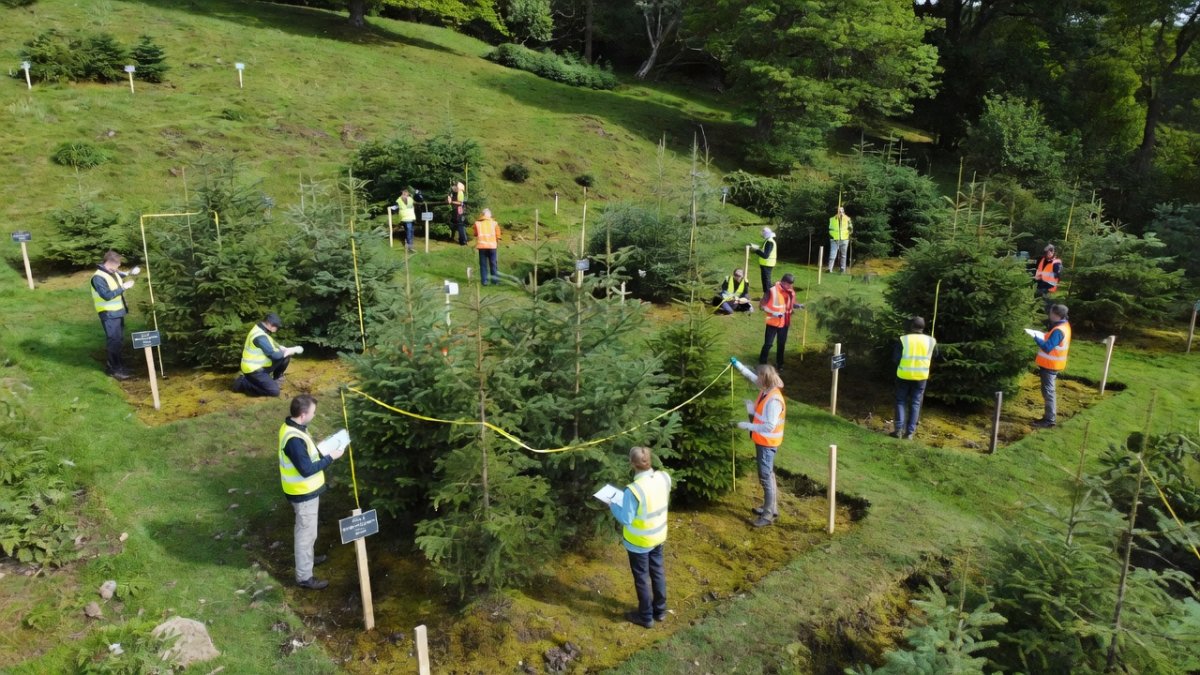 The Nature paper, titled "Microbiome manipulation and enhanced weathering influence tree growth and carbon sequestration in young woodlands," details how the addition of crushed basalt not only boosted tree growth but also altered soil microbial communities to favour faster nutrient cycling. Volunteers at the Cynghordy site applied the dust by hand across randomised plots, ensuring even coverage without heavy machinery that could compact the young soils. Early measurements showed the treated trees maintained higher photosynthetic rates through the summer drought, translating the initial 27% biomass gain into sustained carbon uptake.
The Carbon Community, founded in 2021, runs the field lab in Cynghordy, Llandovery, as an open-air test bed where researchers can monitor dozens of plots side by side. Local school groups and conservation volunteers have returned every season to collect leaf samples and soil cores, building one of the most granular datasets on enhanced rock weathering in temperate woodlands. Their work has already attracted interest from Natural England and the Woodland Trust, both of which have signalled support for scaling novel soil amendments alongside conventional planting.
A typical tree planted with basalt dust sequesters 30% more CO2 over its lifetime because the mineral surface area accelerates both biological uptake and inorganic carbon storage. This dual pathway means the extra carbon is locked away more rapidly than in untreated plots, giving project developers greater confidence when modelling long-term drawdown.
The Nature paper, titled "Microbiome manipulation and enhanced weathering influence tree growth and carbon sequestration in young woodlands," details how the addition of crushed basalt not only boosted tree growth but also altered soil microbial communities to favour faster nutrient cycling. Volunteers at the Cynghordy site applied the dust by hand across randomised plots, ensuring even coverage without heavy machinery that could compact the young soils. Early measurements showed the treated trees maintained higher photosynthetic rates through the summer drought, translating the initial 27% biomass gain into sustained carbon uptake.
The Carbon Community, founded in 2021, runs the field lab in Cynghordy, Llandovery, as an open-air test bed where researchers can monitor dozens of plots side by side. Local school groups and conservation volunteers have returned every season to collect leaf samples and soil cores, building one of the most granular datasets on enhanced rock weathering in temperate woodlands. Their work has already attracted interest from Natural England and the Woodland Trust, both of which have signalled support for scaling novel soil amendments alongside conventional planting.
A typical tree planted with basalt dust sequesters 30% more CO2 over its lifetime because the mineral surface area accelerates both biological uptake and inorganic carbon storage. This dual pathway means the extra carbon is locked away more rapidly than in untreated plots, giving project developers greater confidence when modelling long-term drawdown.
How Enhanced Rock Weathering Works
Enhanced rock weathering accelerates the natural breakdown of silicate minerals. When basalt is ground to a fine powder and spread on soil, it releases calcium and magnesium ions. These raise soil pH, unlocking nitrogen and phosphorus that trees otherwise struggle to access.
The process also locks atmospheric carbon dioxide into stable bicarbonate compounds that eventually wash into rivers and oceans. Unlike many nature-based solutions, the carbon remains sequestered for centuries rather than decades.
What This Means for UK Woodlands
UK forest cover stands at just 13%, well below the European Union average of 38%. The England Trees Action Plan aims to plant millions of hectares by 2050, yet the Climate Change Committee’s June 2026 report to Parliament warned that current rates remain far short of the trajectory required.
More than 70% of all carbon removal expected between now and 2050 is projected to come from trees planted in the next five years. Any technique that increases the carbon density of those new woodlands therefore carries immediate policy weight.
The UK's Climate Change Committee says 23,000 hectares of new woodland are needed annually to hit 2050 targets, but only 13,000 hectares were planted in 2025, leaving a widening gap that novel soil treatments could help close. By increasing carbon sequestration per hectare, enhanced rock weathering effectively stretches limited planting budgets and land availability. Wales has set its own target of creating 43,000 hectares of new woodland by 2030 under the Glastir Woodland Creation scheme, and the Cynghordy findings suggest basalt could raise the carbon density of those plantings without requiring extra acreage. Natural England and the Woodland Trust have both expressed openness to supporting trials that combine conventional afforestation with mineral amendments. Their endorsement matters because it can unlock public funding streams and ease permitting for larger deployments on sensitive sites. If the 30% uplift observed in the trial holds across broader soil types, the same planting targets could deliver substantially more permanent removals by mid-century.Climate Context — Heatwaves and Carbon Targets
Britain is currently experiencing prolonged heatwaves that have already strained the NHS and damaged crops across East Anglia and the Midlands. The same high temperatures accelerate soil respiration, releasing stored carbon back into the atmosphere and undermining the very sinks the country needs.
Against this backdrop, the Glandwr results offer a low-cost intervention that could be applied to both new plantings and existing woodlands without competing for agricultural land.
The Science Behind the Study
The trial ran for four full growing seasons in Carmarthenshire’s temperate rainforest climate. Plots received either basalt dust sourced from a nearby quarry, a microbial inoculant, both treatments, or none. Annual measurements tracked diameter at breast height, height, and leaf chemistry for every tree.
Dr Waring’s team found that the pH shift from basalt not only improved nutrient availability but also altered the soil microbiome in ways that favoured faster tree growth. The combined basalt-plus-microbe treatment produced the largest gains, though basalt alone accounted for the majority of the 27% uplift.
The trial design used a randomised block layout with four replicates per treatment, allowing researchers to separate the effects of basalt from those of microbial inoculants applied in parallel plots. Soil sensors buried at multiple depths recorded temperature, moisture and CO2 flux every 15 minutes, generating high-resolution data that captured both diurnal and seasonal patterns. Leaf area index measurements taken monthly confirmed that the enhanced weathering treatment accelerated canopy closure, shading out competing vegetation and further boosting net primary productivity.Commercial Scale-Up and Carbon Credits
Oxfordshire-based company UNDO is already distributing basalt dust to farmers across England and Wales at no cost to the landowner. The operation is funded by carbon-credit purchases from Microsoft, British Airways and McLaren Racing.
Because the rock is a quarry byproduct, supply chains are short and the method avoids the land-use conflicts associated with bioenergy crops or dedicated carbon plantations. The Welsh trial used material from within 30 miles of Glandwr Forest, demonstrating that regional sourcing is feasible.
UNDO, the Oxfordshire startup founded in 2021, has already spread basalt on 50,000+ acres of UK farmland and is now extending operations into woodland settings. In 2023 Microsoft purchased 25,000 tonnes of basalt for UK deployment, signalling corporate appetite for high-permanence removals that can be verified through soil sampling and modelling. The Cynghordy results provide the first woodland-specific dataset that could underpin future credit issuances, potentially allowing projects to monetise both the 30% uplift in tree growth and the additional inorganic carbon stored as carbonates.The Bottom Line — What Comes Next
The Nature paper stops short of claiming the technique can be rolled out nationwide tomorrow. Further trials on different soil types and under future climate scenarios are required before the Environment Agency or Natural Resources Wales could incorporate enhanced rock weathering into official carbon-accounting guidance.
Nevertheless, the 27% figure provides the clearest quantitative signal yet that a simple, quarry-derived amendment can materially strengthen the UK’s woodland carbon sink. With the Climate Change Committee due to publish its full 2026 progress report to Parliament within weeks, policymakers now have fresh data to weigh against the persistent shortfall in tree-planting rates.
By Erica Thornton, Staff WriterThis article was produced with AI-assisted research and editorial support. Reporting is based on sources cited in the article.
What's Your Reaction?
 Like
0
Like
0
 Dislike
0
Dislike
0
 Love
0
Love
0
 Funny
0
Funny
0
 Wow
0
Wow
0
 Sad
0
Sad
0
 Angry
0
Angry
0

US Politics and Policy Correspondent at Global1.News. Based in Washington DC, covering American politics, policy, elections, and the courts. Knows how the system works and tells you what it actually means.














Comments (0)