
Venezuela Twin Earthquakes Devastate La Guaira
The Catastrophic Twin Quakes of This Week This week Venezuela faced one of the most severe natural disasters in its recent history when twin earthquakes measuring 7.2 and 7.5 magnitude struck the northern state of La Guaira within 39 seconds of each other on Wednesday. The rapid succession left little time for residents to react, resulting in nearly 800 buildings collapsing acr
The Catastrophic Twin Quakes of This Week
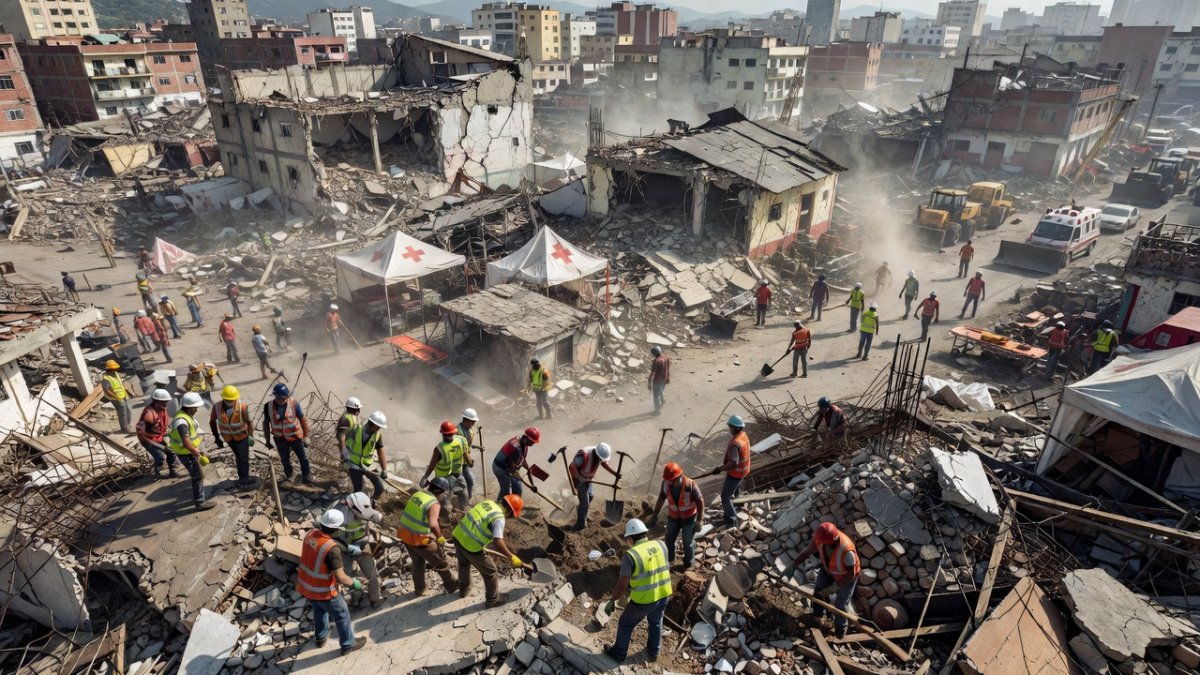
This week Venezuela faced one of the most severe natural disasters in its recent history when twin earthquakes measuring 7.2 and 7.5 magnitude struck the northern state of La Guaira within 39 seconds of each other on Wednesday. The rapid succession left little time for residents to react, resulting in nearly 800 buildings collapsing across the affected zones. Over 1,700 people lost their lives in the initial impact, with tens of thousands still reported missing as search operations continue. The event has drawn attention to how infrastructure vulnerabilities across Latin America can turn natural events into prolonged humanitarian crises.
Communities in La Guaira, Catia La Mar, Caracas, El Junquito, and Caraballeda bore the brunt of the destruction. In these coastal and urban areas, older buildings and informal settlements proved especially susceptible to the shaking. The pattern echoes challenges seen in other regional disasters where rapid urbanization outpaces safety standards. Venezuela's ongoing economic difficulties have compounded the situation, limiting prior investments in earthquake-resistant construction that might have reduced casualties.
Interim President Delcy Rodríguez described the disaster as the most brutal natural catastrophe in the nation's history. Her government quickly mobilized more than 25,000 emergency workers, police, and soldiers to the hardest-hit zones. A commission chaired by National Assembly President Jorge Rodríguez was announced to coordinate damage assessments using a color-coded traffic light system for classifying building safety. Temporary camps are being established for those displaced by the widespread collapses.
The scale of the destruction has prompted comparisons with other Latin American seismic events where response times and resource availability determined outcomes. Here, the combination of high population density near fault lines and limited heavy equipment has slowed progress. Economic resilience remains a pressing concern as the country works to recover from this devastating blow amid existing uncertainties.
Impact on La Guaira and Surrounding Areas
La Guaira, the port city hardest hit by the twin earthquakes, saw entire neighborhoods reduced to rubble within moments on Wednesday. Residents in Catia La Mar and nearby Caraballeda reported similar scenes of collapsed structures and blocked streets. The 39-second interval between the 7.2 and 7.5 magnitude shocks prevented many from reaching safety, contributing to the high death toll exceeding 1,700. Economic realities in Venezuela have long left such coastal communities with aging infrastructure ill-prepared for major seismic activity.
In El Junquito and parts of Caracas, the effects rippled outward as aftershocks began almost immediately. Local accounts highlight how informal housing and limited enforcement of building codes amplified the damage, a recurring issue across Latin America. The loss of homes has displaced thousands, forcing families into temporary arrangements while assessments proceed under the new traffic light classification system.
Delcy Rodríguez's administration has emphasized the need for rapid evaluation of remaining structures to prevent further tragedies. Over 800 buildings have already been confirmed collapsed, with many more at risk. This situation underscores the intersection of environmental hazards and economic constraints that hinder proactive reinforcement of critical infrastructure in the region.
Community leaders in these areas have noted that the disaster arrived at a particularly difficult time for national recovery efforts. The focus now rests on clearing debris and providing basic services, though the economic toll threatens to extend recovery timelines significantly beyond initial projections.
Official Response Led by Delcy Rodríguez
Interim President Delcy Rodríguez directed an immediate large-scale deployment of 25,000 responders including emergency personnel, police, and military units to the northern affected zones. The government established a commission under Jorge Rodríguez to oversee damage evaluations using the color-coded traffic light system for buildings. This structured approach aims to prioritize safe zones for return while identifying structures requiring demolition or reinforcement.
Despite these measures, economic limitations have restricted access to specialized machinery, forcing reliance on manual labor in many locations. The response highlights broader Latin American patterns where state capacity varies widely during crises. Temporary camps are being prepared to shelter displaced families from La Guaira, Catia La Mar, and surrounding communities.
Coordination between national authorities and local responders has been essential in the first days following the Wednesday quakes. Delcy Rodríguez has stressed the unprecedented nature of the event, calling for unified efforts to address both immediate needs and long-term rebuilding. The economic backdrop continues to influence the pace at which resources can be allocated effectively.
Public communication through official channels has focused on safety protocols and available aid points. As assessments continue, the traffic light system provides a practical tool for managing risks in densely populated urban centers like Caracas and El Junquito.
Residents Taking Matters Into Their Own Hands
In La Guaira, residents turned to crowbars, mallets, pickaxes, and even bare hands to search for survivors trapped under collapsed buildings. Ruben Rojas, a 32-year-old electrician, described how civil protection teams lacked proper equipment, forcing everyone to work manually in the same manner. This grassroots effort reflects community solidarity that often emerges in Latin American disasters when official resources fall short.
Carolyn Zerpa, 39, joined neighbors in digging for her father and brother in the rubble of their home. Similar scenes unfolded in Catia La Mar where locals expressed frustration over delayed arrival of heavy machinery. Zuly Marín shared her grief over losing her niece and brother-in-law, noting that earlier intervention might have saved additional lives.
These community actions have complemented the 25,000 official responders deployed by the government. Economic constraints in Venezuela have historically limited stockpiles of rescue tools, pushing citizens to improvise during crises. The pattern mirrors experiences in other regional events where local initiative fills critical gaps.
Residents in El Junquito reported seeing few public officials in the immediate aftermath, reinforcing reliance on neighborhood networks. Such solidarity has proven vital in sustaining search operations amid the challenging conditions created by the twin earthquakes.
Stories of Hope Amid the Rubble
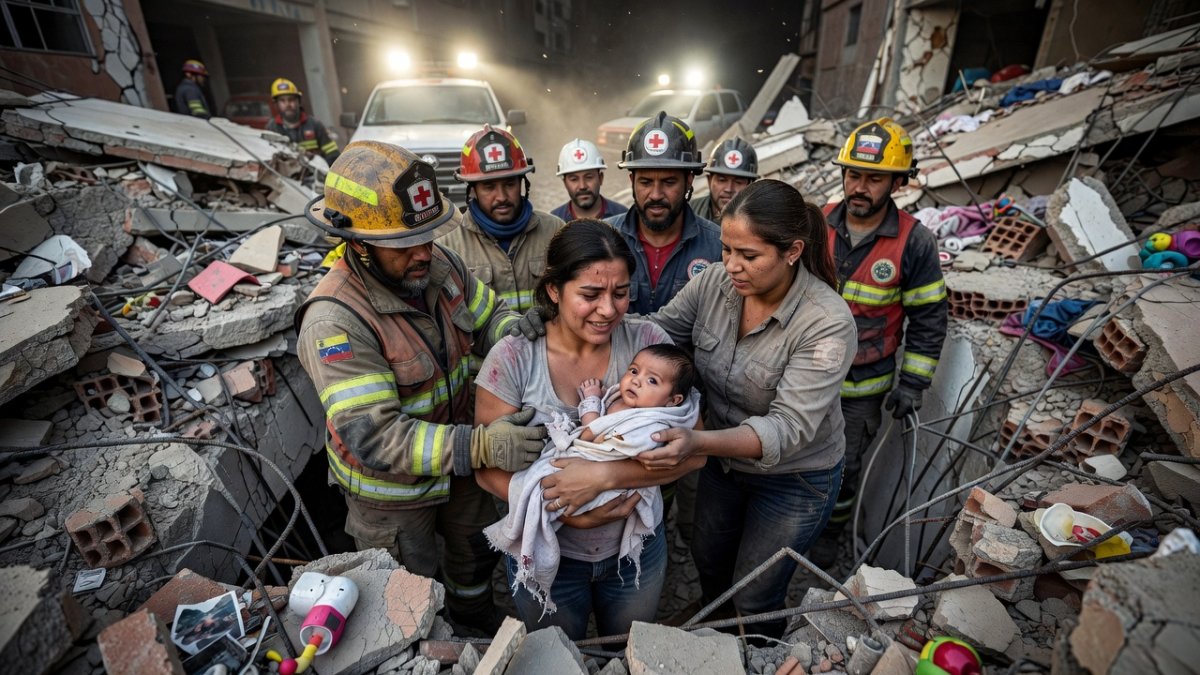
One of the most uplifting moments came with the rescue of 18-day-old baby Juan David from an eighth-floor apartment in La Guaira. His mother Dayana Patino and brother heard his cries, leading to a coordinated effort that freed the infant after hours trapped. Husband Gerson watched the operation unfold, later stating that seeing his son felt like being born again. The footage quickly spread as a symbol of resilience.
In another remarkable case, Salvadoran rescue teams working alongside Mexican and Venezuelan counterparts pulled 21-year-old Aaron Levi Cantillo Vargas from the debris after more than 100 hours. President Nayib Bukele highlighted the international collaboration that made the extraction possible. These stories stand in contrast to the widespread loss reported across the affected areas.
Community members like Zuly Marín and Carolyn Zerpa have balanced personal grief with continued participation in recovery work. The human dimension of the disaster reveals both profound sorrow and determination. Economic hardships have not diminished the willingness of neighbors to support one another through the crisis.
Such narratives offer brief respite from the scale of destruction that claimed over 1,700 lives. They also illustrate how individual acts of courage intersect with larger regional themes of endurance in the face of repeated environmental and economic pressures.
Persistent Aftershocks Shaking the Region
More than 500 aftershocks have continued to rattle northern Venezuela since the initial twin earthquakes on Wednesday. A magnitude 4.6 tremor on Monday struck La Guaira and Caracas once again, heightening anxiety among residents already dealing with collapsed structures. These ongoing events have complicated search and rescue operations in Catia La Mar and El Junquito.
The frequency of aftershocks has forced authorities to maintain heightened alert status while the color-coded traffic light assessments proceed. Economic recovery efforts face additional setbacks as each new shake risks further damage to weakened buildings. Regional patterns show that prolonged seismic sequences often extend the humanitarian impact well beyond the primary event.
Delcy Rodríguez's government has incorporated aftershock monitoring into its commission's work under Jorge Rodríguez. Temporary camps are being reinforced to withstand potential additional tremors. The situation underscores the need for sustained preparedness across Latin America where seismic zones overlap with vulnerable populations.
Residents remain on edge as the aftershocks persist, affecting daily routines and delaying returns to homes deemed marginally safe. The cumulative stress adds to the economic strain already present in the country.
Global Aid Flows to Venezuela
The United States increased its pledge to more than $300 million in assistance, providing emergency medical care, food, water, sanitation supplies, and shelter materials. The United Nations has procured 10,000 body bags to support recovery operations. Rescue teams from Mexico, El Salvador, and Venezuela have worked jointly in the hardest-hit zones including La Guaira.
Gianluca Rampolla Del Tindaro of the UN has coordinated aspects of the international response alongside local efforts. Nayib Bukele's announcement of the successful extraction of Aaron Levi Cantillo Vargas highlighted the value of cross-border cooperation. This aid arrives against the backdrop of Venezuela's economic challenges that limit domestic stockpiles.
Distribution of resources has focused on temporary camps and medical facilities serving displaced families from Caracas and surrounding areas. The scale of international involvement reflects recognition of the disaster's magnitude within Latin American contexts. Economic resilience will depend partly on how effectively this support integrates with national recovery plans.
Continued coordination remains essential as aftershocks and the high number of missing persons sustain demand for external assistance. The response demonstrates how regional and global partnerships can address immediate needs while longer-term economic rebuilding unfolds.
Lessons for Latin America's Disaster Preparedness
The Venezuela twin earthquakes have exposed critical gaps in infrastructure resilience that affect multiple countries across the region. Aging buildings in coastal cities like La Guaira and Catia La Mar collapsed rapidly under the 7.2 and 7.5 magnitude shocks, a reminder of similar vulnerabilities elsewhere. Economic constraints have delayed procurement of modern rescue equipment, forcing reliance on manual methods described by Ruben Rojas and others.
Community solidarity has emerged as a consistent strength, with residents in El Junquito and Caraballeda supporting search efforts alongside the 25,000 official responders. The successful rescues of baby Juan David and Aaron Levi Cantillo Vargas illustrate the potential of combined local and international action. Delcy Rodríguez's traffic light system offers one model for managing post-disaster safety assessments.
Political and economic realities continue to shape recovery trajectories, as seen in the timing of this event amid national uncertainty. Regional patterns suggest that sustained investment in preparedness can reduce future losses. The arrival of $300 million in US aid and UN support provides immediate relief while highlighting the need for coordinated long-term strategies.
As aftershocks exceed 500 and recovery extends, Latin American nations can draw insights from Venezuela's experience. Strengthening economic resilience alongside physical infrastructure will be vital for communities facing recurring environmental threats.
By Elena Vasquez, Staff WriterThis article was produced with AI-assisted research and editorial support. Reporting is based on sources cited in the article.
What's Your Reaction?
 Like
0
Like
0
 Dislike
0
Dislike
0
 Love
0
Love
0
 Funny
0
Funny
0
 Wow
0
Wow
0
 Sad
0
Sad
0
 Angry
0
Angry
0

Latin America Correspondent at Global1.News. Based in Mexico City, covering politics, economics, energy, and culture across the region. Brings an on-the-ground perspective to stories spanning from the Rio Grande to Patagonia.














Comments (0)