
World's Only Flying Garuda Sculpture Found in Ang Thong
The discovery of a rare flying Garuda sculpture at Sri Maha Pho Temple has drawn fresh attention to the cultural heritage of Ang Thong province this week. Located in Rong Chang subdistrict of Pa Mok district, the temple holds a stucco figure unlike any other known example in Thailand. The piece sits on the pediment of the refectory building and shows the mythical bird in full f
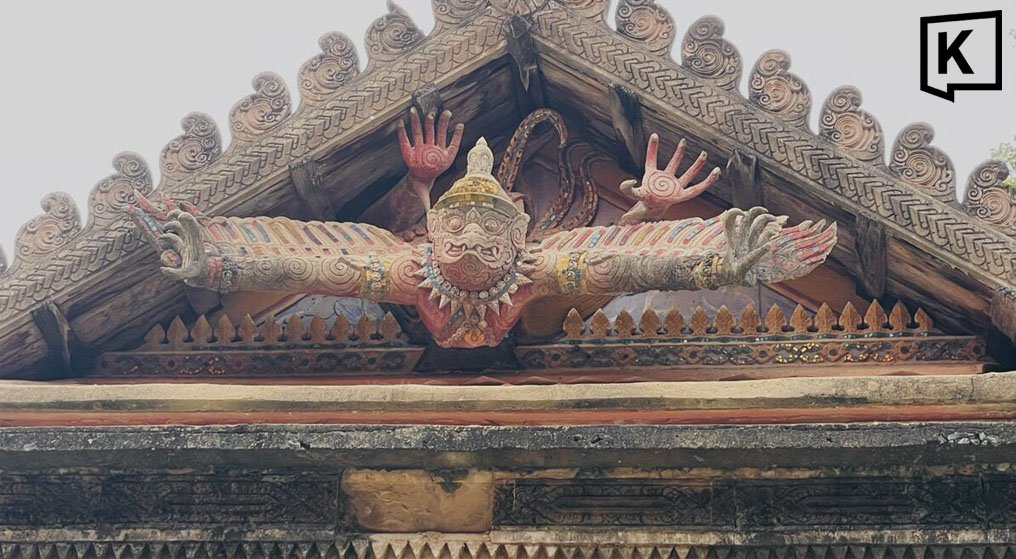
The discovery of a rare flying Garuda sculpture at Sri Maha Pho Temple has drawn fresh attention to the cultural heritage of Ang Thong province this week. Located in Rong Chang subdistrict of Pa Mok district, the temple holds a stucco figure unlike any other known example in Thailand. The piece sits on the pediment of the refectory building and shows the mythical bird in full flight, both feet raised while grasping a naga serpent between its legs.
Flying Garuda sculpture on the pediment of Sri Maha Pho Temple's refectory (Khaosod English)
Local Voices Recall the Sculpture's Creation
Phra Kru Viboon Photharangkan, abbot of Sri Maha Pho Temple and Ecclesiastical Sub-district Head of Bang Sadet, confirmed that the Garuda has remained in place for many decades. Historical records at the temple link the work to the period of a former abbot. The sculpture is estimated to be between sixty and seventy years old.
An 87-year-old lay administrator at the temple shared his direct memory of the carving process. He watched the figure take shape during his youth under Abbot Phra Sansoen. The artisan responsible was a local craftsman named Krit. The reason Krit chose a flying posture instead of the usual seated or standing form remains unknown to the community.
Ancient Settlement Context in Pa Mok District
Former Fine Arts Department director-general Anek Sihamat visited the site and placed the temple within a broader historical setting. The area around Sri Maha Pho Temple formed part of an ancient settlement that dates from the late Ayutthaya period into the early Rattanakosin era. Visible traces include an ancient chedi behind the main buildings and temple bases decorated with Ayutthaya-period stucco crown motifs.
These physical remnants connect present-day Pa Mok district residents to earlier generations who built religious structures along the Chao Phraya River basin. The temple's location in Ang Thong province continues to serve as a focal point for local Buddhist practice and community gatherings.
Traditional Garuda Depictions and the Unique Flying Form
Anek Sihamat noted that royal artisans historically showed Garuda figures in seated or standing postures only. Flying depictions appear extremely rarely in Thai temple art. He described the Sri Maha Pho example as the work of a local folk artisan who created a personal interpretation of the mythical guardian.
The sculpture portrays the Garuda soaring with wings extended and the naga held firmly between its raised feet. This dynamic stance stands apart from the more common static poses found on pediments across central Thailand. The refectory itself carries the inscription Traimit Upatham, marking its role in supporting temple activities.
Protective Symbolism and Royal Connection
Garuda figures placed on temple pediments traditionally protect sacred buildings from harm. They also symbolise divine power and serve as the official royal emblem of the Thai monarchy. The presence of this particular Garuda at Sri Maha Pho Temple therefore links the local community to national symbols of authority and spiritual guardianship.
Residents of Pa Mok district view the sculpture as part of their living heritage. The figure continues to watch over daily activities at the refectory, where monks and lay supporters share meals and observe Buddhist precepts. Its survival through six or seven decades reflects ongoing care by successive generations of temple stewards.
Importance for Thai Cultural Identity and Regional Tourism
The Flying Garuda adds a distinctive element to Ang Thong province's collection of historic religious sites. Visitors interested in Ayutthaya-period architecture and stucco craftsmanship now have an additional reason to travel to Pa Mok district. The temple remains open to the public and continues its role as a centre of Buddhist learning and community life.
For Thai readers across Southeast Asia, the sculpture illustrates how local artisans sometimes departed from royal workshop conventions to express creativity within a sacred context. The story of artisan Krit and the unknown motivation behind the flying posture invites reflection on the relationship between tradition and individual artistic choice in Thai Buddhist art.
Preservation of such pieces supports local identity in Ang Thong province. The temple's abbot and lay administrators maintain the structure as part of their daily responsibilities, ensuring the Garuda remains visible to future visitors. This quiet stewardship connects contemporary Buddhist practice with the artistic legacy of the late Ayutthaya and early Rattanakosin periods.
The Flying Garuda at Sri Maha Pho Temple therefore stands as both a unique artistic achievement and a reminder of the layered history embedded in Thailand's provincial temples. Its location in Rong Chang subdistrict offers residents and travellers alike a tangible link to the protective symbols that have long defined Thai religious architecture.
By Ann Srisawat, Staff WriterThis article was produced with AI-assisted research and editorial support. Reporting is based on sources cited in the article.
What's Your Reaction?
 Like
0
Like
0
 Dislike
0
Dislike
0
 Love
0
Love
0
 Funny
0
Funny
0
 Wow
0
Wow
0
 Sad
0
Sad
0
 Angry
0
Angry
0

Southeast Asia Correspondent at Global1.News. Based in Bangkok, covering Thai and Southeast Asian politics, economy, technology, and culture. Deep regional perspective on one of the world's most dynamic regions.














Comments (0)