
US and Iran Sign Historic Peace Deal at G7 Summit
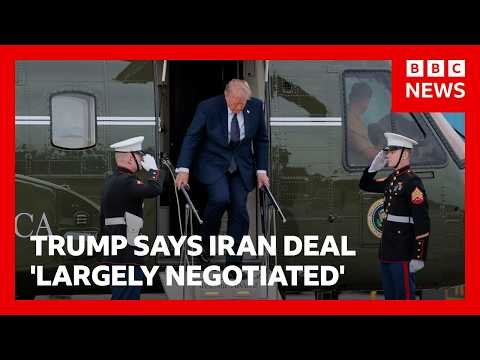
In a recent BBC News report, US President Donald Trump declared the war with Iran effectively over, announcing that a comprehensive peace deal has been signed and will be formally ratified in Geneva this week, marking one of the most consequential shifts in Middle Eastern geopolitics since the end of the Cold War. US and Iran Sign Historic Peace Deal, Strait of Hormuz to Reopen
In a recent BBC News report, US President Donald Trump declared the war with Iran effectively over, announcing that a comprehensive peace deal has been signed and will be formally ratified in Geneva this week, marking one of the most consequential shifts in Middle Eastern geopolitics since the end of the Cold War.
US and Iran Sign Historic Peace Deal, Strait of Hormuz to Reopen as G7 Leaders Gather in France
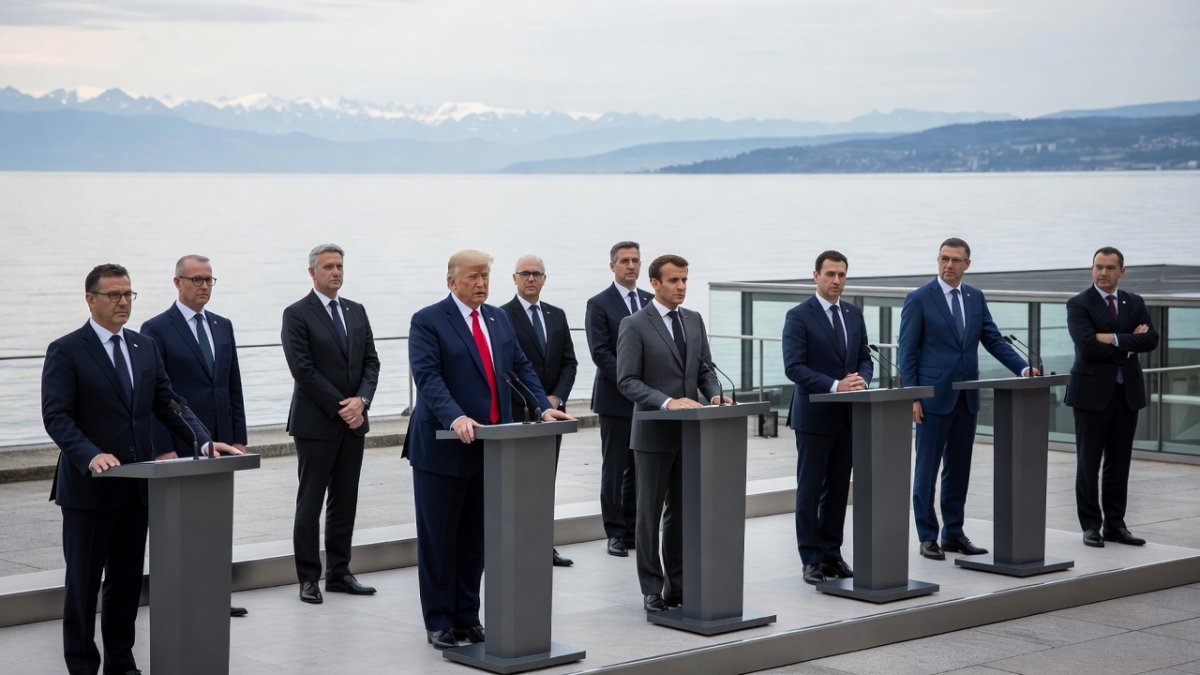
Evian-les-Bains, France – 17 June 2026 — US President Donald Trump announced on Sunday that a peace agreement with Iran had been reached, describing it as "all signed" during the G7 summit in Evian alongside French President Emmanuel Macron. The formal signing ceremony is scheduled for Friday, June 19, in Geneva. Trump indicated that further details would be released "pretty soon," framing the accord as a major diplomatic breakthrough achieved through Pakistani mediation.
The Deal Takes Shape
President Donald Trump made the announcement at the G7 summit in Evian on June 15, standing with French President Emmanuel Macron. He stated that the comprehensive deal was already finalized and would be formally ratified in Geneva later in the week. The G7 gathering provided a platform for allied leaders to absorb the implications of the sudden breakthrough after months of heightened tensions. Trump emphasized that the agreement addressed core security concerns while reopening critical maritime routes. G7 allies, including UK Prime Minister Sir Keir Starmer, are expected to coordinate on implementation measures during ongoing sessions this week.
Iran's President Masoud Pezeshkian confirmed that a memorandum of understanding had been reached with the United States. He described the MOU as potentially an "honourable document" for Iran provided it is implemented properly. Foreign Minister Abbas Araghchi added that the Strait of Hormuz would be open to Russia, China, India, Iraq, and Pakistan once the agreement takes effect. Tehran's statements have remained measured, underscoring that full compliance on both sides will determine whether the document delivers lasting benefits for Iranian interests.
Pakistan served as the key mediator that facilitated direct communications between Washington and Tehran. The resulting framework incorporates an end to military operations in Lebanon, which Iranian officials have described as an inseparable element of the overall accord. This component reflects months of back-channel diplomacy aimed at de-escalating multiple fronts simultaneously. The inclusion of Lebanon-related provisions demonstrates how the agreement seeks to address interconnected regional conflicts rather than isolating the US-Iran bilateral issues. This diplomatic history traces back to earlier indirect contacts that gained momentum after earlier rounds of escalation, allowing Pakistani intermediaries to bridge gaps that formal channels could not.
The Strait of Hormuz — A Waterway Restored
The Strait of Hormuz remains one of the world's most vital energy chokepoints, carrying approximately 20 percent of global oil trade. During the recent conflict both the US naval blockade and Iranian mining operations severely restricted commercial traffic. IMO Secretary General Arsenio Dominguez stated that removal of mines constitutes the essential first step toward restoring maritime traffic to pre-war levels. International shipping companies have already begun preliminary route planning in anticipation of safer passage once demining operations conclude.
President Donald Trump stated that ships are "starting to move" through the strait following the agreement. However, BBC economic correspondent Faisal Islam noted that a major spike in traffic has not yet materialized. US Naval Forces Central Command confirmed that the blockade on Iranian ports will remain in place pending execution of the ceasefire agreement scheduled for June 19. These cautious steps reflect the practical challenges of transitioning from active hostilities to normalized navigation. Energy market implications are already visible as futures contracts reflect reduced risk premiums, potentially easing inflationary pressures for import-dependent economies in Europe and Asia over the coming quarters.
UK Prime Minister Sir Keir Starmer pledged that Britain would play a full part in reopening the Strait of Hormuz. Oil prices have already declined on the news, with Faisal Islam observing every chance of avoiding a prolonged energy shock. US equity markets opened sharply higher after the announcement, signaling investor relief. Broader economic implications include stabilized global shipping costs and reduced pressure on energy-importing nations across Europe and Asia. This development could structurally support longer-term supply chain resilience, particularly if verification milestones are met without interruption.
What the Deal Actually Contains
Known terms include a 60-day ceasefire extension, Iranian commitments to cease funding groups such as Hezbollah, transfer of Iran's enriched uranium stocks to the United States, and immediate reopening of the Strait of Hormuz. Economic relief measures for Iran will be released around physical milestones, according to senior US officials. These provisions aim to create verifiable benchmarks that tie sanctions easing directly to concrete actions on the ground. This milestone-based architecture represents a pragmatic evolution from earlier diplomatic efforts, embedding incentives for incremental compliance rather than relying on comprehensive upfront concessions.
The full text of the agreement has not yet been released, leaving several critical questions unanswered. These include the precise future of Iran's nuclear program, exact timelines for sanctions relief, and verification mechanisms involving international observers. A senior US official described the structure as milestone-based, meaning each phase of relief depends on demonstrated compliance rather than blanket concessions. Geopolitically, the framework signals a potential recalibration of deterrence dynamics in the Gulf, though its success will hinge on whether both parties sustain the transparency required to build mutual confidence.
Israeli Prime Minister Benjamin Netanyahu stated that the fight is not over and that Israel must maintain a buffer zone in southern Lebanon indefinitely. This position highlights a clear gap between the US-Iran framework and Israel's independent security requirements. While the agreement reduces direct US-Iran hostilities, Israeli concerns about Hezbollah's residual capabilities remain unaddressed in the current text. This divergence underscores the limits of bilateral accords in resolving multilayered regional security dilemmas.
Russia, China, and the Geopolitical Chessboard
The agreement directly affects Russia's longstanding position in the Middle East, where Iran has served as a key partner in Syria and energy coordination. With the Strait of Hormuz reopening to Russian vessels, Moscow gains improved access to Gulf routes, yet the broader US-Iran détente may reduce Tehran's reliance on Russian diplomatic cover. EU High Representative Kaja Kallas has indicated that European partners will monitor how this shift influences Moscow's regional leverage in the coming months. From the Russian perspective, the deal could free up diplomatic bandwidth for other priorities while introducing uncertainty about future energy alignments in the Gulf.
China, previously Iran's largest oil buyer before the conflict, stands to benefit from resumed normal supplies once the strait is fully operational. Iranian statements confirming openness to Chinese tankers align with Beijing's interest in stable energy imports. At the same time, any separate normalization between Washington and Tehran could weaken the Russia-China-Iran coordination that developed during the war, potentially altering trilateral dynamics. Analysts interpret this as a possible rebalancing that might encourage Beijing to diversify its energy partnerships while preserving core strategic ties with Tehran.
Russian officials are watching developments closely. The Kremlin continues to manage its own conflict in Ukraine, and the reduction in US focus on Iran may allow President Trump greater bandwidth to address other priorities. Analysts suggest this could influence Moscow's calculations regarding escalation or negotiation in multiple theaters simultaneously. Structurally, the accord may contribute to a more fluid multipolar environment in which great-power competition adapts to new energy and security realities rather than rigid bloc confrontations.
Lebanon — The Unfinished Front
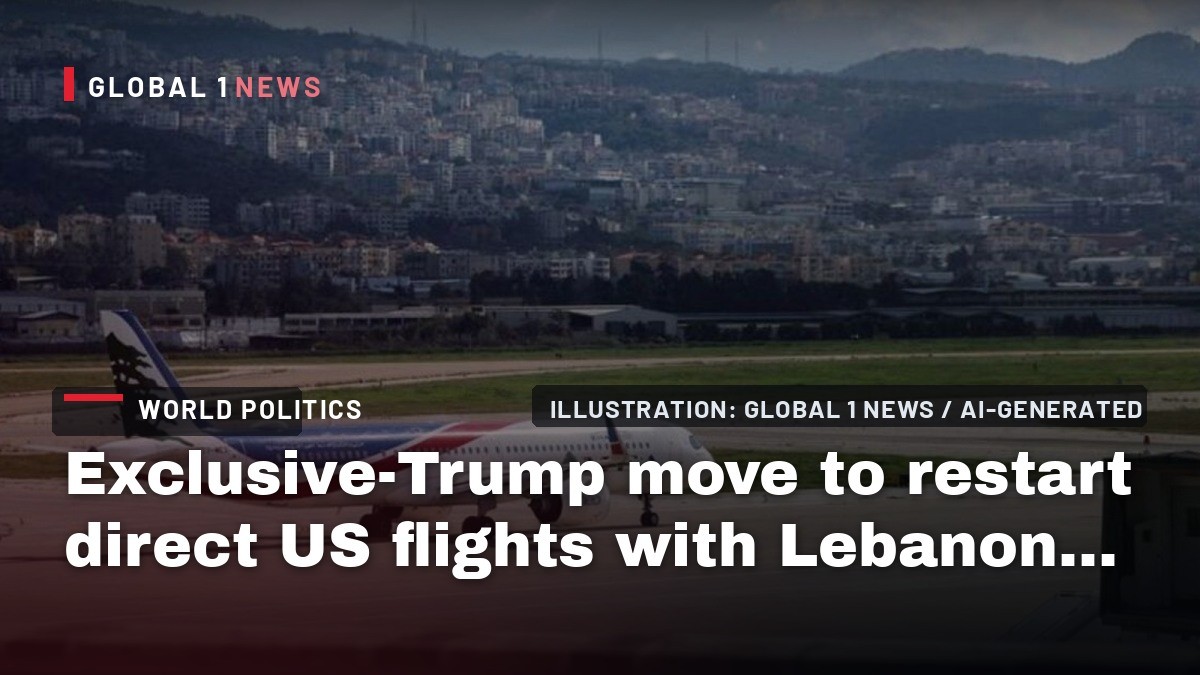
The deal incorporates an end to military operations in Lebanon, allowing displaced Lebanese civilians to begin returning home. Reports indicate gradual movements of families back to southern villages in recent days. However, Israeli Prime Minister Benjamin Netanyahu has reiterated that Israeli forces will remain in the newly established buffer zone for an indefinite period, creating ongoing friction on the ground.
Hezbollah has been significantly weakened yet not eliminated. Iran's commitment to halt funding represents a major concession, though verification of compliance will prove challenging. EU High Representative Kaja Kallas emphasized the need for robust monitoring to prevent renewed arms flows that could destabilize the fragile ceasefire. This element of the agreement illustrates the difficulty of translating high-level diplomatic understandings into durable ground-level stability across fragmented conflict zones.
Analysis and Implications
This agreement concludes the most direct period of US-Iran military confrontation in recent history. President Donald Trump has achieved a negotiated framework that previous administrations could not secure. The milestone-based approach to economic relief offers a pragmatic structure, yet success will depend entirely on consistent implementation by both sides over the initial 60-day ceasefire period. This could indicate a shift toward more transactional diplomacy that prioritizes verifiable steps over sweeping ideological commitments.
Attention now turns to the Geneva signing on June 19 and parallel G7 discussions on verification procedures, the Lebanon situation, and future Gulf security arrangements. UK Prime Minister Sir Keir Starmer and other allies are expected to contribute to maritime security efforts. The humanitarian consequences of the preceding conflict remain severe, with reconstruction needs across affected areas requiring coordinated international support. The broader geopolitical meaning lies in how this reset might reshape alliance patterns and energy interdependencies across Eurasia.
The accord represents a fundamental reset in US-Iran relations, but its durability hinges on transparent execution of every milestone. Regional powers including Russia, China, and Israel continue to assess their positions. While the 60-day ceasefire provides an initial test, the broader hope for reduced conflict across the Middle East rests on sustained diplomatic engagement rather than any single document.
By Irina Volkov, Staff Writer
This article was produced with AI-assisted research and editorial support. Reporting is based on sources cited in the article.
What's Your Reaction?
 Like
0
Like
0
 Dislike
0
Dislike
0
 Love
0
Love
0
 Funny
0
Funny
0
 Wow
0
Wow
0
 Sad
0
Sad
0
 Angry
0
Angry
0
Russia/Eastern Europe Correspondent at Global1.News. Covering Russian politics, energy, security, and the shifting dynamics of the post-Soviet space. Provides clear-eyed analysis on one of the world's most opaque regions.












Comments (0)